

A Theory of Justice
John Rawls
 English
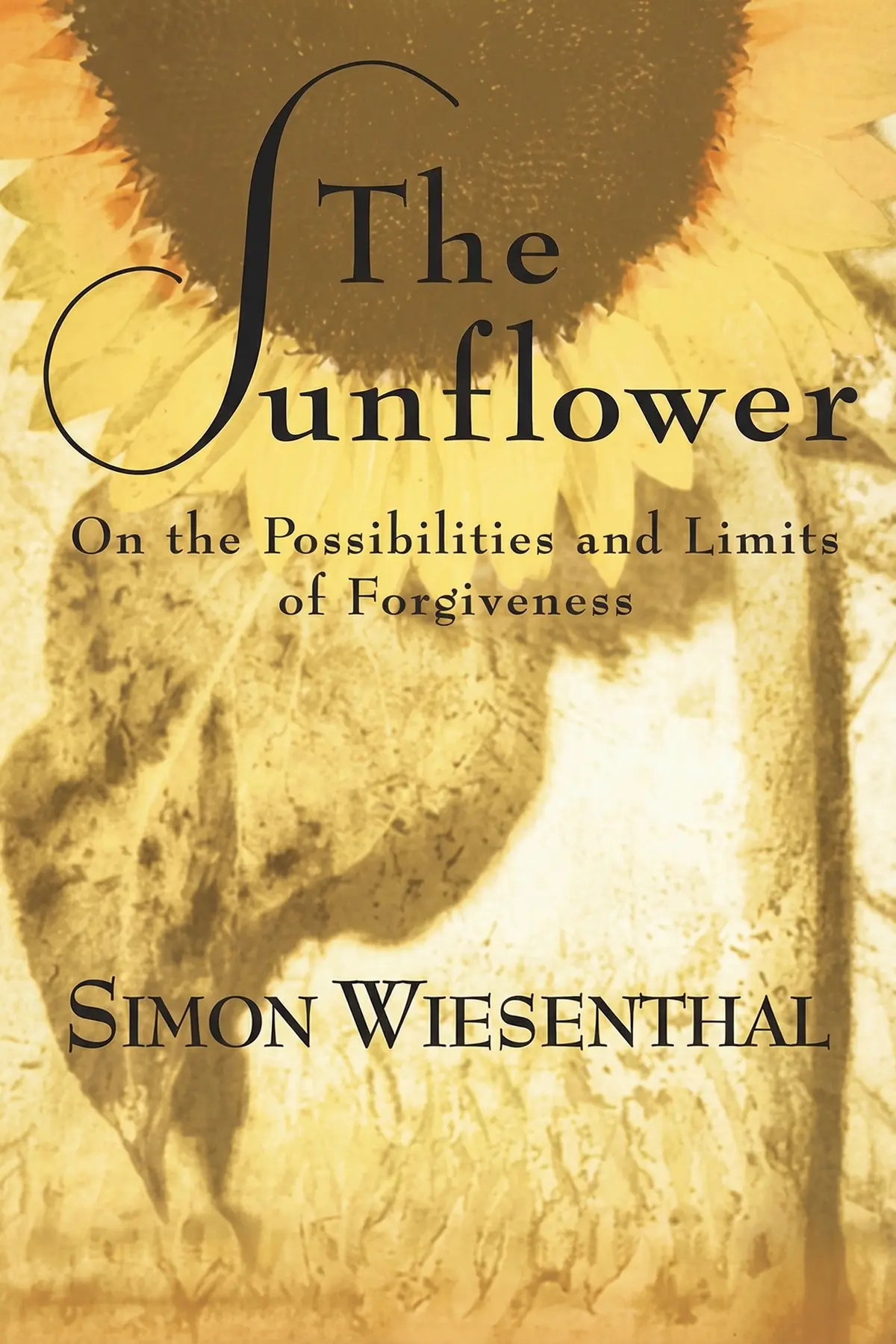
A dying Nazi soldier asks a Jewish prisoner to forgive him. Wiesenthal's response, and the many voices he later consulted, show what forgiveness can heal and where the right to grant it ends.
1 min 06 sec
Most of us treat forgiveness as a simple choice: someone apologizes, and we either let it go or we don’t. In The Sunflower, Simon Wiesenthal shows how quickly that picture breaks. In 1943, while he was a prisoner in a Nazi camp, he was taken to the bedside of a dying SS soldier who wanted a Jew to pardon him for murder.
Wiesenthal walked out without a word of forgiveness, then spent years asking whether he had been right. After the war he put the question to more than 50 people, from religious leaders to writers and fellow survivors. Their answers clash, and that clash is the book’s lesson: forgiveness has real power and real limits, and the honest response to a grave wrong is to keep asking questions.
Along the way you will hear the case against pardon, the case for it, and a set of questions that make you a clearer judge of apology, guilt and who has the right to forgive.
1 min 42 sec
A prisoner on forced labor is pulled aside by a nurse and brought to a stranger’s deathbed. What the dying man wants from him is something no prisoner could have expected, and perhaps something no one could give.
1 min 50 sec
Wiesenthal’s response at the bedside satisfied neither a simple yes nor a simple no. His later visit to the soldier’s grieving mother raised a second moral choice, one he kept to himself for a reason worth examining.
1 min 47 sec
Several of the people Wiesenthal consulted believed the soldier’s remorse fell short. One detail in the way he asked for a Jew, noticed by a famous writer, changes how the whole confession sounds.
1 min 50 sec
A monk held for 18 years in prison named an unexpected danger as the worst he faced. His answer, and a mother’s warning to her angry daughter, make the strongest case that forgiveness serves the forgiver.
1 min 31 sec
After a brutal attack in New York, a cardinal and a group of rabbis were asked how they would face the attackers. Their replies could hardly be further apart, and the gap reveals something about your own instincts.
1 min 35 sec
After hearing from more than 50 people, Wiesenthal still had no verdict. He came to see that missing verdict differently, and to suspect that some choices are meant to keep troubling the people who make them.
1 min 13 sec
The Sunflower ends without a verdict, and that is its gift. Wiesenthal’s story keeps two images side by side: a prisoner holding a murderer’s hand and brushing a fly from his face, and the same prisoner walking out without the words the man begged for. Both were true. Kindness and refusal sat in one room, and the book argues that forgiveness lives in that tension, with real power to free a wounded heart and real limits set by who was harmed and who may speak for them.
What the book supports is a way of meeting hard requests. When someone asks for your pardon, check whether the wrong was done to you, and whether the apology sees you as a person. Treat staying decent and saying yes as two different acts. With your own grievances, weigh what the anger costs you, remembering that letting it go never requires calling the crime acceptable. And when the answer feels obvious, ask someone who was raised to see it differently.
Wiesenthal visited a grieving mother and let her keep the son she remembered. Long afterward he was still asking whether that, and his silence, had been right. Some questions are meant to be carried, not closed.
Most of us treat forgiveness as a simple exchange: someone says sorry, and we decide whether to let it go. Simon Wiesenthal faced a version of that exchange with no simple answer. In 1943, as a Jewish prisoner in a Nazi camp, he was led to the bed of a dying SS soldier who confessed to taking part in a massacre and asked a Jew to forgive him. Wiesenthal stayed, listened and held the man's hand, then left without a word of pardon. The choice haunted him. After the war he put the question to more than 50 people, among them religious leaders, writers and fellow survivors, and their answers pull hard in opposite directions. The book lays out the case against forgiveness, rooted in Jewish teaching, personal choice and the soldier's failure to see his victims as people. It sets that beside the case for it, built on degrees of guilt and the cost of carrying hatred. Readers come out with no formula, but with sharper questions about apology, guilt and who has the right to forgive.
People who have been asked to forgive and are unsure whether they should, or whether it is theirs to give.
Readers drawn to Holocaust history who want to face its moral questions as well as its facts.
Anyone carrying an old grievance and wondering what holding on to it is costing them.
Simon Wiesenthal (1908 to 2005) was born in Buchach, Ukraine, and trained in architecture. Living in Lviv when World War II began, he survived several concentration camps, including Janowska, Plaszow and Mauthausen. After the war he gave up architecture to gather evidence on Nazi criminals still at large, co-founding the Jewish Historical Documentation Centre in Linz, Austria, in 1947 and later opening a documentation center in Vienna. The Simon Wiesenthal Center in Los Angeles bears his name.
Listeners find this work to be a remarkable read featuring superb prose and deep subject matter, rendering it an ideal resource for group discussions. Additionally, the gripping account of the Holocaust and the philosophical exploration of ethical accountability are well-regarded, as one listener notes the various perspectives and opinions provided are quite eye-opening. Nevertheless, the speed of the narrative and the heavy themes draw varied opinions; while some consider it deeply touching, others remark that the story is simply too sorrowful to enjoy.
Wow. This is one of those rare books that actually makes you look inward and question your own character. The imagery of the sunflower—a symbol of connection to the world that the prisoners were denied—is absolutely heartbreaking. Wiesenthal captures the dehumanization of the camps with such precision that you can almost feel the dust and the despair. The central dilemma is a masterpiece of ethical tension. I found myself closing the book every few pages just to think. The responses from various thinkers at the end are wonderful tools for further reflection, even if I didn't agree with all of them. It is a profound meditation on whether we even have the right to forgive crimes committed against others. Simply essential reading.
Show moreWhat would you do? That is the question that haunts every page of this incredible book. Wiesenthal doesn't just tell a story; he invites you into his own unresolved torment. The scene where he visits the SS officer's mother after the war was particularly moving and complicated. It shows that he was a man of immense character, even if he couldn't bring himself to offer the words the dying man wanted. The variety of viewpoints in the back of the book is staggering. From rabbis to secular philosophers, each one adds a new layer to the problem. It’s a profound narrative about the impossibility of speaking for the dead. This should be required reading in every ethics course.
Show moreSimon Wiesenthal's writing is sparse yet devastatingly effective. He manages to convey the atmosphere of the 'Polytechnic' turned hospital with such clarity that you feel the silence of the room where Karl lies dying. This isn't just a Holocaust story; it’s an exploration of what it means to be human in an inhumane system. The way he describes the 'God is on vacation' sentiment among the prisoners is chilling. I found the symposium section to be an enlightening look at how culture and religion shape our sense of mercy. It’s a wonderful tool for anyone trying to understand the nuances of moral responsibility. Even the responses I disagreed with helped me clarify my own stance on the limits of forgiveness.
Show morePicked this up for a local reading group and was immediately gripped by the moral weight of Wiesenthal’s predicament. The first half is a visceral, haunting memoir about a dying SS officer named Karl who begs a Jewish prisoner for absolution. Wiesenthal's silence is deafening. His prose is sparse, lacking any unnecessary flourish, which makes the horrors he describes feel even more immediate and suffocating. To be fair, the second half—the symposium—is a bit of a mixed bag. While it’s fascinating to see how figures like the Dalai Lama and Desmond Tutu grapple with the question, some responses felt a bit repetitive or detached from the reality of the camps. However, the core narrative about the sunflowers on the German graves versus the anonymity of the Jewish dead will stay with me forever. It’s a perfect catalyst for meaningful conversation about the heavy price of reconciliation.
Show moreAs someone who has studied the Holocaust extensively, I found this book offered a unique angle I hadn’t fully considered before. It isn't just about survival; it's about the psychological burden of being asked to speak for an entire people. Truth is, the scenario Wiesenthal presents is almost unbearable. A soldier who participated in atrocities wants a clean conscience before he dies, and he chooses a random prisoner to grant it. The writing is incredibly powerful. I particularly appreciated the diverse spectrum of moral perspectives included in the second half. It was enlightening to see the sharp divide between the Jewish and Christian responses to the concept of forgiveness. Some might find the philosophical section a bit dry compared to the memoir, but I think it’s necessary to flesh out the complexity of the situation.
Show moreA haunting look at the limits of grace and the reality of evil. Simon Wiesenthal's writing style is direct and honest, avoiding sentimentality while describing the unthinkable. The encounter with the dying Nazi, Karl, is paced like a thriller, yet carries the weight of a religious text. Look, I’ll be honest: the book is devastatingly sad. It’s not a light read for a sunny afternoon. Some of the contributors in the symposium section come off as a bit preachy, particularly those who haven't experienced trauma themselves, but that almost adds to the book's value. It highlights the gap between abstract theory and lived experience. I’d recommend this to anyone interested in moral responsibility and history.
Show moreAfter hearing so much about this book, I finally picked it up, and it lived up to the reputation. The contrast between the 'sunflower' on the German graves and the 'fossa' awaiting the Jews is a brilliant, tragic metaphor. Wiesenthal is a gifted storyteller who manages to make a philosophical problem feel like a life-or-death struggle. Gotta say, the Jewish perspectives in the symposium resonated with me far more than the others. They seemed to understand that forgiveness isn't just a feeling, but a matter of justice and law. My only minor gripe is that some of the responses in the back felt a bit dated, but the core story is timeless. It’s an amazing read that will spark hours of debate.
Show moreFinally finished this and I'm still processing the core dilemma. The writing is excellent, and the story itself is remarkably tight. Wiesenthal captures the nuances of his own doubt perfectly. He didn't just walk out of that room and forget; he carried that dying man's request for decades. That kind of honesty is rare. The book is very moving, though it can be quite sad depending on your own history and beliefs. I think the highlight for me was seeing the different ways that survivors of other genocides responded to his question. It reminds us that these aren't just academic puzzles—they are real questions that people have to live with. A truly compelling and necessary piece of literature.
Show moreThis book is less of a cohesive story and more of a heavy moral burden presented in two distinct parts. I loved the first 100 pages. The narrative of Simon being pulled from his work detail to hear a murderer's confession is riveting and well-written. However, the second half dragged significantly for me. Personally, I found that reading 50+ short essays on the same topic became incredibly redundant after a while. Many of the religious leaders offered the same platitudes about turning the other cheek which felt a bit glib given the context of the Holocaust. It's an important book for group discussions, but as a reading experience, the pacing is quite uneven. I'm glad I read it, but I don't think I'd revisit the symposium section.
Show moreFrankly, the first half of the book is a five-star masterpiece, but the second half is a bit of a slog. The memoir portion is one of the most compelling things I've ever read. It's short, punchy, and deeply disturbing. But then you get to the essays, and the momentum just stops. I think the book would have been more effective with fewer, more in-depth responses rather than a huge symposium of 50+ people. Some of the contributors seemed to be speaking from a place of extreme privilege, which made their calls for 'unconditional love' feel a bit tone-deaf. It’s a solid 3.5 for me, rounded down because the pacing in the latter half was so difficult to get through.
Show moreIn 1943, while a prisoner at the Lemberg camp, Wiesenthal was brought to a dying SS soldier, Karl Seidl, who confessed to helping burn 300 Jews alive and asked a Jew to forgive him. Wiesenthal listened and held his hand but left without forgiving him. After the war he asked more than 50 people whether he had been right, and the book weighs their answers on what forgiveness can and cannot do.
He stayed silent, and many he consulted defended that choice. In Jewish teaching murder cannot be forgiven, because only the victim can forgive and the dead cannot. Seidl also chose to kill, since soldiers who refused were not punished. Primo Levi noted that Seidl asked for any Jew and never learned Wiesenthal’s name, treating Jews as a category even while repenting.
Supporters say forgiving is neither forgetting nor approving a crime. Dith Pran, a survivor of the Khmer Rouge genocide, argued that a soldier following orders is less guilty than those who planned the killing. Others stressed that resentment traps the person holding it, as in the Dalai Lama’s story of a Tibetan monk who most feared losing his compassion for his jailers.
Forgiveness has no easy formula. People disagree sharply about who may ask for it and who may grant it, and Wiesenthal found that the range of answers was itself the point. His conclusion is that the conversation should stay open, and that we should keep asking why atrocities happen in the first place, not only whether to pardon them.
When someone asks for your forgiveness, ask whether the wrong was done to you and whether the apology treats you as a person. Remember that you can show compassion, as Wiesenthal did by staying at the bedside, without granting pardon. With your own grudges, weigh what the anger costs you, and test your instinct against people from other traditions.
John Rawls

Eckhart Tolle

Marianne Williamson


Deepak Chopra

Pico Iyer

Alcoholics Anonymous World Services


William B. Irvine
AUDIO SUMMARY AVAILABLE
Get the key ideas from The Sunflower by Simon Wiesenthal, plus 5,000+ more nonfiction titles.









