
15 min 31 sec
Available in: English
 ไทย
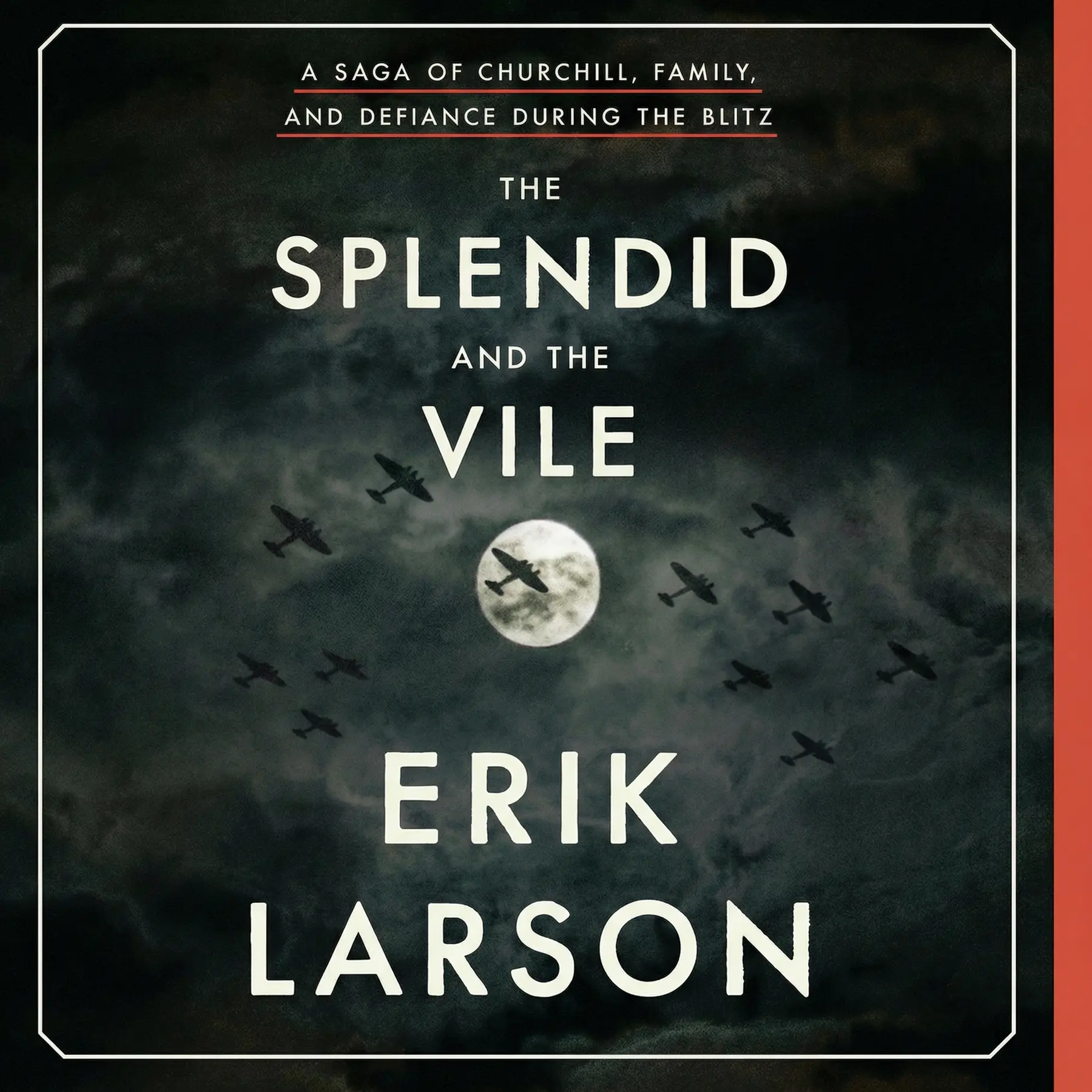
EnglishไทยThe Splendid and the Vile: A Saga of Churchill, Family, and Defiance During the Blitz
By Erik Larson
Follows Winston Churchill through his first year as prime minister, showing how honesty, visible courage and a relentless courtship of Roosevelt kept Britain fighting through the Blitz until Hitler's own choices changed the war.
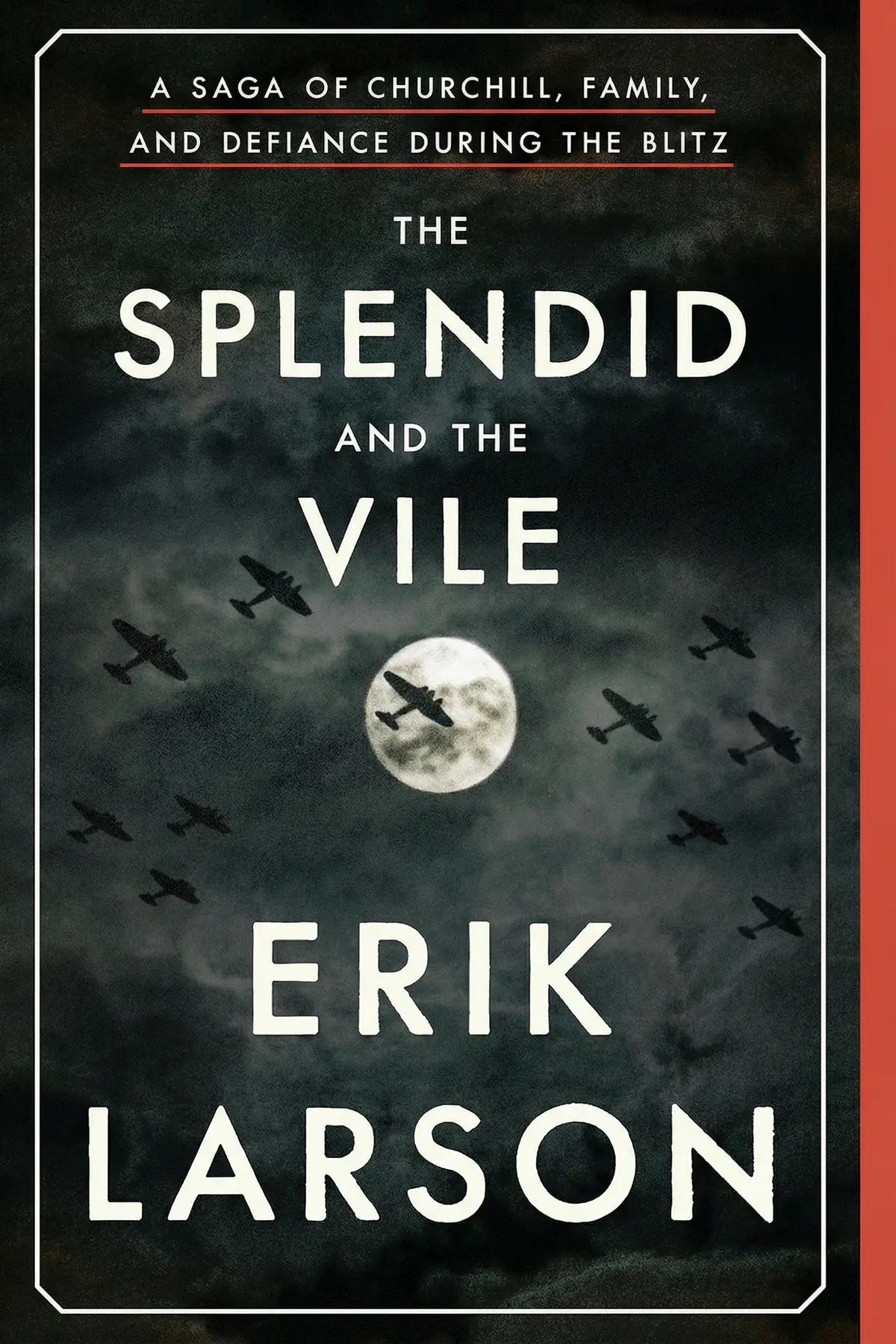
Table of Content
1. Introduction
1 min 00 sec
Leading people when every sensible observer expects failure comes down to two things: telling them the truth and giving them a reason to keep going. That is the pattern Erik Larson traces in The Splendid and the Vile, which follows Winston Churchill through his first year as Britain’s prime minister, from the German invasion of France in May 1940 through the bombing of London known as the Blitz. Almost no one believed Britain could win. Churchill did, and from his first day he knew the war turned on bringing the United States in.
Larson’s story shows how he held a frightened country steady, with blunt honesty and visible courage at home and a patient, flattering campaign to win over President Roosevelt, until Hitler’s own choices changed the war. Along the way come a fleet of fishing boats, a Nazi leader who parachuted into a Scottish field and a prime minister in a baby blue romper, plus a clear picture of what holding firm actually looks like.
2. Set the one goal that decides everything
2 min 09 sec
Churchill took office as Europe fell, with a country that seemed outmatched and an ally across the ocean who did not trust him. He still knew from his first day exactly what would decide the war.
3. Turn a narrow escape into shared resolve
1 min 57 sec
Hundreds of thousands of soldiers were trapped on a French beach, and the first day of rescue brought home only a fraction. Then help arrived from a direction no military planner had counted on.
4. Learn why a weaker air force held the sky
2 min 17 sec
Germany had four times as many fighters, bigger bombs and better navigation in bad weather. Britain should have lost the air war quickly, and a faulty intelligence report helps explain why it did not.
5. Courage that keeps a bombed city going
2 min 07 sec
A navigation mistake by a handful of German pilots brought war to London’s streets. What Churchill did the morning after the first deliberate raid mattered as much as anything the air force achieved.
6. Win a reluctant ally one message at a time
2 min 16 sec
Roosevelt answered Churchill’s first desperate plea with little more than good wishes. Turning that polite distance into real support took daily persistence, careful tone and one well-chosen visitor.
7. Outlast an opponent until his mistakes arrive
2 min 23 sec
The worst night of bombing and the strangest flight of the war happened within hours of each other. Months later the raids simply stopped, for reasons that had little to do with Britain’s strength.
8. Conclusion
1 min 22 sec
Larson closes the year with an image worth keeping. In December 1941, while staying at the White House, Roosevelt entered Churchill’s room and found him unclothed, holding a cigar in one hand and a drink in the other. Churchill joked that he was hiding nothing from the president, then spent an hour strolling about with only a towel over his shoulder, talking and refilling Roosevelt’s glass. The man Washington once called unreliable was now at ease with the ally he had worked so hard to win.
That ease came at a terrible price. From September 1940 through May 1941, close to 29,000 people in London lost their lives, while the death toll across the UK exceeded 44,000, 5,000 of them children. Churchill could not stop that. He could tell the truth about it, stand in the rubble beside the people enduring it and keep asking for help until it arrived.
When a situation looks lost, the book suggests starting where he did: decide the one thing that would change the outcome and work on it every day. Give each hard fact a real reason for hope beside it, and go where the damage is. Defiance bought Britain time, and patience with a reluctant friend turned that time into victory.
About this book
What is this book about?
In May 1940, Winston Churchill became prime minister just as Germany invaded France. The Nazis had the stronger army, an air force four times larger in fighters, and a string of conquests across Europe. Almost nobody believed Britain could survive, let alone win. Erik Larson tells the story of the year that followed: the rescue at Dunkirk, the air battles over England and the bombing of London, Coventry and other cities. Throughout, Churchill pursued one goal he had settled on from his first day, which was to bring the United States into the fight. He courted a wary President Roosevelt with telegrams, warnings and flattery until help began to arrive. Readers get a vivid, human portrait of leadership under pressure, full of strange and memorable scenes: civilian fishing boats crossing the Channel, a senior Nazi parachuting into a Scottish field, and a prime minister doing rifle drills in a baby blue romper. Underneath runs a practical lesson about how a leader keeps people going when the odds look hopeless.
Book Information
Who it's for
Leading teams through crisis
Managers and team leads steering people through a crisis who want a vivid model of steady leadership.
Curious about Churchill's war
History listeners curious about Churchill, the Blitz and how America was drawn into the Second World War.
Hoping to win support
Anyone who needs support from a powerful, hesitant partner and wants to see persistence at work.
About the Author
Erik Larson
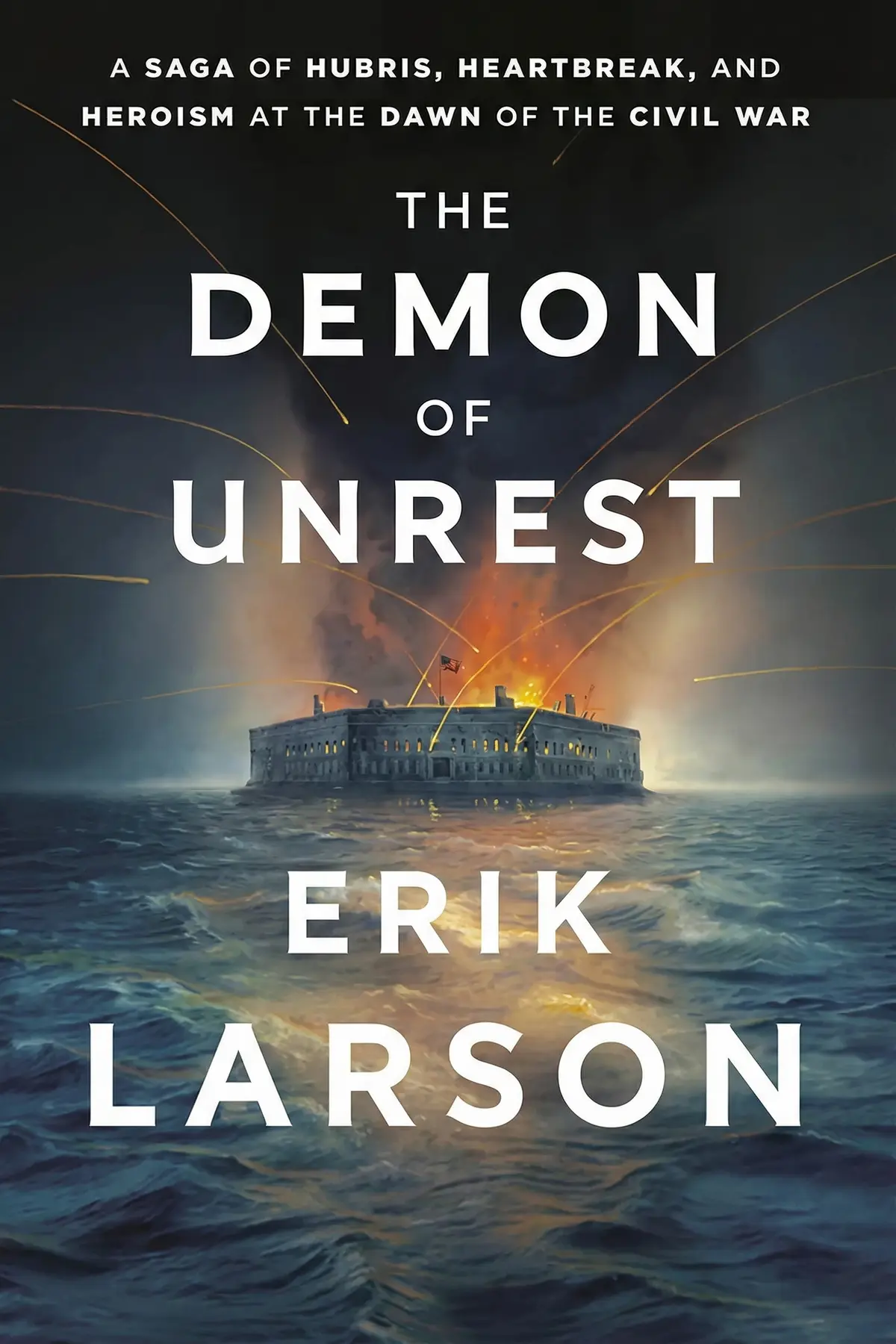
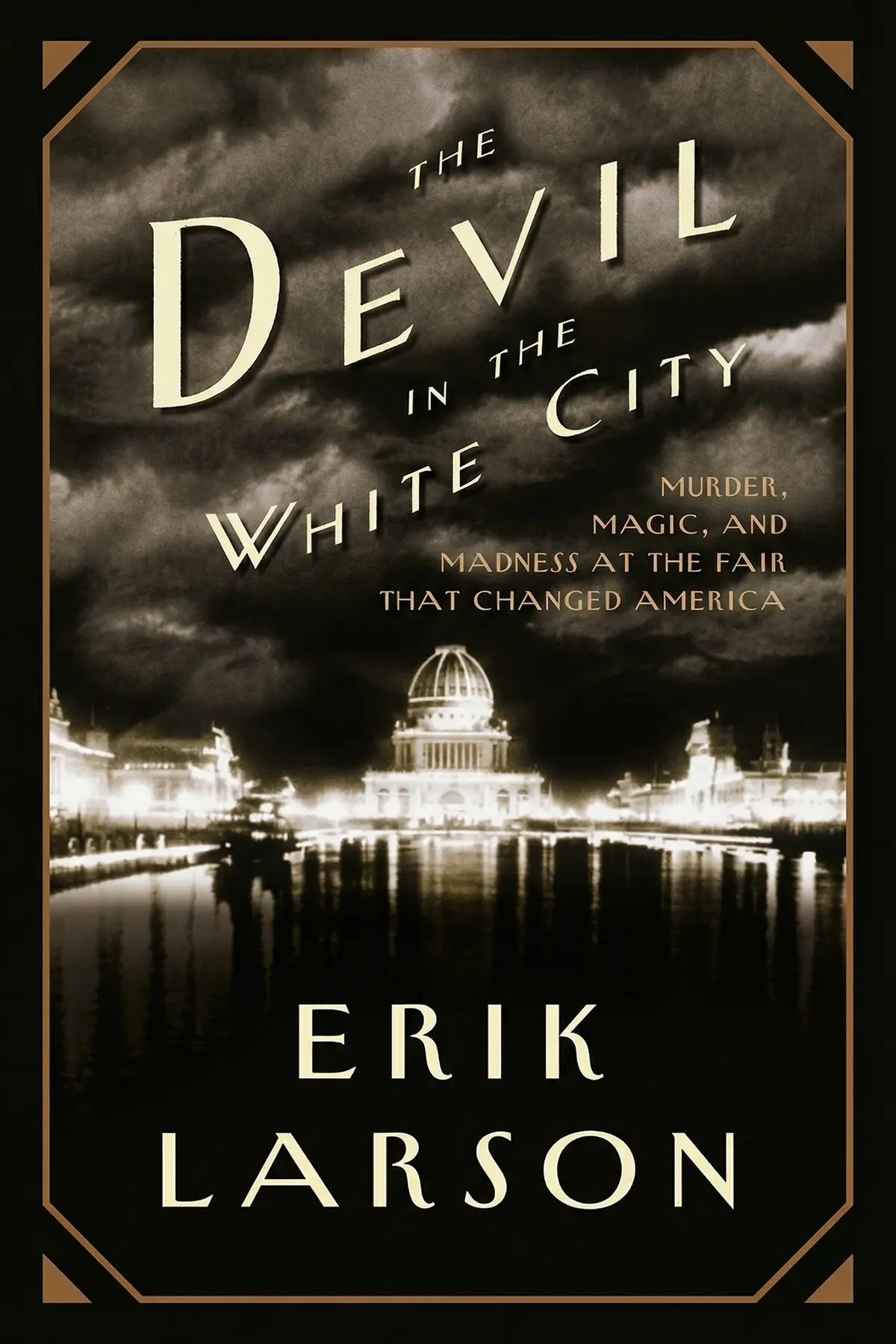
Erik Larson studied Russian history, language and culture at the University of Pennsylvania and earned a master's degree in journalism from Columbia University. He worked as a staff writer at The Wall Street Journal and a contributing writer for Time. His narrative histories include Isaac's Storm and The Devil in the White City, which won an Edgar Award and was a National Book Award finalist. Six of his books have been New York Times bestsellers, and his work appears in nearly forty countries.
Ratings & Reviews
Ratings at a glance
What people think
Listeners find this book an enjoyable experience that flows like a novel, featuring meticulously researched information and a compelling, fast-paced narrative. The author’s prose is celebrated for its precise detail, and listeners value the way the work explores crucial turning points in recent history. Listeners describe the account as captivating, with one review highlighting how it successfully recreates history, and they prize the intimate glimpses provided into Churchill's private life.
Top reviews
Rodrigo
Larson has this uncanny ability to turn dry archival documents into a propulsive narrative that rivals any thriller on the shelf today. The way he captures the tension of the Blitz through the eyes of the Churchill family makes the history feel incredibly immediate and personal. You aren’t just reading about dates and casualties; you are there in the underground bunkers smelling the stale cigar smoke. I especially loved the focus on Mary Churchill’s coming-of-age amidst the chaos, which provided a much-needed contrast to the heavy political maneuvering. My only minor gripe is that the sheer volume of secondary characters can get a bit dizzying if you aren't paying close attention. Still, the prose is elegant and the pacing is relentless. It’s a masterful distillation of a year that changed the world forever.
Show moreJom
Wow, the level of intimacy here is staggering. Larson manages to make you feel like a fly on the wall at Chequers or 10 Downing Street during the most terrifying year of the war. Most history books focus on the 'what,' but Larson is obsessed with the 'how'—how did these people eat, sleep, and love while their city was being leveled? The inclusion of John Colville’s diaries was a stroke of genius, offering a grounded perspective from a young man dealing with unrequited love in the shadow of total annihilation. If you want a dry textbook, look elsewhere. This is a cinematic experience that happens to be entirely true. I couldn’t put it down even though I already knew the ending of the war!
Show moreSangduan
Ever wonder how a single man's sheer force of will could hold an entire nation together while bombs rained down nightly? This book provides a vivid, day-by-day answer. Larson’s depiction of Churchill isn't just about his famous oratory; it’s about his vulnerability and his strange, eccentric habits. I was mesmerized by the descriptions of the Blitz, where Londoners would throw parties and pursue romance with a desperate intensity because they didn't know if they'd survive the night. It captures that strange mix of 'splendor and vileness' perfectly. The research is deep, yet the writing never feels academic or boring. It reads like a high-stakes novel with the highest possible stakes. A must-read for any history buff.
Show moreLeila
Picked this up on a whim and ended up staying awake until 2 AM finishing the section on the Coventry bombing. It is rare to find a non-fiction book that creates such a visceral sense of dread and hope simultaneously. Larson’s focus on the year 1940-1941 was a smart choice, allowing for a deep dive into the specific period when England stood alone against the Nazi machine. The way he juxtaposes the horror of the falling bombs with the mundane details of Mary Churchill’s social life is haunting. It reminds us that life doesn't stop during a war; it just becomes more concentrated. This is easily one of the best books I’ve read this year. It’s historical storytelling at its absolute peak.
Show moreDen
The way Larson humanizes these historical giants is nothing short of masterful. We see a Winston Churchill who is at once a brilliant strategist and a weeping, emotional man who dances in his onesie to boost his own morale. The book beautifully illustrates how his rhetoric wasn't just empty words; it was the fuel that kept the British people going when they had nothing else left. I was also struck by the portrayal of the German leaders, which added a chilling layer to the narrative. The prose is sharp, the chapters are bite-sized, and the research is clearly exhaustive. It’s a remarkable achievement that manages to shed new light on a very well-documented period of history. I highly recommend the audiobook version too!
Show moreFang
As someone who usually finds military history a bit of a slog, I was surprised by how much I enjoyed the domestic vignettes. Larson focuses on the intimate details—Churchill’s obsession with hot baths and his habit of walking around naked—that make the man feel like a human rather than a statue. The dynamic between Winston and Clementine was particularly moving, showing a partnership built on mutual respect and strategic advice. While the book is quite long and sometimes bogs down in the minutiae of aircraft production, the emotional core remains strong. You really get a sense of the 'keep buggering on' spirit that defined London during those fifty-seven nights of consecutive bombing. It’s a fascinating look at leadership under extreme duress.
Show morePick
After hearing so much buzz, I finally dove into this saga of Churchill's first year as Prime Minister. The atmosphere Larson creates is thick with the scent of cordite and the sound of gramophones playing military marches late into the night. It’s an exhausting read in the best way possible, conveying the relentless pressure of the Battle of Britain. I was fascinated by Lord Beaverbrook’s constant threats to resign and the 'Prof' Frederick Lindemann’s scientific influence. However, some of the sections regarding the German perspective felt slightly less engaging than the London-based chapters. Despite that, the book is a triumph of narrative non-fiction. It makes the transition from May 1940 to May 1941 feel like a lifetime of struggle and triumph.
Show moreKob
To be fair, I think you need to have a pre-existing interest in the Blitz to fully appreciate the granular detail Larson provides. If you're looking for a broad overview of WWII, this isn't it. This is a microscopic look at one year and one family, but that focus is exactly what makes it so powerful. You get to know the 'Prof' and John Colville as if they were your own colleagues. The ending epilogue was a nice touch, wrapping up the fates of everyone we spent 500 pages getting to know. My only real complaint is that the sheer amount of detail about random cabinet meetings can be a bit much. Overall, it’s a compelling portrait of defiance that feels strangely relevant in today’s world.
Show moreNew
Truth is, while the writing is undeniably beautiful, the pacing felt a bit uneven in the middle sections. I loved the parts about Churchill’s inner circle and his interactions with Roosevelt, but the book occasionally wanders into excessive detail that stalls the momentum. I found myself skimming through some of the more technical aspects of aircraft production to get back to the family drama. To be fair, Larson’s ability to humanize figures like Randolph and Pamela Churchill is impressive, making them feel like characters in a Victorian soap opera. It’s a solid three-star read for me—informative and well-written, but just a tad too long-winded for my personal taste. If you love granular history, you’ll probably adore this more than I did.
Show moreKwame
Not what I expected after the brilliance of 'The Devil in the White City' or 'Dead Wake.' While Larson is a gifted researcher, this particular volume felt like a collection of leftover notes from 'In the Garden of Beasts' stitched together without a clear through-line. There were far too many storylines involving peripheral figures who simply didn't hold my interest for more than a few pages at a time. Do we really need to know the specific color of the pills Rudolf Hess packed for his flight to Scotland? Sometimes less is more, and this book desperately needed a more aggressive editor to trim the fat. It’s not a bad book, but it lacks the narrative tension that usually defines Larson's work. It felt like a chore to finish.
Show moreQuestions about this book
What is The Splendid and the Vile about?
Erik Larson follows Winston Churchill through his first year as Britain’s prime minister, from the German invasion of France in May 1940 through the Blitz. The book covers Dunkirk, the air battles over England, the bombing of London and Coventry, and Rudolf Hess’s solo flight to Scotland. Its central thread is Churchill’s effort to keep Britain fighting while persuading Roosevelt to send American help.
How did Churchill win Roosevelt's support in The Splendid and the Vile?
Churchill wrote to Roosevelt constantly, stressing the danger of a Nazi-ruled Europe without making Britain look beyond saving. Roosevelt began wary, but eventually arranged a trade of old destroyers for access to British bases, warned Americans in a Fireside Chat, and sent his friend Harry Hopkins to London. Churchill kept Hopkins at his side, and Lend-Lease passed Congress on March 11, 1941.
What leadership lessons does the book offer?
Churchill set one clear goal from his first day, bringing the United States into the war, and pursued it relentlessly. He paired hard facts with a measured reason for hope, as in his blood, toil, tears and sweat speech. The day after the first deliberate raid on London, he toured the wreckage of the East End. And he turned a partial success like Dunkirk into a statement of national resolve.
Why did the German invasion of Britain never happen?
According to the book, the Royal Air Force made Hitler postpone Operation Sea Lion by downing more planes than it lost, helped by radar, new aircraft production and fighting over home ground. Hitler then turned east to invade the Soviet Union. At the Nuremberg trials in 1945, it emerged that only that distraction had kept Germany from invading England.
Readers also enjoyed
A History of Iran: Empire of the Mind
Michael Axworthy

A History of the World in 6 Glasses
Tom Standage

A Long Way Gone: Memoirs of a Boy Soldier
Ishmael Beah




A Splendid Exchange: How Trade Shaped the World
William J. Bernstein

A Spy Among Friends: Philby and the Great Betrayal
Ben Macintyre


AUDIO SUMMARY AVAILABLE
Listen to The Splendid and the Vile in 15 minutes
Get the key ideas from The Splendid and the Vile by Erik Larson, plus 5,000+ more nonfiction titles.
- 5,000+ titles
- Listen as much as you want
- 7-day free trial
- Cancel anytime









