

10 min 32 sec
Available in: English
The Sovereign Child: How a Forgotten Philosophy Can Liberate Kids and Their Parents
Shows parents how to replace bedtime battles, screen limits and forced rules with creative solutions that meet both the child's wishes and the adult's concerns, so trust and cooperation grow where sneaking and resentment used to be.
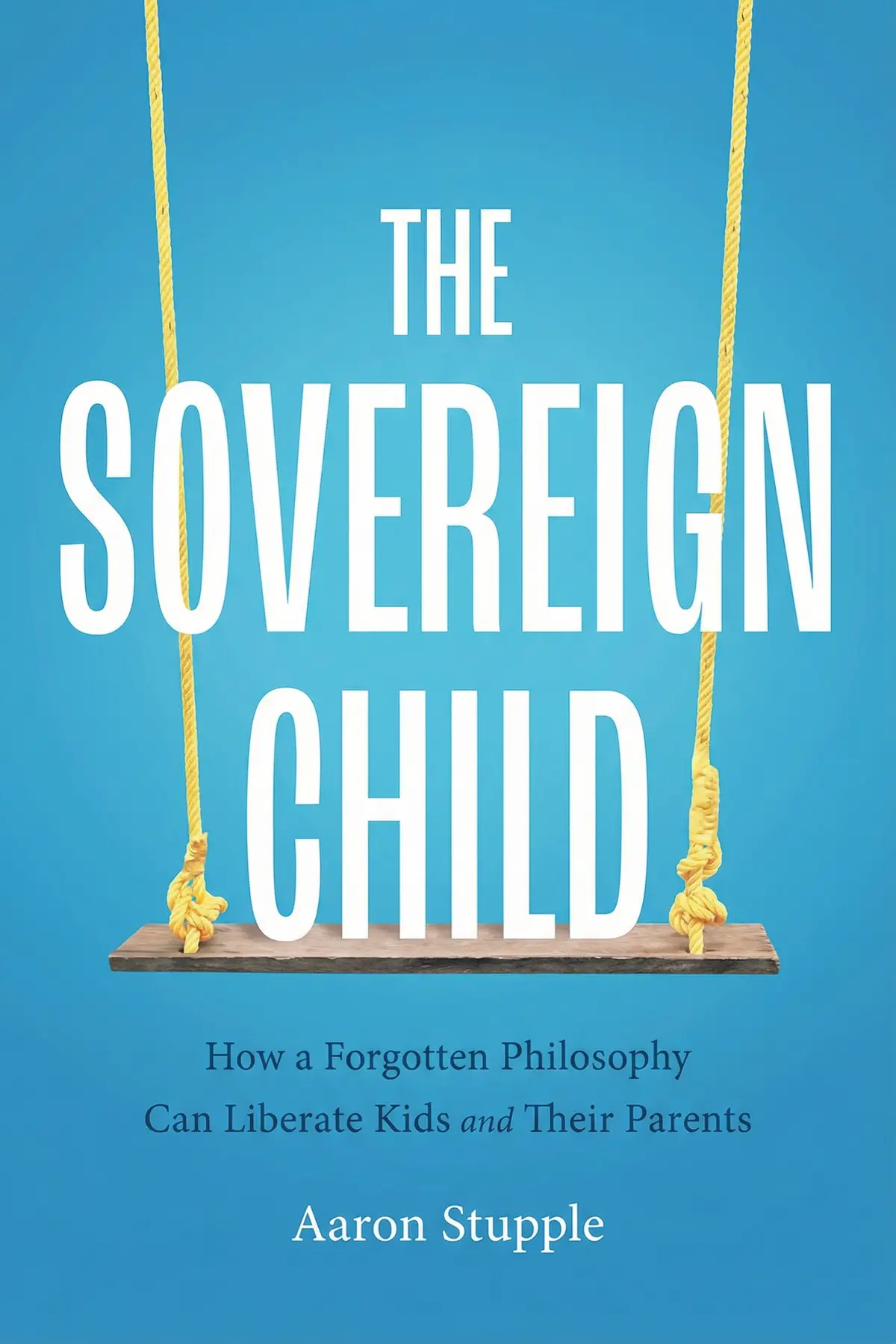
Table of Content
1. Introduction
1 min 05 sec
Many parents spend their evenings negotiating bedtimes, screens and vegetables, and still end up with a child who sneaks, pleads or lies. In The Sovereign Child, physician and former public school teacher Aaron Stupple argues that the rules themselves may be causing much of that struggle. His case rests on a philosophy called Taking Children Seriously, which starts from one claim: a child thinks, feels and creates in the same way an adult does. If that is true, setting limits and demanding obedience may teach a child to outwit their parents rather than to take charge of their own life.
The argument is simple to state and demanding to live. Replace rules with creative solutions that give both child and parent what they want, and trust and responsibility grow where power struggles used to be. Along the way come marker-covered walls, a bath full of shampoo and a toddler who finally swallowed her medicine, plus a way of thinking to try at the next standoff over shoes.
2. Trust children to find their own limits
1 min 42 sec
Imagine a home with no bedtime, no screen limits and no punishments, where even dinner is optional. It sounds like neglect, yet its advocates insist it is the most respectful way to raise a child.
3. Strict rules teach kids to sneak, so avoid them
1 min 52 sec
Even a sensible, kindly explained rule can push a child toward lying and pleading. Stupple traces where that pattern leads, and the destination is far more worrying than a stolen cookie.
4. Turn a standoff into a win for both
1 min 34 sec
A child with a marker sees a wall very differently from the parent who has to clean it. Stupple shows a way out of the fight that involves neither a ban nor surrender.
5. Spot the problems that were never problems
1 min 36 sec
A spill, a bath full of suds, a child who will not put on shoes. Some of these clashes can be solved in seconds, and some may not need solving at all.
6. Let failed ideas lead you to one that works
1 min 38 sec
A toddler clamps her mouth shut against a spoonful of medicine, and explaining gets nowhere. What finally changed her mind was something no rule could have produced.
7. Conclusion
1 min 05 sec
The Sovereign Child asks parents for something harder than a new technique. It asks them to believe that a child is a reasoning person, and then to act on that belief when it is inconvenient. From there, a crayon on the wall or a refused spoonful of medicine stops being a test of authority. It becomes a puzzle with two people’s interests in it, and the parent moves from guard to designer.
Stupple offers no formula, but his examples point to a few habits. Before saying no, check whether the thing is a problem at all, the way a spill on a floor that needed cleaning is not. When it is, find what your child loves about the activity and offer that in a form you can live with, as the taped-down paper did. When an idea fails, treat it as information and try the next one: a doll, a race to the door, a game of doctor.
And keep hold of the belief he places at the center. A solution that works for both of you exists, and the search for it is how trust gets built.
About this book
What is this book about?
Every parent wrestles with the same question: give children more freedom, or hold firmer limits? Conventional advice says that without rules kids will slide into junk food, late nights and endless screens. Aaron Stupple argues that this assumption may be backwards. Drawing on a philosophy called Taking Children Seriously, Stupple starts from one claim: a child's reasoning, emotions and creativity work just like an adult's. If that is so, rules do not teach responsibility. They turn the parent into a gate to get around, and the child learns to sneak, plead, resent and eventually blame others for their problems. In place of rules, Stupple offers a different job for the parent: finding solutions that give both sides what they want. Through everyday cases, from a child drawing on the walls to a toddler refusing medicine, readers learn to ask what makes a behavior appealing, to recreate that appeal in a form they can accept, and to treat failed ideas as steps toward one that works.
Book Information
Who it's for
Exhausted by daily battles
Parents worn out by daily fights over bedtime, food, screens and getting out the door.
Parents questioning their rules
Mothers and fathers who suspect rules are teaching their kids to sneak and want a more respectful alternative.
Educators and caregivers
Teachers and caregivers curious about raising children through cooperation instead of control.
About the Author
Aaron Stupple
Aaron Stupple is a physician who earlier taught in public schools, and both careers shape how he thinks about child development, especially a child's independence and natural curiosity. He and his wife are raising five children in Massachusetts, where they apply the ideas of Taking Children Seriously in their own home.
Ratings & Reviews
Ratings at a glance
What people think
Listeners find the writing both intellectually engaging and simple to digest, valuing the imaginative parenting framework that pushes back against standard rule-heavy tactics. The book’s tempo also earns praise, as one listener specifically points out the lack of shaming or indignation in the text. Moreover, listeners respect the work's ethical viewpoint and its focus on cultivating problem-solving techniques. Still, the core premise and the particular parenting method described draw a variety of responses from listeners.
Top reviews
Aroha
Finally got around to reading this after finishing the Tim Ferriss podcast episode with Aaron, and it’s a total game-changer. Most parenting books focus on how to manipulate kids into obeying, but Stupple asks if obedience is even the right goal. By treating my son as a sovereign individual, our relationship has shifted from a constant power struggle to a collaborative partnership. I love the focus on problem-solving rather than rule-enforcement. While letting a kid eat ice cream for dinner sounds crazy, the philosophy behind it—trusting them to self-regulate—is deeply profound. It’s an easy, non-shaming read that prioritizes the child's autonomy above all else. This creative approach to parenting is exactly what I needed.
Show moreLuke
After hearing the three-hour podcast episode with Naval and the author, I felt compelled to buy this. It is a deeply thought-provoking manual that forces you to question every assumption you hold about parental authority. Stupple manages to present a radical vision for the family without the usual tone of moral indignation found in parenting literature. By focusing on a moral stance of respect, he shows how to foster genuine trust instead of fear-based compliance. Some of the practical examples, like letting a toddler choose their own bedtime, are undeniably shocking to the average parent. Yet, the absence of shaming in the writing makes it easy to explore these ideas with an open mind. Even if you only adopt ten percent of this, your home will be more peaceful.
Show moreHassan
The Sovereign Child isn't just another parenting book; it’s a radical re-evaluation of the parent-child power dynamic. Stupple uses critical rationalism to argue that traditional rules actually hinder a child’s ability to learn about the world around them. I found the chapter on screen time particularly challenging, especially the idea that 'addiction' is often just a label for an intense interest. Even if you don't go full 'no rules,' the mental shift toward finding win-win solutions is incredibly valuable. Some examples felt extreme, and I worry about the lack of hard scientific data throughout. Still, the moral core is hard to argue with if you truly value freedom.
Show morePat
Ever wonder what happens if you just stop saying 'no' to your toddler? Stupple attempts to answer that by documenting his own family’s journey into a rule-free life. The results are sometimes beautiful—like kids choosing to join family dinner because they actually want to be there—and sometimes terrifying. I appreciate that he doesn't shame parents who use rules but instead offers a different path based on creativity and patience. My only real gripe is that it feels geared toward families who have the time for endless negotiation. Still, it’s a moral and highly readable book that prioritizes the child as a full human being. It fosters problem-solving skills in a way that few other books do.
Show moreWatcharee
Picked this up during a particularly rough week of bedtime battles and screen-time tantrums. Instead of more 'gentle parenting' scripts, I found a philosophy that essentially says: stop the fighting. Stupple’s conversational tone makes the heavy philosophical underpinnings surprisingly accessible for a sleep-deprived parent. While I’m not quite ready to let my two-year-old draw on the living room walls, the book encouraged me to stop policing arbitrary things that don't actually matter. It’s a fast-paced read that manages to be thought-provoking without feeling like a long lecture. Definitely not for everyone, but a breath of fresh air for those tired of being the household police. Highly recommend for the perspective shift alone.
Show moreRania
To be fair, the writing style is refreshingly casual and easy to digest compared to most dense parenting manuals. I was intrigued by the recommendation from Naval, but I found myself disagreeing with at least half of the premises. Stupple’s rejection of all conventional wisdom regarding sleep hygiene and nutrition feels a bit reckless in the modern world. However, the sections on fostering a child’s natural curiosity and avoiding coercive education were brilliant. It’s a polarizing read that will make you think, even if you end up tossing it across the room. A creative approach to parenting that certainly fosters problem-solving skills, but proceed with caution.
Show moreSuthinee
This book is a fascinating social experiment, though I’m not entirely sold on the actual execution. As someone who grew up in a strict household, I love the idea of child-led learning and bodily autonomy. But there’s a massive gap between 'respecting a child's choices' and 'letting them stay on an iPad until sunrise.' Stupple argues that kids will eventually self-regulate, but that’s a dangerous gamble to take with a developing brain. I enjoyed the fast-paced chapters and the lack of moral shaming. It’s definitely worth reading for the perspective shift, but keep a healthy dose of skepticism regarding the health claims. It challenges traditional rule-based methods in a way that is hard to forget.
Show moreMay
Personally, I found the pacing of this book to be its greatest asset. It moves quickly through complex ideas about 'Taking Children Seriously' without getting bogged down in academic jargon. I loved the emphasis on teaching children problem-solving skills rather than just demanding blind obedience to authority. However, the chapter on unlimited screen time felt incredibly irresponsible to me. We know how addictive these algorithms are designed to be for adult brains, let alone kids. It’s a morally courageous book, but I can’t get past the safety concerns. Still, the absence of shaming makes it much more readable than other radical parenting texts. A mixed bag, but undeniably thought-provoking.
Show moreKek
Frankly, Stupple’s advice feels like it was written specifically for people who live in a vacuum with unlimited resources. I live in a world where parents have jobs and bills that require some level of structure. Telling me to spend three hours turning a car-seat struggle into a 'creative game' isn't helpful when I'm late for work. The philosophy sounds lovely on paper—treating kids like sovereign adults—but children lack the neurological development to handle that burden. This approach isn't innovative; it's a disingenuous take on parenting that ignores the reality of most families. Two stars for the decent prose and for making me think, even if I ultimately disagreed with the premise.
Show moreAom
What an absolute train wreck of a philosophy. Stupple advocates for a brand of neglect masquerading as high-brow intellectual freedom. Allowing a child to eat only ice cream for months isn't a 'choice'; it's a failure of basic guardianship. I’m a huge fan of Naval, but his recommendation here is a massive error in judgment. This is not what I consider to be parenting. It is a reckless experiment on helpless human beings who deserve boundaries. The writing is narcissistic and lacks any grounding in actual developmental science. One star is being generous for this nonsense. It should be reclassified as satire because the alternative is too disturbing to take seriously.
Show moreQuestions about this book
What is the main idea of The Sovereign Child?
Aaron Stupple argues, drawing on the philosophy Taking Children Seriously, that children reason, feel and create just like adults. If so, rules and enforced limits backfire, producing sneaking, resentment and a habit of blaming others. He proposes replacing rules with creative win-win solutions that meet both what the child wants and what the parent is worried about, so cooperation replaces conflict.
What is Taking Children Seriously?
It is a parenting philosophy that treats children as individuals able to make their own choices. In its fullest form there is no bedtime, no screen limit, no required schoolwork and no punishment, and even dinner at the table is optional. Advocates believe children learn best through freedom and experience, for example by sleeping when tired and learning to read their own bodies.
Does The Sovereign Child mean letting kids do whatever they want?
Stupple says rejecting rules is not neglect. The parent stays deeply involved, but the job changes from enforcing boundaries to shaping an environment and finding solutions both sides accept. A child drawing on walls, for instance, might get large sheets of paper taped to a table or washable markers, so the child keeps the fun and the home stays clean.
How do you apply The Sovereign Child's ideas in daily life?
Start by asking whether a conflict is a problem at all, since a spill on a floor that needs cleaning anyway costs nothing. When it is real, work out what the child enjoys about the behavior and recreate it in an acceptable form. Expect first ideas to fail and keep experimenting, as with a toddler who took her medicine after giving some to her baby brother.
Who should read The Sovereign Child?
It suits parents tired of power struggles over sleep, food, screens and shoes, and anyone who suspects that strict rules are teaching their children to lie or sneak. It also fits teachers and caregivers who want a respectful, cooperative approach and are willing to put patience and creativity into finding solutions that work for adult and child alike.
Readers also enjoyed
AUDIO SUMMARY AVAILABLE
Listen to The Sovereign Child in 15 minutes
Get the key ideas from The Sovereign Child by Aaron Stupple, plus 5,000+ more nonfiction titles.
- 5,000+ titles
- Listen as much as you want
- 7-day free trial
- Cancel anytime









