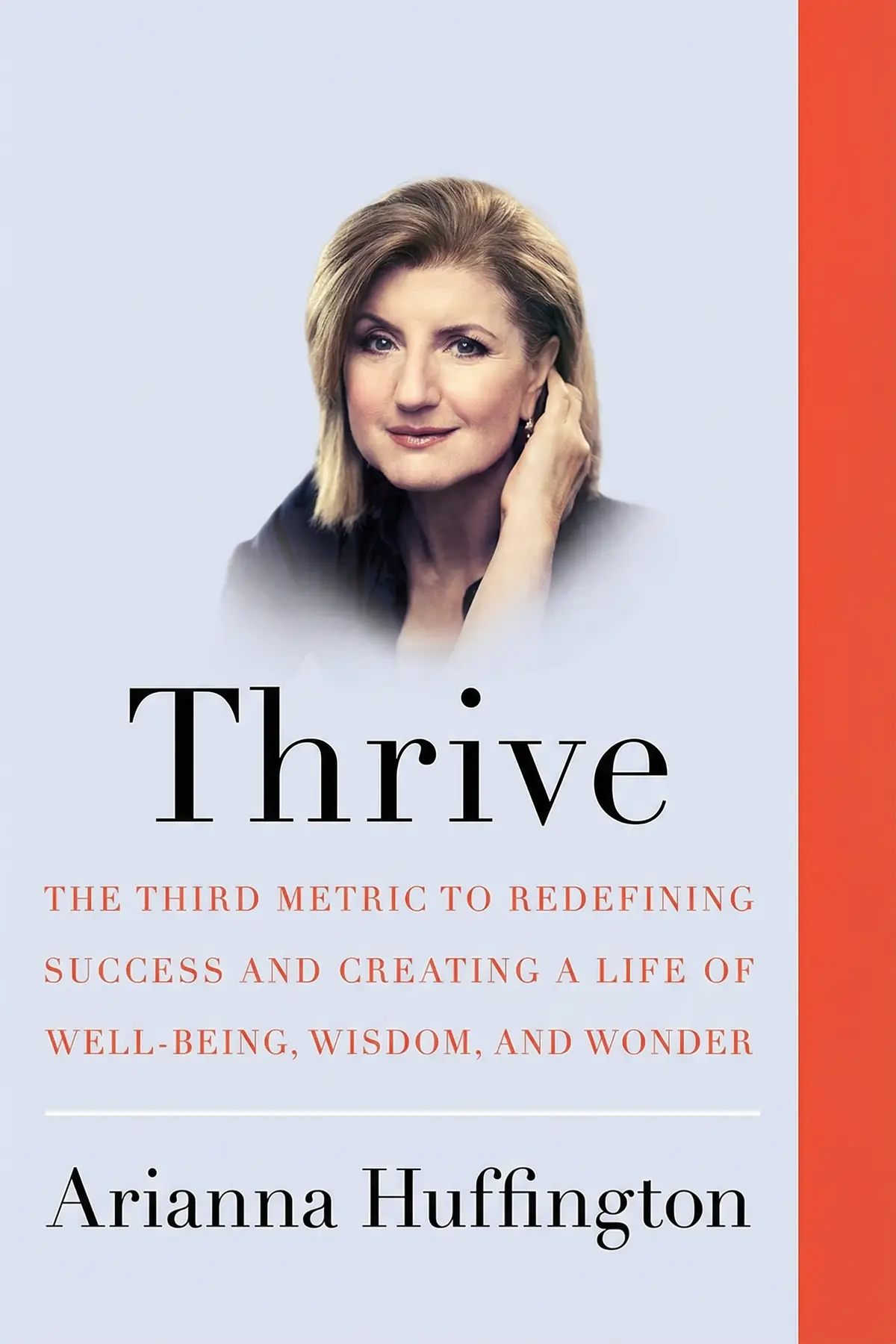
Thrive: The Third Metric to Redefining Success and Creating a Life
Arianna Huffington
 English
Shows why cutting sleep makes people worse at work, school, sport and relationships, not tougher, and offers practical ways to protect your nights, from a 9 p.m. screen curfew to lavender and acupressure.
56 sec
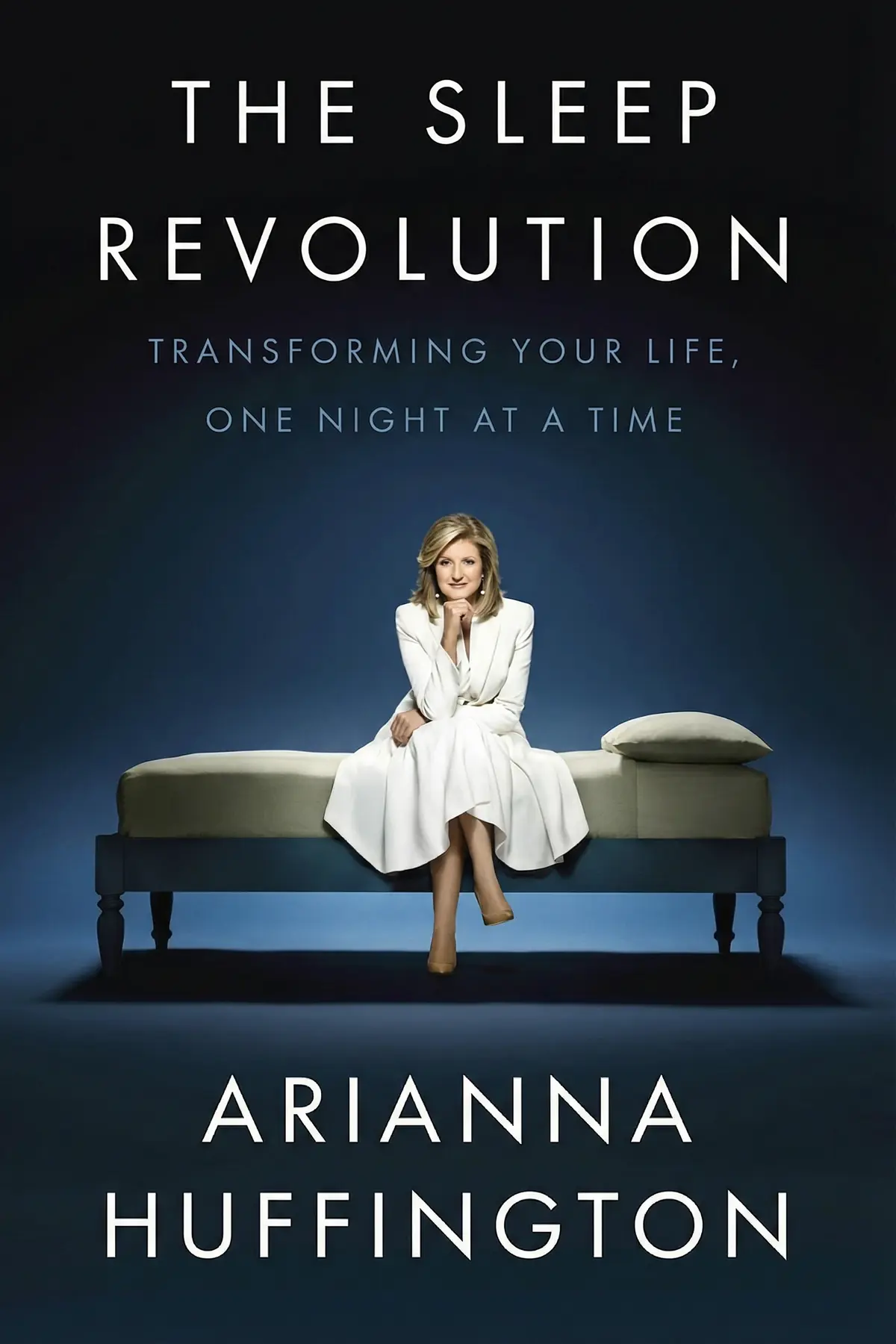
Most busy people treat sleep as the first thing to cut when the day overflows, and many feel a little proud of getting by on six hours. In The Sleep Revolution, Arianna Huffington, who launched The Huffington Post, calls that pride a myth that is doing real harm. Her case is that nothing matters more to our health, happiness and productivity than enough good sleep, and that people who skip it are not tougher, only less effective.
She tests that idea across ordinary life: the office, the classroom, the bedroom, the sports field and the glowing phone beside the pillow. The evidence ranges from a British school that moved its start to 10 a.m. to basketball players who sprinted faster after two extra hours in bed. What you gain is a clear reason to protect your nights, and a few small changes, starting with when the screens go off, that make sleep easier to reach.
1 min 44 sec
A young analyst called his father from his desk in the middle of the night, and the story did not end well. Behind it sits a pattern that touches millions of workers, and some far more than others.
1 min 36 sec
Some of the most celebrated coaches in American football bragged about how little they slept. A researcher who timed basketball players on the court found out what that kind of toughness really costs.
1 min 38 sec
When a newsroom installed rooms for napping, its hardest workers scoffed. Years later, nobody could get a booking. The building itself, it turns out, can steal close to an hour of sleep a night.
1 min 45 sec
Researchers pulled the children out of a morning class and let them lie down. What happened within minutes looked like a medical disorder, and it changes how a sleepy child at breakfast should be seen.
1 min 27 sec
Couples who sleep touching each other report far more happiness together. Yet Huffington argues the shared bed matters less than something else, especially when it comes to desire.
1 min 28 sec
Answering a few emails or watching one more episode feels like relaxing. A psychiatrist explains why the body reads it very differently, and why bedtime can arrive with nothing left to help you sleep.
1 min 28 sec
Pressing on a few points of your ear sounds unlikely as a sleep aid. So does a plant ancient Greek bathhouses relied on. Huffington explains what each one does to a body that will not settle.
1 min 25 sec
The same industry that filled our bedrooms with glowing screens now sells devices that watch over our nights. Huffington sorts out which tools help, and the one thing no gadget can do for you.
1 min 08 sec
Huffington’s argument comes down to one correction. Lost sleep has long been dressed up as dedication: the analyst at his desk at 2:40 a.m., the coach who brags about four hours, the child seated in class by 7:20. Each picture hides a cost, and each study she gathers shows the same truth from another side. Children concentrate better, workers produce more, athletes run faster and couples feel closer when everyone gets enough sleep. Rest belongs inside the work, and so does the case for a sleep revolution.
Her own suggestion for starting is modest. If you sleep fewer than seven hours, give yourself seven or eight for a few nights and notice how you feel and how much you get done the next day. Help those nights along by putting the phone and laptop away by 9 p.m. and reaching for a book, with a little lavender nearby if it calms you. If you run a team or a household, find one rule that makes rest easier for others, a later start or a quiet room.
The cheetah never apologizes for its eighteen hours. You can stop apologizing for your eight.
Many busy people treat sleep as the first thing to cut when the day overflows, and some are quietly proud of running on six hours. Arianna Huffington argues that this pride rests on a myth. In her view, nothing matters more to health, happiness and productivity than enough good sleep. She follows the cost of lost sleep through every part of life. Workaholism has grown, and the working poor feel it most. Schoolchildren pulled out of bed too early fall asleep almost instantly when tested. Offices without windows cost their staff 46 minutes of sleep a night. Partners short on sleep are rarely in the mood for sex, and coaches who boast about sleeping four or five hours a night hurt their players. Basketball players who slept two hours more ran faster and made more three-point shots. Huffington also explains what keeps us awake, above all the phone beside the bed and its blue light, and what helps us sleep: a 9 p.m. screen deadline, acupressure, lavender and a few well-chosen gadgets. Readers get a strong case for treating sleep as part of the work, plus small changes they can test this week.
Professionals who answer email in bed and wear short nights as a badge of commitment.
Managers and parents deciding on start times, nap rooms, home working and school mornings.
Anyone lying awake who wants simple fixes, from a screen curfew to lavender.
Arianna Huffington was born in Athens, Greece, moved to England at 16 and earned a master's degree in economics at Cambridge University, where she became president of the Cambridge Union debating society at 21. She launched The Huffington Post in 2005, which won a Pulitzer Prize in 2012, and later left to focus on Thrive Global, a company built around behavior change. She has written fifteen books, including the international bestsellers Thrive and The Sleep Revolution.
Arianna Huffington
Listeners describe the writing as captivating and polished, highlighting the detailed research and all-encompassing look at the science behind sleep. It serves as an insightful guide for tackling insomnia and refining sleep hygiene habits. That said, the book's pacing draws varied opinions, as some listeners found the content less than convincing.
As a mother who spent years in a fog of exhaustion, reading this was like finally getting permission to prioritize my own health. I’ve lived that "always-on" lifestyle, and this book hit me right where it counts. Huffington isn't just preaching; she's sharing a movement. The statistics she provides about the dangers of drowsy driving and the long-term health consequences of missing those precious 7-8 hours are staggering. I’ve already started implementing her bedtime rituals—moving electronics out of the bedroom is a total game-changer for my anxiety levels. The book is comprehensive, covering everything from the biological mechanisms of REM sleep to the way we treat sleep in our schools. Personally, I think every overworked professional needs to read this to understand that sleep isn't a luxury, it's a fundamental human necessity. Truly life-changing perspective.
Show moreWow, Arianna really hit the nail on the head regarding our collective burnout culture and how it’s literally killing us. As someone who has battled insomnia for years, I found this book to be incredibly validating. It’s not just a list of tips; it’s an exploration of why we struggle to turn our brains off in a world that never stops. The chapters on the history of sleep were fascinating and gave me a new perspective on my own struggles. I especially loved the focus on dream journals and the importance of rituals like dimming the lights an hour before bed. Yes, some of the advice is familiar, but seeing it all laid out with such thorough scientific backing makes it much harder to ignore. This book didn't just help me sleep better; it helped me change my entire mindset about productivity and health. Highly recommended for the modern worker.
Show moreEver wonder how our modern hustle culture actually impacts our biological functions? Huffington does a deep dive into the science and history of rest that I found genuinely enlightening. She doesn't just offer tips; she builds a comprehensive case for why we need to change our societal attitudes toward "burning the candle at both ends." I particularly enjoyed the chapters on dream journals and the specific hormones like ghrelin that affect weight gain. It made me realize that my late-night snacking wasn't a lack of willpower, but a direct result of being sleep-restricted. Some parts felt a bit wordy, and the focus on corporate productivity can feel a bit dry at times, but the overall message is transformative. It's a wake-up call for anyone who thinks five hours of sleep is a badge of honor. Very well-written and engaging overall.
Show moreThe section on the biological impact of sleep deprivation, specifically regarding weight gain and hunger hormones, was worth the price of the book alone. I never realized how much my lack of rest was sabotaging my diet. Learning about how ghrelin and leptin are affected by just a few hours of missed sleep was a massive lightbulb moment for me. The book is a bit dense in places, and some sections on corporate culture could have been trimmed, but the science is presented in a way that is accessible. Huffington makes a compelling argument for a total shift in how we view productivity. I appreciated the specific tips on traveling across time zones and the importance of a wind-down ritual. It’s a very thorough examination of a topic we often take for granted. I'm already sleeping better just by respecting the blue light rule.
Show moreAfter hearing about this on several podcasts, I was curious to see if the revolution was just marketing hype or a real cultural shift. I was pleasantly surprised by how much the book focuses on the systemic issues of our society. It's not just a self-help book about your bedroom; it's a critique of how we value work over health. The data on the multi-billion dollar cost of sleep deprivation to the economy is staggering and makes a great case for why businesses need to change. To be fair, the book does get a bit repetitive in the middle chapters, and I found some of the bedtime ritual suggestions a bit unrealistic for a busy lifestyle. However, the overall tone is enlightening and it definitely motivated me to take my rest more seriously. It's a comprehensive resource that helps with better sleep hygiene.
Show morePicked this up hoping for a solution to my 3 a.m. ceiling-staring sessions, but I left with a history lesson instead. The book is beautifully written and clearly well-researched, but it's more of a cultural manifesto than a practical "how-to" manual. Arianna explains the "why" of sleep deprivation with great passion, citing everyone from Roosevelt to Gwyneth Paltrow. It’s interesting to see how corporate America is finally installing nap rooms, but for a person currently struggling with insomnia, knowing the history of the mattress isn't very helpful. Truth is, the advice boils down to the usual: cool room, no phones, and meditation. I liked the section on sleep hygiene for children, yet I found the overall pacing a bit uneven. It's a solid 3-star read for the research, but skip it if you're looking for a quick fix.
Show moreFrankly, I expected a bit more original insight from such a high-profile author, as the content often felt derivative of existing health blogs. The author spends an enormous amount of time quoting other studies without adding much personal analysis to the conversation. I found the anecdotes about her own life—like her penchant for long baths—to be a bit self-indulgent and repetitive. It’s great that she’s using her platform to promote wellness, but the book is quite padded with filler. Why do we need a chapter on the history of beds? If you are a total novice to the world of sleep science, you might find it useful and enlightening. But for anyone who has read even one article about sleep hygiene, this will feel like a lot of fluff. Still, the research is thorough and it’s a decent summary of the topic.
Show moreLook, we all know we should sleep more, so the real question is whether this book provides enough incentive to actually change our habits. It’s a bit of a mixed bag. On one hand, the research is top-notch and Huffington’s voice is authoritative yet encouraging. On the other hand, the book is quite long and feels like it could have been a very effective long-form essay. She covers the history, the science, and the corporate implications, which is great for context, but it can feel a bit like a college textbook. I did find the discussion on pharmaceutical sleep aids very sobering; it definitely made me rethink reaching for a pill when I can't drift off. In my experience, the practical advice is scattered among a lot of filler, but the core message about the sleep crisis is impossible to ignore.
Show moreThis book feels like a long-form article that was forcibly stretched to meet a publisher's page count requirement. While the core message is vital—we are a sleep-deprived society—the delivery is repetitive. Arianna Huffington spends hundreds of pages trying to convince the reader that sleep is important, which most people picking up the book likely already know. I wanted more practical, science-backed protocols and fewer anecdotes about famous people's bedtime routines. To be fair, her research on the "sleep industry" and the dangers of pharmaceutical sleep aids is quite eye-opening. However, the pacing is sluggish and the writing often feels like a high-quality college thesis rather than a revolutionary guide. If you've already Googled sleep hygiene, you won't find much new ground here beyond the basic advice of avoiding blue light and buying a sleep mask. It's not convincing as a full-length book.
Show moreFinally finished this after several weeks, and I have to say it was the most effective sleep aid I’ve ever encountered—because it was so boring. This is the definition of a padded book. It takes a very simple premise—get 8 hours of sleep and put your phone away—and stretches it into a repetitive, exhausting manifesto. The constant name-dropping of celebrities and CEOs feels out of touch with the average person’s reality. Huffington tells us to take long baths and create a "sleep sanctuary," but most people are just trying to survive their work shifts. There is almost zero new information here for anyone living in the 21st century. It felt like a collection of curated Google searches packaged as a revolutionary text. I really wanted to like this because the topic is so important, but the execution misses the mark in every way.
Show moreArianna Huffington argues that sleep deprivation is not a sign of hard work, dedication or toughness, and that believing otherwise harms us. She shows that children, employees, athletes and couples all do better when they sleep enough, and explains what keeps us awake, especially phones and their blue light, along with practical ways to sleep more and better.
Huffington cites a 2015 survey in which 71 percent of people kept their smartphones beside them at night. Emotional content like social media is linked to worse sleep and more anxiety, and blue light from screens holds back melatonin, so the body does not register that it is time to sleep. Her advice is to put all screens away by 9 p.m. and read a book instead.
Huffington points to several studies. Basketball players studied by Stanford researcher Cheri Mah went from 6.5 to 8.5 hours of sleep and then sprinted 0.7 seconds faster and made more than nine extra three-pointers. Israeli students paid more attention when class moved to 8:30 a.m., and a Stanford study found staff working from home up to 13 percent more productive.
Start with Huffington’s own suggestion: if you sleep fewer than seven hours, try seven or eight for a few nights and notice how you feel and work the next day. Put screens away by 9 p.m., try acupressure on your wrists, ankles and ears with deep breathing, and experiment with lavender or valerian root to find what calms you.
A 2014 University of Hertfordshire study found 94 percent of couples who slept touching were happy together, against 68 percent of those who did not. Huffington notes that two in three couples sleeping apart are still content, and argues that what matters most is that both partners sleep well. Sleep also affects desire: a 2015 study found that each extra hour of sleep made a woman 14 percent more likely to want sex the next day.
AUDIO SUMMARY AVAILABLE
Get the key ideas from The Sleep Revolution by Arianna Huffington, plus 5,000+ more nonfiction titles.