

15 min 42 sec
Available in: English
The Sirens’ Call: How Attention Became the World's Most Endangered Resource
By Chris Hayes
Chris Hayes explains why your focus feels stolen: tech firms, media and politicians profit by grabbing human attention again and again. He traces the personal and democratic costs and shows how commitment devices help you take it back.
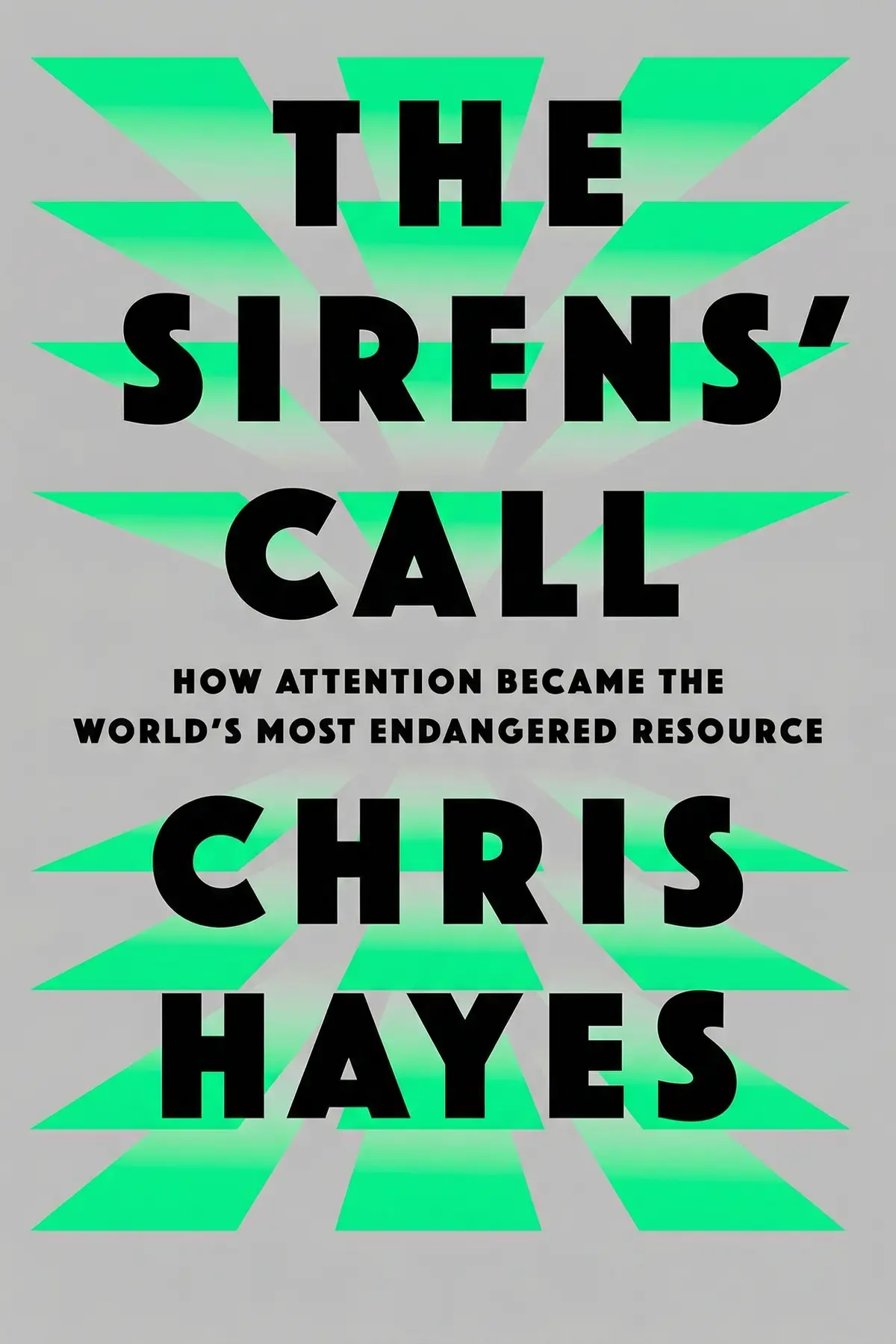
Table of Content
1. Introduction
1 min 05 sec
If you open your phone for one message and surface twenty minutes later feeling vaguely ashamed, the problem may not be your character. In The Sirens’ Call, TV news anchor and author Chris Hayes argues that your focus is being harvested on purpose, because human attention has become one of the most valuable things on Earth to sell. Apple, Google and Facebook compete for it, and so do news outlets, entertainment giants and politicians.
Hayes builds his case on an old story. In Homer’s Odyssey, the Sirens sang so beautifully that sailors steered onto the rocks to keep listening. Today’s Sirens are notifications, feeds and headlines, and they work on three weak spots in us: attention is easy to grab, we dislike being alone with our thoughts, and we crave being noticed. Seeing those weak spots clearly is what lets you start choosing where your attention goes, in your own day and in public life, instead of leaving the choice to the highest bidder.
2. Understand why your phone keeps winning your attention
1 min 43 sec
Tech companies have discovered they never need to keep your interest for long. A crowded party, a shattered tray of glasses and a slot machine explain the strategy behind nearly every app on your home screen.
3. Learn to sit with your own thoughts again
1 min 52 sec
Some people in one experiment chose physical pain over a few quiet minutes with their own minds. Hayes traces that strange preference back centuries, and shows how our screens have made it steadily worse.
4. Stop chasing attention from strangers
1 min 59 sec
Being ignored can hurt more than being criticized, and social media has turned that ancient need into a numbers game. A failing salesman in a classic American play shows where the chase leads.
5. Name the emptiness behind endless scrolling
2 min 01 sec
Former Taliban fighters handed desk jobs ended up doing what office workers everywhere do. Their story, read through a nineteenth-century thinker, explains a hollow feeling many people get after an hour online.
6. Spot when a helpful tool starts using you
1 min 57 sec
The early internet promised to connect everyone to all human knowledge. Then search results filled with ads and inboxes overflowed. Hayes argues this decay follows a rule, and it applies to almost every app you depend on.
7. See how outrage beats argument in public life
2 min 00 sec
Two politicians once spent twelve hours making their case to patient crowds. Today the winning move looks very different, and Hayes argues the shift rewards tactics that make honest debate almost impossible.
8. Tie yourself to the mast before the song starts
1 min 57 sec
Odysseus did not trust his own willpower, and that was his strength. Hayes shows how video stores, vinyl records and printed newspapers point to practical ways of protecting focus, for yourself and for your children.
9. Conclusion
1 min 08 sec
Hayes turns a private embarrassment into a public story. The minutes lost each morning are the visible edge of a system that profits from three human needs: the pull of anything sudden, the wish to escape our own thoughts, and the hunger to be seen. Once attention becomes a product, people start to feel like raw material, useful tools fill with noise, and the loudest voice outranks the best argument.
Odysseus never pretended he was immune to the song. He wanted to hear it, and he planned for his own weakness before the ship came close. That is the stance Hayes recommends. Decide in a calm moment where your attention should go, then build something that holds you to it when the pull arrives: a device left out of reach, a record played whole, an evening with people who notice you back. Beyond your own day, back the spaces and rules that keep children’s attention from being bought and sold.
The Sirens are still singing. What matters is who decides what you listen to.
About this book
What is this book about?
Most people treat the hours lost to their phones as a private failing. Chris Hayes, a TV news anchor and author, argues that they are the predictable result of a system. Attention has become one of the most valuable resources in the world, and Apple, Google and Facebook compete for it alongside news outlets, entertainment companies and politicians. Hayes explains why that contest is so one-sided. Attention is far easier to grab than to hold, we are deeply uncomfortable alone with our thoughts, and we crave being noticed. Drawing on Homer's Sirens, Blaise Pascal, Karl Marx and Arthur Miller's Willy Loman, he shows how the attention economy leaves people feeling alienated, turns useful tools like search engines into noise, and rewards the loudest voices in politics over the most persuasive ones. The book ends with a way forward. Like Odysseus tied to the mast, readers can build commitments in advance, from physical media and simpler phones to community spaces and rules that protect children, so their attention goes where they actually want it.
Book Information
Who it's for
Phone-distracted professionals
Professionals who lose hours to their phones and want to understand why willpower keeps failing.
Worried parents and teachers
Parents and teachers worried about what social media is doing to children's focus and learning.
Citizens frustrated by outrage
Citizens frustrated that online politics rewards outrage and want to see the system behind it.
About the Author
Chris Hayes
Chris Hayes is an American political commentator, TV news anchor and author, born in 1979. He presents the weekday show All In with Chris Hayes and the weekly podcast Why Is This Happening?, and is editor-at-large at The Nation. He was a fellow at Harvard University's Edmond J Safra Foundation Center for Ethics in 2010 and 2011, and he is a New York Times bestselling author whose earlier books include Twilight of the Elites and A Colony in a Nation.
Ratings & Reviews
Ratings at a glance

What people think
Listeners view this work as crucial and evocative, highlighting its strong analysis and polished writing. They find it to be a smooth read filled with valuable perspectives, and one listener points out it is essential for grasping the nuances of the information and misinformation age. Even though the exploration of attention draws varied reactions, listeners value the book’s relevant and punctual commentary.
Top reviews
Suda
Hayes delivers a punchy, urgent dissection of the forces currently shredding our collective focus. While the 'social media is bad' trope feels exhausted, he elevates the conversation by linking our digital malaise to broader economic structures and historical precedents like the Industrial Revolution. I found his analysis of 'attentional warlordism' particularly chilling yet accurate in describing our current political slurry. It isn't just a self-help guide to putting your phone down; it’s a systemic critique that asks us to value our internal lives as something more than a commodity for a tech giant to harvest. The writing is incredibly fluid, making complex sociological theories accessible without feeling like he's talking down to the reader. Truth be told, I haven't looked at my notifications the same way since finishing the final chapter. It's an essential read for anyone feeling the 'enshittification' of their daily digital experience.
Show moreKoi
Finally got around to reading this and it’s easily one of the most thought-provoking books on my shelf this year. Hayes manages to take a topic that feels 'done'—the way the internet ruins our brains—and makes it feel fresh by framing attention as our very essence. The way he discusses the commodification of our focus through the lens of Marx was a total 'lightbulb' moment for me. It’s not just about being distracted; it’s about being alienated from our own lives. The prose is sharp, fast-paced, and filled with the kind of intellectual curiosity that makes you want to go out and buy every book he references. In my experience, most tech-critique books are either too dry or too 'doomer,' but this hits the perfect middle ground. It’s an essential manual for surviving the information and misinformation age without losing your mind.
Show moreTantipat
Chris Hayes has written a masterpiece that perfectly captures the anxiety of living in the 2020s. He argues convincingly that our attention isn't just a commodity to be sold, but the actual substance of our lives—the very thing that makes us who we are. This perspective shift is profound. When we let apps steal our focus, we are literally losing ourselves. Not gonna lie, some of the descriptions of how AI is going to flood our world with 'crap' made me want to throw my phone in the ocean. But the book isn't just a rant; it's a deeply researched, brilliantly written exploration of what it means to be human in a digital world. It’s easily one of the most important books I've read in years, and I’ve already bought copies for my entire family.
Show moreErn
If you feel like your brain has been turned into a 'simple, monotonous productive force' by your screen, you need to read this immediately. Hayes bridges the gap between high-level theory and the everyday reality of being a parent and a worker in a world that never stops screaming for your attention. I loved the section where he invokes the old labor slogan: 'eight hours for what we will.' It’s a powerful reminder that our leisure time belongs to us, not to the tech giants. The analysis is sharp, the tone is urgent, and the message is one we desperately need to hear before we completely lose the ability to think deeply. This is an essential guide for anyone trying to navigate the madness of the current media landscape.
Show moreDiego
Why are we so perpetually distracted even when we know exactly how the apps are manipulating us? The Sirens' Call attempts to answer this by digging into the history of media, drawing lines from Neil Postman’s critiques of TV to the modern algorithmic nightmare. Hayes is a gifted communicator, and he handles the transition from personal anecdote to heavy psychological research with surprising grace. Personally, I appreciated the focus on how attention isn't just a personal resource, but the very substance of a human life. However, I’ll admit the section on Donald Trump and Elon Musk felt a bit repetitive if you already follow Hayes’ work elsewhere. Even with that slight political detour, the book serves as a fantastic wake-up call. It’s a thoughtful, well-written examination of why our brains feel so broken in 2025 and what collective action might actually look like.
Show moreManika
The chapter on the 'enshittification' of search engines and social feeds really hit home for me. Hayes captures that specific frustration of watching a once-useful tool like Google or Facebook turn into a cluttered mess of ads and AI-generated pablum. I think he’s at his best when he’s explaining how the battle for our attention has evolved from 24/7 cable news into the current 'attentional warlordism.' My only real gripe is that he spends quite a bit of time on Donald Trump, which felt a little bit like he was falling into the same trap he’s warning us about. Still, the core argument is incredibly compelling and well-articulated. It’s an easy read that doesn't sacrifice intellectual depth. I’d recommend it to anyone who feels like they’re losing the ability to lose themselves in a good book or a deep thought.
Show moreRania
Look, we all know our phones are making us twitchy, but Hayes digs into the why in a way that feels genuinely urgent. He avoids the typical 'tech doomerism' by providing a nuanced look at how we got here, moving from the Industrial Revolution to the rise of the smartphone. The writing style is conversational yet deeply analytical, which kept me engaged through some of the denser sociological sections. Gotta say, I really appreciated his honesty about his own struggles with focus, especially as someone who works in the heart of the media machine. While the solutions section felt a little brief and optimistic, the diagnosis of the problem is spot on. It’s a welcome wake-up call that reminds us that our time is finite and our attention is the most valuable thing we own.
Show moreKru
As an MSNBC viewer, I was excited for this, but I have mixed feelings now that I’ve finished it. The book is definitely well-written and Hayes’ passion for the topic is obvious on every page. He makes some brilliant points about the alienation we feel when our attention is turned into a simple, monotonous productive force for advertisers. But, to be fair, a lot of this territory has been covered more deeply by authors like Cal Newport or Jenny Odell. At times, the narrative felt a bit disorganized, jumping from labor history to his kids' iPad habits without a clear bridge. It's a decent primer for someone who hasn't thought much about the attention economy, but seasoned readers of this genre might find it a bit redundant. I was hoping for more concrete solutions rather than the brief, somewhat farfetched systemic suggestions offered at the very end.
Show moreAkosua
To be fair, I went into this with very high expectations because I usually enjoy Hayes' commentary. Parts of the book are brilliant—especially his comparison of the modern internet to a failed state where various 'warlords' are fighting for our focus. However, the book often feels like it's trying to do too much at once. Is it a history of media? A political manifesto? A parenting guide? It meanders quite a bit, and some of the examples felt like he just pulled them from his own Twitter feed. I also felt like the ending was a bit of a letdown; telling us to 'screw capitalism' is a bit of a vague solution to such a massive, ingrained technological problem. It’s a good read, but perhaps not the groundbreaking masterpiece some are claiming it to be.
Show moreSomsak
This book is basically a collection of 'vibes' and anecdotes masquerading as a rigorous study of technology. If you have used a smartphone at any point in the last decade, you already intuitively understand 90% of what is being argued here. Frankly, the author relies way too much on cherry-picked stats and his own 'reporter's intuition' rather than providing novel insights into the digital age. I found the unrelenting focus on his own political bugbears to be exhausting and somewhat hypocritical, given he’s warning us about the traps of the attention economy while leaning into them. It felt less like a book and more like a series of interconnected op-eds that desperately needed a more aggressive editor. If you want a real deep dive into this topic, stick to Neil Postman or Johann Hari. This version is just 'attention economy for beginners' with a heavy dose of cable news bias.
Show moreQuestions about this book
What is The Sirens' Call by Chris Hayes about?
Hayes argues that human attention has become one of the world’s most valuable resources, fought over by tech companies, media outlets and politicians. Using the Sirens from Homer’s Odyssey as his guiding image, he explains how these forces exploit the way our minds work, why that leaves people feeling alienated, how it degrades public debate, and how deliberate commitments can help us take our attention back.
Why is it so hard to stop checking my phone, according to Hayes?
Hayes gives three reasons. Attention is much easier to grab than to hold, so apps simply seize it again and again. We are uncomfortable alone with our thoughts, an idea he traces to Blaise Pascal and a 2014 study where some people chose electric shocks over quiet thinking. And we crave social attention, which social media offers in an endless but empty supply.
How does the attention economy affect politics?
Hayes contrasts the Lincoln-Douglas debates, which gave twelve hours over four days to detailed argument, with a present where grabbing attention matters more than persuading. He points to Donald Trump as a master of capturing attention and describes how trolling, whataboutism and conspiracy theories spread. Platforms like Facebook, X and TikTok, he argues, act as profit-driven attentional regimes.
How can I reclaim my attention using The Sirens' Call?
Hayes recommends commitment mechanisms, modeled on Odysseus tying himself to the mast before hearing the Sirens. Decide in advance where your attention should go and make the distraction harder to reach: physical books and newspapers, vinyl albums played whole, or a simpler phone. He also supports noncommercial community spaces and rules limiting children’s exposure to social media.
Readers also enjoyed

Abortion: Our Bodies, Their Lies, and the Truths We Use to
Jessica Valenti


Adults in The Room: My Battle With Europe’s Deep Establishment
Yanis Varoufakis



Age of Anger: A History of the Present
Pankaj Mishra

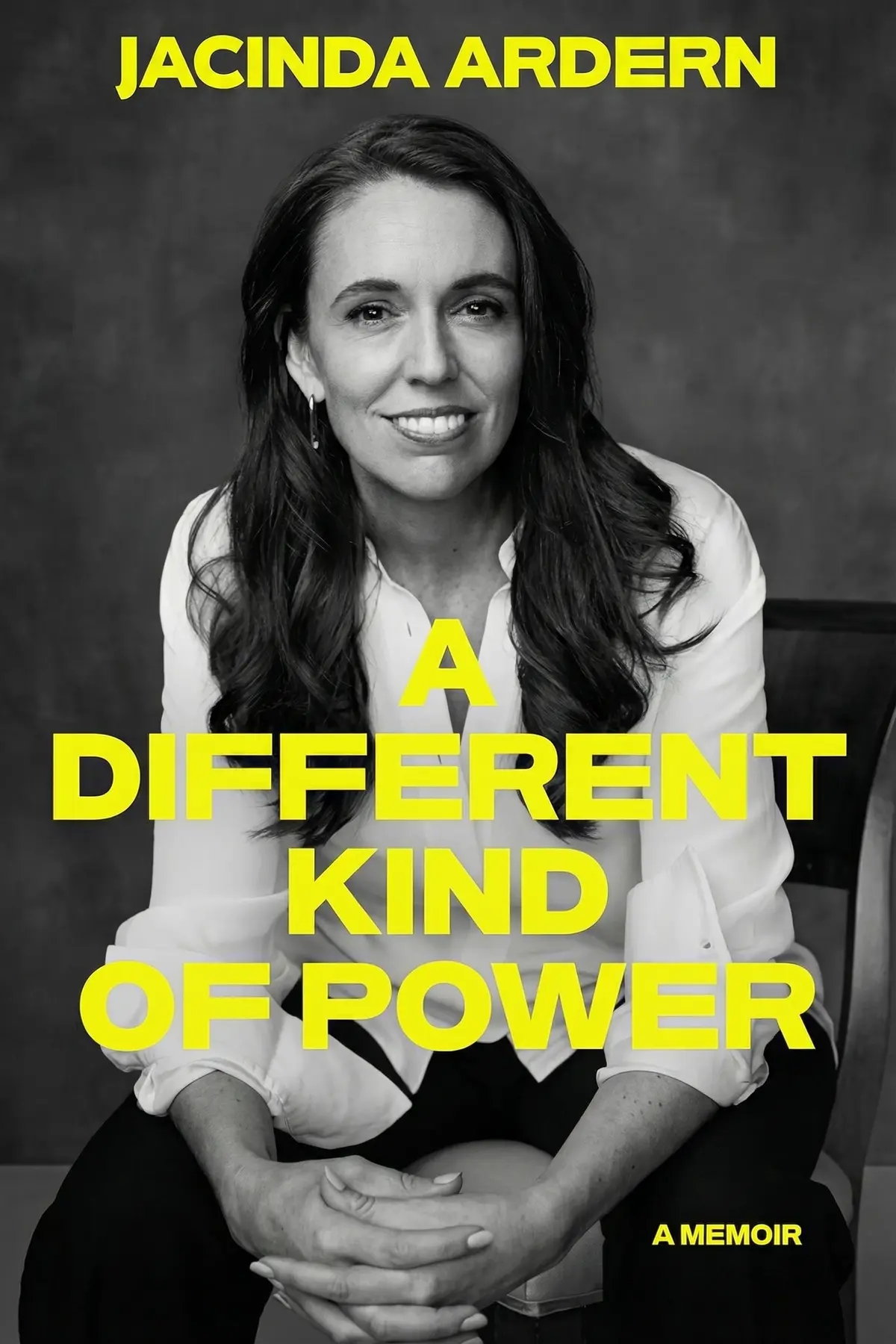
A Different Kind of Power: A Memoir
Jacinda Ardern
AUDIO SUMMARY AVAILABLE
Listen to The Sirens’ Call in 15 minutes
Get the key ideas from The Sirens’ Call by Chris Hayes, plus 5,000+ more nonfiction titles.
- 5,000+ titles
- Listen as much as you want
- 7-day free trial
- Cancel anytime









