
15 min 28 sec
Available in: English
 ไทย
EnglishไทยThe Silk Roads: A New History of the World
Frankopan retells world history as a story of trade, showing how control of the routes linking East and West, from ancient Persia to modern oil and rail, has decided who rises, who falls and why.
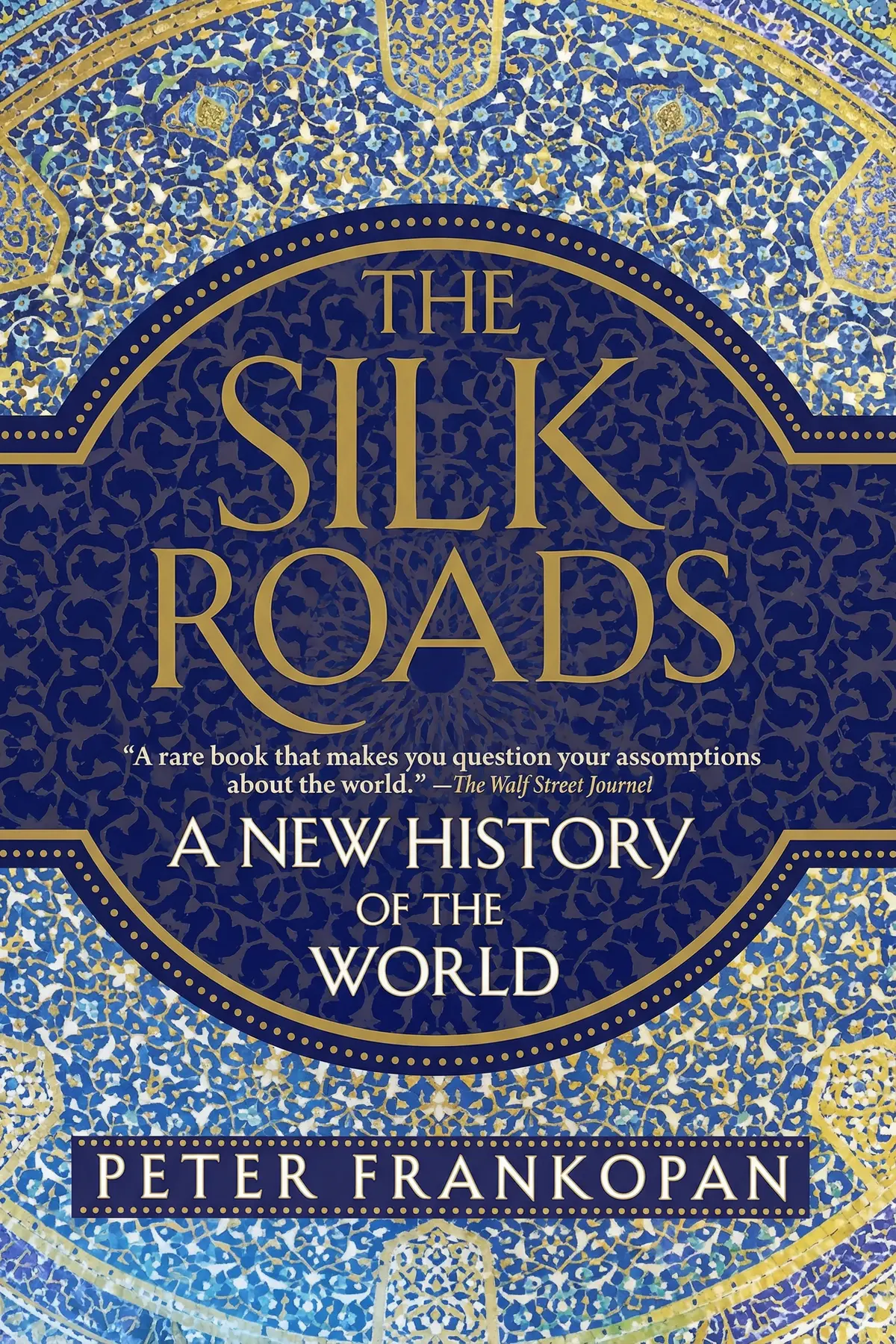
Table of Content
1. Introduction
1 min 02 sec
If news from Iran, Ukraine or Central Asia feels like noise without a pattern, Peter Frankopan offers one: follow the trade. In The Silk Roads, the Oxford historian argues that world history is best told as a story of commerce, and that whoever controls the routes linking East and West shapes the globe. Kings and generals matter, but in his account they are small pieces of a far larger puzzle.
The routes began in ancient Mesopotamia and never stopped changing. Marco Polo followed one version from Italy to China. Frankopan prefers the plural, the Silk Roads, for a network rebuilt in phase after phase.
From Persian roads to the Crusades, the Black Death, twentieth-century oil deals and today’s railways from China to Germany, that one pattern keeps returning. Hold on to it and thousands of years of history become one story you can retell, along with a clear reason why the lands between Europe and China matter again.
2. Read world history through its trade routes
1 min 57 sec
Kings and battles make history feel like a string of dramas. Frankopan points somewhere less glamorous, to a web of ancient roads, and shows that what traveled along them reshaped belief as much as it filled markets.
3. See why the crossroads grow rich and learned
2 min 05 sec
While Western Europe struggled through upheaval, a new faith from Arabia came to hold the routes linking the Mediterranean to China. What followed shows how a single word in English carries the memory of a cruel trade.
4. Discover the plague that helped Europe rise
1 min 45 sec
A disease killed more than a third of Europeans and three quarters of one great trading city. Yet the collapse everyone dreaded never came, and the reason changed who held power across the continent.
5. Ocean routes that put Europe at the center
1 min 56 sec
A sailor looking for India found two continents in his way, and the new sea lanes shifted wealth toward Europe. Frankopan counts the price paid elsewhere, and traces an invention most investors still rely on.
6. Spot the grain and fuel behind world wars
1 min 56 sec
Alliances built to keep Russia away from India helped push Europe into war in 1914. Decades later, Hitler kept one aim hidden from Stalin, and its failure had consequences darker than a lost campaign.
7. Learn how one oil deal doomed a monarchy
2 min 03 sec
In 1901 a Persian ruler signed away his country’s oil for cash, shares and a slice of profits. Frankopan follows that signature through coups, hostages and attacks reaching across most of the century.
8. Watch the world's center shift back east
1 min 43 sec
Western headlines about Ukraine, Syria and the Caucasus mostly describe chaos. Frankopan reads the same region through its resources, railways and new museums, and reaches a conclusion about where the world is heading.
9. Conclusion
1 min 01 sec
The Silk Roads changes the camera angle on the past. Instead of following emperors, it follows caravans, ships, pipelines and trains, and from that height one scene keeps repeating, from silk on the steppes to oil in Persia: whoever holds the crossroads gathers wealth and ideas, and draws rivals who want them.
That lens works on the present. When a conflict seems to be only about faith or ideology, look for the grain, oil or road underneath it, the way Hitler’s war aimed at Ukrainian wheat. When you weigh a deal, remember the Shah’s 16 percent and ask who will be paying for it fifty years on. And when the lands between Europe and China appear in the news as a place of disorder, recall that for most of history they were the center, and that Frankopan expects them to be again.
The silk trade is long gone. The roads remain, and someone is always building the next one.
About this book
What is this book about?
Most histories of the world follow emperors, generals and great battles. Peter Frankopan follows the money instead. His argument is that the network of trade routes linking East and West explains more about the past than any single ruler. It first formed in ancient Mesopotamia and was later known as the Silk Roads, and whoever controls it controls much of the globe. The book moves from Persia and Han China joining their roads, through the Muslim golden age, the Crusades, the Mongol conquests and the Black Death, to the European voyages that made Europe the hub of world trade at a terrible cost to others. It then follows the same logic into the twentieth century: rivalries that led to the First World War, Hitler's drive for Ukrainian grain, and an oil deal signed in Persia in 1901 whose effects ran to the Iranian Revolution and beyond. Readers gain one clear thread for making sense of thousands of years of history. They also get a fresh way to read today's news from the lands between Europe and China, which Frankopan sees rising once again.
Book Information
Who it's for
Wanting history behind headlines
Readers who follow news from Iran, Ukraine or Central Asia and want the long history behind it.
Students and history buffs
Students and history lovers looking for one thread that links ancient Persia to modern oil politics.
Trade, energy, logistics professionals
Professionals in trade, energy or logistics curious how routes have shaped power for thousands of years.
About the Author
Peter Frankopan
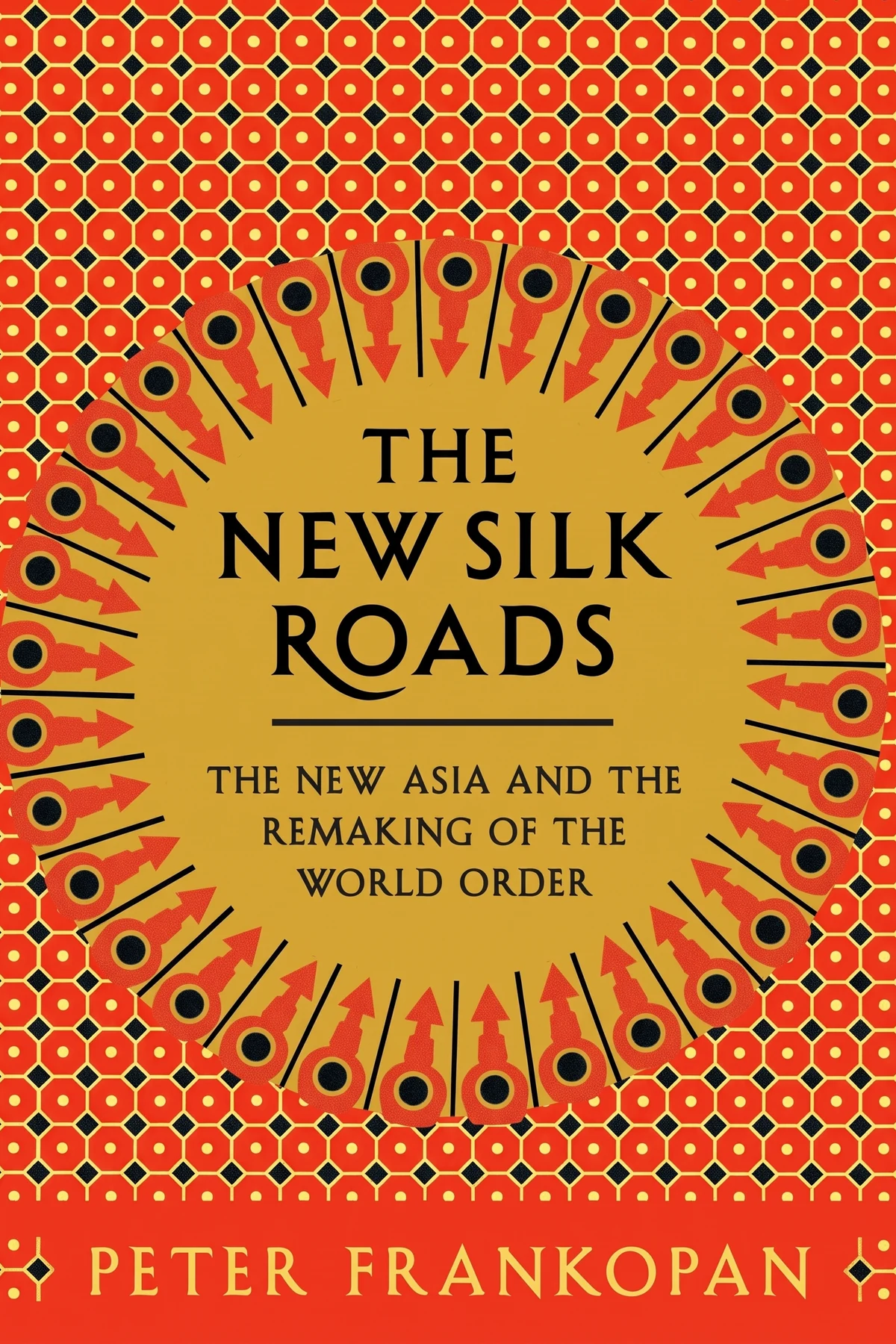
Peter Frankopan is a British historian, born in 1971, who holds a chair in global history at Worcester College, Oxford, and directs the Oxford Centre for Byzantine Research. He is also professor of Silk Roads studies at the University of Cambridge; he studied history at Jesus College, Cambridge, and later completed a doctorate at Corpus Christi College. He writes for the national and international press about what history can tell us about the present, and his work has been translated into twelve languages. He also wrote The New Silk Roads.
Ratings & Reviews
Ratings at a glance
What people think
Listeners find this history book captivating, with one remarking that it flows like a novel, and value the meticulously researched material that offers fresh perspectives and clarifies past occurrences. The prose is simple to track, and listeners characterize the work as being as engrossing as any piece of fiction. They commend the excellent storytelling and compelling viewpoint, while one review emphasizes how the book offers a more profound grasp of locations they have traveled to.
Top reviews
Jom
Finally got around to Peter Frankopan’s massive tome, and I must say the narrative flow is absolutely superb. While most history books feel like a dry slog through dates and dusty names, this reads with the propulsive energy of a high-stakes political thriller. It completely reframes how we view the "middle" of the world, shifting the spotlight away from the usual Greco-Roman tropes to the vibrant heart of Eurasia. I particularly loved the exploration of how trade and faith moved along these ancient veins. Truth is, I hadn’t realized how many of our modern global struggles have roots in the shifting power dynamics of the 15th-century silver trade or 20th-century oil politics. My only tiny gripe is that it covers so much ground that some specific cultures feel a bit glossed over in the rush. Still, it’s a brilliant, eye-opening journey that makes the complex story of our world feel tangible and deeply interconnected.
Show moreLincoln
As someone who has always been fed a steady diet of Eurocentric history, this book felt like a much-needed course correction. Frankopan argues that the center of gravity has always been the region between the Mediterranean and the Himalayas, and his evidence is quite compelling. The way he links the flow of precious metals from the Americas to the economic crises in China was a revelation for me. It’s an engaging read, moving away from the "Dark Ages" myth to show a flourishing Islamic and Persian world that was far ahead of Europe for centuries. To be fair, he does occasionally seem to go out of his way to bash Western policy, particularly when discussing the 20th-century Middle East. While some of the criticism is definitely deserved, it occasionally felt a bit one-sided. Regardless, the writing is lucid and the breadth of research is undeniably impressive for a single volume.
Show moreWatcharin
Wow, I am genuinely stunned by the sheer scale of this book and how Frankopan manages to keep the reader hooked through thousands of years of human history. It’s rare to find a non-fiction book that feels as entertaining as a novel, but the prose here is just so fluid and evocative. By centering the story on Central Asia, the author makes you realize how peripheral Western Europe was for the vast majority of human existence. The chapters on the spread of religions and the impact of the Black Death were particularly haunting and insightful. It really helps you understand why the Middle East remains such a volatile powder keg today after centuries of being treated as a chessboard for imperial powers. It’s an essential read for anyone trying to make sense of the modern world's shifting power structures. This is the kind of book that stays with you long after you’ve turned the final page.
Show moreKet
Ever wonder why we focus so much on the Atlantic when the real action for most of history was happening in the East? Frankopan’s masterpiece provides the answer with a clarity that is frankly refreshing. He weaves together economics, religion, and warfare into a seamless tapestry that rivals Yuval Noah Harari’s Sapiens in its ability to change your worldview. The research is meticulous, yet the author never lets the footnotes get in the way of a good story. I was particularly fascinated by the discussion of how the silver trade fundamentally altered the Ming Dynasty and the eventual rise of the West. It’s a sobering look at how greed and the pursuit of resources have dictated human movement since the time of Alexander. This isn't just a history of a region; it’s a history of human ambition and the interconnectedness of our species. It’s easily one of the most important books I’ve read in the last decade.
Show moreAlice
After hearing so many people rave about this, I finally dived in and I’m so glad I did. It’s a total shift in orientation that makes you look at a map of the world in a completely different way. The way the author traces the development of the "Silk Roads" not just as trade routes, but as pathways for ideas, plagues, and empires is nothing short of masterful. I found the sections on the slave trade in the Islamic world to be particularly eye-opening and well-handled. While some critics say it’s too "West-centric" toward the end, I think Frankopan is just highlighting how the West's interference has shaped the region's modern trajectory. The prose is elegant and the pace is perfect for such a massive subject. It’s an illuminating and often disheartening look at the cycles of history, but it’s absolutely necessary reading for anyone who wants to understand the global stage today.
Show moreKevin
Picked this up for a book club and was surprised by how quickly I flew through such a thick volume. The author has a real talent for picking out those "sticky" historical anecdotes that make the past feel alive, like the story of the Khazar ruler choosing Judaism to avoid picking sides between Christians and Muslims. It’s a powerful perspective that challenges the idea that "progress" only happened in the West. My only complaint is that the title is slightly misleading; it’s less about the actual Silk Roads and more about general history viewed from a specific geographic lens. Also, the final chapters on the 20th century felt a bit rushed compared to the earlier, more detailed sections on the medieval era. However, if you want a book that explains the "why" behind global shifts in wealth and power, this is a fantastic place to start. It’s certainly more readable than any textbook I ever had.
Show moreWaree
The chapter on the "Road to Gold" alone makes this book worth the price of admission. Frankopan does an incredible job illustrating how the discovery of the New World impacted the Silk Road regions, creating a globalized economy much earlier than most people realize. Personally, I appreciated the focus on the Persian and Islamic contributions to science and medicine during Europe's leaner years. It’s a dense read, sure, but the writing is so clear that it never feels overwhelming. I did feel that the Ottoman Empire was brushed over a bit too quickly, which seemed like a missed opportunity given their central role in the region. But look, covering 2,000 years in one book is a Herculean task, and the author handles it with more grace than most. It’s a thought-provoking, well-researched piece of scholarship that deserves all the praise it has been getting lately.
Show moreClaire
Look, this is a frustrating book because it’s brilliant in parts but maddeningly inconsistent in others. Frankopan is a gifted writer, and his ability to synthesize vast amounts of information into a readable narrative is impressive. However, his "center of the world" thesis often feels like he’s trying to fit a square peg into a round hole. He dismisses early European history a bit too flippantly for my taste, and the claim that the Renaissance was basically just a byproduct of Eastern riches felt a little hyperbolic. To be fair, the sections on the "Great Game" and the lead-up to WWI are some of the best historical writing I’ve encountered recently. But by the time we got to the detailed breakdown of the Iran-Contra affair, I felt like I was reading a completely different book. It’s a useful resource, but you have to be willing to sift through some of the author’s more biased interpretations.
Show moreMingkwan
Not what I expected when I saw the title, which I find to be a bit of a misrepresentation of the actual content. If you are looking for a granular study of camels, silk, and specific merchant logs, you are going to be disappointed because this is really a political history of the world. Frankopan tries to cover everything from Alexander the Great to the recent wars in Iraq and Afghanistan, but the scope is almost too ambitious for its own good. At times, the "Silk Road" framing feels like a forced gimmick to tie together a standard, if slightly reoriented, world history. I found the sections on the Mongols and the Khazar conversion to Judaism fascinating, but the author often jumps from event to event without enough deep analysis. It is a useful enough overview for a general reader, but serious history buffs might find it a bit superficial in its treatment of China and India.
Show morePatcharaporn
This book was a massive letdown for me, mainly because it feels more like an exercise in branding than a cohesive history of the Silk Roads. The author claims to offer a "New History of the World," yet he often views these eastern regions through what another reviewer aptly called Union-Jack-striped goggles. Much of the narrative eventually devolves into a critique of US and British foreign policy in the Middle East, which is fine, but it’s not what I signed up for. I wanted to learn about the actual trade routes, the architecture, and the daily lives of the steppe peoples, not read a 500-page summary of geopolitical blunders. Furthermore, there are some distracting errors—like misattributing stories from the Ramayana to the Mahabharata—that make me question the depth of the scholarship in certain areas. It’s an entertaining read if you want a fast-paced summary, but it lacks the nuance I was hoping for.
Show moreQuestions about this book
What is the main idea of The Silk Roads by Peter Frankopan?
Frankopan argues that world history is best told as a story of trade rather than of kings and battles. The routes linking East and West, which took shape in ancient Mesopotamia and later became known as the Silk Roads, carried goods, ideas and religions. In his view, whoever controls these routes controls much of the globe, from the Persian Empire and the Mongols to European trading companies and twentieth-century oil powers.
Why does Frankopan call them the Silk Roads, in the plural?
The famous Silk Road that Marco Polo followed from Italy to China was only one phase of a much older and constantly changing network. Its routes were added to, rebuilt and redirected over thousands of years as empires rose and fell. Speaking of many roads captures that this was a living system, not a single path, and that it still exists today in pipelines and railways.
How did the Black Death help Europe, according to The Silk Roads?
The plague traveled along the trade routes from the Asian steppes and killed more than a third of Europe’s population, including about three quarters of Venice’s people in 1347. Yet the feared collapse never came. With fewer workers, peasants gained power and landowners lost it, wealth spread more evenly and interest rates fell. That stimulated the economy and new military and naval technology, preparing Europe’s age of ocean voyages.
What does The Silk Roads say about Iran and oil?
In 1901 the Shah of Persia gave the Briton William Knox D’Arcy exclusive oil and gas rights for 60 years, for cash, shares and 16 percent of profits. The company became BP, Britain grew rich and Persians received little. Frankopan traces a line from that deal through the 1953 CIA coup against Prime Minister Mossadegh to the 1979 revolution that overthrew the Shah and ended American influence in Iran.
What does Frankopan predict for the Silk Roads region?
He sees the lands between Europe and China rising again despite conflicts in Ukraine, Syria and the Caucasus. The region holds oil, gas, coal and rare earth minerals, its cities are booming, and new roads, railways and pipelines connect it to Europe and China. Frankopan expects China’s influence there to grow and the West’s to decline, as Chinese money funds much of the new infrastructure.
Featured in
Readers also enjoyed

A Splendid Exchange: How Trade Shaped the World
William J. Bernstein

A Spy Among Friends: Philby and the Great Betrayal
Ben Macintyre


1491: New Revelations of the Americas Before Columbus
Charles C. Mann

A Year in the Life of William Shakespeare: 1599
James Shapiro

1929: Inside the Greatest Crash in Wall Street History--and How It
Andrew Ross Sorkin
Age of Anger: A History of the Present
Pankaj Mishra

A Biography of Loneliness: The History of an Emotion
Fay Bound Alberti
Agent Sonya: The Spy Next Door
Ben Macintyre
AUDIO SUMMARY AVAILABLE
Listen to The Silk Roads in 15 minutes
Get the key ideas from The Silk Roads by Peter Frankopan, plus 5,000+ more nonfiction titles.
- 5,000+ titles
- Listen as much as you want
- 7-day free trial
- Cancel anytime









