

13 min 38 sec
Available in: English
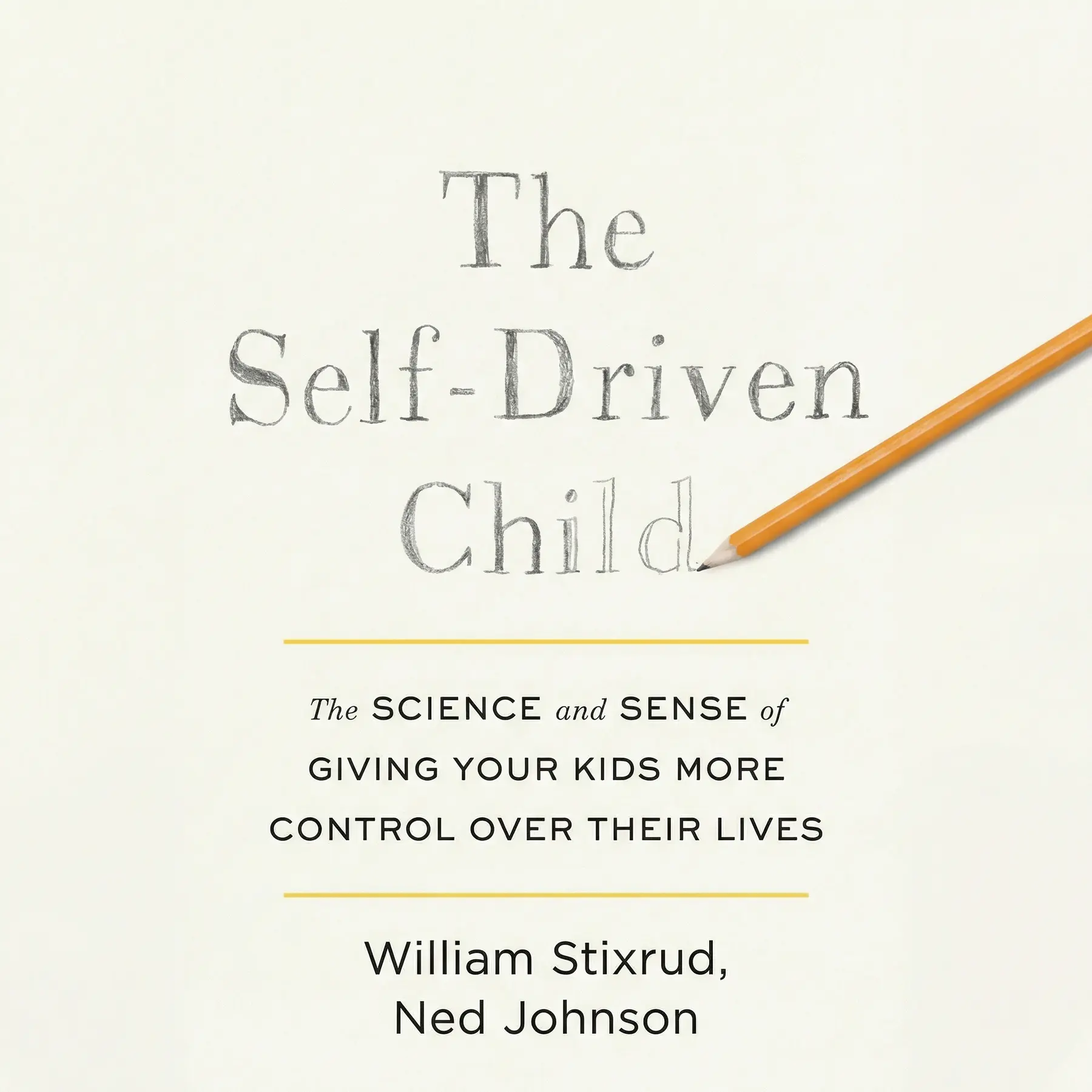
The Self-Driven Child: The Science and Sense of Giving Your Kids More Control Over Their Lives
Shows parents why children become anxious and unmotivated when adults control everything, and how acting as a calm consultant who shares information and lets kids decide builds their motivation, judgment and readiness for adult life.
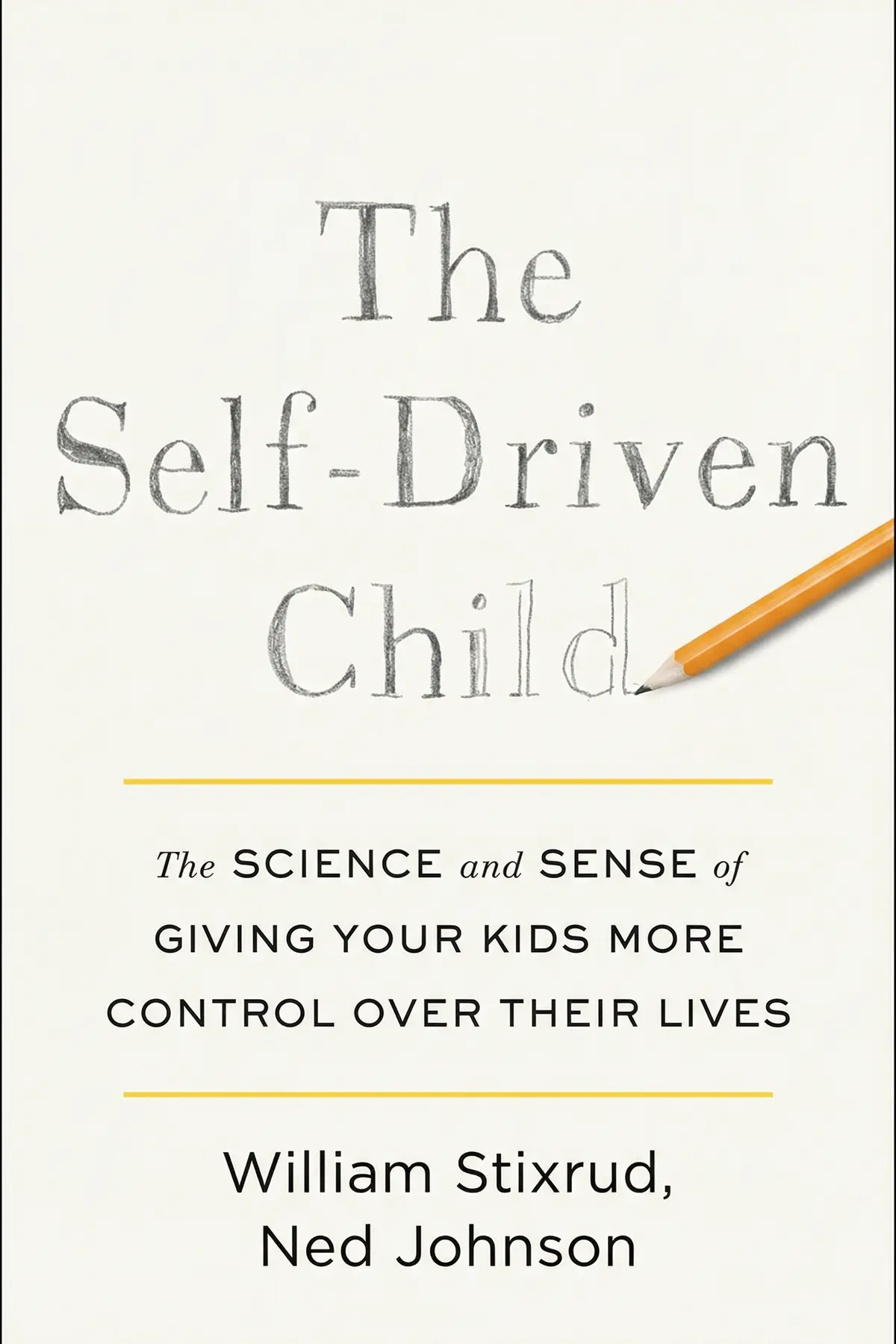
Table of Content
1. Introduction
1 min 05 sec
Many caring parents run their children’s lives like a project, filling every hour and steering every choice, then watch their kids grow more anxious and less motivated. In The Self-Driven Child, William Stixrud and Ned Johnson, a tutor with more than 40,000 hours of one-to-one sessions behind him, argue that the control itself is the problem. A sense of agency, they write, matters more to happiness and well-being than anything else, and children are no exception.
Their answer runs against instinct. Parents help most when they stop acting as the boss and become a calm consultant who shares facts and opinions, then lets the child decide. The authors build the case from their work with students, a few studies and some illustrative families. Along the way come a homework standoff that ended without a single order, a study where nine-year-olds scored only a little below teenagers and young adults on a hard decision, a readiness test for college, and the surprising reason a parent’s face can raise a child’s stress.
2. Spot the stress hidden in a packed schedule
1 min 51 sec
A full timetable looks like a gift of opportunity. A 1970s nursing home study and one overscheduled teenager suggest it may be doing harm at exactly the wrong age.
3. Motivation returns when the homework is theirs
1 min 30 sec
One boy sat at his desk every night and did almost nothing. His parents ended the standoff with a single change, and it involved no new rule, reward or punishment.
4. Act as your child's consultant on big decisions
1 min 37 sec
A girl begs to leave her new private school, and her father says no. A decades-old study of young people aged 9 to 21 suggests who might be better placed to decide.
5. A calm parent raises a calmer child
1 min 41 sec
Parents today can track a bike ride live or diagnose a rash at midnight. That vigilance has a side effect, and children read it straight from their parents’ faces.
6. Model the screen habits you want copied
1 min 41 sec
Screens can sharpen some skills in young brains and weaken others. Before setting family rules, the authors point to a British survey that turns the spotlight somewhere parents rarely look.
7. Know when your teen is ready for college
1 min 32 sec
Good grades and a finished application can hide a teenager who is not ready to live alone. The authors offer clear warning signs and a six-month test that settles the question.
8. Help your child find the work they do best
1 min 34 sec
A young man told one of the authors he was not smart enough for college. What he did instead shows why a failed exam closes far fewer doors than teenagers fear.
9. Conclusion
1 min 07 sec
The Self-Driven Child asks parents to accept something that feels like a risk. A child handed real control, even over big decisions, usually does better than one who is pushed. Stixrud and Johnson trace stress, defiance and a narrow idea of success to the same root: a young life in which someone else makes every call. Their fix is a new role for the parent. Think of a steady adviser in the passenger seat, offering facts and opinions, keeping their own fears in check, and letting the child own the outcome.
That role can begin small this week. Replace one nightly order with an offer of help, as Jonah’s parents did, and see who picks up the responsibility. On the next real decision, lay out the full set of options and let your child choose. Check your own phone habits before commenting on theirs, and protect half an hour a week with every screen switched off.
Jonah’s grades only improved once they belonged to him. Most of what parents want for their children seems to work the same way.
About this book
What is this book about?
Many parents respond to exam pressure, screens and college competition by taking firmer control of their children's lives. William Stixrud and Ned Johnson argue that this instinct backfires. When children feel that nothing is in their hands, they become stressed and anxious, and they resist even good advice. The authors connect that stress to harm during the brain's development in the teenage years, and note that it hits pressured, affluent families hardest. Their alternative is to give children a real share of control. Parents act as consultants instead of bosses. On big choices they present options and opinions, then trust the child to decide. The authors support this with a study in which 14-year-olds reasoned about a hard problem almost as well as 21-year-olds, and with illustrative families, such as a boy whose homework improved only when his parents stopped ordering him to do it. The book also turns the lens on parents themselves. It covers how anxiety spreads through the face, why calm helps children perform, how to model healthy technology use, how to judge whether a teenager is ready for college, and why academic success is only one route to a good life.
Book Information
Who it's for
Parents in homework battles
Parents stuck in nightly homework battles with a teenager who resists every instruction.
Families with packed schedules
Families with packed schedules and high academic hopes who see stress, poor sleep or fights at home.
Unsure about college readiness
Parents of high school seniors unsure whether their child is ready for college or needs a gap year.
About the Author
William Stixrud
Ned Johnson founded PrepMatters, a company offering tutoring, test preparation and education planning. He has tutored since 1993 and has spent more than 40,000 hours in one-to-one sessions with students. He also coaches young people on managing stress, and his writing has appeared in The New York Times and The Washington Post. William Stixrud, PhD, is his co-author. Together they also wrote What Do You Say?, about talking with kids, and a companion workbook, The Seven Principles for Raising a Self-Driven Child.
Ratings & Reviews
Ratings at a glance
What people think
Listeners find this parenting resource exceptionally easy to read and view it as vital for both caregivers and teachers. The content is rooted in scientific evidence, delivering transparent explanations of its ideas, and listeners value the real-world guidance it provides. They appreciate the strategy regarding motivation and emotional health, specifically the focus on fostering deep connections between parents and children. The author's voice is well-liked, and listeners observe that the book yields results, with one highlighting its beneficial influence on academic performance.
Top reviews
Sarocha
Ever wonder why your teenager seems perpetually stressed despite your best efforts to manage their schedule? This book argues that the missing ingredient is agency. Stixrud and Johnson, a neuropsychologist and a test prep expert, make a compelling case that our kids need to feel in control of their own lives to thrive. I loved the concept of the parent as a 'non-anxious consultant' rather than a boss or a manager. It’s a terrifying shift to make, especially when you’re used to hovering over homework, but the science they present regarding the prefrontal cortex is hard to ignore. The chapters on the importance of sleep and the dangers of chronic stress were particularly eye-opening. Not gonna lie, I’ve already started using the phrase 'You’re the expert on you' with my daughter, and the change in our communication has been immediate. This is a must-read for anyone feeling the pressure of the modern achievement culture.
Show moreSiraporn
The chapter on sleep was a total game-changer for our household. We always knew it was important, but seeing the science of how a tired brain simply cannot regulate emotions or learn effectively changed our priorities overnight. Stixrud and Johnson do a fantastic job of translating complex brain science into actionable parenting strategies. Frankly, I was skeptical about the 'consultant' model at first—it felt like I was giving up my authority. However, the authors explain that by giving kids more control, we actually foster a deeper sense of responsibility and trust. My son’s anxiety levels have noticeably dropped since we stopped treating every B-minus like a catastrophic event. It’s not just about grades; it’s about his long-term mental health. This book is a rare find that is both deeply informative and incredibly practical for everyday life.
Show moreGai
Wow. This is hands down the best parenting book I have encountered in years. It’s not just another list of 'tips and tricks' for discipline; it’s a fundamental shift in how to view the parent-child relationship. The authors argue that a sense of control is the antidote to the epidemic of anxiety and depression we see in kids today. I particularly liked the 'reverse engineering' approach—thinking about what kind of adult you want your child to be and then giving them the space to practice those skills now. The anecdotes from their clinical practice and test prep business felt very authentic and relatable. It’s clear that they understand the modern pressures families face. If you are worried about your child's motivation or stress levels, please read this. It provides a roadmap for moving from a relationship based on power to one based on connection and support.
Show moreHannah
Finally got around to reading this after hearing several educators recommend it, and the research-backed approach is refreshing. Unlike many parenting books that rely on anecdotes, Stixrud and Johnson base their advice on how the brain actually develops. They explain that agency is the primary factor in human well-being, which makes so much sense when you look at the current mental health crisis. Since applying the 'non-anxious presence' technique, I’ve noticed a significant improvement in my son’s willingness to tackle difficult school projects on his own. He’s taking more ownership because he knows I’m not going to swoop in and do it for him. The writing is clear, the tone is encouraging, and the practical 'What to do tonight' summaries at the end of each chapter are incredibly helpful. This is essential reading for anyone raising kids in today's high-pressure environment.
Show moreEye
In my experience, parenting books often offer vague platitudes, but Stixrud and Johnson provide a concrete framework for building a child’s autonomy. The concept of the 'Self-Driven Child' isn't about letting kids do whatever they want; it's about fostering the internal motivation they need to succeed in the long run. I was particularly impressed by the discussion on how toxic stress shuts down the learning centers of the brain. Since we stopped focusing so much on high-stakes achievement and more on our son's emotional well-being, his academic performance has actually improved because he's no longer paralyzed by fear of failure. It’s a paradox, but it works. The authors' combined expertise in neuropsychology and academic coaching makes for a very well-rounded perspective. This book changed the way I look at my role as a parent, and I cannot recommend it highly enough.
Show moreNum
As a parent of a middle schooler, the shift in dynamics discussed here was exactly what I needed to hear. The authors provide a grounded, research-backed look at how helicopter parenting can actually weaken a child's internal locus of control. Truth is, I was definitely the parent working harder than my kid to solve his problems, and as they point out, that just makes the child weaker. I appreciated the practical advice on letting kids make age-appropriate choices, even if it means they might fail occasionally. Some of the suggestions, like letting a middle schooler choose their own school, felt a bit extreme for my household, but the underlying philosophy is sound. The writing style is very accessible, though it does get a bit repetitive in the middle sections. Still, the focus on building resilience through autonomy is a message that every parent in high-pressure school districts needs to hear.
Show moreSeksan
Picked this up because I felt like I was working harder than my own kid to get his homework done. The authors' central thesis—that we should be our children’s 'non-anxious presence'—is something I struggle with daily, but it’s so necessary. I found the distinction between 'healthy stress' and 'toxic stress' to be one of the most useful parts of the book. It helped me realize that by protecting my kids from every minor struggle, I was actually preventing their brains from developing the resilience they need for adulthood. The tone is supportive and not at all judgmental, which is a relief in the world of parenting books. My only minor gripe is that the advice can feel a bit simplistic when dealing with more complex behavioral issues. Overall, it’s a solid 4-star read that I’ll likely revisit as my kids enter their teenage years.
Show moreA
Gotta say, I was skeptical about the 'consultant' model at first, thinking it might lead to a household with no rules. However, the authors emphasize that being a consultant doesn’t mean being a doormat. It means providing children with the information they need to make their own decisions while remaining a supportive safety net. The research on brain plasticity was especially encouraging, reminding us that it’s never too late to help a child develop better self-regulation. My teenager actually responded quite well when I told him I was resigning as his 'manager.' We’ve had fewer arguments and more actual conversations. The book is a bit long, and some of the chapters on standardized testing felt a little too specific to the authors' day jobs, but the core message is vital. It’s a grounded, sensible approach to raising independent humans.
Show moreWaree
To be fair, this book feels like it was written exclusively for a very specific demographic of high-intensity, upper-middle-class families. If you aren't already a helicopter parent or someone obsessed with Ivy League admissions, a lot of this advice might seem like common sense. The authors spend a significant amount of time trying to convince parents to just calm down and let their kids breathe. While the neuropsychology behind brain development is fascinating, the book is overlong and could have been a series of long-form articles. I also found the 'moral vacuum' a bit troubling; there’s a heavy emphasis on making choices that make the child feel happy or in control, but not much on the importance of duty or self-sacrifice. It’s an interesting perspective for parents of anxious high-schoolers, but it lacks a broader view on character building beyond just personal autonomy.
Show moreVilaiporn
Truth is, while the brain science here is fascinating, the authors occasionally veer into territory that feels a bit too permissive for my taste. They suggest that children should have a huge amount of latitude in making decisions, but in my experience, kids often lack the maturity to understand the long-term consequences of those choices. While I agree that helicopter parenting is a problem, I think this book swings the pendulum a bit too far in the opposite direction. It focuses heavily on the child's happiness and 'sense of control,' but misses the importance of teaching responsibility and self-discipline through parental guidance. That said, the sections on chronic stress and the impact of social media are very well-written and worth reading. It’s a useful perspective for parents who are overly controlling, but it should be taken with a grain of salt.
Show moreQuestions about this book
What is the main idea of The Self-Driven Child?
Stixrud and Johnson argue that a sense of control is central to well-being, and that children with no say over their lives become stressed, anxious and resistant. Parents help most by handing over agency. They act as consultants who share information and opinions, then trust children to decide, while staying calm themselves and modeling healthy technology use.
How do you stop homework battles, according to The Self-Driven Child?
In the authors’ example, a boy named Jonah faked his homework every night while his parents ordered him to work. They replaced the order with a question: did he have assignments he wanted help with, so they could plan their evening? Once Jonah saw that his grades were his own responsibility, and that he risked not graduating with his friends, he started working on his own.
Can children really make good decisions on their own?
The authors cite a study from over 30 years ago in which people aged 9 to 21 were asked how to help a boy who had shut himself in his room for weeks. Most suggested outpatient psychotherapy, as adult experts would. Fourteen-year-olds scored almost like 21-year-olds, and nine-year-olds were only a little lower, mainly because some did not know what psychotherapy was.
How can parents tell if a teenager is ready for college?
Warning signs include not starting the college search themselves, needing heavy help with applications, being unable to cook, clean or look after themselves, and lacking self-knowledge or self-discipline. For teens who are not ready, the authors suggest a gap year of travel or volunteering. Another option is asking a teen to show they can budget and manage time alone six months before leaving.
Who should read The Self-Driven Child?
Parents of school-age children and teenagers who feel pressure to manage every detail of their kids’ lives, especially in families with high academic hopes. It also suits parents worried about screens, parents anxious that their own stress is spilling over, and those facing a teenager who has failed an exam and fears the future is lost.
Featured in
Readers also enjoyed

AUDIO SUMMARY AVAILABLE
Listen to The Self-Driven Child in 15 minutes
Get the key ideas from The Self-Driven Child by William Stixrud, plus 5,000+ more nonfiction titles.
- 5,000+ titles
- Listen as much as you want
- 7-day free trial
- Cancel anytime









