

A Return to Love: Reflections on the Principles of a Course in Miracles
Marianne Williamson
 English
 ไทย
Wallace D. Wattles sets out a 1910 method for growing rich by creating value: picture a clear goal, hold it with faith and gratitude, and give full attention to today's work.

57 sec
If money feels like a contest you are already losing, Wallace D. Wattles starts somewhere unexpected. In The Science of Getting Rich, first published in 1910, he argues that people grow wealthy through a particular way of thinking and acting, and that rich parents or rare gifts are not what decides it. Supply, in his telling, is never the problem, because the stuff of the world keeps renewing itself.
Wattles wrote within the New Thought movement, and his case is spiritual as much as practical. He believes that a person who holds a clear picture of what they want, with faith and gratitude, and then puts their whole self into today’s work, can become rich by making value and lifting others with them. Each idea that follows is one part of that method. Along the way you will hear why he treats the wish for money as healthy, what a candy seller can teach about drawing customers, and how to use a setting that seems wrong for your plans.
1 min 38 sec
Wanting more money often comes with a small sense of shame. Wattles thinks that feeling rests on two mistaken beliefs, and he links money to something most people would never call greedy.
1 min 35 sec
Most advice about money begins with stocks or a new company. Wattles places the starting line somewhere else entirely, and he attaches a moral rule to it that changes how you are allowed to win.
1 min 34 sec
A vague hope for a better life gives you nothing to steer by. Wattles borrows an image from the sea to show what to do instead, and then adds an ingredient most goal setters forget.
1 min 39 sec
Many people wait for the right job, the right town or the right moment before they begin. Wattles sees that waiting as the point where most plans quietly die, and he offers a different use for an imperfect situation.
1 min 35 sec
A job that looks small can feel like a trap for anyone hoping to get ahead. Wattles uses a seller of children’s candy to argue that the size of the work matters far less than one thing you bring to it.
1 min 01 sec
What Wattles offers, in the end, is a picture of wealth as something made. The Original Substance in his account cannot run out, so another person’s gain never has to be your loss, and the only fair use of your will is on yourself. Money, for him, is simply what a full life needs: food and shelter for the body, books for the mind, gifts that let love show.
His method asks for very little equipment. Choose one thing you want and see it clearly enough to describe every room, the way the sailor keeps the harbor in view. Give thanks for what you already own, as the musician does with the old guitar. Then do one piece of today’s work with your mind and hands on the same task, inside the setting you have, and let the next step grow from there.
The candy seller is the image worth keeping. A job that looks small could, in Wattles’ telling, spread increase to the seller and every customer alike, as long as the person behind the counter believed in it.
Many people treat money as a fixed pie that someone else already holds, and they feel faintly guilty for wanting a bigger slice. Wallace D. Wattles, writing within the New Thought movement, rejects both ideas. In his view, the wish to be rich is natural, because a full life needs food, shelter, books and the means to give to the people we love. Wattles argues that everything is made of one Original Substance that keeps renewing itself, so supply never runs out and nobody needs to compete for it. What decides wealth, he says, is a certain way of thinking and acting. You fix a detailed picture of what you want, hold it with faith, give thanks for what you already have, and then act in the present with mind and body working together. Readers get a short, spiritual and openly optimistic method: why Wattles sees people as creators, why gratitude matters to him, how to use a setting that feels wrong, and why belief in your own work draws customers and opportunity.
Readers who feel guilty about wanting money and want a spiritual case for wealth.
People stuck in a job or setting that seems wrong for their goals and unsure how to begin.
New Thought and self-help readers curious about a classic that inspired The Secret.
Wallace Delois Wattles was born in the United States in 1860 and wrote within the New Thought movement. Little is known about his personal life, yet his books remain in print and are widely quoted by New Thought and self-help readers. The Science of Getting Rich, his best known work, appeared in 1910. He also wrote The Science of Being Well, The Science of Being Great, and Health Through New Thought and Fasting. Wattles asked readers to test his ideas on themselves, and Rhonda Byrne has said this book led her to make The Secret, a 2006 film with a companion book.
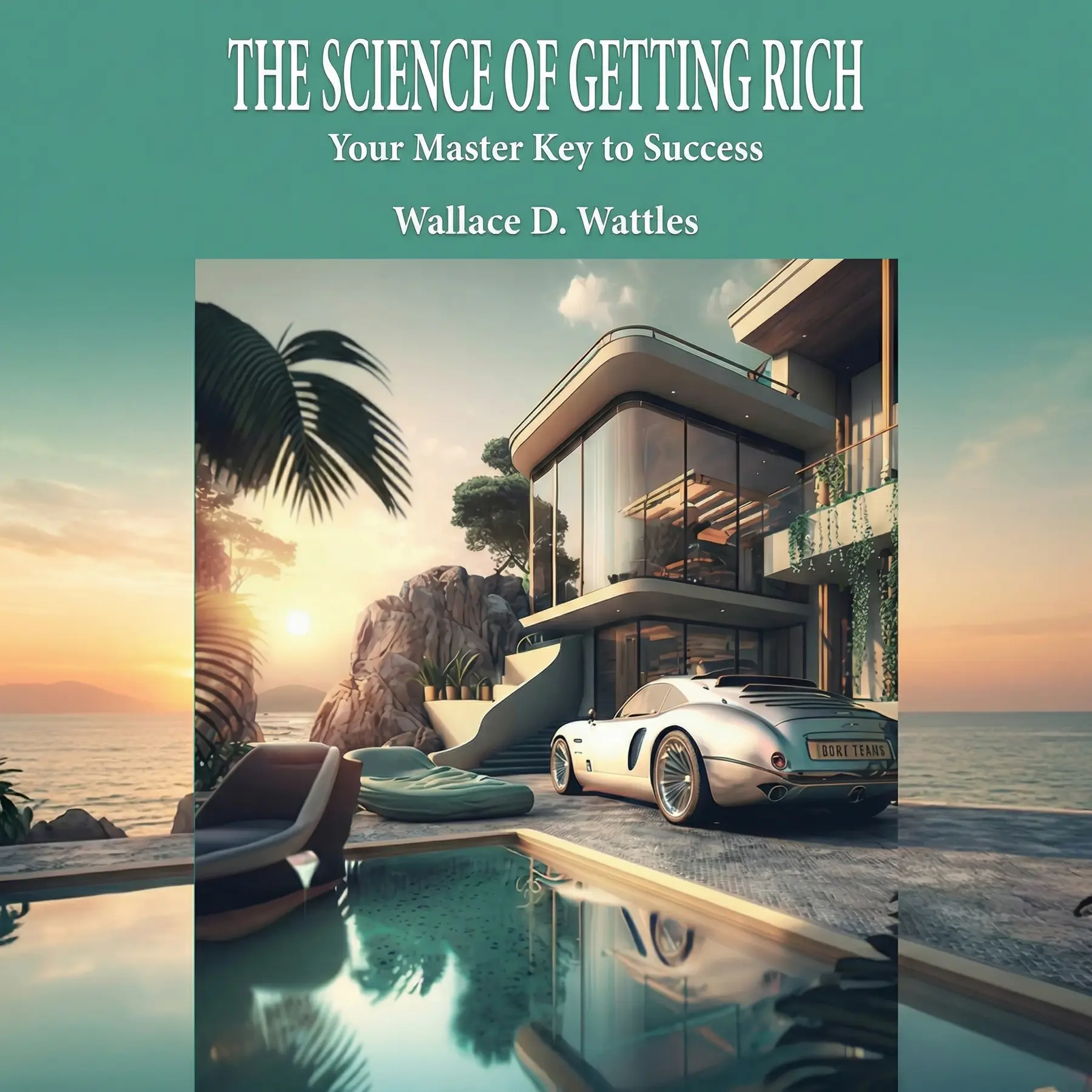
Listeners find this book to be an excellent brief listen that provides actionable advice and strong core principles regarding positive thinking. Furthermore, the content is straightforward, and listeners consider it a valuable investment, especially for individuals aiming to increase their wealth. They also value the way it introduces fresh perspectives while emphasizing the importance of manifestation and gratitude throughout.
Picked this up after seeing it referenced in 'The Secret,' and it’s surprisingly straightforward for something written over a century ago. Wattles argues that we have a duty to become rich to truly expand our souls and help others. The focus on gratitude as a tool for manifestation was a real eye-opener for me. It’s a very short read, maybe an hour or two, but the concepts around the 'Formless Substance' are actually quite profound. Some might find the religious undertones off-putting, but if you look past the 1910 terminology, the mental framework is solid. It doesn't give you a stock market strategy, but it completely shifts how you view opportunity. I feel much more motivated to pursue my goals without feeling guilty about wanting success. Truly a foundational text for positive thought.
Show moreFinally got around to reading this classic and I’m genuinely impressed by how much punch is packed into such a small volume. The truth is, we often sabotage ourselves because we think wanting money is greedy or shallow. Wattles flips that script, explaining that fulfilling our potential requires resources and that seeking wealth is a moral necessity. The simplicity and directness of the writing make it easy to digest, even if the 1910 phrasing is a bit flowery. I love the 'summary of points' at the end of each section because it helps cement the manifestation techniques. This isn't just about money; it’s about a total mindset shift toward abundance and personal growth. It has inspired plans in me that I never thought existed.
Show moreAfter hearing about this book for years, I finally sat down with it and it was a revelation. It tackles the deep-seated fear of wealth that keeps so many people stuck in a cycle of self-doubt and misunderstanding. Wattles makes a compelling case that money is simply a tool to maximize our skills and aid others, much like modern philanthropists do. The chapter on the 'Advancing Man' really resonated with me because it focuses on being the best version of yourself in your current role. It’s about more than just 'positive thinking'; it’s about a specific way of projecting your will onto your work. It’s a must-read if you want to understand the roots of the modern success movement and open your mind to new ideas.
Show moreWow, what a powerful little book that manages to challenge almost everything society tells us about money. It argues that we have a God-given right to be rich and that seeking abundance is actually the most spiritual thing we can do. I loved the emphasis on how acquiring wealth enables us to live more fully and give back to our families and communities. The author’s directness is refreshing, even if some of his claims about the 'Formless Substance' are a bit bold. It has definitely inspired me to do more with my lifetime and stop settling for 'just enough.' If you are looking for a reason to finally chase your dreams and stop feeling guilty about your desires, this is the sign you've been waiting for.
Show moreWhile the prose is definitely a product of its time, the distinction between the 'Creative Mind' and the 'Competitive Mind' is worth the price of admission alone. Most people view wealth as a finite pie where you have to take from others to get yours, but Wattles rejects that entirely. He suggests that by creating new value, you can grow the pie for everyone involved. To be fair, some of the 'scientific' claims are just metaphysical assertions with no data to back them up. It’s more of a philosophy of abundance than a laboratory study. Still, the instructions on mental focus and acting in the 'Certain Way' provide a great blueprint for self-discipline. It’s an essential read for anyone interested in the psychology of success.
Show moreAs a student of modern gurus like Robert Allen and T. Harv Eker, I can clearly see where they got their material. This book is the original blueprint for the Law of Attraction, stripped of the modern marketing fluff. It emphasizes that your mental attitude is the primary engine of your success or failure. By clearing away doubt and disbelief, you align yourself with a 'Certain Way' of acting that attracts opportunity. Look, it’s not going to teach you how to read a balance sheet or invest in real estate. But if you’re struggling with a scarcity mindset, this is the perfect antidote. It’s a quick read that encourages you to stop competing and start creating. A bit dated, but definitely worth the purchase for the fundamental concepts.
Show moreDon't let the age of this book fool you; its format is remarkably similar to the bestsellers you see on Amazon today. It uses cumulative points and reviews at the end of each chapter to ensure the reader isn't just passively consuming the text but actually 'doing' something. The language is eloquently written, though it does take a minute to get used to the early 20th-century cadence and 'New Thought' terminology. I particularly appreciated the focus on not stealing or competing for existing wealth but focusing on creation. It opened my mind to the idea that there is enough for everyone if we approach life with the right intent. It’s an essential read for anyone who wants to understand the foundational principles of manifestation and mindset.
Show moreIs it really possible to think your way into a bigger bank account? This book seems to think so, though I found the lack of concrete financial planning a bit frustrating. The author spends a lot of time on 'New Thought' ideas and cosmic ordering, which feels a bit goofy at times. I appreciated the message that poverty isn't a virtue, as that's a hurdle many of us deal with. However, the instructions on how to actually do things in the 'Certain Way' remained incredibly vague throughout the chapters. It’s more about shifting your vibes than opening a high-yield savings account. It’s an interesting historical artifact of the early self-help movement, but don't expect a step-by-step business plan or modern financial acumen.
Show moreThe core concepts here are decent, but I’m struggling to see how this translates to the modern world without some serious mental gymnastics. Wattles writes with a lot of confidence, but his 'Certain Way' of doing things is never clearly defined in a practical sense. To be fair, the idea that wealth isn't finite is a powerful one that helps eliminate professional jealousy and the competitive mind. But the book relies heavily on a 'Formless Substance' that responds to thought, which is a bit too 'woo-woo' for my taste. It’s a very short book, so it’s not a huge time investment, and there are some nuggets of wisdom about gratitude. Just don't expect it to solve your debt problems overnight without some actual work and real financial strategy.
Show moreFrankly, the title is a complete misnomer because there is absolutely no science to be found in these pages. It is a collection of pseudo-religious assertions and 'New Thought' philosophy that would have appealed mostly to a very specific demographic back in 1910. The premise that getting rich is synonymous with fulfilling your potential feels morally questionable to me. For every grain of truth about positive thinking, there are ten fallacies about how the universe supposedly works. I found it quite repetitive and, at points, almost delusional in its rejection of material reality. If you want practical financial advice or actual economic principles, you are looking in the wrong place. This is just cosmic wishful thinking wrapped in thin Christian imagery and outdated phrases.
Show moreWallace D. Wattles argues that wealth comes from a certain way of thinking and acting, not simply from having wealthy parents or great natural talent. He believes the world’s supply is endless, so people can grow rich by creating value instead of competing. His method combines a clear mental picture of what you want, faith and gratitude, and wholehearted action in the present.
Wattles claims that everything in the world is made of one Original Substance, which shows up in many different forms and keeps regenerating, so it can never run out. In his view, everything that exists began as a thought in this Substance, and a person who impresses a clear thought on it can cause the thing they picture to take form.
He describes a Law of Gratitude, which he presents as a natural principle: the more thankful you are toward the Original Substance, the more good things you attract. His example is a musician who cannot afford a new guitar. Instead of complaining, the musician should feel grateful for the guitar already owned and trust that better tools will come.
Wattles’ steps are simple. Form a detailed picture of one goal, such as a house, and keep it in mind like a sailor holding the port in view. Be grateful for what you have. Then act today, in your current setting, with your mind and body focused on the same task, and treat even small work as a source of growth for others.
It suits readers who want a spiritual, optimistic view of money and who feel uneasy about wanting more. People waiting for better circumstances before acting will find Wattles’ push to start now useful. It also interests New Thought readers and fans of The Secret, since Rhonda Byrne has said this book inspired her to make that film.
Marianne Williamson

Richard Wiseman

Pico Iyer


Alcoholics Anonymous World Services




William B. Irvine

AUDIO SUMMARY AVAILABLE
Get the key ideas from The Science of Getting Rich by Wallace D. Wattles, plus 5,000+ more nonfiction titles.









