

A Long Way Gone: Memoirs of a Boy Soldier
Ishmael Beah
 English
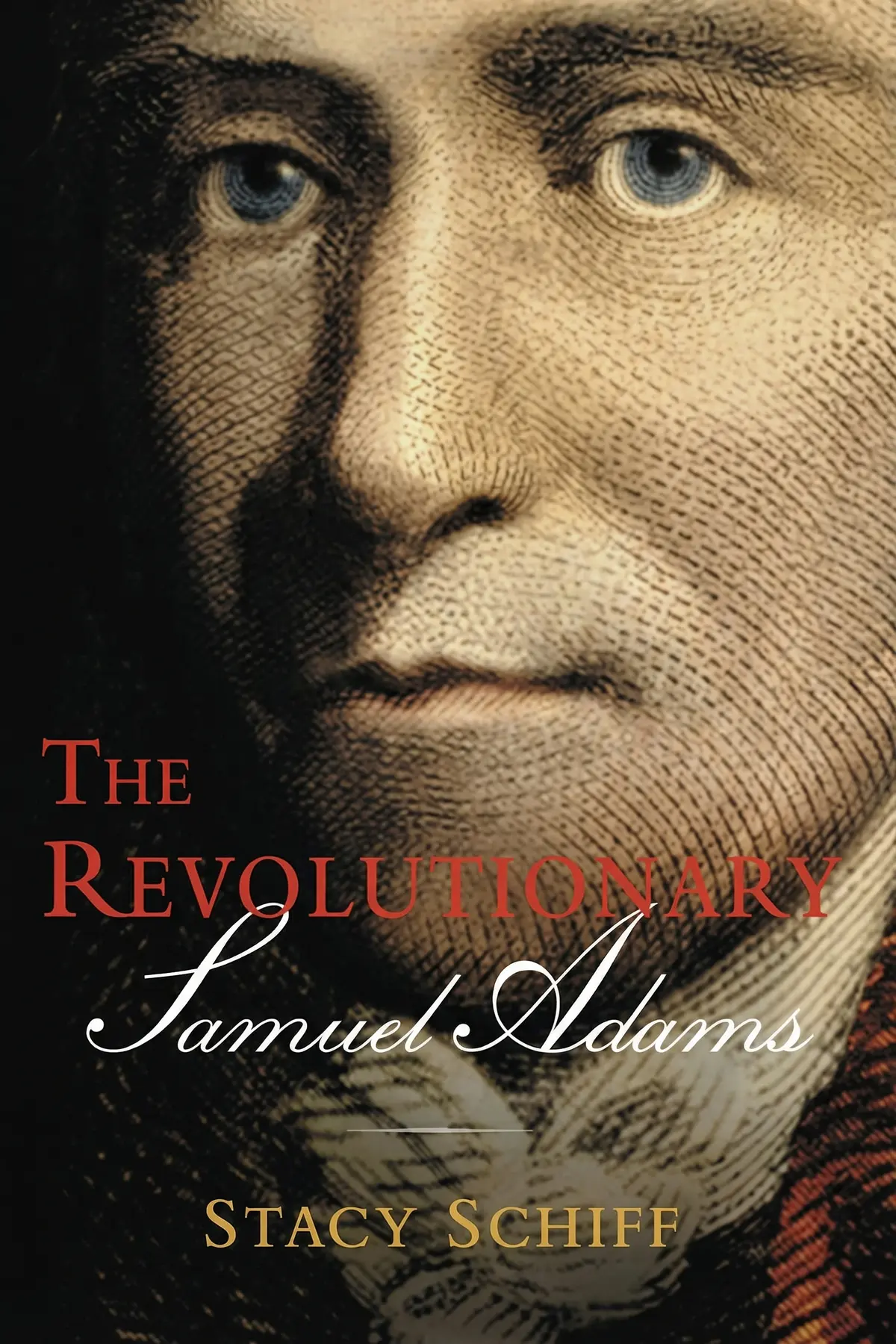
Stacy Schiff shows how Samuel Adams, a debt-ridden Bostonian with a failed career, used anonymous writing, favors and secrecy to unite the colonies against Britain, and how he erased his own trail.
1 min 07 sec
If you have ever watched someone with little money and no grand title move a whole institution, you have seen the kind of power Samuel Adams spent his life building. In The Revolutionary, Pulitzer Prize winning biographer Stacy Schiff argues that the movement behind the American Revolution was already decades old by 1776, and that no one did more to make it necessary than this Massachusetts maltster’s son. Washington and Jefferson got the fame. Adams did the slow work first.
That slow work is the throughline. Adams won through patient persuasion and a network of trust built over decades, and the same discretion that made him effective is why so few people know his name today. Through a family debt, an anonymous newspaper, a failed tax career, a string of hated British taxes and one famous midnight ride, his story shows how influence actually spreads, and why the person who starts a movement is often missing from the picture of how it ended.
2 min 00 sec
A Harvard graduate with two degrees watched officials try to sell his family’s home. The cause of his ruin lay across an ocean, and the way he answered it set the course of his whole life.
1 min 49 sec
Colonial newspapers mostly reprinted official notices. Then a small Boston paper began arguing, often under invented names, and its likely author kept burning his own letters. What did he gain by staying invisible?
1 min 45 sec
He ended his career owing the city more than 8,000 pounds in uncollected taxes, over twice the next-worst collector. Instead of disgrace, the voters handed him a bigger job. The reason says a lot about influence.
2 min 14 sec
Two British taxes, one in 1764 and another in 1765, tested who was in charge. Adams answered one with words and the other with a network on the docks, and the empire got the opposite of what it wanted.
1 min 58 sec
Adams drafted a letter to the King that some lawmakers saw as a public scolding of Parliament. They were shocked when he asked to circulate it. A few weeks later, the outcome looked very different.
1 min 49 sec
British officers marched out at night with a clear aim, and Paul Revere rode hard to warn the most wanted man in Massachusetts. When he finally arrived, he found that his news was already old.
1 min 14 sec
Schiff’s portrait adds up to a paradox. She argues that no founder had more influence on the ideals behind the Revolution and early American democracy than Samuel Adams, yet he is among the least remembered, and that obscurity is a sign of his success. He wanted it that way. He wrote under false names, burned his mail, worked through friends and favors, and kept his own name in the background. A debt-ridden Harvard graduate with a failed career used reason, argument, persuasion and discretion to help bind scattered colonies together against an empire.
For anyone trying to change an organization or a community, his story offers a few things worth keeping. Build trust long before you need it, the way Adams did as a collector who forgave more than he collected. Let a strong argument travel without your name attached, so people weigh it for what it says. Do your persuading in the hallway, before the vote is ever called.
Above all, look for who did the slow work before the famous moment. Behind every midnight ride there is usually someone who spent decades making sure the rider had somewhere to go.
Washington and Jefferson dominate the story of American independence. Stacy Schiff argues that the movement which made the war necessary was already decades old by 1776, and that its most persistent builder was a Massachusetts maltster's son who preferred to stay out of sight. Samuel Adams inherited a ruinous debt, failed at the ministry, law and business, and then found his real talent: persuasion. Schiff tracks him from a blunt newspaper venture in the 1740s, through years as a tax collector who granted dispensations and let his own unpaid taxes pile up past 8,000 pounds, to the battles over the Sugar Act, the Stamp Act and the Townshend taxes. Along the way he built a network of merchants, laborers, friends and spies, his influence reached every class in Boston, and his writing eventually helped unite the colonies. The result is a portrait of influence as slow work: arguments that travel without a name attached, favors that become loyalty, and votes won before the meeting starts. It also explains a puzzle. The man who did so much to start a revolution burned his letters and wrote under false names, and his obscurity is the mark of how well he succeeded.
History readers who know Washington and Jefferson but want the organizer who came first.
Managers and activists trying to build support for change without formal power.
Writers and communicators curious how anonymous argument can shift what a whole city believes.
Stacy Schiff, born in 1961, is an American writer whose biography of Véra Nabokov won the Pulitzer Prize in 2000. She has also written lives of Antoine de Saint-Exupéry, Benjamin Franklin and Cleopatra, and a book on the Salem witch trials. She has held Guggenheim Foundation and National Endowment for the Humanities fellowships, and in 2006 received an Academy Award in Literature from the American Academy of Arts and Letters. She lives in New York City.

Listeners find this biography to be deeply researched and dense with footnotes, valuing its compelling narrative and chronological approach. Additionally, the subject matter makes it a must-read for students of American history. However, the prose draws varied responses, with some praising the writing while others describe it as a real slog. Readability and the level of vocabulary also receive mixed reviews; while some consider it an enjoyable experience, others find it difficult to follow, and one listener points out the use of unnecessarily complex words.
Stacy Schiff has a remarkable talent for dusting off historical figures who have been largely forgotten by the general public. While Samuel Adams spent his life burning letters and using dozens of pseudonyms to hide his tracks, Schiff manages to piece together a coherent and gripping narrative. It’s fascinating to see how he operated as a master manipulator in the shadows of colonial politics. Truth is, the amount of research on display here is staggering, even if the prose gets a little dense in some places. I especially liked the exploration of his early failures as a tax collector, which makes him feel human. This is essential reading for anyone who wants to see the real man behind the revolutionary myth.
Show moreThe chapter detailing the Boston Tea Party alone makes this worth the purchase for any American history nerd. I loved how Schiff broke down the sequence of events, showing that it wasn't just a spontaneous riot but a perfectly executed political statement. This biography is a riveting story told with a level of detail that makes you feel like you are standing in the middle of a Boston town meeting. Each chapter builds on the last, creating a powerful sense of momentum as the colonies move toward the inevitable conflict. This biography serves as a total masterclass in the art of historical writing and character development.
Show moreFinally got around to reading about the man behind the lager, and it turns out Samuel Adams was far more complex than I ever imagined. The book is meticulously structured, offering a riveting account of the events leading up to the battles at Lexington and Concord. Schiff is careful to note that he was called 'Samuel' and never 'Sam' by his contemporaries, which is just one of many interesting details she uncovers. Look, if you want a deep dive into the political machinations of the 1770s, you won’t find a better or more detailed source than this one. It’s a brilliant resurrection of a man who deliberately tried to remain invisible.
Show moreAfter hearing so many mixed things about Schiff’s style, I was prepared for a struggle, but I found myself completely captivated by this 'shadowy operative'. The way she connects the dots between Adams’s early failures as a tax collector and his later success as a master agitator is brilliant. In my experience, most history books gloss over the messy parts of the founding fathers, but Schiff leans into the contradictions of his character. It’s a dense read, sure, but the depth of the research makes every single page worth the effort for any true history buff. I feel like I finally understand the engine behind the revolution.
Show moreAs someone who struggles with dry history books, I found this biography surprisingly engaging despite the dense prose. Schiff does an excellent job of tracing Adams’s life chronologically, showing exactly how he became the prime mover behind the independence movement. I think this is a must-read for students of American history because it highlights the gritty, behind-the-scenes work that actually led to the revolution. Personally, I was impressed by how she brought such a secretive figure to life without resorting to speculation. It’s well-researched and provides a much-needed perspective on the 'other' Adams. While the writing style is elevated, the story itself is compelling enough to keep you turning the pages.
Show moreEver wonder how one man could essentially goad an entire colony into open rebellion through sheer force of will? This book provides a fascinating look at how Samuel Adams used partisan newspapers to stir up the public, almost like an early version of modern rage bait. Schiff paints a vivid picture of 18th-century Boston, making the tension between the colonists and the British soldiers feel immediate and dangerous. Although the middle section drags a bit, the detailed account of the Boston Massacre is worth the price of admission alone. Schiff has provided a very thorough piece of historical scholarship for the modern era that explains our roots well.
Show moreLook, the research here is obviously top-tier, but the execution left me feeling like I was wading through thick mud at times. I really appreciated the deep dive into Adams's thirty different pseudonyms and his talent for political theater, yet the writing style is quite challenging to get through. Frankly, the narrative flow is often interrupted by the author's choice of vocabulary, which can feel a bit elitist and unnecessary for a general biography. It is a good book for those who already have a strong interest in the period, but casual readers might find it a real slog. I respect the scholarship even if the reading experience wasn't exactly smooth or enjoyable.
Show moreTo be fair, Schiff clearly knows her stuff, but her writing style is unnecessarily wordy and frequently uses complex language where simpler terms would suffice. The sheer number of footnotes is distracting, often pulling the reader away from the main narrative just when things start to get interesting. Not gonna lie, I appreciate the scholarly effort, but I found myself checking the page count more often than I’d like to admit. It’s a solid resource for students of the era, but it definitely lacks the 'page-turner' quality found in other modern biographies. It is a dense, academic exercise that requires a lot of patience from the reader.
Show moreWhy does this book have to be so difficult to follow for the average reader? I really wanted to like this biography, but reading it felt like hacking through a jungle of pronouns and confusing sentence structures. Half the time, I wasn’t even sure which 'he' the author was referring to in the middle of these massive, winding paragraphs. While the facts are obviously well-researched, the lack of flow makes it nearly impossible to stay engaged with the actual story of Samuel Adams. It is a real disappointment given the subject's importance to our history. I wish the editor had pushed for much more clarity in the final draft.
Show moreThis book was an absolute chore to finish, and frankly, I almost gave up halfway through because the prose was so dense. While the historical research is clearly exhaustive, the writing style feels more like a dry, dusty textbook than a biography of a living, breathing human. I expected a riveting narrative about the American Revolution, but instead, I found myself getting lost in confusing sentence structures and endless footnotes. To be fair, Adams is a difficult subject, but this narrative just never found its rhythm or a clear sense of direction. I was honestly relieved when I finally reached the last page of this disappointing volume.
Show moreIt is a biography of Samuel Adams, the Boston organizer Schiff sees as the most influential force behind the American Revolution. She traces how a family debt and Britain’s closing of the Massachusetts Land Bank turned him against English rule, and how decades of newspaper writing, favors and political networking united the colonies. She also explains why he is so little known: he deliberately erased his own trail.
Schiff argues his obscurity was his own doing. He wrote many of his articles anonymously or under false names, ended letters with instructions to burn them and was seen burning stacks of correspondence. He told his cousin John Adams he cared more about his friends’ safety than his place in history. That discretion made him effective and left a thin record behind.
He worked on two levels. Officially, he backed letters to England and lobbying of Parliament. Unofficially, he relied on a web of merchants, tradesmen and laborers who ensured that anyone unloading royal stamped paper at Boston’s docks faced the threat of violence. The tax could not be collected without troops, so Parliament repealed it, and the shared fight drew the previously separate colonies together.
His story suggests building trust long before you need it, as he did by easing taxes for struggling neighbors, which earned him loyalty across Boston. It also shows the value of persuading people privately before a formal vote, as he did when the Massachusetts House agreed to circulate his letter to the King. And it shows how protecting allies keeps a network strong.
It suits readers interested in the American Revolution who want to look past the famous names to the organizer who prepared the ground. It also speaks to anyone trying to drive change without a big title, since Adams built his influence from a market clerk’s post, a small newspaper and a tax collector’s job he did badly on purpose.
Ishmael Beah

James Herriot



Pankaj Mishra

Barack Obama


Masaji Ishikawa
Charles C. Mann

Ben Macintyre
AUDIO SUMMARY AVAILABLE
Get the key ideas from The Revolutionary by Stacy Schiff, plus 5,000+ more nonfiction titles.









