

14 min 53 sec
Available in: English
The Psychedelic Explorer’s Guide: Safe, Therapeutic, and Sacred Journeys
A psychologist who studied LSD in the 1960s explains how preparation, setting and a trusted guide make psychedelic experiences safer, and how the same structure has been used for therapy and creative problem-solving.
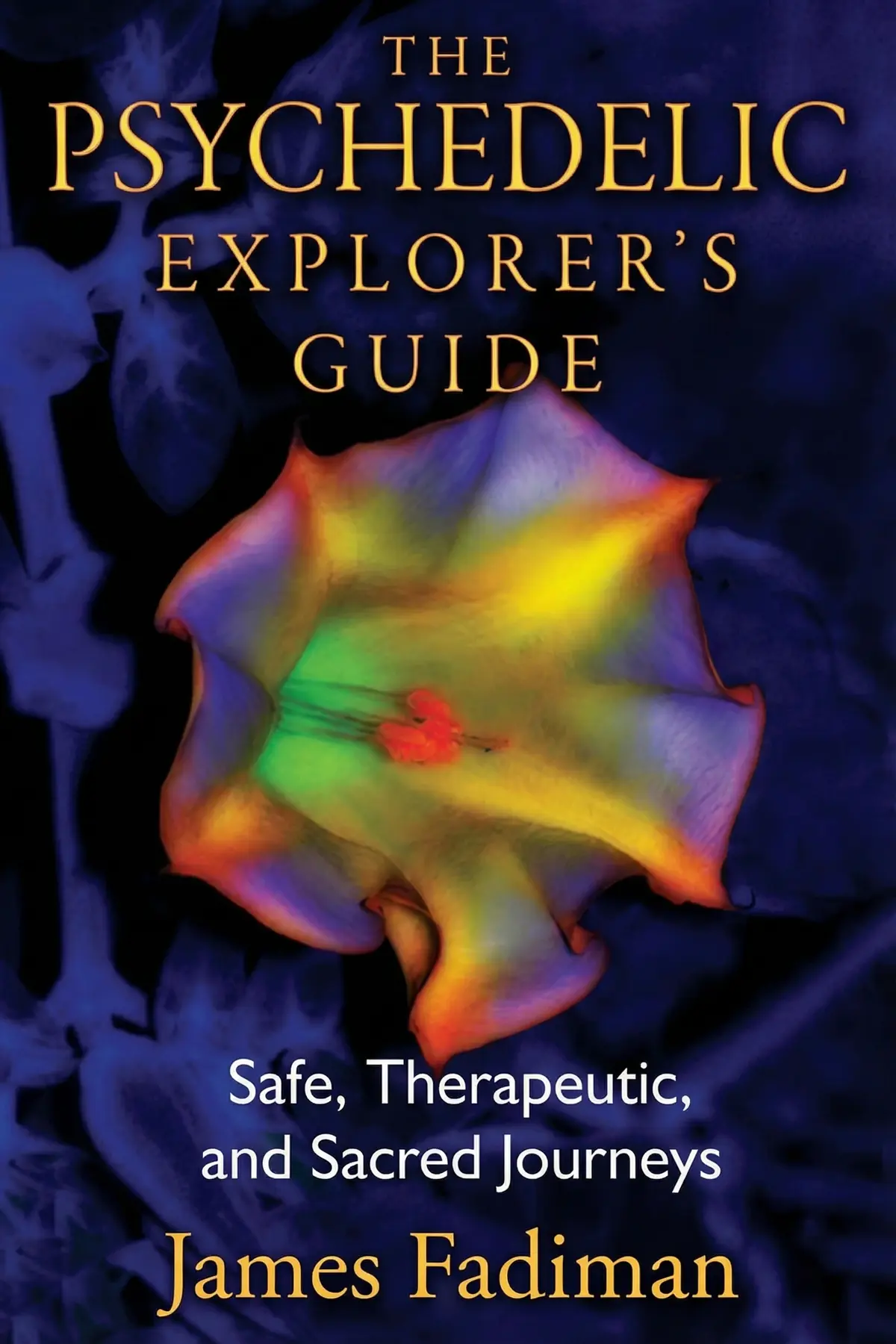
Table of Content
1. Introduction
1 min 17 sec
Most of what people believe about psychedelics comes from rumor: fear stories from the 1960s on one side, careless party talk on the other. In The Psychedelic Explorer’s Guide, psychologist James Fadiman, who studied LSD in therapy and problem-solving before that research was banned, describes a 1960s therapy study in which more than nine in ten participants felt warmer and more self-assured for months after a single session.
His argument is that whether a psychedelic heals or harms depends not only on the substance but on the care taken around it. He lays out that care in six parts: set, setting, substance, sitter, session and situation. Drawing on more than 40 years of research, his own experience and shamanic tradition, Fadiman walks through a careful session hour by hour. He shows how the same structure can be adapted for group problem-solving, describes engineers who felt they made far more progress than usual, and explains why researchers and lawmakers are looking again. His framework gives curious and cautious listeners alike a clear way to tell responsible use from recklessness.
2. Separate the old scare stories from the evidence
2 min 12 sec
Four frightening claims about LSD stopped a promising line of research in its tracks. Fadiman says none of them held up, yet they still color what most people think, and that has a real cost.
3. Six checks that make a bad trip unlikely
2 min 04 sec
Most frightening psychedelic experiences, Fadiman suggests, trace back to the same few oversights. His answer is a short checklist, and only one of its six items is about the substance itself.
4. Know what each hour of a session brings
1 min 49 sec
The hours that feel most chaotic are also the most predictable. Fadiman maps how a session tends to unfold, and knowing the sequence in advance changes how the hardest stretch feels.
5. Turn a powerful night into lasting change
2 min 02 sec
Plenty of intense experiences leave nothing behind once they fade. Fadiman treats the descent and the follow-up meeting with the guide as key stages, and he has clear advice on what to do when fear strikes.
6. Bring a problem you truly care about
1 min 58 sec
In 1966, a group of engineers, architects and mathematicians spent a day on their own work problems under unusual conditions. What they reported afterward is worth hearing, and the study was deliberately run in a calm, supportive setting.
7. See where research, law and culture are heading
2 min 14 sec
After decades of silence, psychedelics are returning to labs, courtrooms and conversations. Fadiman is hopeful, but his optimism comes with conditions that most headlines leave out.
8. Conclusion
1 min 17 sec
Beneath its maps and checklists, Fadiman’s guide is an argument about responsibility. The same substances that alarmed officials in 1966 gave therapy patients months of greater self-worth and helped engineers and architects make unusual progress on their own problems. The chemistry did not decide those outcomes. The care around it did: three days of preparation, a quiet room, a steady guide and slow integration afterward.
That way of thinking reaches past psychedelics. If you or someone close to you is considering this path, begin with the law where you live and with the Six S’s, and give the sitter and the day after as much thought as the substance. If you are simply curious, the book lets you sort old rumor from current evidence and talk about a subject most people still treat as a whisper or a joke. And whenever you look for a breakthrough of any kind, bring a problem you truly care about and take time to understand what you found before you act on it.
Fadiman hopes these substances will be known as tools for healing, spirituality and creativity, not as party drugs. In his telling, that depends on the care people bring to them.
About this book
What is this book about?
Most talk about psychedelics comes from one of two places: fear stories left over from the 1960s, or casual talk about parties. James Fadiman, who took part in early LSD research before it was shut down in 1966, offers a third view. In his account these substances are powerful tools, and the care surrounding their use decides how they turn out. Fadiman draws on over 40 years of research, his own experience and shamanic tradition to present a framework of six elements: set, setting, substance, sitter, session and situation, which he calls the Six S's. He maps the stages of a session from ingestion to the integration meetings that follow, explains how a guide responds to a frightening moment, and describes a 1966 study in which engineers, architects and mathematicians worked on their own professional problems with the help of mescaline. Readers get a clear picture of how responsible use differs from reckless use, a way to separate old rumors from current research, and an understanding of why scientists, lawmakers and the wider culture are taking a second look.
Book Information
Who it's for
Curious about psychedelic research
Curious readers who want to separate old rumors about psychedelics from current research.
Prospective patients and companions
People considering psychedelic therapy, and friends who may sit with them, who want to know what careful practice involves.
Researchers, clinicians and creatives
Researchers, clinicians and creative professionals following the return of psychedelic studies.
About the Author
James Fadiman
James Fadiman, born in 1939, studied social relations at Harvard University and earned his master's degree and doctorate in psychology at Stanford. Ram Dass, his former Harvard adviser, introduced him to psychedelics in Paris in 1961. Fadiman went on to run early studies of LSD in therapy and problem-solving, and later researched and advocated microdosing. He helped found the Institute of Transpersonal Psychology, now Sofia University, and also wrote Your Symphony of Selves.
Ratings & Reviews
Ratings at a glance

What people think
Listeners describe this guide as a highly beneficial resource packed with research and case studies, creating an intriguing and captivating experience. They value how it supports spiritual exploration and view it as a must-read for anyone curious about alternative realities. The prose is expertly written, and listeners feel it is a worthwhile purchase. Perspectives on its utility are divided, with some finding it practical while others disagree.
Top reviews
Vera
Ever wonder how much science actually backs up the psychedelic experience? James Fadiman has managed to distill decades of clandestine wisdom into a functional manual for the modern seeker. This book is a fascinating resource, bridging the gap between clinical research and spiritual exploration. I was especially drawn to the case studies involving architects and engineers using substances to solve complex professional problems. It proves that these tools aren't just for 'dropping out' but for tuning in. The writing is incredibly well-crafted, making even the denser academic sections feel accessible. While some might find the historical context a bit heavy on the 1960s, I think it’s essential for understanding where we are today. Personally, I found the advice on music selection and the importance of a 'guide' to be the most practical takeaways. It’s an absolute must-read for anyone serious about alternative realities and safe, therapeutic journeys.
Show moreAnna
Wow, I finally understand why the clinical community is fighting so hard to bring these substances back into the fold. This book makes me angry. It makes me angry to see how much time we lost during the 'witch hunt' years when this research was stuffed back into a bottle. Fadiman presents a compelling case for the therapeutic use of psychedelics, backed by fascinating research and deeply moving personal anecdotes. I was particularly struck by the spiritual depth of the 'sacred journeys' described here. The book isn't just about drugs; it's about the human potential for self-healing and connection to the universe. Every chapter felt like a revelation about how much God loves us, or rather, how much we are a part of that love. It is a well-written, essential guide for the modern era. Truly, it's a masterpiece of advocacy and education that everyone should read.
Show moreNong
After hearing Fadiman on a podcast, I knew I needed a physical copy for my library. This book is the first work in a long time that actually taught me something new about the psychedelic landscape. The focus on listening to non-vocal, classical music during the onset of a journey was a game-changer for my personal practice. I also appreciated how he dispels common myths with scientific evidence rather than just anecdotal stories. The book offers a beautiful, positive itinerary for those seeking spiritual growth. It’s not just for people looking to have a 'good time,' but for those wanting to use these substances in an intelligent, sacred manner. Fadiman’s writing is clear and unbiased, which is exactly what the psychedelic community needs right now. It has sold me on the concept of using these tools for self-understanding and planetary connection. High marks for this one.
Show moreEarn
The chapter on problem-solving with architects is worth the price of admission. It’s one thing to talk about spiritual visions, but it's another to see how LSD helped professionals visualize complex structures in ways they couldn't while sober. This book is a must-read for anyone interested in the intersection of creativity and chemistry. I love how Fadiman balances the scientific with the anecdotal, creating a well-rounded picture of the psychedelic experience. The advice on being a guide is incredibly thorough, covering everything from physical safety to emotional support. It’s a well-written, engaging read that avoids the typical pitfalls of being too 'trippy' or too academic. I found it to be a valuable resource for my own journeys. It really emphasizes the potential for these substances to awaken unexpected paths in life. If you want a guide to safe and sacred exploration, this is it.
Show moreLaddawan
Gotta say, this is easily one of the most important books on my shelf. It provides a roadmap for a subject that usually lacks clear directions. I particularly enjoyed the anecdotal analysis of microdosing, which seems to be the future of this field. The book does a great job of collecting evidence and arranging it in a way that is easily understood by a layperson. While some might find the 1960s focus a bit dated, I think it provides a necessary foundation for the current 'psychedelic renaissance' we are seeing. The writing style is engaging and the tone remains respectful of the substances' power. It successfully dispels many of the myths that have fueled the war on drugs for decades. This is an informative and essential read for anyone looking to better integrate their experiences into daily life. It’s a five-star resource through and through.
Show moreMason
Picked this up after a friend mentioned Fadiman's pioneering work on sub-perceptual dosing. The chapter on micro-doses was worth the price of admission alone, offering a refreshing look at how tiny amounts can enhance problem-solving without the 'disconnection from reality.' Look, the book can be a bit dry in the middle sections where it leans heavily on old research reports. Some of the quotes feel like they belong to a bygone era—we definitely need some fresher perspectives beyond the usual Leary-era names. Regardless, the safety protocols and the focus on 'set and setting' are indispensable. It functions as a practical itinerary for a successful experience, whether you are looking for healing or just deep curiosity. It’s a solid, grounded counter-weight to the more 'woo-woo' literature out there. I'd recommend it to medical professionals and newcomers alike who want the straight facts without the fluff.
Show moreEye
As someone who values hard data over hippie platitudes, I was impressed by the sheer volume of case studies presented here. Dr. Fadiman provides a sober, analytical look at how these substances can be used safely and effectively. The truth is, the medical establishment has been ignoring these tools for far too long. I found the sections on 'integration'—the process of bringing the psychedelic experience back into ordinary reality—to be the most helpful part of the entire book. There are some minor criticisms to be made, particularly regarding the formatting of certain chapters which feel a bit disjointed. However, the checklists for guides are incredibly practical and provide a level of safety that is often missing from this conversation. It’s a well-crafted resource that manages to be both a history lesson and a forward-looking manual. Definitely worth buying for your permanent collection.
Show moreUraiwan
Frankly, this book is an essential bridge between the old-school pioneers and the new wave of psychedelic research. Fadiman was one of the last legal researchers, and his familiarity with figures like Ram Dass and Ken Kesey adds a layer of authenticity you don't get elsewhere. The text covers a fair bit of history, but it balances that with the modern trend of microdosing, which I found fascinating. It’s a series of informative essays that, while occasionally dry, provide a wealth of straight facts. My only gripe is that it can feel a bit like preaching to the choir at times. If you already believe in the value of entheogens, you'll love it, but it might not be the most persuasive book for a complete skeptic. Still, it’s a valuable resource filled with practical tools. I'll be keeping my copy for the checklists and the music suggestions alone.
Show moreNadia
To be fair, this feels less like a cohesive narrative and more like a curated scrapbook of historical research. I picked this up hoping for cutting-edge data, but a significant portion of the text revisits studies from the early sixties that most enthusiasts already know by heart. If you've already read Michael Pollan’s 'How to Change Your Mind,' you might find this a bit repetitive and less polished. Don't get me wrong, the information is valuable, especially the checklists for being a proper guide. However, the structure is quite fragmented, jumping between essays and trip reports that feel like they were pulled straight from an online forum. It is informative, but it lacks the narrative flow I prefer in a non-fiction book. It's a decent reference tool to keep on the shelf, though it didn't quite live up to the massive hype for me.
Show moreDing
Not what I expected given the hype surrounding it lately. The cover and title led me to believe I was getting a modern, practical manual, but most of this is just a rehash of old data. We are talking about the same 1960s studies that have been cited a thousand times before. Frankly, I was hoping for more new information regarding contemporary research. Instead, a lot of the book is filled with trip reports that you could easily find for free on the internet. It feels cobbled together from various articles rather than being a fresh, original work. While Fadiman is clearly an authority in the field, the tone is occasionally too dry to stay engaging. It's not a bad book, but it’s definitely not the 'explorer's guide' I was looking for. If you are new to the subject, you might enjoy it, but veterans won't find much new ground here.
Show moreQuestions about this book
What is The Psychedelic Explorer's Guide about?
James Fadiman argues that psychedelics such as LSD and psilocybin are powerful tools whose effects depend mostly on how they are used. Drawing on more than 40 years of research, personal experience and shamanic tradition, he explains how preparation, setting, a trusted guide and slow integration make experiences safer. He also covers therapeutic and problem-solving uses, the 1966 shutdown of research, and the renewed scientific and legal interest.
What are the Six S's in Fadiman's book?
The Six S’s are set, setting, substance, sitter, session and situation. Set is preparation over at least three days. Setting is a calm, comfortable room. Substance is the choice of compound and amount. Sitter is an experienced, empathetic guide. Session is the experience itself, usually four to twelve hours. Situation is slowly bringing insights into daily life afterward. Followed with care, Fadiman says, they make a bad trip very unlikely.
What does Fadiman recommend during a difficult psychedelic experience?
The guide reminds the person that the state is temporary, and letting go, instead of resisting, usually eases the anxiety. The guide may also change the room, turn down the music or wrap the person in a blanket. Fadiman’s aim is to restore safety while letting the experience continue. He also points to free resources from MAPS and Erowid on psychedelic therapy and crises.
Can psychedelics help with creative problem-solving?
Fadiman cites a 1966 study at San Francisco State College in which engineers, architects and mathematicians took mescaline and worked on problems they had chosen. They reported up to 200 percent more progress than usual, along with less anxiety and deeper concentration, and many kept a better workflow for months. He stresses a careful setup: small groups, no phones or computers, and problems participants genuinely care about.
Who should read The Psychedelic Explorer's Guide?
It suits readers curious about psychedelics who want a grounded, practical account, people considering psychedelic therapy, and anyone who may act as a guide for a friend. It also interests professionals following the return of research and the legal changes in places such as Portugal and the Netherlands. Fadiman writes as a scientist who took part in the original 1960s studies.
Readers also enjoyed
Aflame: Learning from Silence
Pico Iyer


ADHD an A-Z: Figuring It Out Step by Step
Leanne Maskell






Alcoholics Anonymous
Alcoholics Anonymous World Services
AUDIO SUMMARY AVAILABLE
Listen to The Psychedelic Explorer’s Guide in 15 minutes
Get the key ideas from The Psychedelic Explorer’s Guide by James Fadiman, plus 5,000+ more nonfiction titles.
- 5,000+ titles
- Listen as much as you want
- 7-day free trial
- Cancel anytime









