

12 min 13 sec
Available in: English
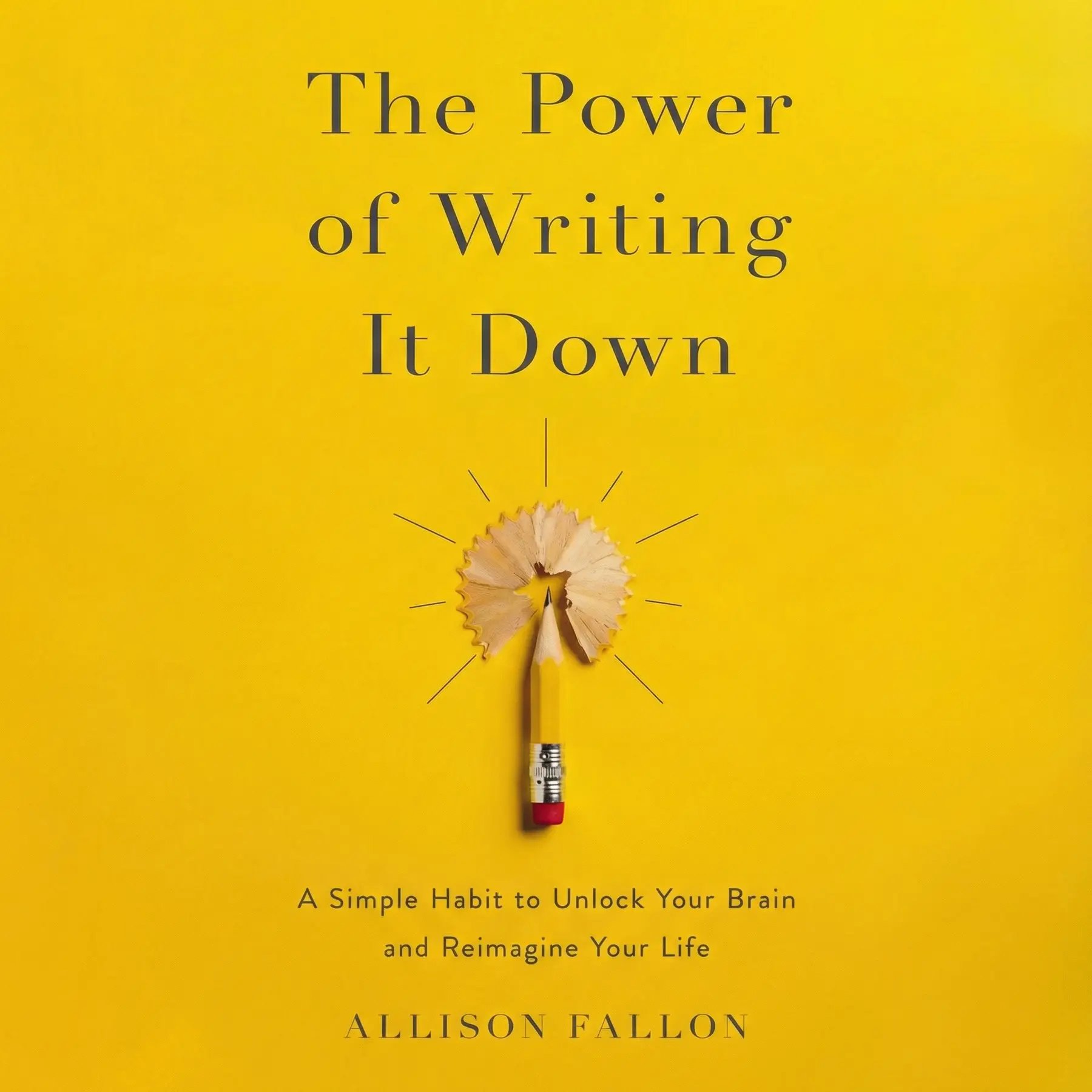
The Power of Writing It Down: A Simple Habit to Unlock Your Brain and Reimagine Your Life
Shows how a few minutes of honest, unpolished writing each day can quiet anxious thinking, separate facts from the stories you tell yourself, and help you see your situation and your choices more clearly.

Table of Content
1. Introduction
59 sec
If your head is full of worries you cannot untangle, a notebook may help more than another night of thinking. In a 1994 study described in The Power of Writing It Down, long-term employees who had lost their jobs and wrote about their feelings and hopes were 30 percent more likely to be offered new work than colleagues who wrote only about daily routines. Writing coach Allison Fallon argues that this kind of honest, unpolished writing is open to anyone, including people who would never call themselves writers.
Her case is that plain writing, done regularly, lets you hear your own thoughts and rewrite the stories that keep you stuck. The tools are small: a dedicated spot, a few minutes a day, a handful of questions and one five-step prompt for any hard moment. With them, a bad day at work or an old family hurt becomes something you can sort into facts, interpretations and choices, and then change.
2. Treat yourself as the writer you already are
1 min 48 sec
Most people who would benefit from a writing habit never begin, convinced it belongs to someone more talented. A quick look at your sent messages, and a single candle, suggest the barrier is far lower than it seems.
3. A blank page that works on your side
1 min 35 sec
The moment you sit down to write, the dishes and emails start calling, and a harsh inner voice joins them. Fallon reads that second voice in a surprising way, and it changes how you handle it.
4. Better questions beat polished sentences
1 min 30 sec
Trying to write something profound is a reliable way to write nothing at all. A different starting point takes the pressure off and tends to lead somewhere deeper than any confident statement would.
5. Separate what happened from the story you tell
1 min 57 sec
Two groups of laid-off workers went to the same number of interviews, but one received far more job offers. What they wrote beforehand points to a five-step tool for any situation that keeps going wrong.
6. Gain distance by narrating your own story
1 min 39 sec
In films, the audience often sees good news coming while the hero sits sure all is lost. Your own life holds that same second point of view, though some versions of it will mislead you.
7. Write to one person and find what you mean
1 min 40 sec
A complaint scribbled in a journal and a letter written to your boss can describe the same conflict yet reveal very different things. The difference lies in one choice made before the first word.
8. Conclusion
1 min 05 sec
Fallon’s book makes a modest promise and keeps it. You do not need talent, training or a novel in mind. You need a corner, a few minutes and the willingness to be honest on paper. What you get back is distance: the chance to see that the manager’s three suggestions were a fact, and that being bad at your job was a story you added on top.
That distinction carries the whole practice. The candle and the calendar block get you to the page. The questions keep you there. The infinity prompt and the narrator’s view show where a loop can be broken, and writing to one person helps you say what you actually mean.
A good first week can be very plain. Pick a spot and a cue, give it five minutes a day, and on the first hard day write down only what happened before you write what you think it means. If the inner critic gets loud, set a timer and let it talk until it runs out.
The employees in that 1994 study did not get more interviews than anyone else. They had likely written their anger out first, which may be why more of them heard yes.
About this book
What is this book about?
Most people carry a running loop of worry, replayed conversations and half-formed plans, and thinking harder rarely untangles it. Allison Fallon, a writing coach who has worked with first-time writers and CEOs, argues that the fix is to get those thoughts onto paper in a plain, honest way she calls expressive writing. Her starting point is that everyone already writes, through emails and texts, so the practice needs no talent. It needs a dedicated spot, a protected slot of even five minutes a day, and the patience to sit through distractions and the inner critic. From there she offers simple tools: open questions in place of polished statements, a five-step infinity prompt that separates the facts of a hard moment from the story you attach to it, a narrator's view of your own life, and letters written to one specific person. Fallon supports the approach with a 1994 study in which laid-off employees who wrote about their feelings were 30 percent more likely to land new jobs. Readers get a practice they can start this week and a way to change the stories that keep them stuck.
Book Information
Who it's for
Replaying conversations at night
Anxious overthinkers who replay conversations at night and want a simple way to get them out of their heads.
Professionals facing career upheaval
Professionals facing criticism, layoffs or a career change who want to separate what happened from the story they tell about it.
Never called themselves writers
People who never call themselves writers but want a short daily practice.
About the Author
Allison Fallon
Allison Fallon is a writing coach and the founder of Find Your Voice, a community for anyone who wants to write. She has coached people ranging from first-time writers to CEOs. Her other books include Packing Light and Indestructible. She also speaks publicly and lives in Pasadena, California, with her family.
Ratings & Reviews
Ratings at a glance
What people think
Listeners find this work successful for establishing a routine of writing, with one individual mentioning how it sheds light on different motivations for the craft. Furthermore, the title offers excellent research along with actionable advice, creating an accessible experience that encourages self-exploration. They value its openness, with one listener pointing out its humorous yet gentle approach, and believe it is vital for individual development.
Top reviews
Pornpimon
Finally got around to reading this, and Fallon’s "Infinity Prompt" has already changed the way I approach my morning pages. This isn't your typical, dry guide on how to structure a novel. It’s a deep dive into how words can literally change the ending of your personal story. The tone is comical and vulnerable, making the heavy research into neuroscience feel accessible and light. I’ve been journaling for years, but this book gave me a fresh perspective on why it actually works. It helps you see the ordinary parts of your life as something worthy of a long, loving look. If you feel stuck in a rut or disconnected from your own voice, this is the manual you need. It’s practical, research-backed, and deeply moving. I expect I will be re-reading this one whenever I need a boost of motivation.
Show moreDylan
Wow, this book landed in my lap at the exact right moment during a season of feeling totally stuck. It felt like having a long, meaningful conversation with a friend who really gets you. The research on the benefits of a regular writing practice is fascinating and provided the "nudge" I needed to finally commit to a daily habit. I love that it’s written for everyone—even the people who laugh at the thought of calling themselves writers. It’s an insightful, beautiful read that delivers on all its promises. The author’s voice is gentle and knowing, helping you dismantle the walls you’ve built around yourself. If you want to find healing, get unstuck, or just understand yourself better, you need to read this. It’s a gift.
Show moreOat
Picked this up after a long period of feeling creatively paralyzed, and it was exactly the spark I needed. Allison Fallon writes with a voice that is both tender and incredibly authoritative. It’s a combo of science and storytelling that makes a strong case for expressive writing. I particularly loved the idea of "bearing witness" to our own lives. To be fair, the book is much heavier on the "Why" than the "How," which might frustrate someone looking for a technical manual. But the inspiration factor is off the charts. Some of the personal anecdotes from her workshops felt a little like filler, yet they do help illustrate the points effectively. It’s not just for "writers" in the traditional sense; it’s for anyone trying to make sense of the chaos in their head. The research into rewiring the brain was fascinating and gave the book some much-needed weight.
Show moreJackson
As someone who has struggled with unprocessed trauma, I found the chapter on the "Three Cautions" to be incredibly necessary and grounded. There is no "woo-woo" magic here; just solid, researched advice on how to use writing as a tool for self-discovery. The concept of "metabolism" in relation to our stories was a total lightbulb moment for me. Fallon acts like that favorite teacher who sees past your junk and calls out the power within you. I did feel that some sections were a bit long-winded, and the personal workshop stories started to blend together. Still, the core message is vital. It’s a beautiful reminder that our stories aren't fixed. We have the power to change the narrative if we’re willing to put the words on paper. It's a timely read for anyone feeling stuck.
Show moreSelin
Ever wonder if putting pen to paper actually does anything for your brain chemistry? This book answers that with a resounding yes. It’s a stark reminder of the life-changing nature of storytelling. Allison writes with a tender flair, helping you navigate the journey to wholeness through simple, expressive words. I found the section on unfinished endings particularly helpful for dealing with recent life changes. The book is approachable and doesn't demand that you be a "writer." Look, it does get a little repetitive in the middle, and the author's personal views leak in occasionally, but the overall message is too good to ignore. It’s about more than just journaling; it’s about learning to bear witness to your own existence. I keep the infinity prompt tucked in my notebook now.
Show moreHannah
In my experience, books on journaling tend to be fluffy, but this one actually backs its claims with solid evidence. It isn't just about "feeling better"; it's about the neuroscience of rewiring your brain. I’ve been writing for years, yet I still found new perspectives here that challenged me to go deeper. The author’s vulnerability is refreshing, and she manages to be funny even when talking about heavy topics. There were a few points where it felt like it dragged, especially when it veered into workshop territory. A bit of a tighter edit would have made it a 5-star read. Still, if you take action as the author suggests, this book has the potential to be transformative. It’s a great investment of time for anyone looking to find their voice again.
Show moreCha
Look, I’m not usually one for self-help, but the way this book frames story-telling as a tool for wholeness is compelling. It’s an easy read that manages to be both inspiring and practical. Allison Fallon shows you how to use writing to get out of your own head and onto the page. I specifically resonated with the idea that writing is a way to make sense of the chaos of our lives. Sometimes we just need to see our thoughts in black and white to realize we have more power than we thought. The book does feel a bit long for the amount of unique information it provides, but the core tools are very effective. I’ve already recommended it to a few friends who are going through tough transitions.
Show morePong
The central premise here is fantastic, but the execution felt a bit padded for a full-length book. Truth is, the author takes over 200 pages to say what probably could have been summarized in a long-form essay or a thin workbook. I appreciated the encouragement to start writing again, and the science behind the habit is definitely solid. However, I found the constant stories from her workshops to be a bit repetitive after a while. At points, it felt like an extended advertisement for her coaching services. I also noticed some out-of-place political commentary that felt unnecessary for a book about self-expression. I’m happy I read it because it got me back into my journal, but I found myself skimming through the middle sections just to get to the actual prompts. It’s a good book, but it drags.
Show moreDream
To be fair, Allison Fallon writes with a very engaging, teacher-like voice that makes you want to believe everything she says. The book is clear and has a natural flow, weaving in brain science and personal examples. However, if you are already a regular journaler, you might find a lot of this to be common sense. It’s a great "starter kit" for someone who has never picked up a pen for self-reflection. For the rest of us, it’s a bit of a mixed bag. I liked the focus on becoming your own narrator, but I wanted more practical "How-to" steps. It felt like the actual tools were hidden under a mountain of "Why writing is great" chapters. It’s a quick read, though, and worth it if you can get it on sale.
Show moreSomkid
Not what I expected based on the title. I was looking for practical exercises and structure, but this was about 90% fluff and personal stories. To be fair, the first chapter was motivating, but then it just descended into repetitive anecdotes that didn't offer much value. My book also arrived with a weird black residue on the cover, which was a bit of a letdown. More importantly, the author wait until very late in the book to discuss the hazards of digging up trauma. For someone dealing with serious issues, doing this without a therapist—as she briefly suggests—could be quite destabilizing. It felt a bit irresponsible to push this "writing as therapy" angle without front-loading the cautions. It might work for some, but it just wasn't for me. It felt like it was trying too hard to be profound.
Show moreQuestions about this book
What is the main idea of The Power of Writing It Down?
Allison Fallon argues that anyone can use expressive writing, honest and unpolished writing about thoughts and feelings, to hear their own mind more clearly and change the stories that keep them stuck. Since everyone already writes emails and texts, no special talent is required. The practice needs a dedicated space, a regular time and a few prompts, such as open questions, the five-step infinity prompt and letters addressed to one specific person.
What is the infinity prompt in The Power of Writing It Down?
It is a set of five questions for any difficult situation. Write the bare facts, then the story you have attached to them, then how you feel about both, then whether you engaged with those feelings or pulled away, and finally what that response led to. Fallon’s example is a manager suggesting three improvements, which turns into a belief that you are bad at your job, avoided meetings and more criticism.
How do I start an expressive writing practice?
Fallon suggests three kinds of space. Choose a physical spot that feels special and tie it to a sensory cue, such as a candle lit only for writing. Block time in your calendar, even five minutes a day, often early morning or late night. Then make mental space by sitting there and simply observing your thoughts. When the inner critic is loud, try a 30 minute unedited freewrite or a gentle five minutes about your day.
Does expressive writing really help, according to the book?
Fallon points to a 1994 study of long-term employees who lost their jobs unexpectedly. Participants who put their feelings, revised plans and hopes on paper were 30 percent more likely to land job offers than those who recounted their work routines, although the interview count was identical in the two groups. She suggests the writing helped them release negative emotions and focus on the future, and she compares the approach to Cognitive Behavioral Therapy.
Readers also enjoyed

59 Seconds: Change Your Life in Under a Minute
Richard Wiseman

ADHD an A-Z: Figuring It Out Step by Step
Leanne Maskell





AUDIO SUMMARY AVAILABLE
Listen to The Power of Writing It Down in 15 minutes
Get the key ideas from The Power of Writing It Down by Allison Fallon, plus 5,000+ more nonfiction titles.
- 5,000+ titles
- Listen as much as you want
- 7-day free trial
- Cancel anytime









