
The Hero with a Thousand Faces
Joseph Campbell
 English
 ไทย
Shows why ancient myths still matter: they bind communities, reveal what all cultures share, guide people through marriage, adulthood and death, and leave a dangerous gap when modern life forgets them.
1 min 13 sec
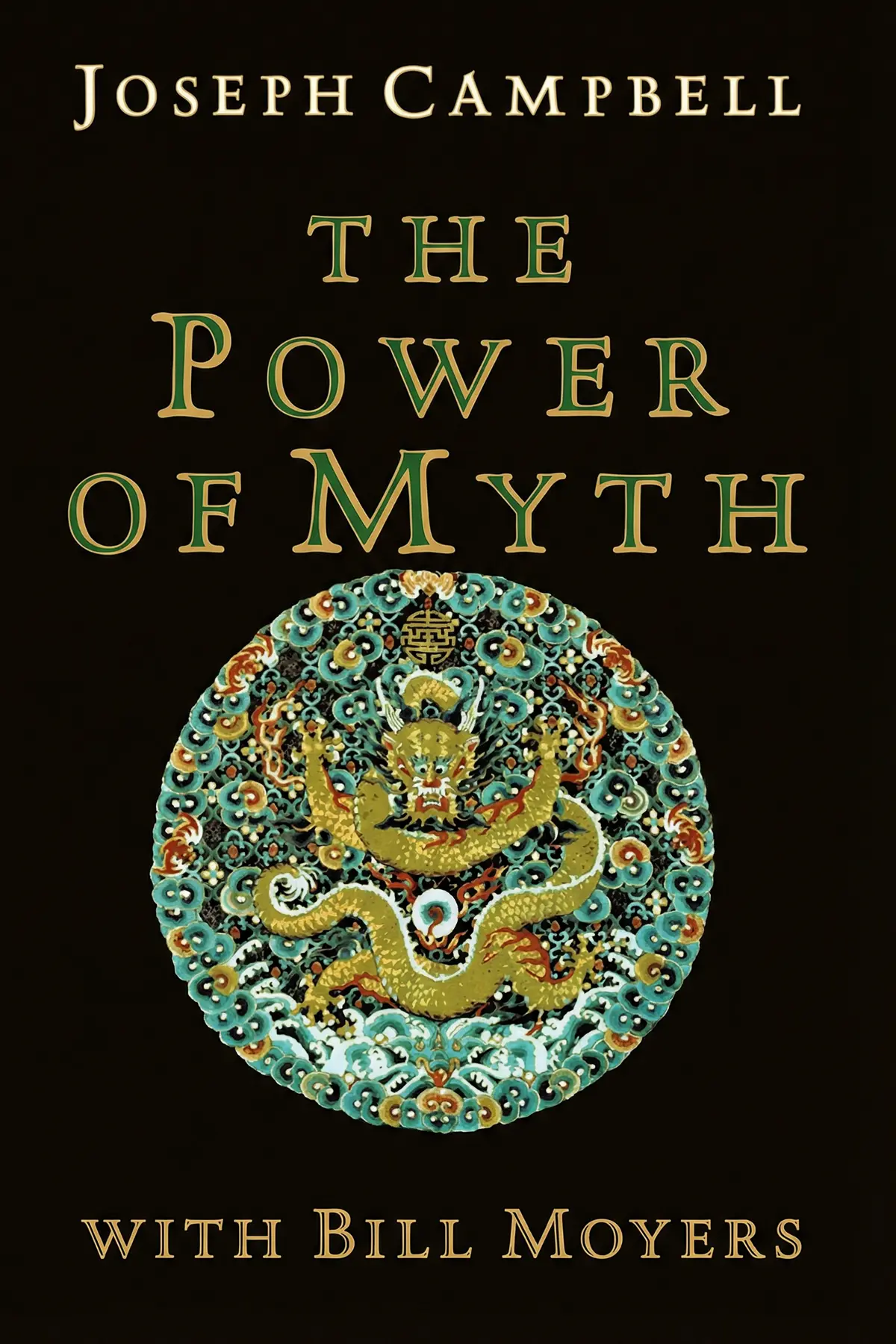
If old myths sound like children’s tales of talking snakes and magic swords, you may be missing tools that still shape how people marry, mourn and belong. In The Power of Myth, the scholar Joseph Campbell, in conversation with the journalist Bill Moyers, argues that modern people need these stories more than ever, because science explains how the world works but not why we are here or what death means. Their first surprise is how much the world’s myths share. The Bible’s tale of Adam, Eve, the serpent and the forbidden fruit is also told, in the same form, by the Bassari people of Senegal.
The argument running through the book is easy to state. Myths give a community its identity, carry people across the frightening thresholds of life and point toward ideas too large to grasp directly. When they fade, people reach for riskier substitutes, and a new shared mythology starts to form. Follow that thread and Star Wars, a wedding toast and a gang initiation start to sound like versions of one old human need.
1 min 49 sec
A Native American goddess named after a crop made room for a new sacred animal once strangers arrived with horses. That shift reveals how the stories behind a group change, and why they can unite and divide at once.
1 min 49 sec
Two different religious traditions both tell of a figure who walked on water. An African tale about farmers and a two-colored hat explains why people keep fighting over stories that are secretly the same.
1 min 49 sec
Calling a partner your other half sounds like a casual phrase, yet it carries an ancient belief about souls. The book shows how such stories, and the rituals built on them, steady people when one stage of life ends.
1 min 53 sec
Ancient peoples on different continents buried gifts with their dead, and some tribes tied a boy’s right to marry to a death. These customs point to a gentler way of facing mortality and ideas too big to picture.
1 min 45 sec
Modern life dropped many old rites of passage in favor of personal goals. The need behind them did not go away, and the book traces where it went instead, from lonely evenings to street-gang initiations.
1 min 39 sec
The films that earn the most around the world keep telling one very old story. The book sees in them the first outline of a mythology shared by people of every nation and faith.
1 min 10 sec
What Campbell and Moyers offer, finally, is a different way to hear old stories. The talking snake and the god in the two-colored hat were tools people built to belong somewhere, to change roles without falling apart, and to stand at the edge of death or eternity without panic. Lose those tools and the need remains, showing up as loneliness, a risky high or a gang’s ordeal.
The book’s closing advice is personal: “Follow your bliss.” It traces much modern depression to the pressure of living by other people’s wisdom, when each of us knows inside what we should be doing and what makes us happy. The old myths, on this reading, say that doing what brings real joy lets the rest fall into place.
That leaves some things to try. Notice when an argument about belief is really two farmers disputing a hat. Mark your next big passage, a new job or a new home, with something deliberate. And when a story stirs you, ask which part of your own life it is speaking to.
The myths were always about the person listening.
Talking snakes, magic swords and gods walking on water can sound like leftovers from an age before science. Joseph Campbell and Bill Moyers argue the opposite. Science explains how the world works, but it cannot say why we are here or what death means, and that is the work myths have always done. In their conversations, Campbell and Moyers trace how myths give a people its identity, from the Inca sun god to the Cherokee maize goddess, and how the same stories surface far apart. The forbidden fruit appears both in the Bible and among the Bassari of Senegal. Myths and rituals guide people through marriage, adulthood and death, and offer a feeling for ideas like eternity that no definition can hold. The book also looks at what happens when these stories fade: loneliness, risky searches for awe and harsh home-made initiations. It finds a hopeful sign in global culture, where blockbusters retell the oldest hero story. Readers get a new way to hear the stories around them, and a reason to follow their own sense of joy.
Curious readers who see myths as fairy tales and want to know why they still shape modern life.
People facing a big change, such as marriage, loss or a new role, who want older ways to make sense of it.
Anyone tired of religious conflict who wants to see what different faiths share.
Joseph Campbell (1904 to 1987) studied medieval literature at Columbia University, then in Paris and Munich, and taught literature at Sarah Lawrence College for many years. His book The Hero with a Thousand Faces argued that heroic myths share one pattern, the monomyth. Bill Moyers (1934 to 2025) was a journalist who served as White House Press Secretary under Lyndon Johnson, helped organize the Peace Corps and won more than thirty Emmy awards. Their television interviews, broadcast in 1988, brought Campbell's ideas to millions.
Joseph Campbell

Listeners find this work captivating, especially for enthusiasts of Star Wars, and value its profound perspectives on mythology and faith, with one listener mentioning that it clarifies long-standing convictions. Furthermore, the material provides excellent bits of wisdom throughout and prompts listeners to reflect on various facets of religion, which they find applicable to their everyday routines. Nevertheless, opinions on the tempo are varied, with some finding it mesmerizing while others find it repetitive, and the caliber of the conversation also draws diverse reactions, even if many appreciate the candid exchange with Moyers.
After hearing George Lucas credit Campbell for the structure of Star Wars, I knew I had to pick this up. The dialogue between Moyers and Campbell flows effortlessly, making complex anthropological theories feel like a casual fireside chat. It is truly fascinating to see how the 'Force' is rooted in ancient metaphors that humanity has carried for millennia. While some parts feel slightly dated, the core message about finding our own 'hero's journey' remains incredibly potent. To be fair, some sections on individual religious traditions get a bit dense, but the 'nuggets' of knowledge you find on every other page more than make up for it. It really helped me clear up some long-held misconceptions I had about faith versus organized religion. Every Star Wars fan should read this at least once to see the DNA of their favorite film.
Show moreWow, what an incredible journey through the collective human spirit. I found myself highlighting nearly every page because Campbell’s definition of 'following your bliss' resonated so deeply with my current life situation. It isn't just about being happy; it’s about being in sync with your true nature. Frankly, I didn’t expect a book about ancient myths to provide such practical guidance for my daily career and relationship struggles. The connection between the feminine divine and our modern understanding of creativity was especially moving for me. Moyers does an excellent job as the interviewer, asking the questions that a regular person would actually want to know. It’s the kind of book that stays with you long after you’ve put it down. You start seeing archetypes in everything from movies to the way people interact at work.
Show morePicking this up felt like finally finding the missing pieces to a puzzle I’ve been staring at for years. As someone who grew up in a secular household, I often felt like I was missing out on the 'language' of the sacred. Campbell translates that language into something universal and deeply personal. He helps you realize that myths aren't just 'false stories,' but metaphors for the internal realities of the human heart. The chapter on standing in a cathedral and experiencing a sense of smallness gave me a completely new perspective on religious architecture. It’s the kind of book that clarifies your own beliefs rather than trying to convert you to new ones. I found it mesmerizing from start to finish. I’ve started recommending it to everyone I know who is going through a period of transition or 'finding themselves.'
Show moreThe chapter on marriage alone transformed how I view my long-term relationship. Campbell explains it not as a romantic contract, but as a spiritual 'reconstruction' of the two people involved. It’s such a profound shift from how our culture usually portrays love. The book is filled with these kinds of 'aha!' moments that make you re-evaluate everything you thought you knew about society. Not gonna lie, some of the psychological stuff gets a bit heavy, but it's always followed by a fascinating story from a distant culture. I appreciated how he treats all religions with the same level of respect and metaphorical curiosity. It makes the world feel smaller and more connected. This isn’t a book you read once and put away; it’s one you keep on your nightstand to revisit whenever you feel disconnected from the world.
Show moreThis book feels like it should be mandatory reading for anyone trying to navigate the complexities of modern adulthood. Campbell’s insights into why our current generation feels so lost—often due to a lack of meaningful rites of passage—really hit home for me. We live in a world that has largely discarded the rituals that once helped us transition from childhood into maturity. Truth is, Campbell does stretch his points occasionally, and you might find yourself rolling your eyes at his more 'starry-eyed' assertions. However, the way he explains the psyche through the lens of myth is absolutely eye-opening. The interview format makes it much more accessible than his more academic works like 'The Hero with a Thousand Faces.' It forces you to pause and think about the stories you tell yourself every day.
Show moreIf you've already tackled 'The Hero with a Thousand Faces,' you'll find this to be a much more relaxed and conversational companion piece. Because it’s a transcript of an interview, the tone is light and engaging, though it does occasionally suffer from repetitive phrasing. Campbell is a self-proclaimed generalist, which means he occasionally irritates specialists by glossing over historical nuances. Yet, his ability to synthesize global traditions into a cohesive narrative about the human experience is unmatched. I particularly enjoyed the discussion on how technology functions as a 'merciless' god in the modern age. It's a fascinating look at how we’ve replaced old altars with new, digital ones. Look, you might not agree with his Jungian psychological leanings, but the breadth of his knowledge is undeniably impressive. It's a great entry point for anyone curious about why we keep telling the same stories.
Show moreEver wonder why we still have such a strong emotional reaction to certain movies or classic tales? This book provides the answers by breaking down the 'monomyth' in a way that is both intellectual and accessible. It’s essentially a deep dive into the human hardware that makes us crave adventure and rebirth. I loved the parts where they discuss the impact of George Lucas and the Skywalker Ranch setting. It grounds the high-concept philosophy in something tangible that we all recognize. Gotta say, the pacing is a bit hit-or-miss depending on how interested you are in specific tribal rituals. Some sections definitely drag more than others. But the insights into how religion has changed as society evolved are worth the price of admission alone. It’s a solid read that will change how you view your favorite films.
Show moreTo be fair, I went into this expecting a dry lecture on mythology, but was pleasantly surprised by how vibrant the dialogue is. Bill Moyers is a fantastic surrogate for the reader, often pushing Campbell to explain his more abstract ideas. You can tell they have a genuine rapport, which makes the 'nuggets' of knowledge feel earned rather than lectured. My favorite part was the discussion on how we need to find new myths for the global age. It’s a very optimistic outlook on where humanity is headed, despite the 'sloppy' scholarship some critics point out. Personally, I don’t care if a few of his quotes are misattributed; the overarching message is what matters. It helped me reframe my daily stressors as part of a much larger, more heroic narrative. A few repetitive chapters keep it from a perfect score, but it's still a must-read.
Show moreFinally got around to reading this classic and it absolutely lived up to the massive hype. Campbell has this incredible way of making you feel like you’re part of a grand, ancient tradition just by being alive. For a Star Wars nerd like me, seeing the thematic foundations of the Jedi was a total treat. I loved his point about how we are all dots completing a giant circle of existence. But the book offers so much more than just movie trivia. It’s a deep meditation on what it means to be human in a world that often feels cold and mechanical. Truth is, Campbell might be a 'generalist,' but that’s exactly what makes this work so powerful. He sees the big picture that specialists often miss. It’s an enlightening, life-affirming read that I’ll be thinking about for a very long time.
Show moreNot what I expected from a supposedly scholarly text, as the 'spiritual' fluff frequently outweighs the actual historical analysis. While Campbell is clearly a master storyteller, his tendency to dismiss scientific inquiry in favor of 'transcendence' felt incredibly dated and, at times, quite frustrating. He makes broad, sweeping claims about 'The Mystery' without providing much evidence beyond anecdotal myths. Furthermore, his reliance on Jungian archetypes feels like trading one set of unprovable dogmas for another. In my experience, the book is far too repetitive, circling the same three or four ideas for hundreds of pages. There are definitely some interesting nuggets of knowledge regarding Native American and Norse folklore, but they are buried under layers of vague mysticism. If you’re looking for a rigorous anthropological study, you should probably look elsewhere.
Show moreJoseph Campbell and Bill Moyers argue that myths remain necessary even in a scientific age. Science explains how the world works, but myths help people understand why they are here and what death means. Myths also give communities a shared identity, guide individuals through stages like adulthood and marriage, and reveal how much different cultures have in common. When myths fade, the book warns, people look for riskier substitutes.
The book describes archetypes, universal ideas that cross cultures because all people share the same basic fears, desires and hopes. Both Jesus and the Buddha are said to have walked on water. The Bible’s story of Eve, the serpent and the forbidden fruit is also told by the Bassari people of Senegal. Yet people often fixate on surface differences, like farmers fighting over the color of one god’s hat.
The book links the decline of myth to schools dropping classical texts and to a culture focused on individual goals rather than the group. Without myths and rituals, it argues, many people feel cut off and suffer depression or loneliness. Some seek awe through drugs or alcohol, and some groups, such as street gangs, invent harsh initiation rituals of their own.
It is the book’s central piece of personal advice. The authors connect much modern depression to the pressure of living by other people’s wisdom. They argue that each person knows inside what they should be doing and what makes them happy, and that ancient myths teach us to trust that feeling. Doing what brings real joy, in their view, lets everything else fall into place.
According to the book, the Hollywood films that earn the most money, Star Wars and The Matrix among them, follow the familiar hero narrative: a hero departs, completes the task and comes back. The same arc appears in the lives of Jesus and the Buddha and in the tales of King Arthur. Because audiences everywhere recognize it, the authors see such films as the start of a shared global mythology.

Alcoholics Anonymous World Services


Daniel Goleman


Eckhart Tolle
Marianne Williamson

Deepak Chopra

Pico Iyer
Beth Moore
Paramahansa Yogananda
AUDIO SUMMARY AVAILABLE
Get the key ideas from The Power of Myth by Joseph Campbell, plus 5,000+ more nonfiction titles.









