

Alcoholics Anonymous
Alcoholics Anonymous World Services
 English
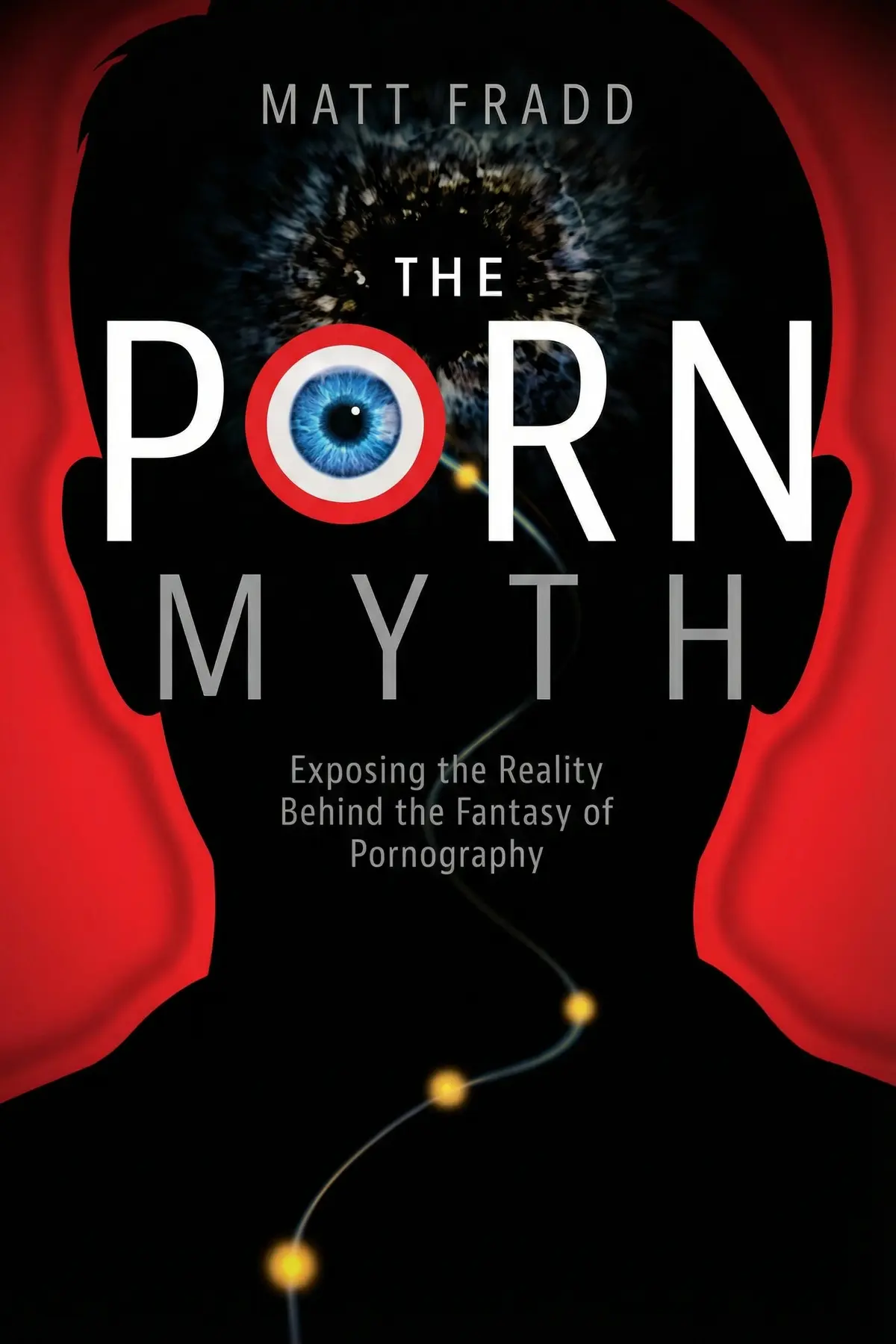
Shows, in non-religious terms, how pornography shapes desire, dulls the brain's reward system and strains sex lives and relationships. Gives concrete steps for quitting, rebuilding trust and protecting children.
1 min 05 sec
Many people treat pornography as harmless private fun, and Matt Fradd thinks that belief needs a hard second look. In The Porn Myth, he opens with gypsy moths. In the 1960s and 1970s, scientists dropped pellets of synthetic female pheromone over infested forests. The flooded males lost track of real females and stopped breeding, and the population fell sharply. Fradd argues that porn works on people in a similar way, leaving many confused about real intimacy or no longer interested in it.
His throughline is that the harmless pastime is a myth. He makes his case in non-religious terms, with evidence from scientists, performers and users. Porn trains desire, he argues, dulls the brain’s reward system, strains bodies and relationships, and depends on people who are hurt making it. He also insists the habit can be broken. Ahead are the studies he relies on, a map of how an urge builds, and concrete steps for stopping, repairing trust and protecting children.
1 min 42 sec
Most people feel free and unaffected by what they watch. Advertisers spend fortunes betting otherwise, and one study that sorted men by risk suggests the stakes are higher than a sales figure.
2 min 09 sec
Nobody swallows or injects porn, so skeptics say calling it addictive is a stretch. Fradd answers with an account of how the brain’s reward system works, and a surprising comparison to the casino floor.
1 min 54 sec
Erectile problems used to be something for older men to worry about. Fradd points to the year the numbers among men in their twenties began to change, and to a sharp gap between screen and bed.
1 min 57 sec
Porn is often defended as a private matter between consenting adults. Fradd turns attention to the people being filmed and to magazine covers, and asks what the whole culture learns from what it watches.
2 min 02 sec
Some people compulsively eat clay and charcoal, and Fradd sees the same bent appetite in porn use. He also traces the urge through seven stages and shows where you can still turn back at each one.
1 min 38 sec
A spouse’s pain is often dismissed and a child’s first phone is often handed over without much thought. Fradd’s advice for both starts years earlier, and more gently, than many parents and partners expect.
1 min 29 sec
Fradd calls choice the biggest myth of all. A culture that treats the act of choosing as its highest value, he argues, stops asking whether a choice is right, good or noble. To the claim that people can do what they want, he answers with simple prudence: think about what a behavior may cost before you take it up. The costs he collects range from a numbed reward system and failing bodies to weaker commitment, exploited performers and magazine covers that teach a narrow idea of women. He sums up his case as two reasons to reconsider porn: being for science and being for love.
He doesn’t leave readers in shame. He tells users they are not their addictions. What they actually want is relief, stimulation and joy, and porn cannot give them any of these.
The steps he supports are small. Write down the truths you will say out loud when an urge starts, and then say them. Remove one trigger this week, whether that means leaving a door open, cancelling a subscription or installing a filter. If someone you love is struggling, take their hurt seriously and respond with love.
The moths in those forests never stopped wanting to mate. They were flooded with a fake signal until they could no longer find the real one. Fradd hopes people, unlike moths, can learn to tell the two apart.
Plenty of people see pornography as ordinary private entertainment. They think it is harmless and maybe even healthy. Matt Fradd once believed the same thing. In The Porn Myth he takes that belief apart one popular claim at a time: that porn is just adult entertainment, that it empowers women, that it is not addictive, and that opposing it means opposing sex. Fradd makes his case without appealing to religion. He draws on neuroscientists, psychologists and sociologists, and on the experiences of porn users and performers. He explains how a flood of dopamine leads the brain to numb itself and push users toward harder material. He sets out studies linking heavy use to erectile problems in young men and to weaker commitment in couples. He also looks at the industry's treatment of performers and at what porn teaches a culture about women. The book doesn't stop at a list of harms. It describes the stages an urge passes through and gives practical ways to turn back before acting on it. It also offers advice for spouses who have been hurt and for parents handing a child a first screen.
People who suspect their porn habit is costing more than they admit and want a clear plan to stop.
Partners hurt by a spouse's porn use who want their pain taken seriously.
Parents about to give a child a first phone or tablet who want to know where to start.
Matt Fradd was born in Australia in 1983. A conversion experience at World Youth Day in Rome in 2000 led him into lay ministry, including missionary work in Canada and Ireland. He later worked as an apologist and speaker with Catholic Answers. In 2016 he started the Pints with Aquinas podcast, which became part of The Daily Wire in 2026. He studied philosophy and holds an honorary doctorate from Holy Apostles College & Seminary. He has also spoken and written about pornography.

Listeners describe the book as well-documented and accessible, with one listener remarking that it is full of statistics and studies. The text offers deep insight into the pornography issue and how it handles addiction struggles, presented in a clear, conversational manner. Listeners respect the caliber of the writing and find the content credible, with one listener emphasizing the inclusion of testimonies from the legal and medical realms. They also prize the book's humanizing perspective, with one noting its effectiveness in helping to improve relationships.
Matt Fradd delivers a punchy, science-backed case against the modern pornography industry that feels more like a wake-up call than a Sunday sermon. I was particularly impressed by how he avoids constant "God-talk" to focus on the neurobiological fallout of high-speed streaming. The data on gray matter shrinkage and the hijacking of the dopamine system is genuinely terrifying, especially for someone who grew up with unrestricted internet access. It’s written in a clear, conversational style that makes dense medical studies digestible for the average person. While the author's personal convictions occasionally peek through, the sheer volume of statistics and legal testimonies provides a solid foundation for his arguments. Frankly, you don’t need to be religious to see the logic here; the evidence of damaged relationships and distorted intimacy speaks for itself. It’s a legit, humanizing approach to a topic that is too often dismissed as a harmless pastime.
Show moreFinally, a resource that doesn't just shame you but actually explains the 'why' behind the struggle with compulsive sexual behaviors. For years, I felt like I was failing a moral test, but this book shifts the perspective from character flaws to neurological hijacking. Fradd uses a conversational tone to explain how porn functions like a drug, creating an endless cycle of anticipation and disappointment. The focus on the "gambler's fallacy" and the dopamine-driven chase for the next novel image was a total lightbulb moment for me. Not gonna lie, some of the advice on software like Covenant Eyes feels a bit extreme for my lifestyle, but the goal is clearly about regaining freedom and self-confidence. This isn't just a parenting book; it’s a manual for anyone looking to repair their gray matter and reclaim their capacity for real-world intimacy. The approach is deeply humanizing and focuses on growth.
Show moreThe legal and medical testimonies included in these pages were truly eye-opening and added a layer of credibility I wasn't expecting. Matt Fradd doesn't just give his opinion; he builds a case like a prosecutor, using a massive array of peer-reviewed studies to show how porn creates an environment of disrespect. I appreciated the chapter on how the industry exploits performers, which echoed a lot of the feminist arguments I’ve read elsewhere. The book is well-researched and avoids being overly dense, maintaining an accessible pace throughout. In my experience, most books on this topic are either too "churchy" or too academic, but this hits the sweet spot of being informative without being boring. It’s an excellent start for those who claim porn has no effect on real life. The appendix at the end is a great addition, providing practical resources for those actually struggling with addiction.
Show moreWow, Fradd really strips away the excuses we’ve all used to justify the porn industry for the last few decades. He doesn't just say "porn is bad" because a book told him so; he shows the actual wreckage in the brain and in the legal system. The statistics on how porn consumption correlates with a higher acceptance of rape myths and violent sexual behavior are haunting. This isn't just a "NoFap" manual; it’s a comprehensive look at how digital commodification ruins our ability to connect with real people. The writing is easy to read and packed with insights that will make you rethink your "mouse clicks." Frankly, it's one of the few books on this topic that feels like it has actual intellectual teeth. Whether you’re a parent, a spouse, or just someone curious about the effects of the internet on the psyche, this is a must-read.
Show moreAs a secular reader, I was skeptical about picking up a book by a Catholic apologist, but the "myth" aspect of the title intrigued me enough to give it a shot. The book is remarkably well-researched, pulling from a variety of secular studies on addiction and feminist critiques of the industry. Fradd makes a compelling case that porn isn't just a private choice but a public health crisis that fuels misogyny and unrealistic expectations. To be fair, there are moments where his "man up" rhetoric feels a bit dated and paternalistic, and his focus remains strictly on traditional monogamy. However, the insights into how digital stimulation rewires the brain are too important to ignore. It’s an easy read, packed with testimonies from medical professionals that ground the theory in reality. Even if you don't agree with every moral conclusion, the core argument about the commodification of human beings is hard to refute.
Show moreEver wonder why people are suddenly so vocal about the harms of a 'harmless' click? This book dives deep into that question, dismantling the idea that pornography is a victimless hobby with surgical precision. The writing quality is top-notch—Fradd has a way of taking complex data from the legal and medical realms and making it feel like a chat over coffee. I found the sections on how porn affects marital satisfaction particularly jarring, especially the statistics about how it changes a person's taste in sex toward more extreme content. It’s not just "moral bitching"; it's a serious look at how we’ve been sold a lie by a billion-dollar industry. My only minor gripe is that it can feel a bit heterocentric at times, but the core message about protecting our children and our own minds is universal. It’s a legitimizing read for anyone who has felt that "ick" factor.
Show morePicked this up after a recommendation from a friend who said it changed their relationship dynamic, and I’m glad I did. The book provides great insight into how pornography takes away the innocence of adolescents and ruins the "self-gift" aspect of sex. Fradd writes with a clear, conversational style that avoids being condescending while still being challenging. He highlights how the industry is built on money and sex, not trust or intimacy, which is a message our "pornified" culture desperately needs to hear. The focus on how porn use contributes to anhedonia and a lack of self-confidence was particularly relatable. It’s a legit resource that humanizes the user while condemning the industry, which is a difficult balance to strike. My only real criticism is that it occasionally feels like it’s only addressing men. Overall, it’s a solid 4-star guide for improving your life and relationships.
Show moreFradd’s writing style is surprisingly accessible, making complex neurobiology feel like a kitchen-table conversation rather than a college lecture. I’ve read a few books on this topic and this serves as a great companion piece that adds more of a social and feminist dimension. It’s packed with statistics and studies that help define the nature of the "ick" we all feel but can't always explain. Personally, I liked how he tackled the idea that porn is just "erotic art," clearly showing how the industry’s goal of industrialised stimulation is the polar opposite of true art. While the author is an openly devout Catholic, he mostly succeeds in mounting a case based on reason and social justice. Some parts do feel a bit "Ned Flanders" in their over-scrupulousness regarding any minor sexual thought, which might be a turn-off for some. Still, for a well-documented look at the porn epidemic, this is one of the better options out there.
Show moreTo be fair, the first half of this book is significantly stronger than the second half. The deep dive into addiction science and the "rewiring" of the adolescent brain is fascinating and well-documented with plenty of stats. However, as the book progressed, it felt a bit unfocused, veering into parenting advice and specific lifestyle changes that might not apply to everyone. I also found the author's occasional insistence on his own religious background unnecessary since he promised a secular argument. Truth is, the middle sections feel a bit like he's trying to write five different books at once: a psychology text, a self-help guide, and a social critique. Despite the scattered structure, the "myth-busting" elements are effective and based on compelling arguments about human dignity. It’s a decent read for the data, even if the delivery gets a little preachy toward the end.
Show moreThis was a massive disappointment for anyone looking for an objective, academic study on the sociological impacts of sexual media. While Fradd claims to offer a non-religious perspective, the entire book is dripping with bias and a very specific, narrow view of what a "healthy" relationship looks like. He consistently alienates anyone who isn't a heterosexual, cisgender person in a traditional marriage, making the tone feel incredibly preachy and exclusionary. The research feels cherry-picked to support his personal ideology, often ignoring studies that don't fit his specific narrative. Look, I agree that the industry has massive flaws, but his "paternalistic" lecturing makes it feel like he’s talking down to the reader. It’s unfocused, jumping from brain science to parenting advice to religious justifications without a clear through-line. If you aren't already part of his specific faith tradition, you'll likely find this more nauseating than enlightening.
Show moreFradd argues that the popular view of pornography as harmless or even healthy entertainment is a myth. He makes his case without appealing to religion, using neuroscience, psychology, sociology and the accounts of users and performers. He argues that porn shapes desire, numbs the brain’s reward system, is linked to sexual dysfunction and weaker commitment, harms performers and teaches a narrow view of women. He also holds that the habit can be broken.
Yes, though he presents the debate. Skeptics such as the therapist Marty Klein doubt sex addiction exists, and the main diagnostic manual dropped hypersexuality as a diagnosis. Fradd answers that behaviors like gambling can be as addictive as substances. He explains that porn floods the reward center with dopamine, the brain numbs its response, and users need harder material. He claims 39 neuroscience studies of porn users support the addiction model.
Fradd describes two strategies. The first is to turn back at any of the seven stages that lead from a trigger to porn use, by saying prepared truths out loud to engage the thinking brain. The second is to avoid triggers altogether: keep doors open, cancel cable, install filters. He also recommends therapy or 12-step groups and support from loved ones, and warns against secrecy. Freedom, he says, is a choice made each day.
Fradd suggests starting conversations about pornography around age six, roughly when children first get screen access. He says parents should monitor any device they give a child, or not buy it, since an unfiltered device is effectively a portable theater for explicit films. He also wants parents to help children build an internal filter and to respond with love, not anger, so children keep confiding in them.
Alcoholics Anonymous World Services

Steven C. Hayes




Leanne Maskell



AUDIO SUMMARY AVAILABLE
Get the key ideas from The Porn Myth by Matt Fradd, plus 5,000+ more nonfiction titles.









