

15 min 07 sec
Available in: English
The Perfectionist’s Guide to Losing Control: A Path to Peace and Power
Shows perfectionists how to keep their high standards without the self-punishment: recognize which of five perfectionist types you are, then replace the inner attack with self-compassion, support from other people and rest that actually restores you.
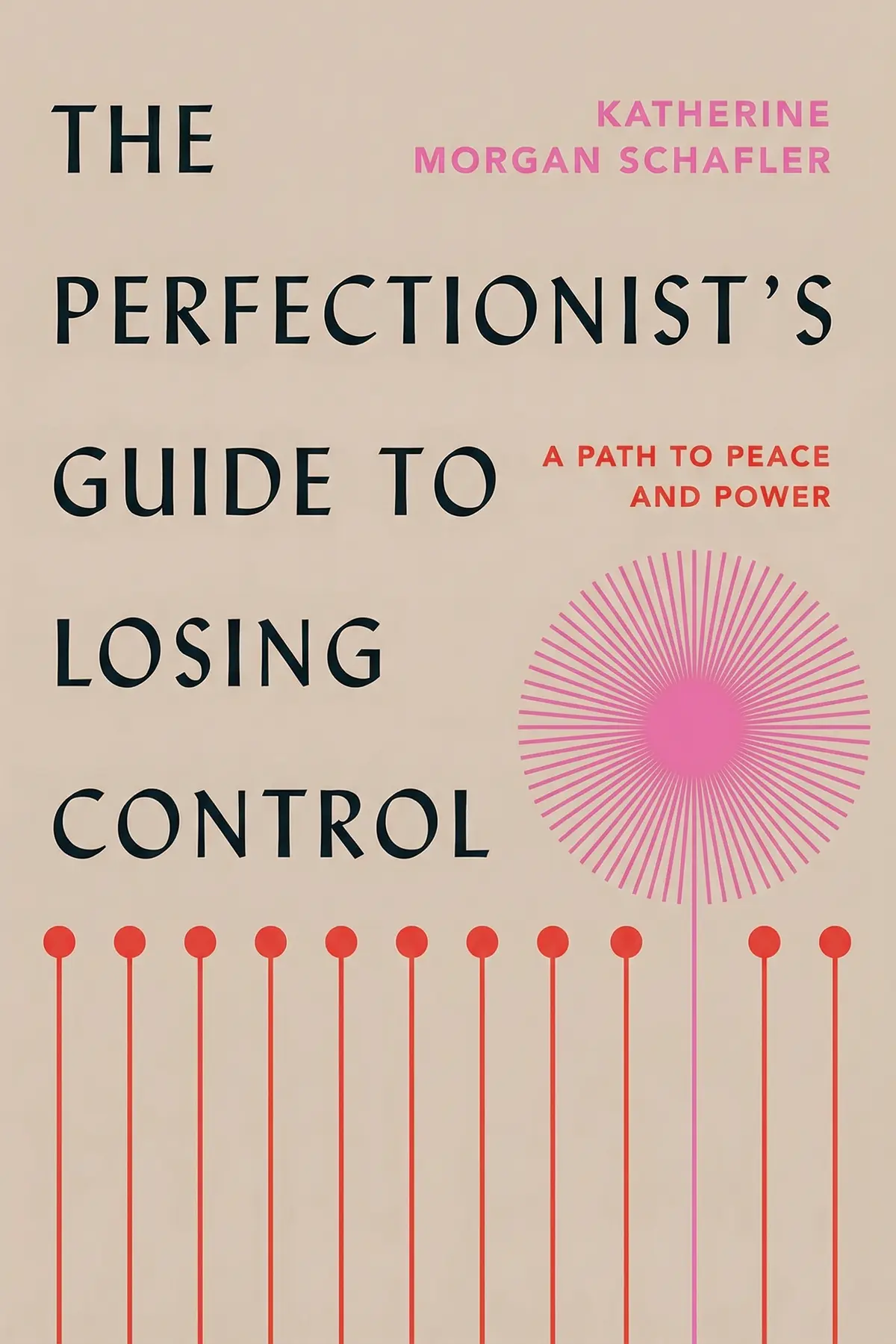
Table of Content
1. Introduction
58 sec
If you hold yourself to high standards and keep being told to lower them, you may have started to see your own drive as a defect. In The Perfectionist’s Guide to Losing Control, New York City psychotherapist Katherine Morgan Schafler argues the opposite: perfectionism is a form of power, and the harm comes from how it is treated. She describes perfectionists as people who keep noticing the gap between how things are and how they could be, and who feel responsible for closing it. That habit can drive great work or wear a person down.
Her case is that perfectionism turns destructive only when it is fought or punished, and becomes a strength once you adapt to it with self-compassion, connection and rest. Schafler, herself a perfectionist who treats perfectionists, sketches five distinct types, names the one habit that does the real damage, and offers ways to keep your standards while dropping the self-attack.
2. Turn your perfectionism into a working strength
1 min 55 sec
Two people can hold exactly the same impossibly high standards. One ends up fulfilled and confident, the other anxious and stuck. The difference between them has nothing to do with how high they aim.
3. Recognize the perfectionist who craves order or approval
1 min 58 sec
One client arrives at therapy perfectly pressed and precisely on time, yet her private life is in pieces. Another works tirelessly at friendships while hiding every bit of the effort. Both are perfectionists of very different kinds.
4. Know whether you stall, scatter or push too hard
1 min 55 sec
Some perfectionists never begin, some never finish, and some can see nothing but the finish line. Each pattern hides a real talent, and each can wreck careers and relationships when it goes unmanaged.
5. Replace self-punishment with self-compassion to loosen perfectionism's grip
1 min 56 sec
Many perfectionists believe their harsh inner voice keeps them responsible. Schafler sees it very differently, and she draws a sharp line between holding yourself to account and something far more corrosive.
6. Trade the inner critic for self-compassion
1 min 50 sec
Being kind to yourself sounds soft, and for perfectionists it can feel almost impossible. Schafler offers a handful of concrete footholds, and the smallest of them takes only a few minutes.
7. Let other people carry you on hard days
1 min 55 sec
There will be days when no amount of effort produces kindness toward yourself. Schafler’s fallback is surprisingly broad, and it includes a plumber, a yoga mat and a group chat.
8. Rest in ways a perfectionist can enjoy
1 min 29 sec
For many high achievers, lying still feels worse than working. Schafler does not ask them to love doing nothing. She offers kinds of rest that a restless mind can actually accept.
9. Conclusion
1 min 11 sec
Schafler’s title promises a kind of control that comes from letting go, and what she asks perfectionists to release is the superficial kind: the tidy surface, the flawless image, the inner voice that punishes every slip. What she asks them to keep is the drive itself, the urge to see what could be better and to help make it so. Abigail, with her pressed trousers and her corner of the couch, never needed to stop being a classic perfectionist. She needed her standards to stop costing her the people in her life.
That change is less about effort than about treatment. Notice which of the five patterns you fall into, and where it already serves you. When you replay a mistake, check whether you are assigning blame or working out the next step. On hard days, hand someone a real task when they offer help, or show up to a class where people know your face. And book rest that feels worth doing.
The path will wind, and perfectionists forgive their own missteps slowly. But the gap between the real and the ideal is where they do their best work, once they stop punishing themselves for standing in it.
About this book
What is this book about?
Most advice treats perfectionism as a disorder to be cured. You are told to treat it as an illness, miss a deadline on purpose, show up late or color outside the lines. Psychotherapist Katherine Morgan Schafler takes the opposite view. Perfectionists, she argues, are people who keep seeing the gap between how things are and how they could be, and who feel responsible for closing it. That is a form of power, and it only turns harmful when it is ignored, fought or misunderstood. Schafler describes five types of perfectionist: classic, Parisian, procrastinator, messy and intense. Each comes in a healthy, adaptive version and a punishing, maladaptive one. She then names the habit that does the real damage across all five, which is self-punishment, especially harsh self-talk. The practical core of the book is how to adapt. Schafler offers ways to build self-compassion, to lean on other people when compassion will not come, to stop ranking yourself against others, and to rest in ways a restless mind can tolerate. Readers get a map of their own pattern and a method for keeping their drive while dropping the shame.
Book Information
Who it's for
Self-critical high achievers
High achievers who are tired of being told to lower their standards but are worn down by their own self-criticism.
Struggling to finish projects
People who stall on projects, abandon them halfway or push others away with impossible demands.
Struggling to rest
Anyone who finds rest harder than work and wants a kinder way to keep their drive.
About the Author
Katherine Morgan Schafler
Katherine Morgan Schafler is a psychotherapist, speaker and writer based in New York City, and a former on-site therapist at Google. She studied at UC Berkeley and Columbia University and completed further certification with the Association for Spirituality and Psychotherapy. A self-described perfectionist, she specializes in working with perfectionists. The Perfectionist's Guide to Losing Control is her first book.
Ratings & Reviews
Ratings at a glance
What people think
Listeners describe this work as accessible and articulately composed, offering an all-encompassing roadmap for mental health that assists in leveraging perfectionist tendencies for efficiency. Furthermore, many consider the content transformative, with one listener highlighting how it expanded their worldview, and listeners prize its hands-on methodology and detailed clarifications. Also, the prose is characterized as compassionate, and listeners appreciate the unique lens through which the author views perfectionism.
Top reviews
Mia
Wow. This isn’t your standard “just do less” self-help garbage. For years, I’ve felt like my high standards were a character flaw I needed to excise, but Schafler turns that entire narrative on its head. She argues that perfectionism isn’t a disease to be cured but a power to be channeled, and honestly, that shift in perspective changed everything for me. The way she breaks down the five different types of perfectionists—especially the Procrastinator and the Messy types—made me feel seen in a way I haven't since reading Brene Brown. The writing is incredibly empathetic, almost like sitting in a session with a therapist who actually likes you. It’s a thick book and takes some time to digest, but the practical tools for self-compassion are worth every page. I found myself highlighting entire paragraphs because the insights into why we feel the need to close the gap between ideal and reality were just that profound. If you’re tired of being told to just 'relax,' get this.
Show moreAdam
Finally, a perspective that doesn't treat perfectionism like a disease to be cured! I’ve read so many books that tell me to just 'be okay with average,' and that never worked for me because I genuinely love working and striving for excellence. Schafler is the first author I’ve found who says it’s okay to want things to be perfect, as long as you aren’t tying your self-worth to the outcome. Her background as a Google therapist shines through in how practical and structured her advice is. The book is readable and empathetic, providing a roadmap for channeling that intense energy into something productive rather than self-destructive. I was audibly gasping at some of the case studies because they mirrored my own life so closely. It’s a life-changing read for anyone who identifies as a high achiever but feels like they’re on the verge of burnout. It helped me open up my mind to a new way of existing without losing my edge.
Show moreKofi
After hearing the author on a podcast, I knew I needed the physical copy to highlight, and it did not disappoint. Katherine Morgan Schafler has written something truly life-changing here. She manages to be both clinical and deeply personal, which creates a feeling of safety while you're confronting your own toxic habits. I’ve struggled with the 'Classic' perfectionist profile my whole life, and her advice on how to stop trying to control the outcome and start focusing on the process was exactly what I needed to hear. The book is comprehensive and provides a total guide to mental wellness that feels sustainable. I loved her perspective on how perfectionism is just the desire to close the gap between what is and what could be. That’s a beautiful thing, not a flaw! I’ve already recommended this to three of my friends who are also chronic overachievers. It’s the kind of book you’ll want to revisit every year when you start feeling the burnout creep back in.
Show morePichaya
Ever wonder why you can't just 'relax' even when you're on vacation? This book is the answer. I’ve read dozens of self-help books, but this is easily in my top five. Schafler’s empathetic tone made me feel understood rather than judged. She doesn't tell you to lower your standards; she tells you how to live with them without letting them destroy your happiness. The way she defines the different types of perfectionism is brilliant and helped me identify my own 'Parisian' tendencies. The book is well-written and serves as a comprehensive guide for anyone who feels like they’re constantly chasing an impossible ideal. It’s life-changing to realize that your drive is a gift, not a burden. I’ve been using her strategies for self-compassion for a month now, and the shift in my mental health is palpable. It’s an essential read for anyone who identifies as a perfectionist and wants to find a way to be both ambitious and at peace.
Show moreVilaiporn
Picked this up because the cover was beautiful, but the content actually matched the aesthetic. Katherine Morgan Schafler has an accessible, conversational style that makes complex psychological concepts feel like advice from a smart friend. I really appreciated the specific framework for identifying your perfectionist 'type,' which helped me realize why I get stuck in certain loops. Truth is, I did find the middle section a bit repetitive. It felt like the book could have been about fifty pages shorter without losing much of the core message. Also, it’s very focused on the female experience, which might feel alienating to some readers, though as a woman in a high-pressure career, it resonated deeply with me. It’s a comprehensive guide to mental wellness that doesn't ask you to sacrifice your ambition. Instead, it teaches you how to keep your drive while ditching the soul-crushing self-flagellation that usually comes with it. Definitely a solid 4 stars.
Show moreJiraporn
As someone who has always viewed my high standards as a curse, this felt like a long-overdue exhale. Schafler defines perfectionism with such precision that it’s almost scary. She doesn't just give you vague platitudes; she provides a thorough explanation of the 'why' behind our behavior. I especially liked the distinction between healthy and maladaptive perfectionism. The writing is well-written and life-changing in parts, particularly when she discusses the difference between control and power. However, to be fair, the book does get a little disjointed in the second half. It starts to feel like a collection of separate essays on self-compassion rather than a focused manual. I also noticed the lack of intersectional nuance that some other reviewers mentioned—she touches on gender but ignores how race and class play into the pressure to be perfect. Still, the core message is incredibly empowering for anyone who feels like they’re constantly white-knuckling their way through life. It’s worth the read for the 'type' descriptions alone.
Show moreOat
Look, I’ll admit it: I’m a mess, but this book made me feel like a productive mess. The chapter on the 'Messy Perfectionist' felt like a personal attack in the best way possible. I always thought I couldn't be a perfectionist because my house is a disaster, but Schafler explains that perfectionism shows up in different ways for everyone. Her writing style is accessible and easy to digest, which I appreciated because some of these therapy books can be a real slog. It’s a bit long, and she does tend to ramble in the middle sections about self-compassion, but the core insights are solid. I really liked the practical approach to channeling energy into productivity. It gave me a different perspective on my own brain and helped me realize that I don't need to 'fix' myself—I just need to learn how to manage my intensity. It’s a very life-changing book if you’re willing to put in the work to read through the slower parts.
Show moreKavya
Gotta say, the framework for channeling your energy into productivity is solid. I’ve spent my whole life trying to be 'less'—less intense, less demanding, less focused on the details. Schafler argues that this is a mistake and that we should lean into our nature. It’s a bold take that I really appreciated. The book is very readable, but you have to be prepared for some redundancy. She defines and re-defines perfectionism a lot, which can get a bit tiring if you’ve already grasped the concept. I also found her focus on women to be a bit narrow at times, though I understand that was her intended audience. Despite those minor gripes, the book offers a wealth of practical advice and a refreshing, life-changing perspective. It’s a great resource for anyone looking to understand their own mind better and stop the cycle of self-criticism. Definitely worth picking up a physical copy so you can underline the best bits.
Show moreElise
To be fair, I have very mixed feelings about this one. On one hand, the author's central premise—that we should embrace perfectionism instead of fighting it—is refreshing and unique. I loved the breakdown of the different perfectionist archetypes. On the other hand, the book is much longer than it needs to be. By the 60% mark, it felt like I was wading through a 'word soup' of therapy speak that didn't always connect back to the main point. It’s very much written for a specific demographic (professional women), and the tone can occasionally come across as a bit condescending. There were a lot of broad strokes and generalizations about how 'men never do this' or 'perfectionists always do that' which lacked nuance. You can definitely find some nuggets of wisdom here, but you have to be willing to skim through a lot of redundant filler to get to them. It’s an interesting concept that probably would have worked better as a long-form article or a much tighter, 150-page book.
Show moreGioia
Not what I expected based on the glowing recommendations. While the cover is well-designed, the actual content felt scattered and surprisingly exclusive. My biggest issue is how much the author relies on generalizations. She constantly makes claims like 'Men never describe getting older this way,' which felt reductive and unnecessary. For a book about psychology, there’s a shocking lack of nuance regarding how different social identities affect our relationship with perfectionism. It also felt very repetitive; I felt like I was reading the same three points rewritten in twenty different ways just to fill up the page count. I kept waiting for actionable insights or success stories, but instead, I got a lot of 'ra-ra' cheerleading and vague mentions of self-compassion. I eventually DNF’d at 40% because it just wasn't helpful. If you’re looking for a rigorous, inclusive look at perfectionism, I’d suggest looking elsewhere. This felt more like a virtual retreat for a very specific social class than a universal guide.
Show moreQuestions about this book
What is the main idea of The Perfectionist's Guide to Losing Control?
Katherine Morgan Schafler argues that perfectionism is a power to be used, not an illness to be cured. Perfectionists notice the gap between reality and an ideal and feel responsible for closing it. That drive becomes harmful mainly through self-punishment. When perfectionists replace harsh self-talk with self-compassion, connection and rest, the same drive turns into a constructive strength.
What are the five types of perfectionist in Schafler's book?
Schafler describes the classic, who loves order and reliability; the Parisian, who wants ideal relationships and hides the effort; the procrastinator, who has many plans but fears starting; the messy perfectionist, who loves beginning and struggles to finish; and the intense perfectionist, who fixates on the ideal outcome. Each has an adaptive, healthy version and a maladaptive, punishing one, and many people fit more than one type.
What does Schafler say is the most dangerous part of perfectionism?
Self-punishment, especially negative self-talk, where you attack yourself for every mistake. Schafler distinguishes it from accountability: punishment focuses only on blame, while accountability moves on to fixing the problem. Self-attack drains the energy needed to improve, and people often escape the pain by numbing it with drinking, overeating or television, or by blaming others.
How can a perfectionist practice self-compassion?
Schafler suggests focusing on the process instead of waiting to be happy at the goal, celebrating small wins, and learning from failure so you fail forward. She also recommends remembering that everyone suffers and that feelings are not facts. Even a few minutes of forgiveness can help. On days when compassion will not come, connecting with other people can take its place.
Readers also enjoyed





A Guide to the Good Life: The Ancient Art of Stoic Joy
William B. Irvine




A High-Performing Mind: Strengthen Your Mind and Live Your Best Life
Andrew D. Thompson
AUDIO SUMMARY AVAILABLE
Listen to The Perfectionist’s Guide to Losing Control in 15 minutes
Get the key ideas from The Perfectionist’s Guide to Losing Control by Katherine Morgan Schafler, plus 5,000+ more nonfiction titles.
- 5,000+ titles
- Listen as much as you want
- 7-day free trial
- Cancel anytime









