

Alcoholics Anonymous
Alcoholics Anonymous World Services
 English
Shows why small worries about a partner swell into fights, where the habit of overthinking comes from, and which simple daily practices, plus extra tools for long-distance couples, help calm it.
1 min 01 sec
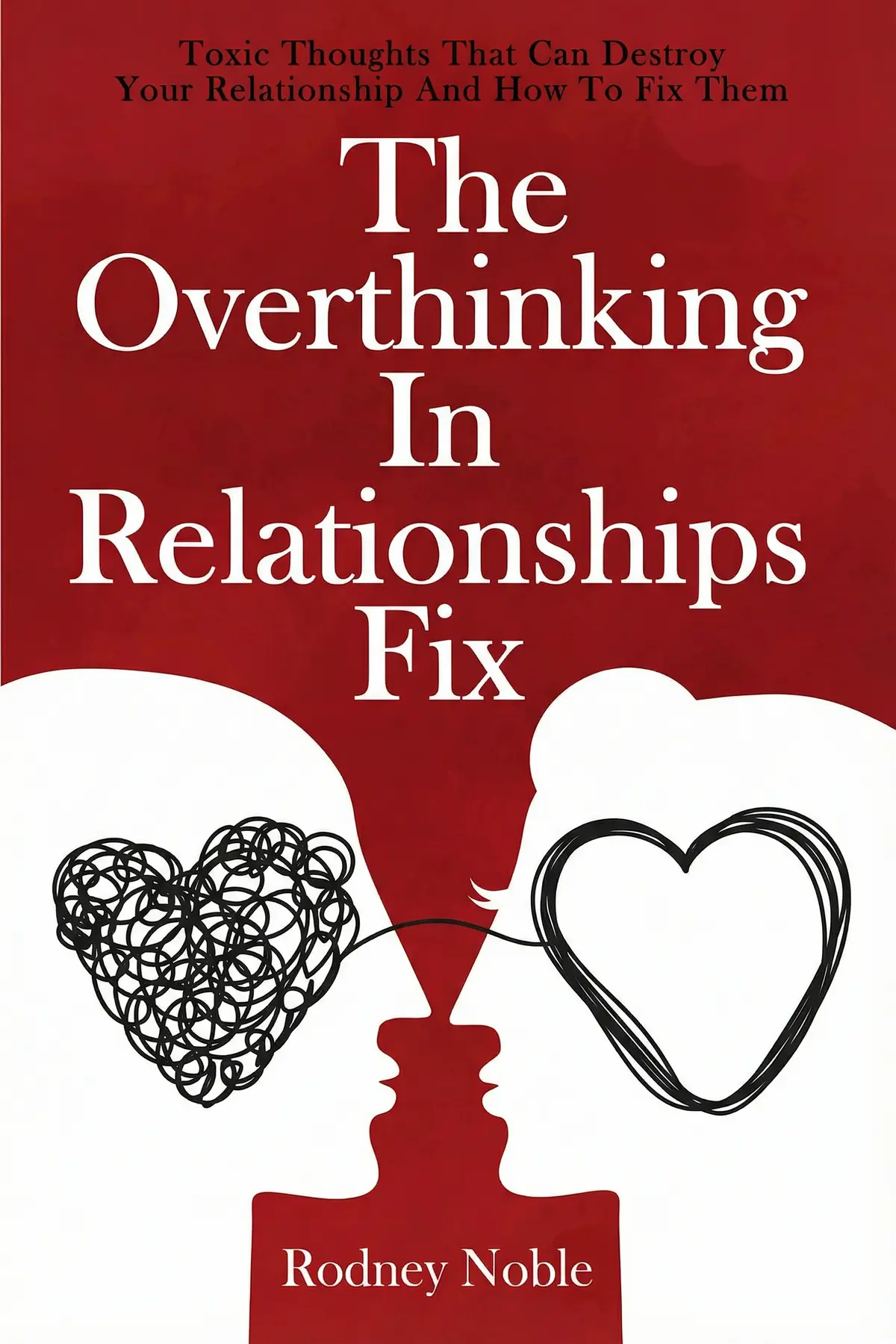
A partner comes home far later than usual, and your mind quickly fills with negative thoughts about what it means. In The Overthinking In Relationships Fix, Rodney Noble argues that this habit of spending huge mental energy on small things is what slowly drives couples apart. The late arrival is only the trigger. The thoughts turn into accusations, the accusations into the same argument on repeat, and the gap between two people widens with each round.
Noble’s case is that overthinking in love follows a few recognizable patterns, grows from a single root called relationship anxiety, and harms your health and trust as well as your relationship. Because it is a habit of the mind, it responds to habits: honest self-checks, a few minutes of quiet breathing, a worry journal, a gratitude list, a morning run. Couples who live apart get tools of their own. Learn to name the loop when it starts, and you gain a pause in which to choose your next words yourself.
1 min 30 sec
A passing remark over dinner can turn into an interrogation by dessert. Noble describes two primary patterns this kind of spiral can follow in a relationship: dwelling on the past and worrying about the future.
1 min 28 sec
Some anxious partners cling until they control, while others go silent and pull away. Both reactions grow from the same root, and seeing it clearly changes how you read your own behavior.
1 min 37 sec
Worry about a partner rarely stays in the mind. Noble follows it into sleep, breathing and blood pressure, and then to the insecurity he considers the most destructive of all.
1 min 26 sec
The fastest way out of a spiral may start with seeing yourself the way a friend does. Two simple practices, one reflective and one calming, give racing thoughts somewhere to go.
1 min 25 sec
A pen, a notebook and a workout sound too ordinary to stop a spiral. Noble argues each one attacks overthinking from a different side, and one of them works by searching for the good.
1 min 42 sec
Fewer days together give doubt more room to grow. Noble’s answer includes a precise rule for how often to meet and a warning about the one topic that can crowd out every call.
1 min 12 sec
Noble’s book comes down to a single observation: much of the tension in a worried relationship is produced in one head before it ever reaches the other person. A remark about an ex, a slow reply, a late arrival. Each becomes dangerous only after the mind has spent far too much energy on it. That is why his remedies aim at the thinker more than the partner. They lower stress, make thoughts visible and give fears a calmer outlet.
The starting point is small. The next time your mind races, notice whether it is replaying the past or forecasting the future, then write the thought down and judge it on paper. Add a few lines each day about what you value in your partner, and a workout to burn off the stress the worry leaves behind. If you live apart, agree on when you will talk and when you will next meet, so the silence between calls has less to fill.
Noble admits the first tool you try may not be the right one, and persistence matters more than finding the perfect fix at once. The aim is a mind that lets a late arrival be exactly that: a partner who is late, and nothing more.
A slow text, a late arrival, a passing mention of an ex. For people prone to overthinking, small moments like these set off a flood of negative thoughts that turn into accusations and the same argument again and again. Rodney Noble argues that this habit, more than the moments themselves, is what wears a relationship down. He describes two patterns: dwelling on the past and fearing the future. He traces both to relationship anxiety, which can make people clingy and controlling or withdrawn and silent. He also lays out what overthinking does to the body and the mind, from headaches and poor sleep to jealousy, low self-esteem and broken trust. The second half is practical. Noble offers self-awareness questions, a short meditation routine, worry and gratitude journals and regular exercise. He follows them with specific advice for long-distance couples on call schedules, shared activities, how often to visit and how to set realistic expectations.
People who replay a partner's comments for days or lie awake fearing a breakup.
Anxious partners who notice themselves checking, clinging or pulling away.
Couples in long-distance relationships who want concrete habits for calls, visits and trust.
Rodney Noble writes about overthinking: where it comes from, how it affects different parts of life and how to move beyond it. His books aim to give readers practical tools for regaining a sense of control over their mental health. Alongside The Overthinking In Relationships Fix, he is the author of The Overthinking Cure and Conquering Overthinking 2 In 1.

Listeners find this guide provides useful guidance and is a straightforward listen. They value its perspectives, with one listener highlighting how it revealed their own overthinking habits, while another notes that it serves as a quality overview of overthinking disorder.
Wow. I didn't realize how much my mental clutter was physically affecting my body until I read the sections on stress hormones and hypertension. This book literally shook me to my core because it described my daily thought patterns with scary accuracy. I used to think I was just 'thorough,' but Noble helped me see that I was actually just trapped in a loop of rumination. The distinction between being dependent and avoidant was a total 'aha' moment for me and my partner. We actually read a few chapters together and it sparked the first healthy conversation we've had in months. If you feel like you're losing control of your emotions, please buy this. It provides such a clear, practical framework for taking your thoughts captive and choosing a better path. Truly life-changing stuff.
Show moreI've been a chronic overthinker for as long as I can remember, and it has ruined more than one good relationship in the past. To be fair, I was a total skeptic about 'self-help' books before my sister shoved this into my hands, but I'm so glad I gave it a chance. Rodney Noble has a way of explaining relationship anxiety that makes you feel seen rather than judged. The practical steps, especially the gratitude journaling and the advice on building self-awareness, are things I can actually do every day. It’s an easy read but it packs a punch. I feel much more confident now in my ability to handle those 'unsettling feelings' when my partner is late or distant. This book didn't just fix my relationship; it's helping me fix how I see myself. Five stars all the way.
Show moreFinally got around to reading this after a particularly bad fight with my boyfriend over his late responses to my texts. This book really opened my eyes to how my 'avoidant' tendencies were actually creating a wedge between us. I loved the section on 'negative spirals' because that is exactly what happens to me every Friday night. The author explains the science behind panic attacks and high stress levels in a way that actually makes sense without being too academic. It’s a very easy read, which is great because when you’re already stressed, you don’t want to struggle through a textbook. My only gripe is that some of the advice for long-distance couples felt a bit dated, but the core message is solid. Definitely worth a look if you’re tired of arguing over nothing.
Show moreEver wonder why you're constantly checking their location or obsessing over a comment made three years ago? Noble breaks down these patterns with a lot of compassion, which I really needed right now. Personally, I found the 'worry journal' suggestion to be the most helpful part of the whole book. It sounds simple, but getting those irrational fears out of my head and onto paper made them look a lot less scary. The writing is direct and doesn't waste your time with fluff. I do think the book could have used more real-world examples or case studies to show these strategies in action, but the advice is sound regardless. It’s a great tool for anyone feeling suffocated by their own thoughts. I’ve already recommended it to a friend who is struggling with trust issues.
Show morePicked this up because my long-distance relationship was starting to feel the strain of constant doubt and unnecessary interrogation. The distance makes everything feel ten times more intense, and this book addressed that specific anxiety perfectly. I liked the suggestion of setting up a regular call schedule to eliminate the guesswork; it seems obvious, but we weren't doing it! Noble's tone is very reassuring, like a friend giving you a reality check. While I don't think exercise is the 'cure' for a deep-seated insecurity, the science about endorphins was interesting. The book is short enough to finish in a few sittings, which is perfect for my short attention span. It’s not a miracle cure, but it’s a very helpful roadmap for navigating the early stages of relationship anxiety.
Show moreThe chapter on self-awareness actually gave me a lot to think about regarding my own behavior in my current relationship. I never really considered myself a 'dependent' partner, but seeing the traits laid out made me realize I seek way too much reassurance. That said, I felt like the book leaned way too heavily on meditation as a cure-all. Not everyone wants to sit in a quiet room to fix their problems! The section on how overthinking causes physical symptoms like chest pain and sleep loss was eye-opening, though. It’s a decent summary of overthinking disorder, even if some of the 'fixes' feel a bit recycled from other popular psychology books. It’s a middle-of-the-road read that works well as a refresher but won't necessarily change your life overnight.
Show moreFrankly, this is a solid primer if you're just starting to realize your brain is sabotaging your love life. Noble writes in a very conversational tone that makes the medicine go down easy, which I appreciated. I'm definitely in my 'self-help era' right now, and this was a quick win for my reading list. However, I wish there was more unique advice for those of us who aren't in long-distance relationships. While the LDR section was detailed, the rest of the book felt a bit thin in comparison. It’s a short, to-the-point read that highlights some good points about how stress hormones mess with your head. It didn't 'shake me to my core,' but it gave me a few things to journal about tonight. A safe three-star choice for a weekend read.
Show moreLook, the advice here is practical, but the structure of the book is a bit chaotic and repetitive at times. One minute you're reading about childhood trauma and the next you're being told to go for a run to clear your head. I think the biggest takeaway for me was just the validation that I'm not crazy for having these racing thoughts. Just knowing that other people struggle with the same 'future-tripping' and ex-partner paranoia was empowering in a way. I would have liked more specific exercises beyond just 'write it down' and 'breathe.' It’s a helpful summary of why we overthink, but it’s a bit light on the actual 'how-to' for long-term change. Good for beginners, but seasoned self-help readers might find it a bit redundant.
Show moreNot what I expected given the buzz this book seems to have on social media. To be fair, the writing style is very accessible and it’s a quick read, but the content is extremely surface-level. It focuses heavily on what happens when a relationship is already failing, which didn't help my specific situation at all. My partner and I are actually doing great, but my internal anxiety makes me fear that something will go wrong eventually. This book didn't address that 'pre-emptive' overthinking well. It felt like the advice was geared toward people who have never heard of journaling or meditation before. Truth is, if you've done even a little bit of self-reflection or therapy, you’ll find this very elementary. It might be okay for a teenager or someone totally new to self-help, but for me, it was a letdown.
Show moreAs someone who works in the mental health field, I had high hopes for Rodney Noble’s book, but it fell flat almost immediately. Frankly, I felt like I was reading a collection of basic blog posts rather than a professional guide. While the author identifies common symptoms of anxiety, he fails to provide deep, actionable solutions for people who have already tried the basics. I kept waiting for the 'fix' promised in the title, yet the book just kept circling back to the same definitions of overthinking. It's repetitive and lacks the clinical depth needed for such a complex issue. If you’ve ever Googled 'how to stop worrying,' you have already seen everything this book has to offer. I found it quite disappointing and would suggest looking for more established psychological texts instead.
Show moreRodney Noble argues that overthinking, giving far more thought to small moments than they deserve, is what turns a late arrival or a slow reply into repeated fights. He describes how the habit shows up, traces it to relationship anxiety, explains its effects on health, confidence and trust, and offers practical tools to calm it, with a separate set of advice for long-distance couples.
Noble describes one pattern that looks backward and one that looks forward. In the first, you ruminate on a past issue, from a partner’s small flaw to a major event, until it pulls you away from your partner and the present. In the second, you worry about the future far more than needed, fearing cheating, a breakup, not being good enough or that your partner is not the one.
Noble suggests several habits to test. Build self-awareness by asking what you need to work on and by getting honest feedback from friends and family. Meditate when a spiral starts, letting go of what you cannot control. Keep a worry journal for five to 15 minutes a day and a gratitude journal about your partner. Exercise regularly, especially aerobic activity, to clear stress hormones.
Noble recommends a regular call schedule so neither partner is left guessing, plus shared activities such as streaming the same film, reading the same book or cooking the same meal. He suggests a two-day visit every three weeks, and never letting three months pass without meeting. Couples should also agree on realistic expectations, plan when the distance will end and share fears openly without letting them dominate every conversation.
Alcoholics Anonymous World Services

Steven C. Hayes


Leanne Maskell



AUDIO SUMMARY AVAILABLE
Get the key ideas from The Overthinking In Relationships Fix by Rodney Noble, plus 5,000+ more nonfiction titles.









