


14 min 21 sec
Available in: English
The Optimistic Child: A Proven Program to Safeguard Children Against Depression and Build Lifelong Resilience
Shows parents and teachers how to protect children from depression by changing how they explain setbacks, owning mistakes fairly and solving real problems, rather than relying on praise to make them feel special.
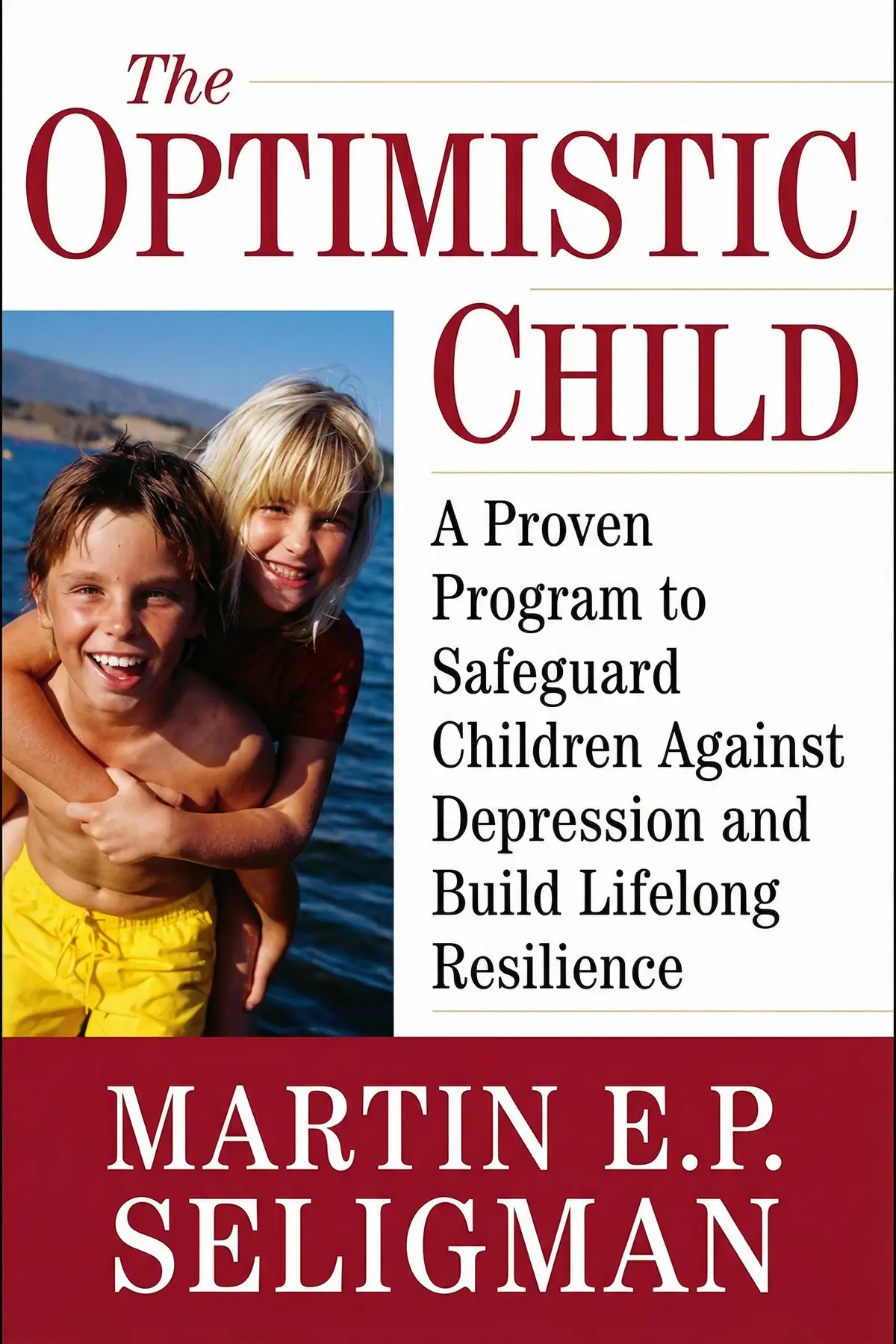
Table of Content
1. Introduction
59 sec
Telling a child she is special does not protect her from depression. Teaching her to explain her setbacks accurately might. That is the case psychologist Martin Seligman makes in The Optimistic Child, drawing on his team’s research into helplessness and depression. If you are a parent or teacher watching a child give up after one bad grade, the book offers a route other than praise.
Optimism, in Seligman’s account, has little to do with cheerful slogans or picturing happy endings. It is a way of explaining why bad things happen: as passing instead of permanent, as limited instead of everywhere, and as owned in fair measure instead of as proof of being a bad person. Those explanations can be learned, by adults first and then by the children who watch them.
What follows is how to hear a pessimistic explanation in a child’s own words, the four mental skills that answer it, and a simple routine for the problems that are real and need solving.
2. Spot the explanation that breeds helplessness
2 min 01 sec
Two children fail the same test on the same day. One shrugs and tries again; the other quietly stops trying. The difference lies in a few words they say to themselves, and those words can shape a whole life.
3. Real self-esteem grows from what children do
2 min 07 sec
For decades, schools and parents have worked hard to make children feel good about themselves. Over the same decades, childhood unhappiness has climbed. Seligman traces the mismatch to one widely shared mistake about where confidence comes from.
4. Hear pessimism in a child's always and never
1 min 59 sec
A scolded child can blame her mother’s mood or her mother’s nature, and the choice sounds trivial. Seligman shows why that small difference in wording predicts who bounces back, and how parents can hear it in everyday talk.
5. Teach blame that fits the mistake
2 min 07 sec
Children who blame themselves for everything sink into guilt, yet children who blame no one never learn. Seligman describes a middle path, and parents shape it every single time they correct a child.
6. Model four skills that talk back to dark thoughts
1 min 58 sec
A mother who screams at her children every morning decides she must be a terrible parent. Watch how she takes that verdict apart, step by step, and what her children learn from seeing her do it.
7. Turn a real problem into clear steps
1 min 56 sec
Optimism can stop a child from imagining disasters, but some problems are not imagined. A spilled lunch in a school cafeteria shows the short routine that keeps a bad moment from becoming a worse one.
8. Conclusion
1 min 14 sec
Seligman’s argument moves the work of raising a resilient child away from how children feel and toward how they think and what they do. A child who believes a bad grade came from not studying, a scolding from a passing mood and a lost contest from one weak skill still has room to try again. A child who hears always, never and everything in her own head has already started to quit. Praise cannot close that gap. Accurate explanations and real accomplishments can.
The practice starts small. Listen for permanent and sweeping words when your child talks about failure, and offer a cause that is temporary and specific. When you correct her, name the act and leave her character out of it. Let her watch you catch, check and argue with your own worst thoughts.
And give her small chances to master the world. Seligman suggests something as ordinary as a trip to a shop: let a young child pick out three items, pay for them himself and place them in his own little bag. Moments like that teach a child that his actions make things happen.
That belief does more than any poster on a classroom wall to keep helplessness from taking hold.
About this book
What is this book about?
Many parents watch a child give up after one bad grade or one fight with a friend, and the usual response is praise. Martin Seligman argues that this misses the point. Since the 1950s, depression has risen across the Western world and struck people ever younger, even as schools and families poured effort into boosting children's self-esteem. Seligman's research on learned helplessness points to a different cause and a different cure. What protects a child is the way she explains bad events: whether she sees their causes as permanent or passing, as spreading across her whole life or limited to one area, and whether she blames herself in fair proportion or entirely. Optimism, in his account, is a set of thinking habits. It can be learned. The book shows parents how to hear pessimism in a child's own words, how to correct behavior without attacking character, and how to model four skills for answering negative thoughts, illustrated through a mother named Lydia who dreads mornings. It closes with a three-step method for the problems that turn out to be real, along with a simple way to give young children a sense of mastery.
Book Information
Who it's for
Parents of self-critical kids
Parents who see a child give up quickly after failures or talk about themselves harshly.
Educators rethinking praise programs
Teachers and school counselors who want an alternative to praise-based self-esteem programs.
Prone to worst-case thinking
Adults prone to worst-case thinking who want to model a healthier habit for the children around them.
About the Author
Martin E.P. Seligman
Martin E.P. Seligman, born in 1942, is an American psychologist, educator and author. He teaches psychology at the University of Pennsylvania, where he directs the Positive Psychology Center and earlier led the clinical training program. He served as president of the American Psychological Association for the 1998 term and was founding editor-in-chief of its electronic journal, Prevention and Treatment. His other books include Learned Optimism, Authentic Happiness, Flourish and Tomorrowmind, written with Gabriella Rosen Kellerman.
Ratings & Reviews
Ratings at a glance
What people think
Listeners find the material both practical and wise, with one listener noting that it offers research-based applications. Furthermore, many view it as a necessary resource for parents, with one listener describing the book as a basic course in cognitive behavioral therapy. Additionally, listeners value how accessible and encouraging the text is, noting that it has a meaningful effect on overall resilience and mental health.
Top reviews
Moon
This book basically functions as an essential introductory course in cognitive behavioral therapy for parents who want to build genuine resilience in their children. Seligman provides a refreshing, research-based framework that moves far beyond the shallow 'participation trophy' culture that has dominated parenting for decades. Frankly, his explanation of how mastery leads to self-esteem—rather than the other way around—completely changed how I praise my ten-year-old son. Instead of empty puffery, I now focus on helping him develop an accurate explanatory style for his successes and failures. The chapter on how to identify and challenge pessimistic thoughts is worth the price of the book alone. It is not just about being 'happy,' but about giving kids the mental tools to handle life's inevitable setbacks without spiraling into a cycle of helplessness. While some of the academic studies mentioned are a bit dense, the practical applications for daily life are invaluable for any family struggling with a glass-half-empty outlook.
Show moreRafael
Finally got around to reading this after a friend recommended it for my teenager, and it turned out to be life-changing for the whole family. Personally, I have struggled with cycles of depression since my own youth, and doing the exercises alongside my daughter was a revelation. It is rare to find a psychology book that is this readable while still being grounded in rigorous scientific research. The author’s conclusion about the positive consequences of a realistic, optimistic mindset felt genuinely inspirational rather than just clinical. We’ve started using the 'ABC' method to challenge pessimistic thoughts, and I can already see a shift in how my daughter handles social conflicts at school. She is learning that her actions actually have an impact on her environment, which is the best defense against helplessness. This should be required reading for every new parent before their kids hit middle school. Truly a masterpiece of practical mental health.
Show moreSuthee
After hearing about the 'self-esteem movement' for years, it was fascinating to read the actual science that debunks its effectiveness. Seligman explains that self-esteem is the byproduct of doing well, not a prerequisite for it, which is a total paradigm shift for many modern parents. This book is much more than a parenting guide; it’s a manual for building mental grit and preventing the 'learned helplessness' that leads to depression. I loved the specific focus on how parents should interpret failure for their children without taking over the problem themselves. Failure isn't catastrophic if you have the right mental framework to process it. The stories and assessments helped me identify my own pessimistic tendencies, which I hadn't even realized I was passing down to my kids. It is an inspirational and practical resource that I find myself quoting to other parents almost every single week. Absolutely essential reading for the modern age.
Show moreKom
As a parent of two, I found this book's critique of the self-esteem movement of the 1960s to be absolutely spot on. Seligman argues that artificial 'puffery'—telling kids they are special regardless of their actions—actually undermines their confidence because it isn't rooted in reality. Look, we have all seen those kids who get a trophy just for showing up, and this book explains why that approach fails to prevent depression. He emphasizes 'accurate optimism,' which is about weighing evidence and seeing multiple points of view rather than just ignoring problems. The truth is, I’ve started using these techniques on myself as much as on my children. While I agree with other reviewers that some sections feel a bit like a scholarly dissertation, the 'toolbox' provided is something I will keep on my nightstand for years. It’s a dense read, but the payoff for your child’s mental health and grit is undeniable.
Show moreChaiwat
Ever wonder why some kids bounce back from a bad grade while others feel like their world is ending? This book provides a deeply insightful look into the mechanics of resilience and how we can teach optimism as a learned skill. Not gonna lie, I was skeptical about the idea that you can 'teach' a personality trait, but Seligman’s research on explanatory styles is very convincing. The way he breaks down how children develop theories of success and failure during their school years is eye-opening. I particularly liked the section on helping children avoid assigning negative motives to other people's actions. It is a great reminder that our thought patterns aren't fixed; they are habits that can be rewired with enough practice. My only minor gripe is that the book feels a bit dated in its examples, but the psychological principles remain incredibly relevant in our high-pressure society.
Show moreManika
Truth is, I was a bit overwhelmed by the length of this book at first, but the insights into cognitive behavioral techniques for kids are gold. Seligman’s focus on 'accurate optimism'—being realistic about the world while still seeking positive outcomes—is exactly what my cynical eight-year-old needed. I’ve started applying the rule of 'telling the truth without puffery,' and it has actually improved our relationship. When he fails, I don't tell him he's the best anyway; instead, we look at what happened and make a plan to practice. This approach builds real confidence because it’s based on his actual achievements, not just my empty praise. The writing can be a bit dry in the middle sections where he discusses his staff’s resumes, but the 'toolbox' at the end makes it worth the effort. It’s an insightful, serious look at how to raise a child who can thrive in a difficult world.
Show moreGin
The chapter on how masterful action creates optimism was a huge 'aha' moment for me. Seligman argues that children need to persist through challenges to understand their own agency, which is a lesson many of us forget in our rush to protect them. To be fair, the book is quite long and some of the case studies feel repetitive after a while. However, the core message about cognitive thinking patterns is so important that I can overlook the occasional academic fluff. I’ve started using the assessments with my ten-year-old, and it has sparked some of the most honest conversations we’ve ever had about his fears and frustrations. It’s not a quick fix, and you definitely have to put in the work to see results, but the logic is sound. If you want a research-based alternative to the usual 'feel-good' parenting advice, this is the book you should be reading.
Show moreMikael
The core concepts regarding how children interpret failure are brilliant, but the implementation side of things is surprisingly difficult for a busy household. Picked this up hoping for a quick set of strategies, but instead found a very involved curriculum that feels better suited for a classroom or clinical setting. Seligman’s distinction between 'feeling good' and 'doing well' is an important one, and I appreciate how he ties self-concept to actual commerce with the world. However, the exercises he suggests require a level of daily commitment that just isn't realistic for most working parents with multiple kids. I also found his dismissal of cross-cultural research regarding depression rates to be a bit shortsighted. It is a good book to read once to understand the philosophy of learned optimism, but don't expect it to be a simple 'how-to' guide that works overnight. I will probably just adapt his stories into my own simplified versions.
Show moreNong
While Seligman is clearly the authority on learned optimism, I found this book to be a bit of a mixed bag in terms of accessibility. The first half is a fascinating deep dive into why depression rates are rising among children despite our obsession with making them feel special. He makes a compelling case that intelligence is fixed but optimism is a skill we can actually sharpen through deliberate effort. But then the book slows down significantly with pages of research data that could have been summarized much more efficiently. In my experience, the 'step-by-step' guides were hit or miss depending on the child’s personality. One of my kids was engaged, but the other felt like they were being interrogated during the exercises. It’s a solid 3-star read: great theory and essential concepts, but the execution and pacing left me wanting something a bit more streamlined for a general audience.
Show moreAnchalee
I really wanted to like this given Seligman's reputation as a pioneer of positive psychology, but the writing style was incredibly frustrating. Most of the practical advice could have been distilled into a short pamphlet, yet it’s stretched out with endless anecdotes about his research assistants' career milestones. To be fair, the core theory is sound, but the delivery feels like it was written for graduate students or professional colleagues rather than exhausted parents. Who is the target audience here? I was looking for a clear, actionable guide to help my daughter through a pessimistic streak, but I found myself wading through case studies that didn't feel relatable. The exercises are described as 'fun,' but my kids found them tedious and forced, making it nearly impossible to maintain any consistency. It is a shame because the underlying science of learned optimism is fascinating, but the filler makes it a chore to get through.
Show moreQuestions about this book
What is the main idea of The Optimistic Child?
Martin Seligman argues that children are protected from depression by how they explain bad events, not by feeling special. Pessimistic children see the causes of setbacks as permanent, as spreading across their whole lives and as entirely their own fault. Optimistic children see them as temporary, specific and fairly shared. Because these explanations are learned, parents can teach a more optimistic style and help guard children against helplessness and depression.
Why does Seligman say the self-esteem movement failed?
Since the 1960s, schools and parents have tried to lift children’s self-esteem directly through praise and slogans, yet depression has kept climbing, and a 1993 study found depressive symptoms in almost one third of American 13-year-olds. Seligman argues that self-esteem comes mainly from doing well, from mastering skills and persisting through challenges. Trying to make children feel good without that achievement cannot build it.
How can I tell if my child has a pessimistic thinking style?
Listen to the words your child uses about failures. Words like always and never suggest a permanent, pessimistic explanation, while sometimes and recently point toward optimism. Notice whether one setback spreads, as when a lost essay contest becomes being bad at everything. Also watch for general self-blame, such as deciding a punishment happened because they are a bad kid instead of because of something they did.
What are the four skills for learning optimism in the book?
Seligman describes thought catching, which means noticing the negative thought when you feel bad; evaluation, checking that thought against evidence; disputing, finding a more accurate explanation to argue back; and decatastrophizing, focusing on the most likely outcome instead of the worst. He illustrates them with Lydia, a mother who screams at her children in the morning and then decides she is a terrible mother.
How do I apply The Optimistic Child at home?
Criticize your child’s behavior, never their character. Practice the four optimism skills yourself where your child can see you. Teach a three-step routine for real problems: pause for at least a minute, consider the other person’s view from their face, then set a goal and list ways to reach it. And give small chances for mastery, such as letting a young child choose and pay for three items at a shop.
Featured in
Readers also enjoyed



Alcoholics Anonymous
Alcoholics Anonymous World Services

A Liberated Mind: How to Pivot Toward What Matters
Steven C. Hayes



AUDIO SUMMARY AVAILABLE
Listen to The Optimistic Child in 15 minutes
Get the key ideas from The Optimistic Child by Martin E.P. Seligman, plus 5,000+ more nonfiction titles.
- 5,000+ titles
- Listen as much as you want
- 7-day free trial
- Cancel anytime









