Legendary Service: The Key Is To Care
Ken Blanchard
 English
 ไทย
Shows busy managers how three brief conversations (one-page goals, prompt specific praise and quick, fair reprimands) can keep employees motivated while lifting their performance, without choosing between being liked and getting results.
1 min 01 sec
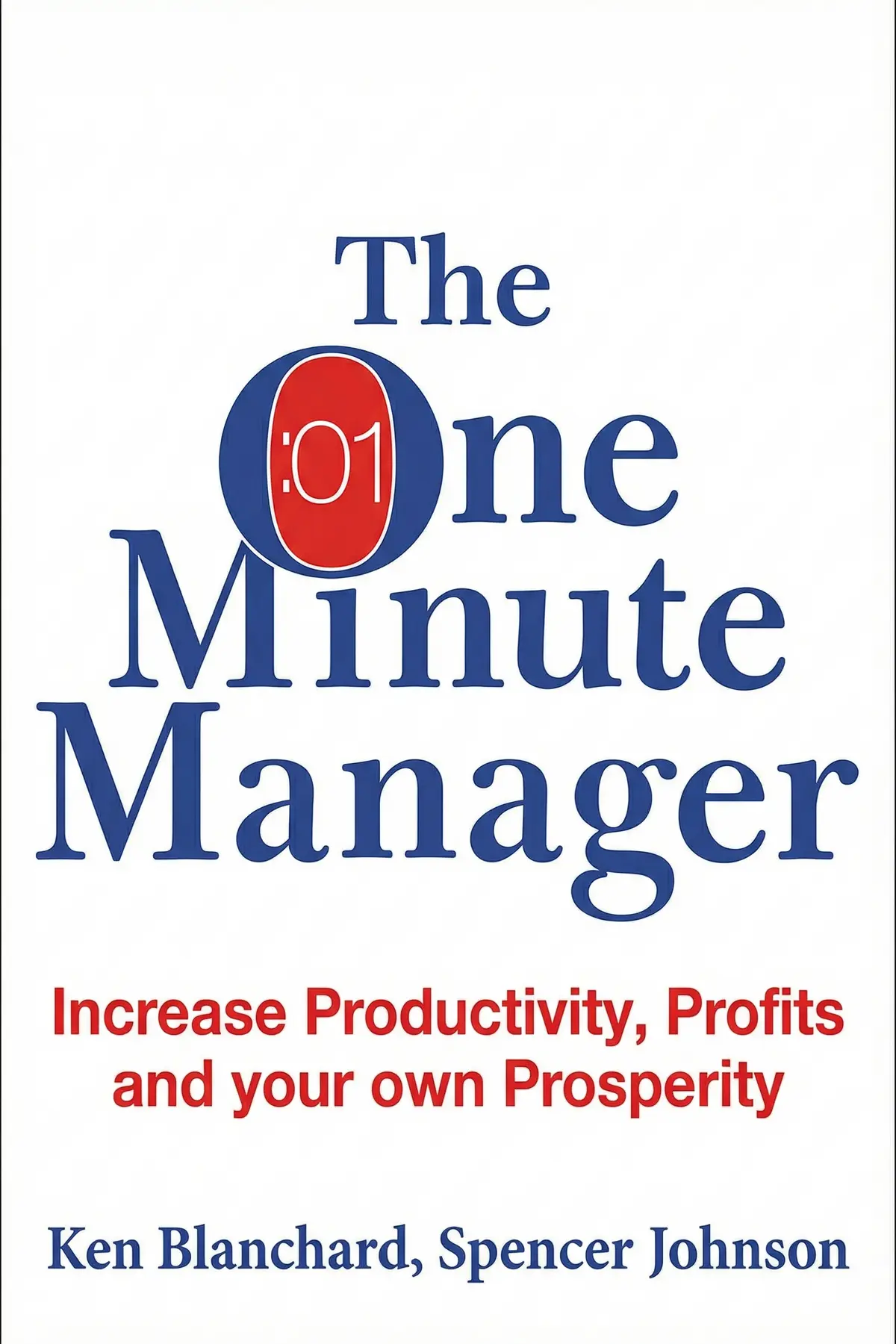
If you manage people, you are probably short of time, and your team either likes you or delivers for you, rarely both. In The One Minute Manager, Ken Blanchard and Spencer Johnson argue that a manager can have both from conversations lasting about sixty seconds. Their starting point is blunt: a manager’s main product is not a budget or a sales figure but the people who produce them.
The method rests on three short tools. Goals are written so they can be read in a minute, praise follows good work right away, and a reprimand follows a mistake just as fast. Each one is quick, and each treats the employee as someone worth developing.
The case the authors make is that brief, immediate, specific conversations keep people motivated and still raise performance. Along the way you will hear how to write a goal page, what to say when someone does well or slips, and how to use all three tools with a new hire starting next week.
1 min 49 sec
Companies pour most of their budget into salaries and almost nothing into the people earning them. The authors trace that gap to two familiar kinds of boss, and both, in their view, are failing the business.
1 min 45 sec
Most employees learn how they are doing only when something goes wrong. A single page, readable in under a minute, can change who keeps score, as long as the manager resists writing too many of them.
1 min 48 sec
Feedback that arrives only after errors teaches people they can never win. The authors describe a short habit of noticing good work, and the one warning a manager must give first so it lands well.
2 min 01 sec
Saying nothing about a mistake and exploding weeks later both damage a team. The book’s alternative takes a minute and borrows an unexpected idea from how families confront a loved one’s drinking.
1 min 45 sec
A new hire’s first weeks decide what they think good work looks like. The book’s most practical advice strings its tools together for that moment, with a surprisingly generous standard for what deserves praise.
1 min 06 sec
What Blanchard and Johnson offer is a way to stop choosing between kindness and results. The manager who never criticizes and the manager who never praises fail for a shared reason: they leave people without a clear picture of what good work is and where they stand. One page of goals, a specific word of thanks given promptly, and a quick correction that ends with respect give that picture back, a minute at a time.
The method asks for very little time, but it does ask for attention. When a goal feels fuzzy, rewrite it until it fits on one page and carries a number, as the five percent sales target does. When someone does good work, tell them soon what was good about it and how it made you feel. And when an experienced person slips, say so at once, then remind them why you still value them, the way a family names the harm while making clear the person is loved.
Much of managing, on this view, comes down to sixty seconds of honest attention, given often and given early.
Most managers are short of time and end up in one of two traps. Some protect their staff so carefully that problems go unspoken and the work suffers. Others push so hard on results that their people lose heart. Ken Blanchard and Spencer Johnson argue that both miss the same point. A company's results come from its employees, so developing those employees is the manager's main job. Their answer is a set of three tools, each designed to take about a minute. One minute goals put a few measurable targets on a single page that manager and employee both keep. One minute praise names good work right after it happens. One minute reprimands correct a mistake at once, then remind the person that they are still valued. Readers get a compact, repeatable way to manage: how to write goals people can check for themselves, why only three to six of them matter, what to say when someone does well or slips, and how to start a new employee off with clear goals and early praise.
New and busy managers who either avoid hard conversations or push so hard their team loses heart.
Founders and team leads who want a simple, repeatable way to set goals and give feedback.
Anyone about to onboard a new hire and unsure how to start.
Ken Blanchard writes and speaks on leadership and management and works as a business consultant. With his wife, Margie Blanchard, he founded The Ken Blanchard Companies in San Diego in 1979, where he is Chief Spiritual Officer. He holds a PhD from Cornell, teaches on an executive leadership master's program at the University of San Diego, and has received the National Speakers Association's Council of Peers Award of Excellence. Spencer Johnson (1938 to 2017) trained in medicine before writing motivational books, including Who Moved My Cheese?, which sold over 21 million copies within five years.
Ken Blanchard
Spencer Johnson
Listeners consider this management guide accessible and very informative, offering clear-cut concepts that assist in building strong team leaders. The content is practical across multiple management fields and focused on results, with one listener stating it takes about 2 hours to read. However, opinions on the storytelling are split; while some enjoy the included tales, others find the narrative style to be contrived.
Ever wonder why management feels so needlessly complicated in the modern corporate world? This book strips away the jargon and delivers a masterclass in simplicity through its parable of a young man seeking a great manager. I finished the entire thing in about two hours during a flight, and the three 'secrets'—goals, praisings, and reprimands—actually feel actionable rather than just theoretical. Truth be told, the idea of having employees write their goals in under 250 words is a game changer for clarity. It stops the endless back-and-forth and ensures everyone is on the same page from day one. While the storytelling is a bit dated, the core message about catching people doing something right is timeless. It’s a foundational text for anyone who wants to lead a team without micromanaging every single second of the day.
Show moreAfter hearing my boss quote this for years, I finally saw the light regarding its simple effectiveness. The concept of the 'One Minute Reprimand' is what really stuck with me because it teaches you to address the behavior without attacking the person. You tell them exactly what they did wrong, let the silence sink in, and then reaffirm their value to the company. It is a tough-but-fair approach that keeps morale high even when corrections are necessary. Some might call the writing style 'capitalistic garbage,' but in the trenches of a high-pressure office, these tools actually work. I love how the book emphasizes that people who feel good about themselves produce good results. It took me less than two hours to digest, and I’ve already started seeing improvements in my team’s output.
Show moreThe chapter on One Minute Praising really changed my perspective on how I interact with my staff daily. I used to be the type of manager who only spoke up when something went wrong, which created a culture of fear. By focusing on 'catching them doing something right,' I've noticed a massive shift in team energy and overall productivity. The book is incredibly easy to read and gets straight to the point without any unnecessary academic jargon. Some critics might hate the parable format, but I think it helps the lessons stick better than a standard textbook. It’s results-driven and emphasizes that the best minute you spend is the one you invest in people. Frankly, every new lead in our company should be required to read this within their first month.
Show moreGotta say, the simplicity is its greatest strength in a world of 500-page business tomes. You can read this on your lunch break and walk back into the office with a completely different mindset. The '250-word goal' rule has already helped me trim down my weekly check-ins because the objectives are finally clear. It’s about managing the behavior, not the person, which is a distinction many leaders fail to make. I know some people find the 'One Minute Manager' character to be a bit contrived, but the logic holds up under scrutiny. If you want a quick, informative guide to producing better leaders within your team, this is the one. It’s a short book that delivers more value than most semester-long management courses I've taken.
Show morePicked this up after my supervisor recommended it during my first week in a leadership role. The format is essentially business fiction, following a protagonist who interviews different managers to find the 'best' style. Personally, I found the One Minute Praise technique to be the most valuable takeaway because it emphasizes immediate, specific feedback. We often wait for annual reviews to tell people they are doing well, which is honestly a waste of potential. The book does show its age with some of the advice regarding physical contact, like putting a hand on an employee's shoulder, which definitely wouldn't fly in most HR departments today. However, if you can look past the 1980s corporate veneer, the logic regarding clear goal-setting is solid. It’s a quick read that provides a decent framework for results-driven leadership.
Show moreAs someone who hates fluff, I appreciated how fast this moves through its central thesis. The authors use a bowling pin analogy to explain feedback that I found particularly insightful for my department. If you didn't see the pins fall, you wouldn't know how to adjust your throw, and management is the same way. The book argues that feedback is the primary motivator for results, and I tend to agree with that sentiment. Look, the narrative is definitely cheesy and the 'One Minute Manager' himself comes off a bit like a cult leader at times. But the underlying mechanics of setting 250-word goals are undeniably practical for keeping a busy team focused. It’s a classic for a reason, even if the 'parable' style feels a bit like a children's book for executives.
Show moreFinally got around to reading this classic and it’s surprisingly relevant for today's fast-paced environment. The main takeaway for me was the structure of the One Minute Praise: be immediate, be specific, and tell them how it helps the organization. Most managers are too busy to give feedback, so the 'one minute' hook is actually very appealing. I did find the writing a bit repetitive, as they keep showing the same 'plaques' with slogans throughout the chapters. It feels very much like a product of the early 80s, especially with the 'touching' advice that I would highly recommend ignoring. Despite the cringe-worthy bits, the focus on self-management for employees is a powerful concept. It’s worth the short time investment just to grab those three core management tools.
Show moreThis book is basically a postcard expanded into a hundred pages of repetitive storytelling. I appreciate the core message—be clear about expectations and be quick with feedback—but the delivery is incredibly dry. It’s written at a very basic level, which makes it accessible, though it occasionally feels like it’s talking down to the reader. In my experience, real management involves a lot more nuance than just 'one minute' interactions. The characters in the story exist only to validate the author's points, lacking any real depth or soul. That said, the specific advice on 'catching people doing something right' is a great habit to build. It's a decent starting point for a brand-new manager, but seasoned leaders might find it a bit too simplistic for their needs.
Show moreLook, the advice is solid gold, but the storytelling is pretty cringeworthy and feels very dated. It’s part of that 'business fiction' genre where everything works out perfectly and the protagonist learns life-changing lessons from every conversation. I found the 'One Minute Reprimand' section a bit harsh in its description, particularly the part about making the employee 'feel' your displeasure. It sounds a bit like training a dog rather than collaborating with a professional adult. However, to be fair, the emphasis on immediate feedback is something most workplaces desperately lack. If you can ignore the weirdly didactic tone and the outdated 'pat on the back' stuff, there are three very useful tools here. It’s just a shame they couldn't have been delivered in a more realistic or modern way.
Show moreNot what I expected from such a famous bestseller, to be perfectly frank. It falls into that 'business parable' category where the characters are one-dimensional automatons designed only to spout the author’s slogans. The 'young man' in the story doesn't feel like a real person, and the dialogue is incredibly contrived and pedantic. I struggled with the suggestion that you can manage a person’s entire career in one-minute increments; it feels a bit dismissive of the complexity of human behavior. Also, the repetitive mention of touching employees to show 'care' made me very uncomfortable given modern workplace standards. While the 80/20 rule application is smart, the rest of the book feels like a series of motivational posters stitched together. I think you could probably get the same value from reading a one-page summary online.
Show moreKen Blanchard and Spencer Johnson argue that a company’s results depend on its employees, so a manager’s main job is developing people. They propose three tools that each take about a minute: one-page goals agreed with the employee, specific praise given right after good work, and quick reprimands that correct a mistake while reminding the person they are valued.
They are goals agreed between manager and employee, each written in 250 words or fewer so it fits on one page and can be read in about a minute. Both keep a copy. An example is raising sales by five percent next quarter. Following an 80-20 rule, the authors recommend only three to six goals, covering the small share that drives most of the work.
React immediately after the error, spell out precisely what was wrong and your emotional reaction to it, then finish with some praise so the person understands they remain valued. The book reserves this for experienced employees and advises telling people beforehand that their work will be reviewed. It compares the approach to a family intervention, where relatives name the harm but also express love.
It suits managers who are short of time and stuck in one of the two camps the authors describe: those so protective of staff that problems go unspoken, and those so focused on results that they drain motivation. Its tools are simple enough for a first-time team lead and practical enough for a founder onboarding new hires.
Start by writing one minute goals together and explain that you will observe and review their work. Then, as you review it, find something they did right, or at least roughly right, and praise it specifically and promptly. The authors say this raises motivation and encourages the new hire to try harder the next time.


Margaret Heffernan





Joseph A. Maciariello



Deborah Gruenfeld
AUDIO SUMMARY AVAILABLE
Get the key ideas from The One Minute Manager by Ken Blanchard, plus 5,000+ more nonfiction titles.