
13 min 08 sec
Available in: English
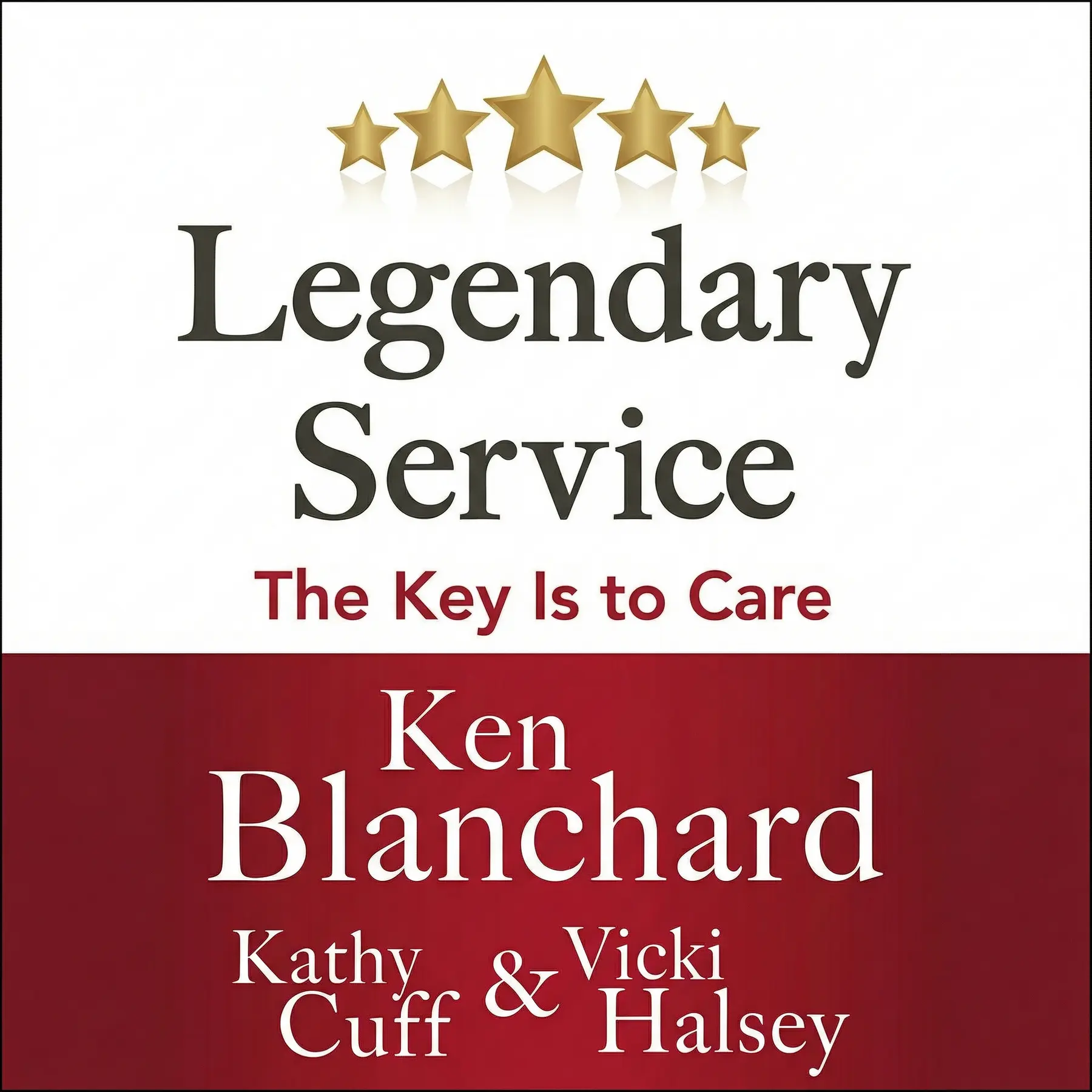
Legendary Service: The Key Is To Care
Shows how to turn service that is merely fine into service customers come back for, by caring for employees and customers alike and following a five-step model called ICARE, told through one store clerk's story.
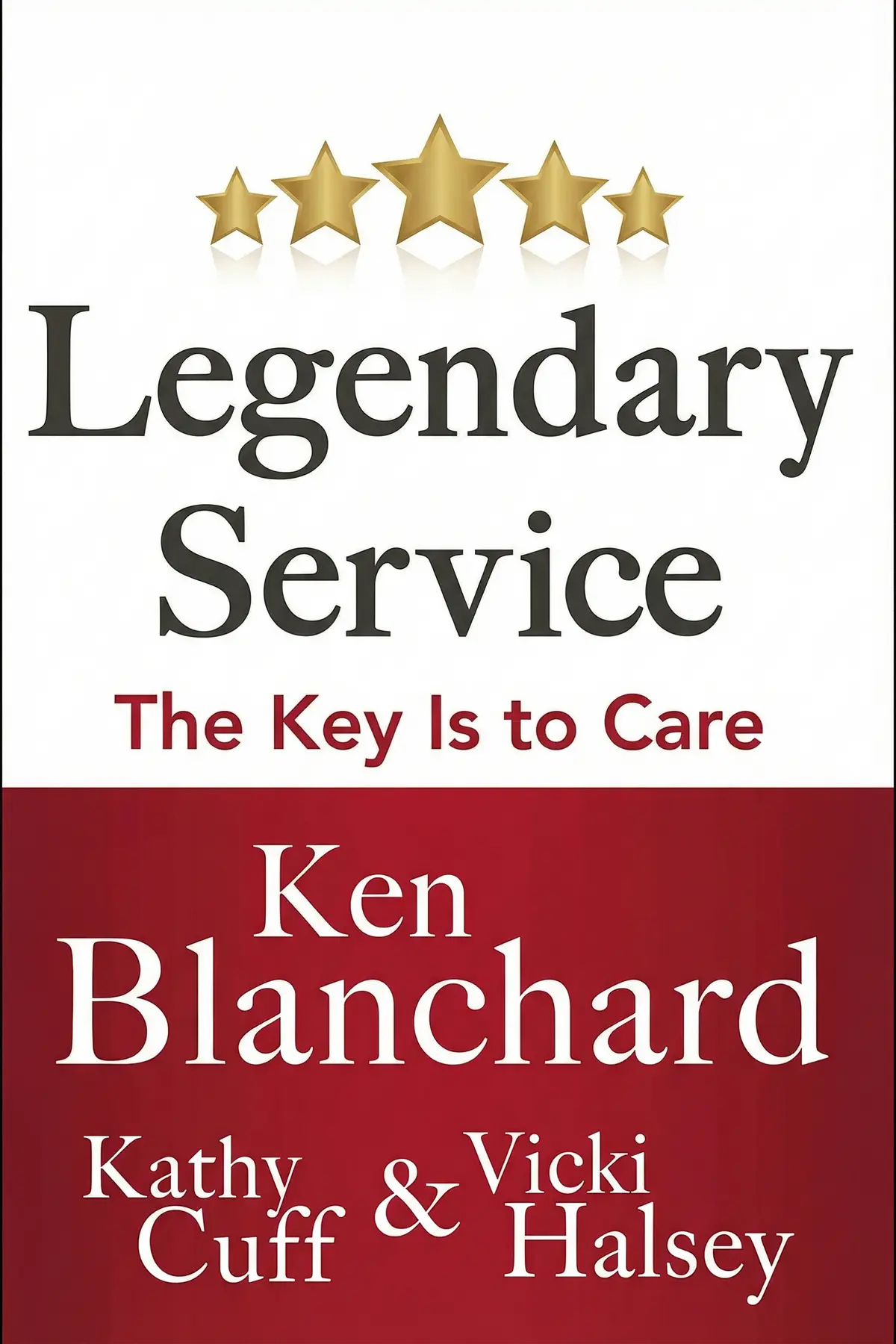
Table of Content
1. Introduction
1 min 05 sec
Most customer service is merely fine, and fine gives nobody a reason to come back. In Legendary Service, Ken Blanchard, Kathy Cuff and Vicki Halsey argue that the fix starts with caring, genuinely, about two groups at once: the customers who buy and the employees who serve them. Telling staff to be friendly changes nothing, they say, if the people at the counter feel ignored themselves.
The authors make this case through Kelsey, a university student working at a discount store, and the people she meets as she learns what great service looks like. Their argument is simple: care becomes legendary service only when it is turned into a system. They call that system ICARE, for ideal service, culture of service, attentiveness, responsiveness and empowerment.
Along the way there is a bartender’s bowl of popcorn, a clinic that feels like family and a bear that waved. Each one shows a step you can take at your own counter, desk or company, whatever your title.
2. One refused refund can cost you two relationships
1 min 48 sec
A broken coffeemaker, a missing receipt and a manager’s firm no. The customer walks out for good, but the authors point to a second casualty of that moment that most businesses never count.
3. Define the service that makes customers return
1 min 46 sec
Most people struggle to remember a single truly extraordinary service experience. A worried mother with a son leaving for college shows what one looks like, and what it takes to produce it on purpose.
4. Remember the pretzels and keep your regulars loyal
1 min 50 sec
Years of good service can be erased in a single visit. A bartender with a talent for small details shows how paying attention protects the customers you most want to keep.
5. Turn listening into a moment customers retell
1 min 44 sec
A bus full of tourists, a grandmother’s birthday and a bear in its enclosure. One zoo guide’s quick yes shows what customers mean when they say someone was truly on their side.
6. A culture where everyone gives the same care
1 min 48 sec
A single caring employee can win a letter of thanks, yet the business barely moves. A small clinic shows what changes when an entire team shares one idea of how people should be treated.
7. Free your frontline staff to serve well
1 min 52 sec
Managers are sometimes reluctant to hand real power to their staff. Kelsey’s own story, from a boss who liked her idea but could not act on it to a company-wide change, shows what an empowered employee can achieve.
8. Conclusion
1 min 15 sec
Legendary Service begins from an old line, that the customer is always right, and treats it as only a starting point. What Blanchard, Cuff and Halsey add is that customers can feel whether anyone cares, and that care seldom survives a workplace where staff feel ignored. The customer with the broken coffeemaker and the grandmother at the zoo both met someone who wanted to help. One of those people was stopped by a rule. The other was free to stop a bus.
So the work runs in two directions. Treat the people who serve as customers in their own right, and give them a clear vision, real training and room to act. Then make the service personal: learn what each regular prefers, listen until you can say their concern back to them, and decide ahead of time what ideal looks like where you work.
The authors’ last piece of advice is to start with yourself. Make the service you personally give as good as it can be, and when customers respond, bring your ideas to your manager with conviction. Kelsey began with one mother’s shopping list and ended up changing how a whole company served people. Somewhere, a bear waved because a guide said yes.
About this book
What is this book about?
Most customer experiences are neither awful nor memorable. They are fine, and fine gives nobody a reason to return or to recommend you. Ken Blanchard, Kathy Cuff and Vicki Halsey argue that telling staff to be friendly cannot change that. Customers can tell whether someone cares, and the people serving them can only care well if they feel valued themselves. The authors center their argument on Kelsey, who studies at a university and works at a discount store, along with the people who teach her: a bartender who recalls who likes popcorn, a clinic owner whose staff treat patients like family, and a zoo guide who got a bear to wave for a grandmother's birthday. From these scenes comes ICARE, a five-part model: define ideal service, build a culture of service, practice attentiveness, show responsiveness and empower employees. Readers get a practical way to look at their own counter, desk or company from both sides: what customers need, and what frontline staff need to deliver it, starting with the service they personally give.
Book Information
Who it's for
Managers with good-enough service
Store, clinic and hospitality managers whose service is fine but never memorable.
Frontline staff with ideas
Frontline employees who want to serve customers better and bring ideas to their boss.
Building a service culture
Team leads and trainers building a service culture where staff feel valued and free to act.
About the Author
Ken Blanchard
Ken Blanchard writes, speaks and consults on leadership and management. In 1979 he and his wife, Margie Blanchard, founded The Ken Blanchard Companies in San Diego, where he is Chief Spiritual Officer, and he wrote The One Minute Manager. Kathy Cuff has been a Senior Consulting Partner and Practice Lead for Legendary Service at Blanchard, delivering training and keynotes. Dr. Vicki Halsey, a former teacher, counselor and school administrator, served as Vice President of Applied Learning at the firm and coauthored Blanchard's Legendary Customer Service Training.
Ratings & Reviews
Ratings at a glance
What people think
Listeners find this book easy to navigate and value the practical advice provided, with one noting it is required reading for all levels of organization. Additionally, the text conveys a powerful message and aids in building a service culture, while one listener points out its applicability to both business and personal relationships. They also enjoy the storytelling quality and informative content, with one listener mentioning it is easy to apply to any business.
Top reviews
Big
After hearing so much about the Blanchard 'parable' style, I was curious how it would apply to the service industry specifically. This book exceeded my expectations by demonstrating how a service-oriented mindset improves not just our business bottom line but our personal connections too. To be fair, the story is a little sugary, but the underlying message about empowering employees to take care of clients is incredibly powerful. Every member of an organization, from the CEO down to the entry-level staff, could benefit from adopting this service culture. It makes the daunting task of 'going the extra mile' feel manageable and even rewarding for the team.
Show moreA
Wow. This is exactly what my startup needed to read before we finalized our client support protocols for the upcoming fiscal year. The authors managed to take complex organizational psychology and distill it into a quick, punchy story that stays with you long after you finish. Not gonna lie, I was skeptical about the short length, but the brevity is actually a strength because it keeps the momentum going throughout. It emphasizes that great service isn't about being a saint; it's about being consistent and intentional with every single person you meet. Truly an essential guide for building a legendary reputation.
Show moreMoo
Finally got around to finishing this today, and I am already planning to buy copies for my entire sales department next week. The authors present a groundbreaking method for service that doesn't feel like a chore but rather a natural extension of a healthy workplace. In my experience, the biggest hurdle to great service is employee burnout, and this book addresses that by emphasizing empowerment and clear communication. The story might be simple, but the principles are sound and can be applied immediately to see real, tangible results in client retention. It really helps shift your perspective from just doing a job to genuinely caring.
Show moreKan
Picked this up because my manager recommended it for our quarterly training session. It follows a student applying customer service principles in her workplace, which makes the concepts feel grounded and accessible to everyone. I’ll admit the narrative can feel a bit simplistic at times, but the ICARE model is genuinely useful for rethinking how we interact with patrons. In my experience, the focus on 'internal customers' is where the real value lies for most corporate environments. It isn't rocket science, yet seeing these steps laid out helps bridge the gap between knowing service is important and actually delivering it. Good for a quick read on a flight.
Show moreSiriphen
As someone who has worked in retail for over a decade, I’ve seen every 'customer is king' training manual under the sun. This book stands out because it focuses on the internal culture of the company just as much as the external face we show the public. Frankly, I appreciated the focus on self-care and personal growth as a prerequisite for serving others effectively. While some sections are a bit repetitive, the overarching strategy for creating a sustainable service culture is very well-defined. It’s a fast read that would make an excellent gift for a new team lead or middle manager entering the industry.
Show moreWillow
Blanchard does it again with a practical management tool that fits right in with the legacy of his earlier works like the One Minute Manager. The message here is just as potent: outstanding service is a choice that requires hard work, but it is ultimately achievable for any team. I found the section on defining what 'legendary' actually looks like for your specific brand to be the most helpful part of the text. Gotta say, it’s refreshing to read something that doesn't overcomplicate the basics of human interaction and professional courtesy. It provides a roadmap that is easy to follow and even easier to teach.
Show moreWaree
This book is a short but mighty guide that takes the intimidation out of improving your organization's reputation. The ICARE model—Ideal service, Culture of service, Attentiveness, Responsiveness, and Empowerment—is easy to memorize and even easier to implement on the fly. I like that the authors acknowledge that the customer isn't always right, but they still deserve to be treated with dignity and legendary care. While the narrative style is definitely an acquired taste, the bite-sized chapters make it very convenient for busy professionals to digest in small chunks. It’s a solid investment for any business owner looking for an edge.
Show morePooja
The format didn't quite land for me, as I generally prefer data-heavy business books over fictionalized accounts of college students and their internships. Look, the core principles of the ICARE model are solid and offer a great framework for anyone looking to revamp their service image. However, the dialogue feels stiff and the 'aha' moments come across as a bit forced or overly sentimental. It takes some digging to get past the fluff to reach the actual actionable advice hidden within the chapters. If you can stomach the corny storytelling, you will definitely find some practical gems that are worth implementing in your office.
Show moreGai
Ever wonder why some companies thrive while others with better products fail simply because their frontline staff seems completely disconnected? This book attempts to answer that by showing how a change in core thinking can transform a mundane transaction into a legendary experience. Personally, I found the 'legendary' moniker a bit hyperbolic for what is essentially just high-quality common sense and basic kindness. It’s a decent enough primer for those who are new to management, though seasoned professionals might find the advice a bit too elementary for their needs. It is worth a read if you need a quick boost of motivation.
Show moreSamuel
Truth be told, I found the 'corny' factor of the narrative to be so high that it actually distracted me from the educational content. The story of a student learning these life-altering lessons in a single class feels detached from the harsh reality of modern corporate service work. While the information isn't inherently bad, the way it’s delivered in this rambling, talkative style left me feeling quite underwhelmed and frankly bored. I was hoping for more 'meat' and perhaps some case studies from real companies rather than this sugary, fictionalized version of success. If you prefer direct, no-nonsense business advice, you might want to look elsewhere.
Show moreQuestions about this book
What is the main idea of Legendary Service?
Ken Blanchard, Kathy Cuff and Vicki Halsey argue that great service comes from genuinely caring about two groups: employees, whom they call internal customers, and the external customers who buy. Care becomes legendary when it is turned into a system they call ICARE: define ideal service, build a culture of service, be attentive, be responsive and empower employees to act within the company’s service vision.
What does ICARE stand for in Legendary Service?
I is ideal service, defining what it would take to meet each customer’s need every day. C is a culture of service with its own vision and values. A is attentiveness, knowing your customer groups and their preferences. R is responsiveness, listening and showing empathy so customers feel someone is on their side. E is empowerment, giving frontline staff training and the freedom to serve well.
Why do employees matter so much for customer service?
The authors show that frustrated employees do not give great service. When Kelsey’s manager refused a customer’s return, the store lost the customer and Kelsey lost her enthusiasm for work. Employees who feel valued enjoy their jobs and pass that attitude on. Because customers deal with frontline staff, not senior managers, empowering those staff has a large effect on satisfaction.
How can I apply Legendary Service at work?
Start with the service you personally give and make it as good as it can be. Learn small preferences of regular customers, as the bartender did with popcorn and pretzels. When someone is upset, restate their concern before fixing it. If customers respond well, share your ideas with your manager, as Kelsey did before her plan spread across her whole company.
Readers also enjoyed




A Year with Peter Drucker: 52 Weeks of Coaching for Leadership Effectiveness
Joseph A. Maciariello



Acting with Power: Why We Are More Powerful Than We Believe
Deborah Gruenfeld

All In: How Great Leaders Build Unstoppable Teams
Mike Michalowicz


AUDIO SUMMARY AVAILABLE
Listen to Legendary Service in 15 minutes
Get the key ideas from Legendary Service by Ken Blanchard, plus 5,000+ more nonfiction titles.
- 5,000+ titles
- Listen as much as you want
- 7-day free trial
- Cancel anytime









