
14 min 15 sec
Available in: English
 ไทย
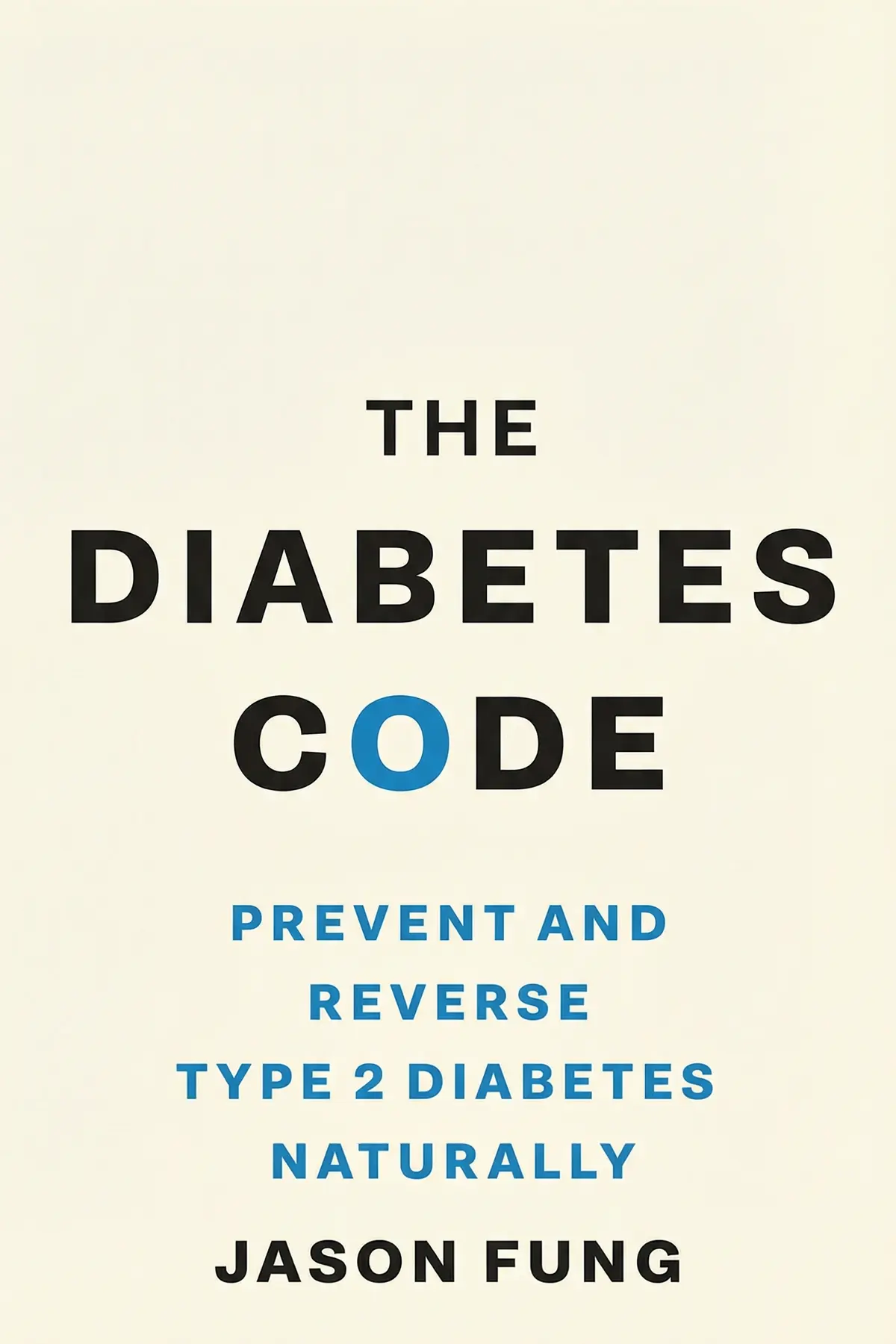
EnglishไทยThe Obesity Code: Unlocking the Secrets of Weight Loss
By Jason Fung
Jason Fung explains why cutting calories and fat so often fails, and how lowering insulin by eating less sugar and refined carbohydrates, spacing out meals and fasting can make weight control work.
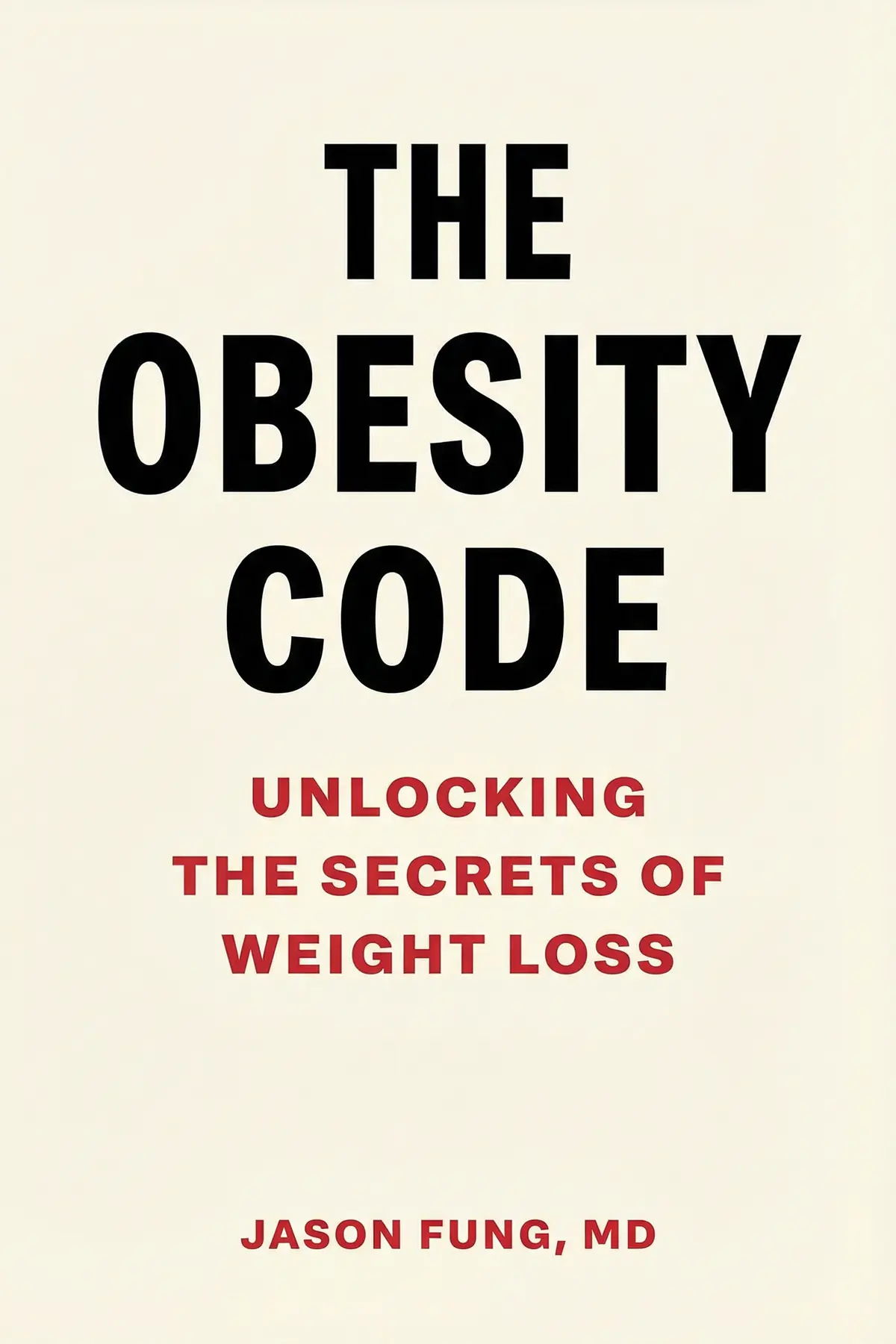
Table of Content
1. Introduction
1 min 01 sec
If you have dieted, lost weight and watched it come back, Jason Fung has a blunt diagnosis: the diet was aimed at the wrong target. In The Obesity Code, the Canadian kidney doctor argues that body fat is governed by a hormone, insulin. Sugar, refined carbohydrates and all-day snacking keep it high. Counting calories and fearing fat, in his view, are habits built on stories that never fit the evidence.
His case runs through every idea ahead: weight is a hormonal problem, so the way out is to bring insulin down. Fung builds it from Danish adoption records, a Minnesota doctor’s starvation study, a Native American community in the American Southwest and a Harvard heart study that began in 1948. The payoff is practical. You learn which foods to leave on the shelf, why the hours between meals matter, and what a weekly fasting day can look like.
2. Stop blaming your upbringing for your weight
1 min 31 sec
Danish adoption records let one researcher test a question families argue about at the dinner table. His answer surprised the experts of his day and changes where the blame for extra weight should fall.
3. Eating less slows your body's energy burn
1 min 53 sec
Volunteers in two early experiments ate far less than usual and barely got thinner. What their bodies did instead explains why so many strict diets leave people tired, cold and back where they started.
4. See insulin as the hormone that sets weight
1 min 47 sec
Hunger and fullness are not decisions you make. One hormone, already flowing through your blood, seems to tip those signals, and doctors still debate exactly how it manages to do it.
5. Give insulin a break by skipping snacks
1 min 33 sec
Oprah Winfrey’s long cycle of losing and regaining weight is a familiar one. Fung traces it to a habit most people consider harmless, and to what that habit slowly does to your cells.
6. Cheap refined food costs poorer communities their health
1 min 49 sec
A Native American community once known for its fitness now sees about half its adults living with obesity. The reasons reach from colonial settlement to the way government payments to farmers are divided.
7. Eat natural fats again, but drop trans fats
1 min 51 sec
A Harvard team set out in 1948 to prove that eating fat raises cholesterol. What they found, and how researchers responded to it for decades, says a lot about the advice you grew up with.
8. Cut sugar first and keep your coffee
1 min 36 sec
One common ingredient puts a load on a single organ that no other part of the body can share. And one drink often treated as a vice comes out looking better than its reputation suggests.
9. Conclusion
1 min 14 sec
Fung’s book recasts weight as a matter of signals. The body does not behave like a bank account, where smaller deposits always mean a smaller balance. It answers to hormones, and when food runs short it simply spends less, as Keys’s cold, sluggish volunteers discovered. Insulin is the setting that counts. Sugar, refined grains and endless snacking keep pushing it up, and cheap, subsidized food makes that path easiest for people with the least money.
The changes worth making follow from that picture. Start at the shelf: leave behind products heavy in sugar, high-fructose corn syrup or hydrogenated oils, and stop fearing ordinary fat. Let four or five hours pass between meals instead of grazing. And, after talking it over with your doctor, try one fasting day a week: water or tea in the morning, more hot drinks and a vegetable broth at midday, then a light dinner of protein and vegetables with no sugar or carbohydrates, before eating normally again the next day. Kept up for a while, Fung says, such a day brings insulin down sharply.
Success, for Fung, looks like a body that no longer asks to be fed every hour.
About this book
What is this book about?
Most weight-loss advice comes down to two rules: eat fewer calories and avoid fat. Jason Fung, a kidney doctor, argues that both rules rest on stories that never matched the evidence. That, he says, is why so many diets end with the weight coming back. His alternative puts a hormone at the center. Insulin, Fung argues, is the main driver of obesity, and sugar, refined carbohydrates and the habit of snacking all day push it up. His evidence includes Danish adoption research, early starvation experiments, the story of the Pima in the southwestern United States, and several decades of studies that found little or no link between eating dietary fat and higher cholesterol. Along the way he explains why eating less makes the body burn less, why poorer communities carry more weight, and why trans fats deserve their bad name when ordinary fats do not. Readers get a clear model of how weight is regulated and practical changes to try. Read labels for sugar and hydrogenated oils, leave four to five hours between meals, and, with a doctor's agreement, fast one day a week.
Book Information
Who it's for
Weight back after dieting
People who have lost weight on calorie-cutting diets and watched it return.
Family history of obesity
Adults with a family history of obesity who want to understand what insulin has to do with it.
Snacking through the workday
Busy professionals who snack through the workday and want a simple rule for spacing out meals.
About the Author
Jason Fung
Jason Fung is a Canadian nephrologist, a kidney specialist, born in 1973. He trained in medicine at the University of Toronto and in nephrology at the University of California, Los Angeles, before returning to practice in Toronto. Caring for people with kidney damage from type 2 diabetes, he saw that insulin medication seemed tied to weight gain, and he began prescribing intermittent fasting and a low-carbohydrate diet. He co-founded The Fasting Method, a program aimed at weight loss and type 2 diabetes, and wrote The Diabetes Code. The Obesity Code, published in 2016, has sold more than 2 million copies worldwide.
Ratings & Reviews
Ratings at a glance
What people think
Listeners find this work to be well-researched and simple to understand, with one individual remarking that it unfolds with the intensity of a thriller. They value its holistic perspective on weight management and obesity, specifically regarding the insulin theory and its relationship with fat accumulation. The book is recognized for its meticulous documentation, lucid explanations, and useful tips, resulting in a transformative experience that many believe could actually save lives.
Top reviews
Maya
This book reads like a medical thriller, pulling back the curtain on why we actually gain weight. Dr. Fung presents a compelling case that obesity isn't a character flaw or a simple math problem involving calories. Instead, it’s a complex hormonal imbalance driven primarily by insulin. While the sections on intermittent fasting can feel a bit extreme for the average person, the explanation of 'body set weight' is revolutionary. I finally understand why my body fights so hard to keep the pounds on after a diet ends. It’s a dense read but remains incredibly accessible for those without a science background. Frankly, it should be required reading for anyone struggling with their metabolic health.
Show moreHenry
Ever wonder why the standard advice of 'eat less, move more' has failed so many people over the last fifty years? This book answers that question by focusing on the timing of when we eat rather than just the volume of food consumed. The research into insulin resistance and how it leads to fat storage is thorough and eye-opening for anyone struggling with a weight loss plateau. Personally, I appreciated the breakdown of the 'dawn phenomenon' and why I’m not actually hungry first thing in the morning. It isn't just a diet book; it's a masterclass in human metabolism that will change how you view your pantry. I’ve already seen my energy levels stabilize after cutting out refined grains as suggested.
Show moreChokdee
Wow, I didn't realize that my 'healthy' snacking was actually the thing keeping my insulin levels spiked and preventing fat loss. Fung explains that our bodies are like thermostats, and until we lower our insulin, our weight is essentially stuck at a predetermined set point. The truth is, the food industry has done a number on us by pushing 'low-fat' products that are actually loaded with sugar and refined carbs. Reading about the history of the food pyramid was infuriating but necessary to understand our current health crisis. This is life-changing information for anyone with Type 2 diabetes or those who are just tired of the yo-yo diet cycle. It's a comprehensive approach that prioritizes long-term health.
Show moreWissanu
Finally got around to reading this, and it’s easily the most important health book I’ve picked up in a decade. It completely debunks the idea that all calories are created equal, which is a lie we’ve been fed by big food corporations for years. The explanation of how fasting allows the body to actually burn stored fat instead of just lowering your metabolism is brilliant. I've switched to eating more natural fats like avocado and butter while cutting out the 'heart-healthy' margarines, and I feel significantly better. It’s rare to find a book that is both intellectually stimulating and immediately actionable. I'm recommending this to everyone I know who is tired of the traditional, failing diet advice.
Show morePierre
As a competitive powerlifter who spends a lot of time obsessing over macros, I found this perspective on hormones refreshing yet challenging. Fung’s critique of the 'calories in, calories out' model is spot on because it ignores how 100 calories of cookies impacts your blood sugar differently than 100 calories of broccoli. I have to be fair: his suggestion to fast for days at a time is a tough pill to swallow for someone trying to maintain heavy lifting volume. It’s a great resource for health, but the adherence factor for those 72-hour fasts is likely low for most people. Still, the focus on whole foods and vinegar is very practical for daily life.
Show morePalm
After hearing about this book in a health forum, I decided to give it a shot to break a six-month weight loss plateau. The focus on cortisol and stress as secondary drivers of weight gain was a major lightbulb moment for me because I'm a high-stress professional. Fung’s writing is punchy and direct, though his tone can occasionally come across as a bit condescending toward the medical establishment. I started the 16:8 intermittent fasting protocol he describes, and for the first time in years, I don't feel like a slave to my hunger pangs. It’s a very practical guide, even if some of the longer fasting windows seem unrealistic for a busy social life. Definitely worth a read for the science alone.
Show moreTalia
Look, the science behind the hormonal theory presented here is rock solid and backed by decades of research that usually gets ignored. Most doctors just tell you to walk more, but Fung explains why that 5% of the equation won't save you from a diet high in processed sugar. I loved the deep dive into how fiber and vinegar can actually mitigate the insulin response of certain foods. My only gripe is that the book could have been about fifty pages shorter if it didn't repeat the same core thesis in every single chapter. If you can get past the redundancy, the advice on avoiding artificial sweeteners is worth the price of the book alone. It's a foundational text.
Show moreSophia
The chapter on the 'dawn phenomenon' alone was worth the price of admission for me. Understanding why our bodies dump glucose into the bloodstream in the morning helped me realize why I wasn't actually hungry for breakfast. Fung does a great job of explaining how the 'snacking' culture was essentially manufactured to sell more processed goods. While I don't agree with every single conclusion—especially the dismissal of exercise as a weight-loss tool—the core message about insulin is undeniable. It's a well-documented look at a systemic problem that requires a lifestyle change, not just a temporary diet. I’m currently two weeks into the recommended changes and my sugar cravings have almost entirely vanished.
Show moreKiattisak
Not what I expected given the glowing recommendations, especially since it feels like it glosses over the risks of disordered eating. To be fair, Fung's logic regarding insulin as the primary driver of obesity is well-documented and hard to argue with from a biological standpoint. However, telling a population prone to bingeing that they should simply 'not eat' for extended periods feels a bit irresponsible without more psychological safeguards. The constant repetition of certain points made the middle sections feel like they were dragging on forever. It’s a solid read for the science, but I’m docking points for the lack of nuance regarding mental health and food relationships. Some of the fasting goals feel like a recipe for a crash diet.
Show moreMuk
Gotta say, I have mixed feelings about this one because while the insulin theory is fascinating, the implementation is quite extreme. Dr. Fung is a great writer, but he seems to think that everyone has the willpower of a saint when it comes to multi-day fasts. For someone like me who has a history of stress-eating, skipping meals can occasionally trigger a massive binge later in the week. The book assumes a 'one-size-fits-all' approach to fasting that might not work for people with different metabolic or psychological backgrounds. It’s definitely informative, and I learned a lot about how sugar affects my liver, but take the fasting advice with a grain of salt. It’s a good starting point, but don't feel like a failure if you can't go 48 hours without food.
Show moreQuestions about this book
What is the main idea of The Obesity Code?
Jason Fung argues that obesity is mainly a hormonal problem driven by high insulin, and that eating too many calories or too much fat is not the real cause. Sugar, refined carbohydrates and frequent snacking keep insulin raised, and over time cells become insulin resistant, which leaves people hungry and makes lost weight return. The fix, in his view, is to lower insulin by cutting sugar and refined carbohydrates, spacing out meals and fasting.
Why does cutting calories not work, according to Jason Fung?
Fung says the body adjusts its spending to match its intake. In a 1919 Carnegie Institute study, volunteers who ate about 30 percent less saw their energy use fall by roughly the same share and lost little weight. In Ancel Keys’s 1945 starvation research, metabolism fell 40 percent, heart rates slowed sharply and subjects felt cold and struggled to concentrate. Eating less, in this view, mostly makes the body burn less.
What does The Obesity Code say about snacking?
Fung sees snacking as one of the main reasons insulin stays high. Each snack, however small, triggers its own rise in insulin, so grazing all day keeps levels medium to high and denies the body the low periods it needs. He recommends going about four to five hours without food after a meal so insulin can settle before the next one.
How does Jason Fung suggest doing intermittent fasting?
One option he describes, to be discussed with your doctor first, is fasting one day a week. Drink water or tea for breakfast, more hot drinks and a vegetable broth at lunch, and then eat a light dinner of protein and nutritious vegetables with no carbohydrates or sugars. The next day you return to your usual diet. Kept up over time, Fung says, this brings insulin levels down sharply.
Is fat bad for you according to The Obesity Code?
Mostly not. Fung points to a Harvard study begun in 1948 in Framingham, Massachusetts, which found no link between eating lots of fat and higher cholesterol. The real exception is modified trans fat, the hydrogenated vegetable oil in products like margarine. Dutch researchers found in 1990 that it raises bad cholesterol and lowers good cholesterol, and a later study tied a two percent rise in intake to a 23 percent higher heart disease risk.
Featured in
Readers also enjoyed





AUDIO SUMMARY AVAILABLE
Listen to The Obesity Code in 15 minutes
Get the key ideas from The Obesity Code by Jason Fung, plus 5,000+ more nonfiction titles.
- 5,000+ titles
- Listen as much as you want
- 7-day free trial
- Cancel anytime









