

15 min 02 sec
Available in: English
The Myth of Sanity: Divided Consciousness and the Promise of Awareness
By Martha Stout
Explains why the mind checks out under overwhelming stress, how that escape turns into lost memories, lost time and sudden personality switches, and how facing old pain helps people stay present.
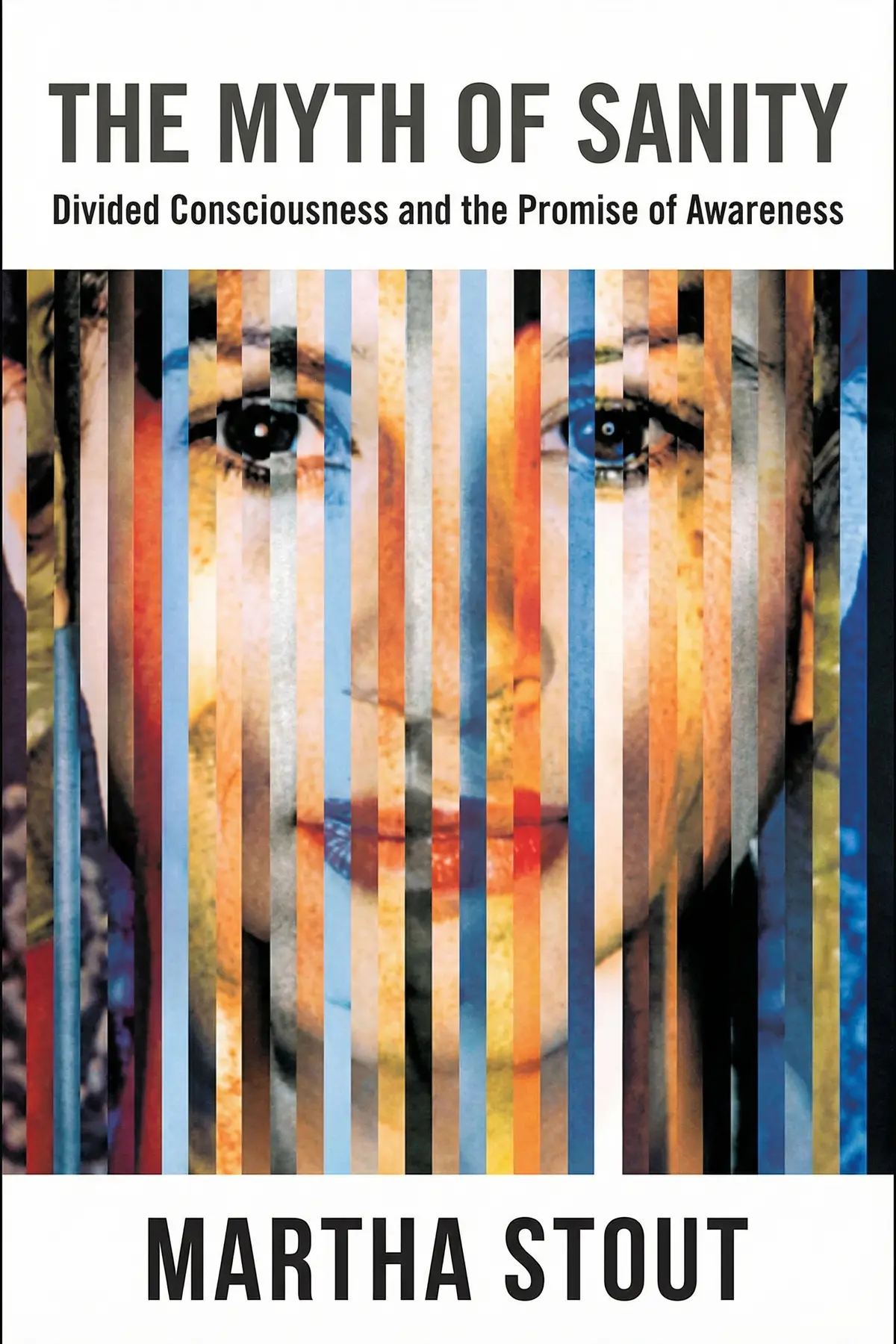
Table of Content
1. Introduction
1 min 07 sec
Most people have driven home and arrived with no memory of the road, and that small blank, Martha Stout argues, is a mild version of something much larger. In The Myth of Sanity, the clinical psychologist, who spent twenty-five years teaching at Harvard Medical School, describes dissociation: the mind’s ability to step away from a moment that feels like too much. In a car crash or a frightening childhood, that escape can save a person. Later it can become a habit, switching on at a train horn or a shop counter and leaving people absent from parts of their own lives.
Stout’s case, built on her patients’ stories, is that the defense that protects us in danger keeps us half present afterward, and that the way back runs through awareness. Her examples include a filmmaker who lost her whole childhood and a man whose mind held several identities. They teach you to notice when you, or someone close to you, has gone somewhere else, and what helps bring them back.
2. Spot the escape your mind makes under threat
1 min 38 sec
In the second before a crash, many people feel they are watching from outside their own body. That reflex is a rescue, yet it can leave behind a trap that springs years later at a railway station.
3. Understand painful memories that resist words
1 min 47 sec
A gifted filmmaker could not name a single teacher from her school years. Her missing childhood points to a fault in how the brain records the worst moments, and why talking about them feels impossible.
4. Recognize lost time and the flyaway self
1 min 47 sec
One woman woke up on what she thought was Tuesday and learned it was Friday, while her coworkers had noticed nothing. Most dissociation is far milder, but its signs are easy to miss.
5. See how childhood fear teaches adults to drift
1 min 59 sec
A boy who was never hit still learned to vanish behind his own eyes. His story shows why children absorb fear so deeply, and how a kitchen scene can shape decades of adult conversations.
6. Understand the split mind that saves a child
1 min 50 sec
Mice with no way out of danger simply died. Humans have another option, and in its most extreme form it creates separate identities inside one mind, each guarding a different piece of the pain.
7. Respond calmly when someone you love switches
1 min 42 sec
A warm, devoted father would vanish for long stretches or turn suddenly jealous, leaving his wife unsure who she had married. Stout explains what may be happening and what a partner can safely do.
8. Return to your own life and stay present
1 min 56 sec
A man whose inner voice urged him toward death, and a woman who walked back to the beach where she nearly died, both recovered. What they did offers steps anyone who drifts can try.
9. Conclusion
1 min 16 sec
Stout’s title carries her argument. Sanity, as most of us picture it, means a mind that is always fully here. Her patients point somewhere else: to a mind that learned, often in childhood, to step out when life became too much, and that keeps stepping out long after the danger is gone. The forgotten drive, the train horn that brings back chlorine and the husband who suddenly feels like a stranger all sit on one scale.
That scale also shows the way back. The escape helped Julia, Garrett and Matthew get through what happened to them as children. For Garrett and Julia, recovery came when they turned toward what they had fled.
You can begin small. When a reaction feels far bigger than its trigger, pause and ask what it reminds you of. When someone close to you seems to vanish in the middle of a conversation, read it as old fear rather than indifference, while keeping yourself safe. And when a painful memory surfaces, give it words and a listener, because the memories that hurt most are the ones that never found language.
In Stout’s account, awareness is what makes presence possible. A mind that once left to survive can learn to stay.
About this book
What is this book about?
Many people know the feeling of arriving home with no memory of the drive, or of watching a frightening moment as if from outside their body. Clinical psychologist Martha Stout argues that these everyday blanks belong on the same scale as far more serious conditions. They all come from dissociation, the mind's ability to disconnect from what feels unbearable. Drawing on her patients, Stout shows how this defense saves people during trauma and then lingers long after the danger is gone. She explains how overwhelming events skip the brain's normal memory filing, why such memories resist words, and how children in particular learn to leave their own experience. Her cases include a successful filmmaker with no childhood memories, a man whose mind split into several identities after his brother's death, and a husband who changed without warning. Readers get a clear way to recognize dissociation in themselves and others, from mild drifting to lost days, and practical steps Stout recommends for coming back: dream journals, meditation, revisiting painful places and asking hard questions out loud.
Book Information
Who it's for
Often spacing out
People who often space out, lose track of time or react far more strongly than a moment seems to deserve.
After childhood trauma
Survivors of childhood trauma who want to understand why the past keeps intruding.
Loved one changes suddenly
Partners and friends of someone whose behavior suddenly switches without explanation.
About the Author
Martha Stout
Martha Stout is an American clinical psychologist who has worked in private practice and spent twenty-five years on the psychology faculty of the psychiatry department at Harvard Medical School. She has also taught at Wellesley College, The New School for Social Research and the Massachusetts School of Professional Psychology. Her other books include The Paranoia Switch and The Sociopath Next Door, which won the psychology prize at the Books for a Better Life Awards.
Ratings & Reviews
Ratings at a glance

What people think
Listeners find this work insightful, especially valuing its explanation of how the human mind builds awareness. The writing style is also commended for being articulate and accessible, with one listener noting that it successfully avoids excessive psychobabble. Additionally, the book’s pacing receives positive marks; one listener highlights the exploration of trauma survivors' painful psyches, while another appreciates the way background stories are used to present the information.
Top reviews
Ana
Martha Stout has a gift for taking the most complex, terrifying corners of human psychology and making them feel deeply human. Instead of hiding behind dense clinical terms, she uses vivid narratives of her own patients to illustrate how trauma fractures the self. I was particularly struck by the idea that dissociation isn't just a "movie trope" like Sybil, but a spectrum we all inhabit to some degree. It’s a chilling but ultimately hopeful look at the mind's survival mechanisms. The pacing is excellent, moving quickly through case studies without losing the emotional weight of the survivors' experiences. If you've enjoyed her other work, this is a must-read for understanding the "normalcy" of mental fragmentation and how the mind constructs awareness.
Show moreDao
Picked this up after reading "The Sociopath Next Door" and found it equally gripping, though much more heartbreaking. The way Stout explores the painful psyches of trauma survivors through their background stories makes the disorder feel less like a medical curiosity and more like a heroic survival strategy. I was fascinated by the discussion on how children create different personality states to cope with abuse they can't escape. The book flows perfectly, balancing clinical definitions with deeply personal anecdotes that keep you turning pages. It really highlights how thin the line is between "sane" and "dissociated." It’s rare to find a psych book this accessible and moving.
Show moreNim
Wow, I never realized how much of my daily life is spent "checked out" until I read Stout’s analysis of awareness. This isn't just a book about "multiple personalities"; it's a deep dive into how we all protect ourselves from reality when it gets too intense. The background stories of her patients are haunting and beautifully told, providing a bridge to understanding the extreme trauma responses. I loved that she avoided "psychobabble" entirely, making this feel more like a conversation with a brilliant friend than a lecture. It’s a powerful testament to the human mind’s ability to survive the unthinkable through creativity and fragmentation. One of the best psych books I've read in years.
Show moreRosa
Ever wonder how your brain handles stress that feels too big to carry? This book dives into the mechanics of awareness and how the mind builds protective walls through dissociation. Stout avoids the typical psychobabble found in academic texts, opting instead for a storytelling approach that makes the concepts easy to grasp. I appreciated her explanation of how everyday "spacing out" is actually a milder form of what trauma survivors experience. Gotta say, my only gripe is that she occasionally repeats certain points, making some sections feel slightly redundant. Still, the insight into DID and the importance of personal responsibility in healing is profound and worth the read for anyone interested in behavioral psychology.
Show moreNoi
The way Stout dismantles the barrier between "us" and "them" is probably the most impressive feat of this book. She argues that we all experience micro-dissociations, like losing time during a long commute or getting lost in a movie. This perspective humanizes the more extreme cases of DID, showing them as an extension of a normal mental process used for defense. Look, the subject matter is undeniably dark—some of the trauma described is hard to stomach—but the focus remains on recovery and the courage required to face the past. I wish there had been more focus on other mental health conditions besides dissociation, but for a deep dive into this specific syndrome, it’s excellent.
Show moreSureerat
As someone who appreciates psychology without the jargon, I found this to be one of the most readable books on trauma out there. Stout explains the "Diagnostic and Statistical Manual" symptoms in a way that actually makes sense in a real-world context. She uses her history as a Harvard psychologist to provide authority, yet her tone remains accessible and grounded in empathy. The exploration of "victim identification" was particularly resonant and offered a unique perspective on the long-term effects of trauma. I did find the pacing a bit slow in the middle chapters, but the final sections on recovery and taking responsibility were very strong. It’s a very easy to understand book.
Show moreLiam
Finally got around to this classic and I’m glad I did, even if some parts felt a bit dated. The core message—that dissociation is a normal defense mechanism taken to an extreme—is still incredibly relevant today. Stout is a master at using narrative to explain behavioral psychology, which makes the book feel like a collection of short stories rather than a dry textbook. I appreciated her honesty regarding the difficulties of treating suicidal patients and the fierce respect she has for her clients. It’s a bit redundant if you’ve studied DID before, but for a general reader, it’s a goldmine of insight into the mind's ability to cope.
Show moreSawit
The chapter on dissociation during mundane tasks like driving was a huge eye-opener for me. It’s fascinating to see how the mind can perform complex actions while the conscious self is essentially "on vacation." Stout uses these relatable moments to build a foundation for understanding the more severe fragmentation seen in trauma survivors. Personally, I found the book's pacing to be one of its greatest strengths; it never feels like it's dragging through data. A minor criticism would be the lack of discussion on modern neurobiology, but for an older text, it holds up remarkably well. It’s a compassionate and clear-eyed look at the architecture of the human soul.
Show moreArt
While I found the core information regarding Dissociative Identity Disorder fascinating, the author’s writing style often pulled me out of the narrative. Stout has a tendency to be somewhat "cloying" and overly sentimental when describing her patients, which felt a bit unprofessional at times. To be fair, her clarity on how the brain constructs awareness is top-notch and serves as a great introduction for laypeople. The book effectively debunks the "Sybil" myths, showing that these shifts are often subtle and hard to detect. It just didn't have that "eureka" moment for me that I was expecting after her sociopath book. It’s a decent primer, but the tone might not be for everyone.
Show moreSombat
Not what I expected given the title, as it focuses almost exclusively on Dissociative Identity Disorder rather than a broader "myth of sanity." I found the sections on hypnosis and memory retrieval to be a bit controversial, though Stout does emphasize the need for ethical practitioners. Truth is, the case studies are well-written, but they occasionally feel a bit "neat" and polished for such messy conditions. I did appreciate the distinction between a change in mood and a change in personality, which cleared up a lot of my misconceptions. It’s a solid read that offers good information but lacks the comprehensive scope I was hoping for when I first bought it.
Show moreQuestions about this book
What is The Myth of Sanity by Martha Stout about?
It is about dissociation, the mind’s ability to disconnect from overwhelming experiences. Stout argues that this defense protects people during trauma, such as a car crash or childhood abuse, but can become a lasting habit. That habit can show up as memory gaps, lost time, out-of-body feelings or, at the extreme, dissociative identity disorder. She also describes how people can recover by facing their past directly.
Why are traumatic memories hard to put into words?
Stout explains that ordinary memories pass from the amygdala, which judges emotional weight, to the hippocampus, which organizes them and links them with other memories. In extreme situations that process breaks down. Traumatic memories then remain as isolated images or bodily sensations, may lack links to the brain’s language areas, and come back more easily than normal memories, which is why they are so hard to describe.
What is the difference between fugue and demifugue?
In fugue, a person keeps functioning, going to work and talking, while the part of the mind that feels and remembers is offline, so whole days can vanish. Stout’s patient Julia once woke thinking it was Tuesday when it was Friday. Demifugue is milder and more common: a brief sense of being cut off from reality, such as the world seeming to shrink or the body feeling heavy and absent.
How can you help someone who dissociates or switches personality?
Stout’s first rule is safety: if the person is violent, remove yourself. If you are sure they will not harm you, you can gently ask to speak with them by name once they are ready to come back. After that, you might suggest therapy, though she notes it is unlikely to help if the person will not acknowledge the problem.
What does Martha Stout recommend for overcoming dissociation?
She suggests keeping a dream journal, meditating to observe memories without changing them, and visiting places linked to painful memories. She urges people to stop seeing themselves as victims, which she believes gives power to those who caused harm. She also recommends asking hard questions about a traumatic event and discussing them with others, which helps weaken nightmares and dissociative states.
Readers also enjoyed

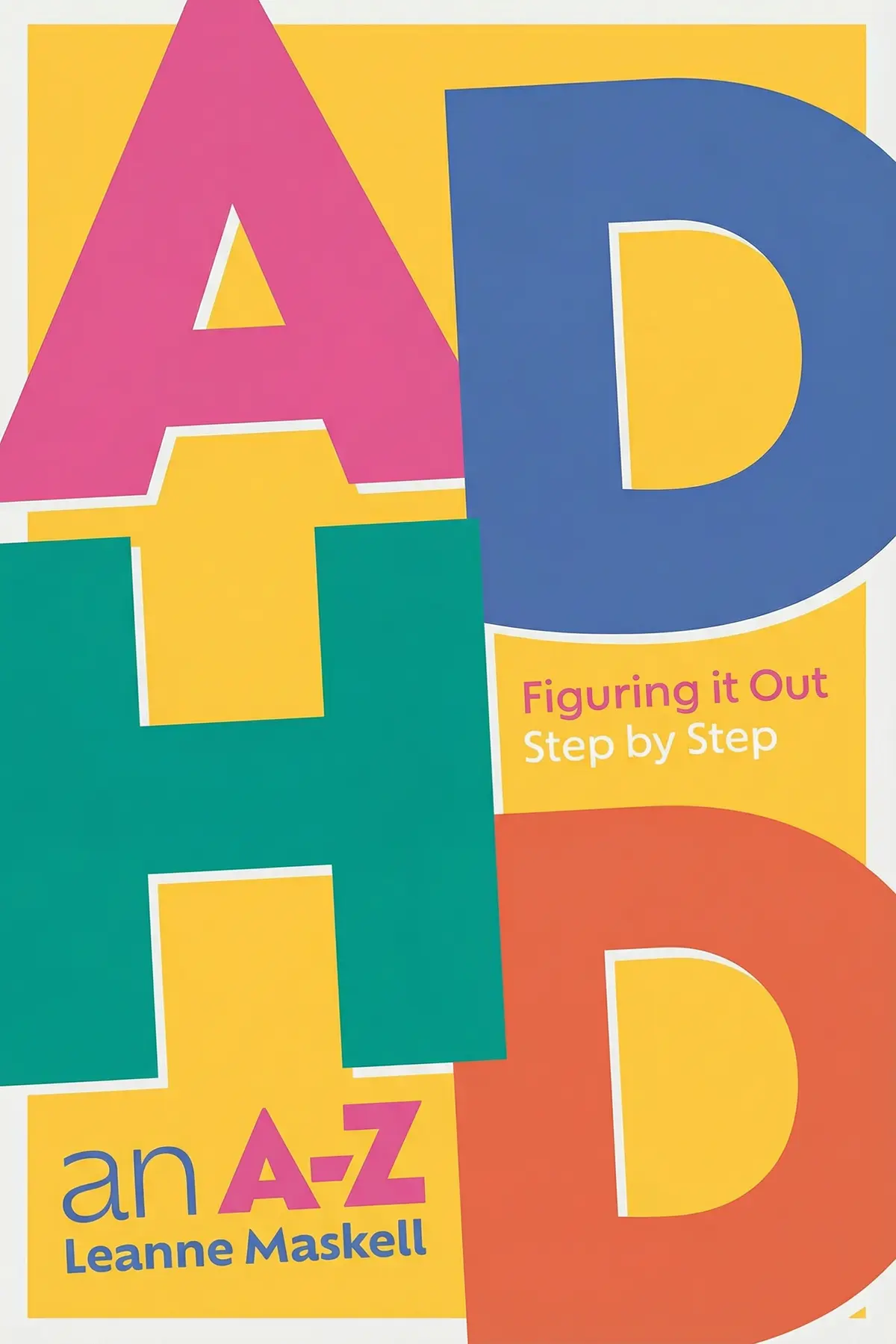
ADHD an A-Z: Figuring It Out Step by Step
Leanne Maskell

A Liberated Mind: How to Pivot Toward What Matters
Steven C. Hayes




Acting with Power: Why We Are More Powerful Than We Believe
Deborah Gruenfeld

AUDIO SUMMARY AVAILABLE
Listen to The Myth of Sanity in 15 minutes
Get the key ideas from The Myth of Sanity by Martha Stout, plus 5,000+ more nonfiction titles.
- 5,000+ titles
- Listen as much as you want
- 7-day free trial
- Cancel anytime









