

A Biography of Loneliness: The History of an Emotion
Fay Bound Alberti
 English
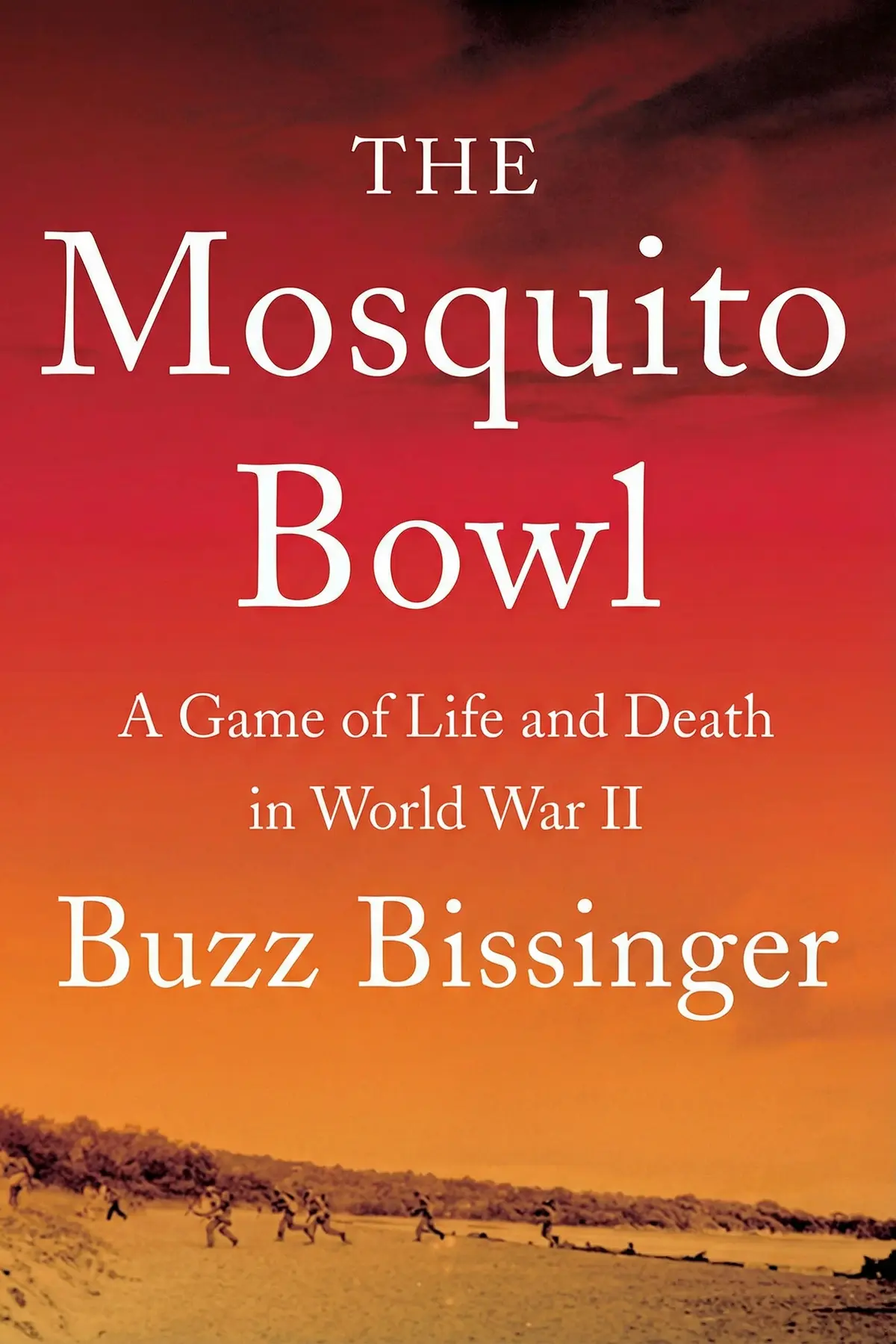
The true story of college football stars who became Marines, played a scoreless game on a coral field on Christmas Eve 1944, and then fought on Okinawa, where many of them died.
1 min 09 sec
Most people meet World War II as totals: battles, dates, casualty counts. In The Mosquito Bowl, Pulitzer Prize winner Buzz Bissinger turns those totals back into people, starting from a strange fact. By 1944, drafts and wartime transfers had gathered over 50 onetime college football players in two Marine regiments on the same Pacific island, and the men settled their bragging with a real game. It was played on Christmas Eve on a field of dirt and coral, carried live by radio across the Pacific, and it ended 0-0. Within months, many of the men on that field were dead on Okinawa.
Bissinger’s case is that this one game holds the war in miniature. It brought together immigrant sons and sons of privilege. It exposed what the military wasted and what it learned. And it ended in a battle that took men without regard for talent or virtue. Through four players, the Pacific war shrinks to the size of a single life, and courage stops being an abstraction.
2 min 03 sec
A Croatian immigrant’s boy fought his way from Illinois coal country to a Big 10 record and a high pro draft pick. The war had other plans for him, and they began with a publicity photo.
1 min 47 sec
An All-American with a safe path out of the draft did something few would have bothered to do. His friend and former teammate would later show the same instinct, at a far higher cost.
2 min 10 sec
A privileged football captain wanted the most dangerous assignment in the Marines and got the one nobody wanted. What he saw there changed how he understood his own country.
2 min 09 sec
Misread tides and badly built boats turned one tiny islet into a slaughter. Months later, a seven-man patrol slipped behind enemy lines, and the camp they left behind assumed the worst.
2 min 09 sec
Bored Marines on a Pacific island turned drunken bragging into a broadcast event, with marching bands, betting and a roster full of All-Americans. Nobody won, and that may be the most fitting result.
2 min 06 sec
The beaches were empty on landing day, and it felt like a joke. Over the next 82 days, the island took a record-breaking runner, a loyal friend and a humble leader in very different ways.
1 min 21 sec
Bissinger’s closing figures are vast. On Okinawa, up to 250,000 people died over 82 days, among them 1,622 Marines of the 6th Division. The 29th Regiment alone lost 551, more than any other Marine regiment lost in a single operation of the war. The book’s achievement is to put faces inside those numbers: a coal miner’s son with a Big 10 record, an honest pre-med student, a friend who ran toward the gunfire.
John McLaughry survived. On the night Schreiner died, he ran into Japanese soldiers in the dark and took grenade fragments in his leg and jaw. Back home he did what everyone expected and coached football, at Union College, at Amherst and finally at Brown. In retirement he won recognition as a painter and wrote 80 pages about his patrol on Bougainville. He died on November 28, 2007, at 90.
The habit worth keeping is to read history at the size of one life. When a casualty count crosses your screen, picture the roster behind it. When you lead people, borrow McLaughry’s sideline sense, rotating them before the heat breaks them, and look hard for the talent your system was built to overlook. On a coral field in 1944, nobody scored, and for one game, nobody had to lose.
In 1944, wartime drafts and transfers brought over 50 onetime college football players together in two Marine regiments stationed on the same Pacific island. They argued over which regiment would win a game, and then they played one. The game was played on Christmas Eve on a field of dirt and coral, the island's radio station broadcast it live across the Pacific, and it ended 0-0. Pulitzer Prize winner Buzz Bissinger follows the men who played in it. Tony Butkovich was the son of a Croatian coal miner and a record-breaking running back. Dave Schreiner was an honest All-American from Wisconsin, and Bob Bauman was his loyal teammate. John McLaughry was a coach's son who saw the military's racism up close at Montford Point. Bissinger also covers the bungled landings at Tarawa, then follows these men through a tense jungle patrol on Bougainville and the long horror of Okinawa. Readers get the Pacific war told through a handful of lives, plus a lasting picture of what courage, loyalty and wasted talent looked like when the price was everything.
Readers who know World War II mainly through dates and totals and want the Pacific war told through individual lives.
Sports fans curious about the college stars who traded football fields for Marine landings.
Leaders interested in loyalty, duty and the talent that institutions waste.
Buzz Bissinger was born in New York City in 1954. He won a Pulitzer Prize for investigative reporting at the Philadelphia Inquirer. His book Friday Night Lights inspired both a film and a television series, and his 3 Nights in August was a New York Times bestseller. He has been a contributing editor at Vanity Fair and a sports writer at the Daily Beast, and his work has appeared in the New York Times, the New Republic and Time.
Listeners find that this title ranks among the top World War II books and flows with the pace of a novel, earning praise for its deep research and gripping narrative. Furthermore, the writing is superb, and listeners value the historical information provided, with one mentioning it offers a meticulous look at the 82-day battle for Okinawa. The work also receives acclaim for its emotional impact, with one listener noting how it illustrates the true scale of the sacrifices made, as well as for its focus on developing real-life figures.
Bissinger has a way of turning dry military history into something that feels like a high-stakes, gripping novel. I was completely captivated by the way he humanized these young men, moving from their glory days on the college gridiron to the absolute hell of the Pacific theater. To see All-Americans from schools like Notre Dame and Wisconsin reduced to mere survivors—or casualties—on Okinawa was a visceral experience. The research here is clearly exhaustive, with over a hundred pages of notes that back up every tragic detail of the 82-day battle. While some people might complain about the lack of actual football strategy, I found the focus on the Marines' individual journeys much more rewarding. It’s a haunting, beautifully written tribute to a group of boys who were forced to grow up in the most violent way imaginable. If you want to understand the magnitude of sacrifice during WWII, this is the book to read.
Show moreEver wonder what happened to those elite college athletes who traded their jerseys for Marine dungarees during the height of the war? This book provides a staggering, detailed answer. I was floored by the storytelling. Bissinger doesn't just tell you they were heroes; he shows you their flaws, their fears, and their youthful arrogance before the war stripped it all away. The contrast between the trash-talking on the dirt field of Guadalcanal and the horrific flame-thrower attacks on Okinawa is stark. It’s a brilliant character study that happens to be set against the backdrop of one of the bloodiest battles in human history. The ending is particularly moving, as it lists the fates of the men who played in that Christmas Eve game. It’s a sobering reminder that war doesn't care about your Heisman trophies or your NFL draft status. This is easily one of the best WWII books I have ever read.
Show moreWow, the level of detail Buzz Bissinger put into these biographies is honestly staggering. This isn't just a book about war; it’s a book about the American dream being interrupted by the reality of global conflict. I loved the deep dives into the lives of the Bauman brothers and Dave Schreiner. You really feel like you know these guys by the time they hit the beaches of Okinawa, which makes the final chapters almost impossible to get through without tearing up. The writing is sharp, and the author isn't afraid to criticize the 'Greatest Generation' while still honoring their incredible sacrifice. He paints a picture of a complicated America—one with immigration bans and lynchings—that fought for freedom abroad while denying it at home. It’s a nuanced, mature look at history that doesn't shy away from the ugly parts. This is a masterpiece of immersive journalism that stays with you long after the final page.
Show moreAfter hearing so much about the Mosquito Bowl, I finally dove into this mammoth of a book. It’s phenomenal. Bissinger captures the loss of innocence in a way that feels incredibly modern. He shows us these boys—captains of their teams, NFL prospects, local heroes—and then shows us the mud, the blood, and the senselessness of their deaths on a distant island. The irony of the 0-0 tie in the football game, compared to the total destruction that followed at Okinawa, is a powerful metaphor for the futility of war. I appreciated that he didn't sugarcoat the experience or rely on easy platitudes about heroism. Instead, he gave us a gritty, realistic account of what it was actually like for these athletes to serve. The character development is second to none for a nonfiction book. It’s emotional, informative, and deeply respectful of the men it portrays. Highly recommended for any history or sports fan.
Show moreFew books have left me feeling as hollow and heartbroken as this one. Buzz Bissinger manages to bridge the gap between sports and slaughter with incredible precision. I didn’t know much about the invasion of Okinawa before this, but the descriptions of the Japanese underground bunkers and the sheer brutality of the fighting were eye-opening. The way he follows specific players like George Murphy and Tony Butkovich makes the eventual casualty lists feel personal rather than just statistics. My only real gripe is that the marketing leads you to believe the football game is the centerpiece, when it’s really just a footnote in a much larger, darker narrative. However, the writing quality is top-notch, and the emotional depth is undeniable. It’s a heavy read that demands your full attention, but it pays off by giving a face to the 'Greatest Generation' that feels authentic rather than just a tired cliché.
Show moreAs someone who usually reads about the European theater, this was a brutal wake-up call regarding the reality of the Pacific. We often focus on the Nazis, but the battle for Okinawa was a different kind of nightmare. Bissinger captures the terror of the interlocking tunnel systems and the sheer desperation of the Japanese forces with vivid, often uncomfortable detail. The 'Mosquito Bowl' game serves as a clever, if slightly under-utilized, frame to introduce us to these kids before they were sent into the meat grinder. I actually appreciated the commentary on how the military used these athletes for recruiting—it added a layer of realism to the 'patriotic' narrative we usually get. It’s not a perfect book, as the author does tend to get a bit repetitive with his political themes, but the core story of these fifteen men who died is powerful. It’s a testament to bravery that avoids being overly sentimental.
Show morePicked this up because I’m a huge fan of Friday Night Lights, but this is a very different beast. It’s a bit of a mixed bag for me. On one hand, the historical content regarding the '90-day wonders' and the hierarchy of the service academies was fascinating. I never knew that West Point players were essentially seen as draft dodgers because of their deferments! On the other hand, the structure is a mess. Bissinger bounces around so much between the different men that I occasionally lost track of who was who. The book is heavily researched, which I appreciate, but it sometimes feels like he’s trying to cram every single fact he found into the prose. It’s a solid piece of nonfiction, but the pacing drags in the middle sections. If you’re looking for a quick sports story, look elsewhere. This is a dense military history that just happens to feature athletes.
Show moreFrankly, it's a bit of a slog in the middle, but the ending is worth the effort for the historical perspective. I went into this expecting something like a WWII version of Friday Night Lights, and while the writing quality is high, the focus is much more on the 'death' part of the subtitle than the 'game' part. The descriptions of the 82-day battle for Okinawa are incredibly detailed, perhaps a bit too much for a casual reader. There are so many names and ranks to keep track of that I found myself flipping back to the beginning quite often. I also found the author's frequent sidebars about social issues to be a bit heavy-handed at times, though they did provide some interesting context. It’s a respectable piece of work and clearly a labor of love, but it lacked the punchy, focused narrative I was hoping for. It’s an okay read, just be prepared for a long journey.
Show moreTo be fair, I was expecting a sports book, not a long-winded lecture on social justice and the failures of American policy. The title is quite a bait-and-switch. You’d think a book called The Mosquito Bowl would spend more than a dozen pages on the actual football game, but it’s mostly just an excuse for the author to air his grievances about racism and misogyny. I found his constant interjection of 'woke' commentary to be a major distraction from what should have been a heroic story about the Marines. Why tear down the United States Army just to puff up the Marine Corps? It felt petty and unnecessary. The prose is often turgid, and the endless lists of names in the final section felt like an exercise in filler rather than a meaningful tribute. I loved Friday Night Lights, but this was a slog that I only finished out of stubbornness. Definitely wouldn't recommend it.
Show moreThe title is incredibly misleading if you are actually looking for a book about a football game. I felt like the Mosquito Bowl itself was barely a footnote in what turned out to be a 400-page military history book. While I respect the research that went into this, the author’s tone felt very cynical and occasionally even anti-American. He goes out of his way to highlight every flaw in US strategy and every instance of systemic racism, which felt out of place in a book marketed as a tribute to Marine bravery. I found the narrative to be quite disjointed, jumping from one person’s life story to an encyclopedic entry about a battle without much flow. It was a frustrating experience. I wanted to hear about the game, the camaraderie, and the sportsmanship, but instead, I got a grim diatribe on the horrors of war and the failures of the era. It just wasn't for me.
Show moreIt tells the true story of a football game played on Guadalcanal on December 24, 1944, between two Marine regiments full of former college players. The game was broadcast live across the Pacific and ended 0-0. Bissinger follows several of the players, including Tony Butkovich, Dave Schreiner, Bob Bauman and John McLaughry, from their American childhoods through training and earlier battles to Okinawa, where many of them were killed.
Sixty-five men were listed on the rosters of the 4th and 29th Marine Regiments, and 56 of them had played college football. Twenty-two had been starters and five had been captains. Sixteen had been drafted by professional teams or had received offers. Three were All-Americans: Tony Butkovich of Purdue, Dave Schreiner of Wisconsin and Bob Herwig of Cal. About 1,500 spectators watched.
At least fifteen of them died there. Butkovich was killed by a sniper after he wrapped himself in a noisy poncho instead of digging a foxhole. Bauman died on June 6, 1945, while rushing to save Schreiner’s pinned platoon. Schreiner joined the attack on the last Japanese stronghold rather than sending someone else, and was shot by a sniper on the 82nd day, when the island was declared secure. McLaughry was wounded but survived.
Through John McLaughry’s posting at Montford Point in North Carolina, Bissinger shows that Black Marines trained in segregation. Roughly one million Black people served in the US military, and almost all of their duties involved serving white troops. Some were abused or killed, among them two privates, Robert Stafford and William Walton. McLaughry saw talent and ambition there that his country was not allowing to grow.
The book encourages reading history at the scale of individual lives, so that casualty totals turn back into people. It also offers leadership lessons. McLaughry rotated his players to beat the heat, Schreiner led from the front rather than sending others, and Montford Point shows how a system can waste talent it has decided in advance to overlook.
Fay Bound Alberti
Ben Macintyre

Ron Chernow

Philip Freeman


Michael Axworthy

Tom Standage

Ishmael Beah
AUDIO SUMMARY AVAILABLE
Get the key ideas from The Mosquito Bowl by Buzz Bissinger, plus 5,000+ more nonfiction titles.









