

14 min 41 sec
Available in: English
The Money Trap: Lost Illusions Inside the Tech Bubble
By Alok Sama
An insider account of SoftBank's biggest tech deals, from Arm to WeWork. It shows how bold vision builds fortunes, and the warning signs that tell you confidence has started to outrun judgment.
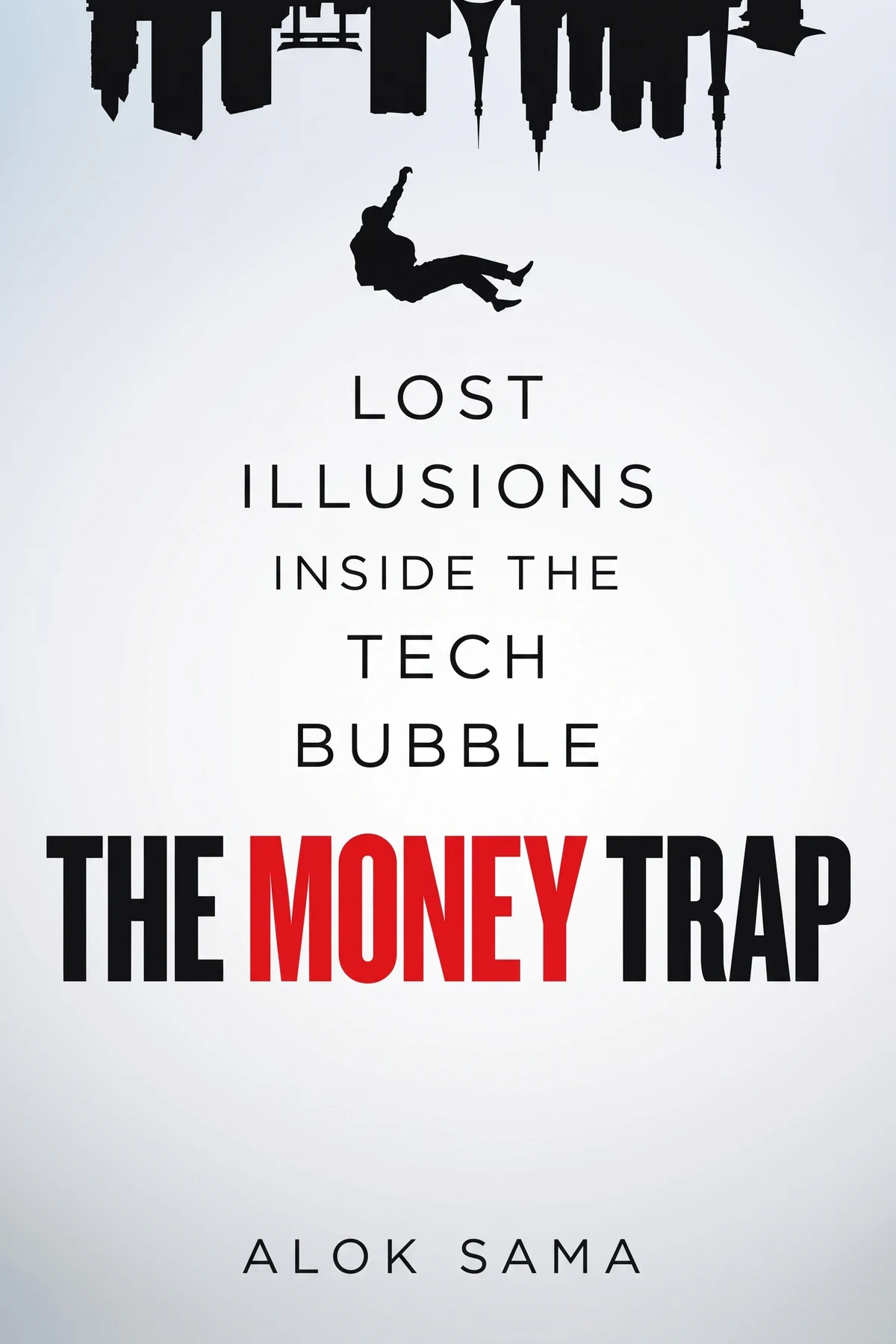
Table of Content
1. Introduction
1 min 00 sec
Ambitious investors, founders and managers all run into the same trap sooner or later: the bold instinct that wins the first big bet can wreck the tenth, once money stops being scarce. In The Money Trap, Alok Sama, the Morgan Stanley banker who became chief dealmaker at SoftBank, tells that story from inside the room. He sat beside Masayoshi Son, a founder who once committed billions after a twelve-minute tour, as SoftBank bought the chip designer Arm, raised a $100 billion Vision Fund and then watched WeWork collapse.
Sama’s account turns on one tension. Vision and discipline need each other. SoftBank flourished while it had both, then stumbled when a flood of capital drowned out the voice asking hard questions. Follow the deals in order and you get a working sense of how very large money decisions are made, which tactics actually move a price, and the warning signs that a bold strategy is turning reckless.
2. Learn what pulls a safe career toward bigger ambitions
2 min 04 sec
A young managing director with a London house and top pay still felt he was missing out. What he envied, and the essay that finally moved him, explains the world he was about to enter.
3. Learn an investor's playbook from a coffee shop
2 min 02 sec
Free coffee in a struggling family café became the seed of a strategy worth billions. Behind it sat a founder who had lost almost everything once and never forgot one missed chance.
4. Make rivals compete to raise your price
2 min 10 sec
SoftBank needed $20 billion fast, with its credit rating falling. A carefully staged breakfast in Helsinki and an unusual bond deal show how deal pressure can be turned into leverage of a quieter kind.
5. Spot the value that bold investors see first
2 min 11 sec
Tech giants such as Apple and Google all relied on one chip designer the public barely knew, and that neutrality made it very hard to buy. Son bought it anyway, in two months, and then raised money at a pace no one had seen.
6. Too much money makes weak bets look smart
1 min 54 sec
A $100 billion fund sounds like pure freedom. Inside SoftBank it created a different kind of pressure, and it led to a multibillion-dollar decision made in about the time of a coffee break.
7. Read the warning signs before the fall
2 min 05 sec
The dealmaker warned his boss, was ignored and walked away. What followed was a run of disasters from Istanbul to Beijing, and a loss so large it set a record.
8. Conclusion
1 min 15 sec
SoftBank’s story, as Sama tells it, is about a strength that changed sides. The same appetite that turned $20 million in Yahoo into billions, bought Arm in two months and raised $45 billion in under an hour also wrote a $4.4 billion check after a 12-minute tour. Early on, scarcity forced discipline. Once money was plentiful, nothing did, and the skeptic in the room eventually walked out.
That is the trap of the title, and it reaches well beyond billionaires. A founder after a big raise, a team with a generous budget, a manager who has just been proven right: each meets the moment when confidence starts to replace checking.
The book supports a few habits. Write down the thesis behind any large commitment, and test each new bet against it before you look at how much money is waiting to be spent. Keep someone close who is allowed to say no, and listen hardest when you are winning. Treat borrowed money as something that magnifies mistakes as surely as successes.
Son’s parents could give away coffee because the pastries paid for it. Free coffee only works while someone is still counting the pastries.
About this book
What is this book about?
Masayoshi Son turned SoftBank from a regional telecom company into one of the most powerful investors in technology. For years his chief dealmaker was Alok Sama, a former Morgan Stanley banker who structured the deals that kept the company afloat and then helped it make some of the largest bets in tech history. In The Money Trap, Sama tells that story from inside the room. He traces the moves that saved SoftBank in 2013, the Arm chip designer purchase completed within two months, and the founding of the Vision Fund, worth $100 billion and funded with $45 billion from Saudi Arabia. Then he follows the fall: a $4.4 billion commitment to WeWork after a short tour, a drift away from artificial intelligence, heavy borrowing and a record $27.4 billion loss. Readers get a clear look at how very large money decisions are actually made, with negotiating moves and deal structures explained in plain terms. They also get a sharp lesson for any founder, investor or manager: the instinct that wins the first big bet can wreck the later ones once money stops being scarce.
Book Information
Who it's for
Newly funded startup leaders
Founders and operators who have just raised money and want to avoid spending it on drift.
Finance and investment professionals
Investors and finance professionals curious how giant tech deals are really structured and negotiated.
Professionals weighing riskier careers
Ambitious professionals weighing a jump from a safe institution into high-risk, high-reward work.
About the Author
Alok Sama
Alok Sama grew up in Delhi, where he was a mathematics prodigy. He started his career at Morgan Stanley and rose to managing director before moving into technology investing. At SoftBank he served as chief dealmaker, helping to arrange major technology investments, including in Alibaba and Uber, which gave him a front-row seat to the decisions he describes in The Money Trap.
Ratings & Reviews
Ratings at a glance
What people think
Listeners find this work both captivating and amusing, noting the quality of the writing and its frequent touches of humor. They also value the depth of information provided, with one listener drawing attention to its geeky deep dives into finance and valuation, and another mentioning the unique insider's perspective it offers. Additionally, the briskly moving personal story earns praise for being an evocative and thought-provoking narrative.
Top reviews
Sirinat
This book is a rare find in the business memoir genre because it actually has a soul. Alok Sama doesn’t just brag about the massive T-Mobile or Arm deals; he dismantles the myth of the invincible banker. Truth is, the depictions of Masayoshi Son are worth the price of admission alone, showing a man whose visionary status is often indistinguishable from sheer chaos. I appreciated the dry humor and the way Sama balances complex valuation discussions with his own existential dread. It’s funny, smart, and unexpectedly touching. If you want to understand why SoftBank moves the way it does, start here. My only minor gripe is that it occasionally feels a bit too fast-paced toward the end, but it remains a stellar look at the tech bubble's inner workings.
Show moreAndrei
Wow, I was not expecting a former Morgan Stanley banker to be such a talented writer! Sama’s style is racy and contemporary, often reading more like a novel than a business autobiography. He manages to distill complex financial maneuvers into metaphors that actually make sense to the average person. The portrayal of Masa Son as both a genius and a man of whims is fascinating. Look, the book excels because it focuses on people rather than just numbers on a spreadsheet. It’s a phenomenal education on the startup ecosystem, yet it remains deeply entertaining throughout. Highly recommended for anyone curious about the price of extreme success.
Show moreMoo
Frankly, this is the most honest business memoir I have come across in a long time. Alok Sama captures the immigrant experience in high finance with a unique blend of vulnerability and sharp analysis. He spearheads some of the greatest deals in history, yet remains remarkably grounded in his writing. The book dives deep into the money trap—the idea that more wealth doesn't necessarily solve existential questions. I loved the chapters on the Sprint and T-Mobile merger; they were genuinely gripping. While the tech bubble talk can get a little overwhelming, Sama’s voice keeps you anchored. It’s a masterclass in professional storytelling.
Show moreDuangjai
Sama’s narrative moves with the frantic energy of a market boom, and I couldn't put it down. This is an eye-opening exposé that cuts through the glittering façade of the tech industry. It’s rare to find a book that is both educational and genuinely funny, but Sama pulls it off with ease. He takes us from the boardrooms of Tokyo to the offices of Silicon Valley, revealing the moral questions that arise when you’re playing with billion-dollar stakes. The insights into the boom-and-bust cycles are invaluable for any entrepreneur. It’s a compelling journey through ambition and reflection. An absolute must-read for anyone in the tech space.
Show moreFort
Finally got around to reading this and I’m genuinely impressed by how accessible the prose is for a finance book. As someone who usually avoids venture capital talk, I found the breakdown of the WeWork saga and the Vision Fund’s rise incredibly digestible. Sama writes with a witty, self-deprecating tone that makes the high-stakes world of SoftBank feel human. He avoids the dense jargon that usually bogs down these types of memoirs. To be fair, I wanted a bit more on the specific fallout of some failed investments, but the personal reflection on family life adds a necessary layer. It’s a brisk, thought-provoking read that captures the madness of chasing the next big thing.
Show moreViroj
Ever wonder what it’s like to be in the room when billions of dollars are being tossed around like pocket change? Alok Sama gives us a front-row seat to the circus that is modern tech investing. The Money Trap isn’t just a dry account of transactions; it’s a narrative about the human cost of ambition. I was particularly struck by the tension between his career and his private life. Not gonna lie, some of the deal-making stories felt like they belonged in a corporate thriller rather than a memoir. While the book is mostly celebratory of the hustle, it doesn’t shy away from the darker illusions of the Silicon Valley façade. It is a balanced, insightful piece of writing.
Show moreWoramet
As someone who has followed the SoftBank drama for years, I found this insider’s perspective absolutely invaluable. Sama doesn't just recount events; he deconstructs the emotional toll of working under such immense pressure. The storytelling is conversational and filled with fly-on-the-wall anecdotes that you won't find in the financial press. Gotta say, the way he describes the relationship between Masa and Nikesh Arora provides a lot of clarity on that era. It’s a page-turner that moves at a breakneck speed. Some might find the humor a bit too cynical, but for me, it added an authentic layer to the high-stakes narrative.
Show moreYothaka
Picked this up because I wanted to understand the hype around Masayoshi Son, and I left with a much deeper appreciation for the chaos of deal-making. Sama is a phenomenal storyteller who balances the thrilling highs of massive wins with the sobering reality of the costs involved. The book is filled with tongue-in-cheek humor that keeps the mood from getting too heavy. I think it's important for people to read this because these investors are literally shaping our future. My only complaint is that a few of the smaller deals got glossed over a bit too quickly. Overall, it’s a brilliant, racy, and incredibly insightful look inside the bubble.
Show moreWanphen
The opening chapter set such a high bar that the rest of the book struggled to keep up for me. It’s an interesting enough account of SoftBank’s internal dynamics, but I kept waiting for that initial tension to return. Sama is clearly a witty guy, and his self-reflection is refreshing, but I found some of the middle sections a bit repetitive. Personally, I would have liked more granular detail on the actual valuation models used during the bubble. It’s a decent 3-star read for those who want a light, behind the scenes look at venture capital without getting their hands too dirty with math. Good, but not quite the deep dive I was hoping for.
Show moreNook
Not what I expected at all, and unfortunately, not in a good way. While the writing is technically proficient, I found the author’s focus on his own internal monologues to be distracting from the actual business history. I was looking for a more objective analysis of SoftBank's strategy, but instead, I got a lot of lost illusions and personal reflection. It felt more like a therapy session disguised as a finance book. If you enjoy memoirs that lean heavily into the emotional side of work-life balance, you might like it. However, if you're looking for hard-hitting financial journalism, this probably isn't for you. It’s a bit too light on the how-to and too heavy on the how I felt.
Show moreQuestions about this book
What is The Money Trap by Alok Sama about?
It is an insider account of SoftBank under Masayoshi Son, told by Alok Sama, his former chief dealmaker. It covers the rescue deals of 2013, the purchase of Arm, the $100 billion Vision Fund and the WeWork disaster. The central lesson is that bold vision pays while discipline and a clear thesis check it, and turns dangerous once capital becomes plentiful and warnings are ignored.
What went wrong with SoftBank's Vision Fund?
Sama describes pressure to spend $100 billion and deliver returns quickly, which pushed the fund away from its AI focus into bets like WeWork, Wag and Zume. Heavy borrowing magnified losses when markets turned. Next came WeWork’s failed 2019 listing, the Khashoggi murder casting a shadow over Saudi funding, a crypto crash, the pandemic and China’s tech crackdown, and in May 2022 the Vision Fund reported a record loss of $27.4 billion.
What negotiation tactic did Alok Sama use to sell Supercell?
While negotiating with Tencent in Helsinki over the sale of Supercell, the maker of Clash of Clans, Sama held a breakfast meeting with an Alibaba representative where it would be easily noticed. The suggestion of a competing buyer created tension and helped push the final price to $10.2 billion. The lesson for any seller is that a visible alternative strengthens your position.
What is SoftBank's time machine strategy?
It is the approach Sama refined at SoftBank: find a business model that has already succeeded in the United States and invest in a copy in a market running a few years behind. Flipkart, which followed Amazon’s model in India, and Didi, which followed Uber’s in China, are the examples Sama gives.
What can founders and managers learn from The Money Trap?
Write down the thesis behind every major commitment and test new bets against it, so available money does not become the reason to spend. Keep a trusted skeptic close and listen most carefully when things are going well. Watch for the warning signs Sama saw before SoftBank’s troubles: the speed of dealmaking, rising risk, growing leverage and drift from the core AI idea.
Readers also enjoyed


A Promised Land
Barack Obama


A River in Darkness: One Man’s Escape from North Korea
Masaji Ishikawa

A Spy Among Friends: Philby and the Great Betrayal
Ben Macintyre


A Year in the Life of William Shakespeare: 1599
James Shapiro


AUDIO SUMMARY AVAILABLE
Listen to The Money Trap in 15 minutes
Get the key ideas from The Money Trap by Alok Sama, plus 5,000+ more nonfiction titles.
- 5,000+ titles
- Listen as much as you want
- 7-day free trial
- Cancel anytime









