

15 min 08 sec
Available in: English
The Menopause Manifesto: Own Your Health with Facts and Feminism
By Jen Gunter
Jen Gunter explains what really happens to the body during menopause: which symptoms fade, which risks need screening, and how to judge hormone therapy, supplements and doctors using solid facts.
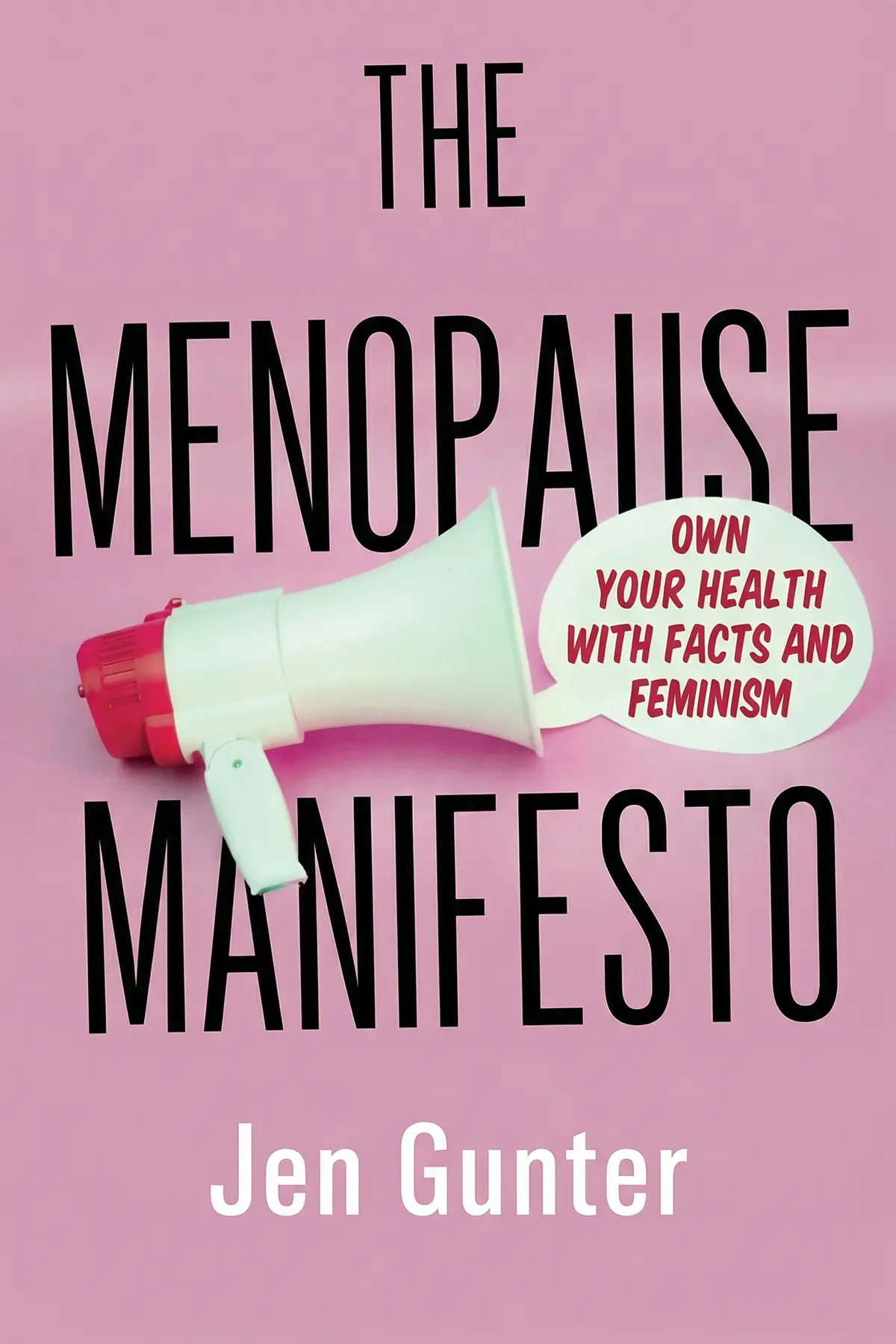
Table of Content
1. Introduction
59 sec
Most women reach menopause knowing far less about it than they knew about puberty at thirteen, and Dr. Jen Gunter argues the silence itself makes the change harder. In The Menopause Manifesto, the Canadian gynecologist and pain specialist points to research suggesting that women in countries with kinder words for menopause suffer less from its symptoms. Knowledge, in her view, is part of the treatment.
Her case is that menopause is a normal, purposeful stage of human biology, and that a woman who understands what her body is doing can separate real medicine from myth and marketing. That means knowing which symptoms pass, which risks deserve a screening, when hormone therapy makes sense and which products and practitioners to avoid.
Most women will spend at least a third of their lives after this change. With Gunter’s facts in hand, that long stretch becomes something to plan for, the same way you would plan for any other stage of life.
2. Break the silence that makes the change harder
1 min 43 sec
Films and novels love a first period, yet the last one almost never appears on screen or page. Gunter traces where that silence came from, and why even the word we use may be making symptoms worse.
3. See menopause as a feature of human design
1 min 54 sec
A popular theory says menopause exists only because modern people live too long. Gunter rejects it, and the explanation she offers instead puts an unexpected family member at the center of human survival.
4. Know which changes pass and which need watching
1 min 59 sec
Hot flashes get the attention, yet they are the part that eventually ends. Two other changes arrive with far less noise, and they are the ones Gunter wants every woman over 40 to keep an eye on.
5. Weigh hormone therapy clearly, without the hype
2 min 14 sec
Hormone therapy was once sold as a cure, then dropped in a panic after one famous study. Gunter shows what a second look at the same data revealed, and what it means for anyone deciding today.
6. Keep sex comfortable and enjoyable at any age
1 min 53 sec
Many women quietly assume their sex life is winding down along with their periods. Gunter disagrees, and her fixes start with items most people already have in the kitchen or the bathroom cabinet.
7. Everyday habits do the heaviest lifting
1 min 40 sec
The most effective menopause treatment Gunter describes has no brand name and no pharmacy markup. It comes with exact numbers, though, and most people are further from them than they think.
8. Spot the snake oil and the wrong doctor
1 min 43 sec
Menopause has become a busy market, and not every seller wears a lab coat for the right reasons. Gunter offers a handful of warning signs, including one test she says should send you straight out the door.
9. Conclusion
1 min 03 sec
Gunter’s manifesto rests on a simple trade: give up silence, gain facts, and fear loses most of its grip. The grandmother hypothesis turns menopause into one of the traits that let human families thrive, not a breakdown at fifty. Once you see it that way, decisions get easier, because you know which discomforts will fade, which risks a screening can catch early and which promises are marketing.
What the book supports doing is modest and specific. Book the blood pressure and cholesterol checks that fit your age and history, and the bone density scans that come later. Build your week around walking or jogging, two strength sessions and plenty of fiber. If symptoms wear you down before 60, ask your doctor about hormone therapy at the lowest dose that helps. And walk away from saliva tests, compounded hormones and anyone selling a miracle.
The Dutch already have the right word. Overgang means a bridge, and a bridge is something you cross on the way to the rest of your life.
About this book
What is this book about?
Puberty gets plenty of books and films. Menopause, the second great hormonal transition, gets mostly silence, and that silence leaves many women frightened, misinformed and without support for a stage that lasts at least a third of their lives. Dr. Jen Gunter, a gynecologist and pain medicine specialist, takes on that silence with facts and a feminist edge. She argues that menopause is no flaw or disease but a feature of human biology, possibly one that helped families thrive through grandmothers. She explains why the body changes, which symptoms are temporary and which shifts, such as rising heart disease risk and faster bone loss, deserve regular screening. She also gives clear rules for menopausal hormone therapy, from its troubled history to the window in which it helps most, along with simple fixes for changes in sex and comfort. Readers come away knowing the everyday habits that matter most, why most supplements are poorly studied, and the warning signs of snake oil and bad medical advice.
Book Information
Who it's for
Women with midlife symptoms
Women in their forties and fifties facing hot flashes, poor sleep or irregular periods who want straight facts.
Weighing hormone therapy
Anyone weighing hormone therapy and confused by mixed headlines about its risks.
Partners, daughters and friends
Partners, daughters and friends who want to understand the change and offer real support.
About the Author
Jen Gunter
Dr. Jen Gunter is a Canadian physician board certified in obstetrics and gynecology and in pain medicine. She writes about women's health, sex, science and pop culture as a columnist for the New York Times, and she has said she wants patients to have solid facts and better health information online. Her earlier books include The Vagina Bible, which topped the Canadian nonfiction bestseller list, and The Preemie Primer.
Ratings & Reviews
Ratings at a glance
What people think
Listeners find the work highly educational, with one noting it contains concrete data from scientific research, and value its readability, with one remarking that it is written to be accessible for non-academics. The prose is praised for being high-quality, and one listener describes it as a whole-body review of menopause changes. Although the material is humorous and evidence-based, reactions are mixed regarding the heavy use of research and feminist themes; some listeners appreciate these elements while others consider them insincere.
Top reviews
Harper
Finally a book that doesn't treat a natural biological transition like a shameful secret or a terminal illness. Dr. Gunter breaks down the complex science of ovarian aging into something actually readable for those of us without medical degrees. I especially appreciated the deep dive into the history of how the word "menopause" was coined by men who basically viewed women as expired once they stopped breeding. The data-driven approach to MHT (formerly HRT) helped ease my anxiety about hormone risks significantly. While the feminist commentary might feel a bit heavy-handed for some, I found it totally necessary given how the medical system often ignores middle-aged women. It is a thick read, but the humor keeps it from feeling like a textbook. Every woman over forty should have this on her nightstand for reference.
Show moreEllie
Why didn't anyone tell me about the "grandmother hypothesis" before now? Understanding that menopause might actually be an evolutionary advantage for our species changed my entire perspective on getting older. Dr. Gunter’s writing is sharp, funny, and refreshingly blunt about everything from hot flashes to the absurdity of "feminine wipes." Not gonna lie, I laughed out loud at her take on how the patriarchy treats women's bodies as inherently dirty. It’s wonderful to find an author who trusts her readers with actual science instead of dumbing everything down into "self-care" platitudes. This isn't just about hormones; it's a whole-body review that covers heart health, brain fog, and bone density. I feel much more equipped to walk into my next doctor's appointment and demand evidence-based care. Truly a must-read for anyone with ovaries.
Show moreMuk
Dr. Gunter has written a literal bible for the second half of life that every person should read long before they hit age fifty. I spent years thinking my symptoms were just "stress" because my primary care doctor didn't have the training to recognize perimenopause. This book gave me the vocabulary and the confidence to advocate for myself and finally get the treatment I needed. The truth is, we are taught to be ashamed of our aging bodies, and Gunter burns that idea to the ground with facts. I loved the humor she injected into topics that are usually treated with hushed tones or clinical coldness. It's informative, empowering, and deeply grounded in the latest research. This isn't just a book; it’s a toolkit for survival in a world that wants women to disappear once they're no longer "useful."
Show morePisit
Wow, this was exactly the science-based reality check I needed to stop panicking about my body changing. Gunter’s voice is like having a very smart, slightly foul-mouthed best friend who also happens to be a world-class OB-GYN. She clears up all the confusion surrounding the Women's Health Initiative study and helps you understand what the actual risks of hormone therapy are today. I felt so much more informed about things like fiber intake and the grandmother hypothesis after reading this. The book is lengthy, but the way it's broken down into specific symptoms makes it easy to use as a reference guide. It’s high time we stopped treating menopause like a disease and started treating it like the major life transition it is. Highly recommend for anyone looking for the truth behind the myths.
Show moreRose
After hearing Dr. Gunter on a podcast, I knew I needed the full manifesto to navigate my own "perimenopausal chaos." The way she explains the "flooding" and the unpredictable nature of cycle changes made me feel so much less alone. Frankly, the medical establishment has failed us by keeping these details so quiet for so long. She backs up every single claim with peer-reviewed studies, which is a breath of fresh air compared to the miracle supplements pushed by celebrities. I did find the sections on evolutionary biology a bit long-winded, and I wish there was more focus on natural management. Still, the breakdown of how our bones and hearts change is vital information for long-term health. It’s an empowering, if slightly clinical, look at what’s coming for half the population.
Show moreAna
Ever wonder why humans are one of the only species that lives long past our reproductive years? This book dives deep into the biology of that question, offering a fascinating look at our evolution alongside toothed whales. Gunter does a fantastic job of separating the predatory "wellness" myths from the actual medicine we need to stay healthy. I particularly appreciated the sections on sleep disturbances and why our brains feel so foggy during the transition. To be honest, I could have done without some of the snarky comments about specific celebrities, though I understand her frustration with misinformation. The chapters on hormone therapy were the most helpful, providing a clear-eyed look at risks versus benefits without the usual scare tactics. It's a long book, so prepare to take your time.
Show moreNatalie
Look, I appreciate the snarky take on the "wellness" industry because I'm tired of being sold expensive tea for a medical condition. Dr. Gunter provides a wealth of data that helped me understand why my joints are suddenly aching and why my mood is all over the place. Her explanation of the concepts from her previous work applied to menopause was particularly insightful for those of us dealing with physical discomfort. I did feel that the book was a bit heavily weighted toward medical interventions rather than holistic approaches. While she's right that "natural" doesn't mean "safe," I would have liked more than a cursory chapter on how nutrition affects our symptoms. Regardless, the writing style is engaging and makes complex endocrinology surprisingly easy to grasp. It’s an essential reality check for anyone entering their fifties.
Show moreElena
Picked this up because I wanted facts, not myths, and that is exactly what I got. Dr. Jen Gunter is a fierce advocate for women’s health, and her passion for debunking "snake oil" salesmen is evident on every page. The breakdown of how estrogen affects every system in the body—not just the uterus—was eye-opening for me. However, I found the constant focus on the "patriarchy" to be a bit distracting from the actual medical advice at times. Personally, I don't need a political lecture to understand that my hot flashes are annoying, but I see why she feels it's an important context. The advice on bone health and cardiovascular risk is gold. It’s a very comprehensive guide that covers everything from "scream creams" to clinical trials.
Show morePracha
This guide is undeniably dense with data, which is great if you want a scientific breakdown of every possible symptom and pharmaceutical intervention. However, the tone often feels like it's trying too hard to be "edgy" by constantly attacking the patriarchy. To be fair, some of the points about medical misogyny are valid, but it gets repetitive after the fifth chapter. I was looking for more practical advice on lifestyle changes like diet and exercise, but those felt like afterthoughts compared to the extensive chapters on drugs. Also, for a book that calls itself a feminist manifesto, it’s strangely exclusionary toward trans men who also experience these body changes. The information is solid and well-researched, but the delivery felt like being yelled at by a very smart, very angry doctor. It's a useful resource for medical facts, but maybe not the celebration I was hoping for.
Show moreJan
The title promises feminism, but the content feels stuck in a rigid gender binary that ignores a significant portion of the population. While I appreciate the scientific rigor Dr. Gunter brings to the table, her refusal to acknowledge trans and non-binary people in a book about menopause is a glaring oversight in 2021. It’s hard to call something a "manifesto" when it centers its narrative so exclusively on cisgender women while claiming to dismantle patriarchal structures. The medical information itself is accurate and well-organized, but the constant gendered language felt alienating and outdated. If you are looking for an inclusive look at reproductive health, this isn't it. I found the tone to be quite dismissive of anyone who doesn't fit her specific vision of womanhood. Very disappointed given her reputation for being a progressive advocate.
Show moreQuestions about this book
What is the main idea of The Menopause Manifesto?
Jen Gunter argues that menopause is a normal, purposeful part of human biology, not a disease or flaw, and that cultural silence leaves women misinformed and unsupported. She explains why the body changes, which symptoms are temporary, which long-term risks such as heart disease and osteoporosis need screening, and how to judge hormone therapy, supplements and doctors using reliable facts instead of myths and marketing.
Is menopausal hormone therapy safe according to Jen Gunter?
Gunter says the risks were overstated after a 2002 Women’s Health Initiative study. A 2007 review found women on hormone therapy lived just as long, and those who started within 10 years of their final period had less coronary heart disease. Before age 60, it can greatly ease hot flashes, insomnia and hormonal depression, with slightly higher risks of stroke, clots and breast cancer. She advises the lowest effective dose and pharmaceutical-grade hormones.
What is the grandmother hypothesis?
It is Gunter’s explanation for why menopause evolved. Human children take a long time and many resources to raise, and they survive better when care is shared. A long-lived grandmother can gather food and look after grandchildren, but only if she has no young children of her own. Ending fertility in midlife therefore helped families and societies thrive, which makes menopause a feature of biology rather than a mistake.
What lifestyle changes does The Menopause Manifesto recommend?
Gunter puts quitting smoking, exercise and diet first. She recommends 150 minutes a week of light aerobic activity like walking, or 75 minutes of moderate activity like jogging, plus weight training twice a week for bones and muscles. For food, she suggests avoiding ultraprocessed products, eating plenty of whole grains, vegetables and fruit, adding fish or seafood, and getting about 25 grams of fiber daily.
How can I tell if a menopause doctor or product is trustworthy?
Gunter warns against doctors who describe estrogen as a wonder drug, recommend progesterone applied to the skin, or sell products themselves. She is especially firm about saliva hormone tests, which she calls unreliable, since hormone levels do not match symptoms. For supplements, most are poorly studied, so she suggests checking what reputable bodies such as the International Menopause Society say before buying.
Readers also enjoyed




AUDIO SUMMARY AVAILABLE
Listen to The Menopause Manifesto in 15 minutes
Get the key ideas from The Menopause Manifesto by Jen Gunter, plus 5,000+ more nonfiction titles.
- 5,000+ titles
- Listen as much as you want
- 7-day free trial
- Cancel anytime









