
15 min 41 sec
Available in: English
 ไทย
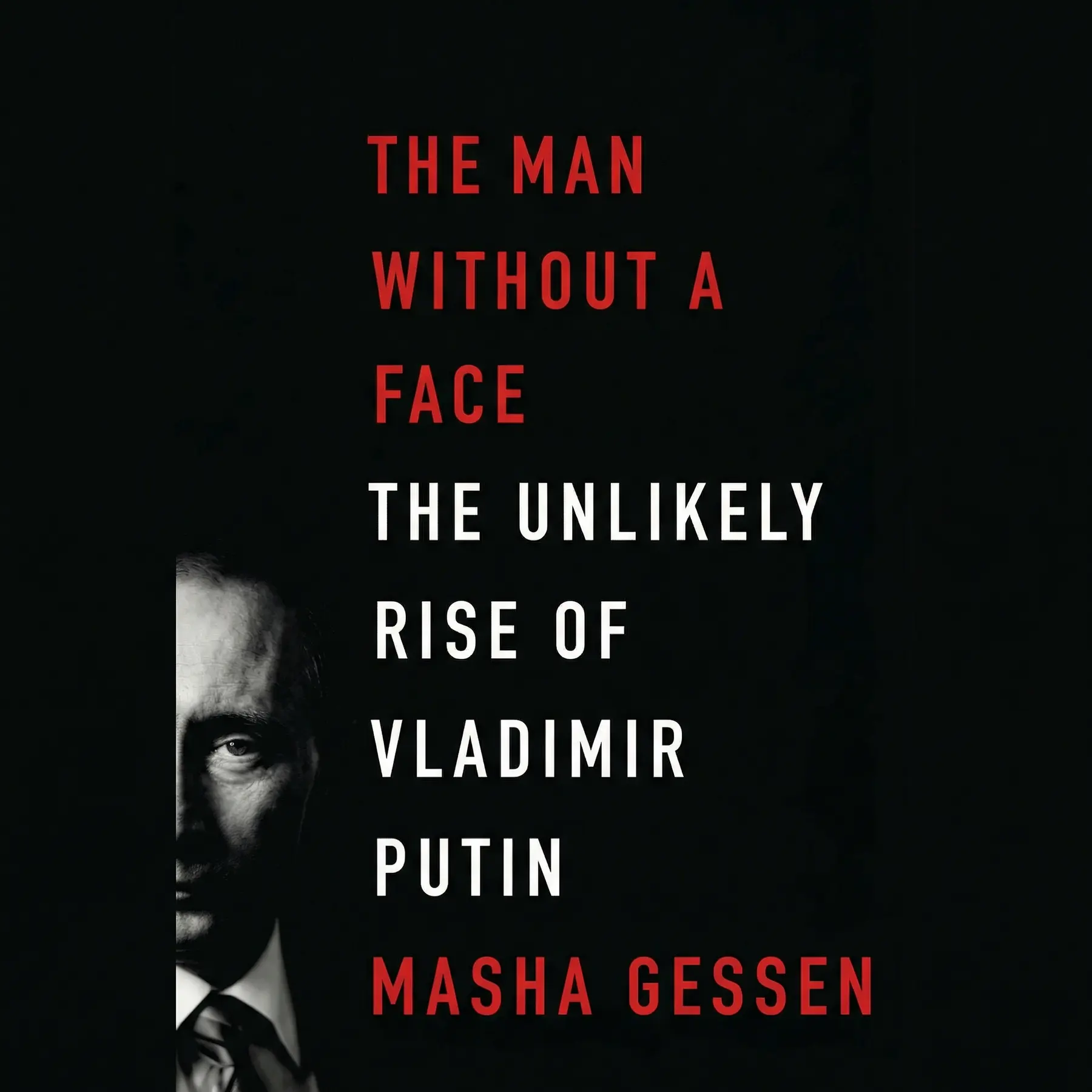
EnglishไทยThe Man Without A Face: The Unlikely Rise of Vladimir Putin
By Masha Gessen
Traces how an obscure KGB clerk was handed the Russian presidency by insiders who thought him harmless, and how he then used terror, intimidation and theft to make himself untouchable.
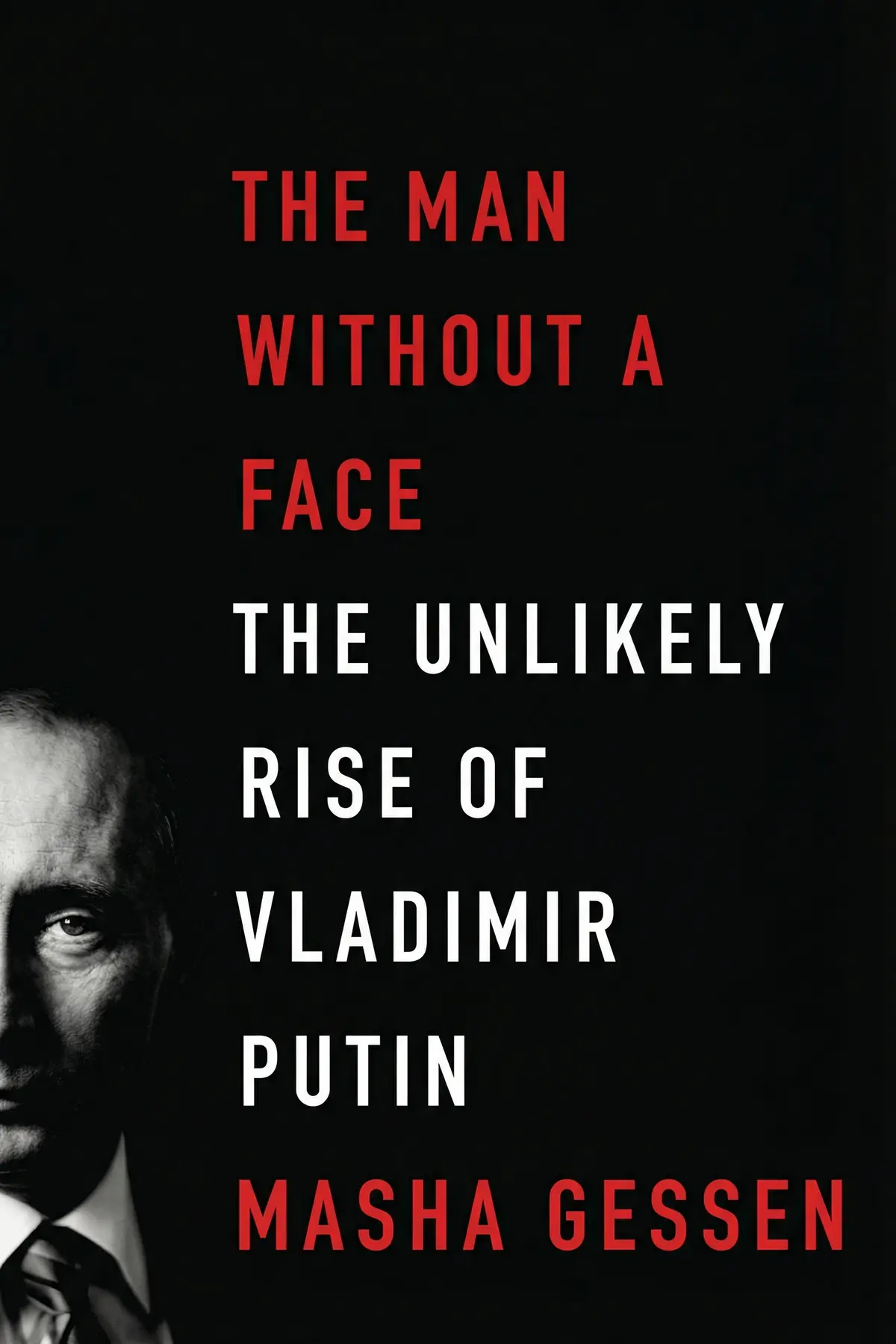
Table of Content
1. Introduction
58 sec
Most people know Vladimir Putin as one of the most feared leaders alive, yet few could explain how he got there, and the honest answer is that almost nobody planned it. In January 2000, weeks after he became acting president of Russia, guests at the World Economic Forum asked senior Russian politicians who he was, and they had no answer. In The Man Without A Face, journalist Masha Gessen traces how that blank figure took power. Gessen’s argument is that insiders mistook a loyal, forgettable functionary for a safe choice, and that once in charge he used crisis, fear and theft to turn his empty face into one of total control.
The story runs from a single crowded room in postwar Leningrad to a palace on the Black Sea. It also gives you a way to read any strongman’s rise: watch who chose him, what each emergency let him take, and what happened to the people who asked questions.
2. Trace Putin's hunger for control to Leningrad
1 min 27 sec
A boy in one shared room, banned from a youth group for fighting, somehow grew up with a telephone and a summer cabin. The source of those comforts says a lot about the man he became.
3. What a desk spy learned when Moscow vanished
1 min 23 sec
The future ruler of Russia spent the 1980s clipping newspapers in a provincial German city. Then an angry crowd came to his door, and the state he served gave him an answer he never forgot.
4. Watch survival instincts turn into private fortune
2 min 04 sec
During a failed coup, Putin and his political patron spent the decisive days hiding underground. What they did once it was safe to come out shows exactly how chaos rewards those who play both sides.
5. Learn what a blank record did for Putin's rise
1 min 32 sec
A frightened president needed an heir, and a wealthy oligarch who acted as a kingmaker of sorts thought he had found the perfect one. The very qualities that made Putin look harmless are what made the choice so costly.
6. Understand what each national crisis gave Putin in power
1 min 55 sec
A bus driver in a provincial city noticed men carrying sacks into a basement one night. What was inside, and how the authorities explained it, casts a long shadow over everything that followed.
7. The price critics paid for telling the truth
1 min 41 sec
A television owner, a former kingmaker, a politician, a journalist and an exiled officer each challenged the official story. Follow what happened to them, one by one, and a pattern becomes impossible to ignore.
8. Follow the money to a missing Super Bowl ring
1 min 42 sec
Putin’s early backers admired him as the one official no one could bribe. The fortune he is now thought to hold, and the fate of one billionaire who spoke up, tell a very different story.
9. See through the staged elections and staged strength
1 min 53 sec
Russians kept going to the polls, and Putin kept appearing beside tigers and polar bears. Behind both pictures sat something else, which surfaced when a submarine went down and he was asked about it on air.
10. Conclusion
1 min 06 sec
Gessen’s portrait is of a man whose emptiness was his first qualification. His backers saw a modest, obedient officer and assumed they could steer him. What they got was the boy from the single room who fought anyone who crossed him, and the officer who watched his own state abandon him in Dresden. At best, Gessen concludes, Putin is a lifelong ultranationalist set on keeping Russia a superpower; at worst, a ruler who has wiped out opponents and shares the blame for hundreds of needless deaths.
Some habits of attention follow from the story. When someone rises from nowhere, look closely at who chose them and what they expected in return. When critics start going silent, treat the silence itself as news. And since one of Putin’s first moves was taking over television, Gessen urges readers to follow several independent news sources and reach their own conclusions instead of trusting a single outlet.
The man without a face never stayed faceless. He simply decided which face the cameras would see.
About this book
What is this book about?
In January 2000, senior Russian politicians at the World Economic Forum could not tell foreign guests who their new acting president was. Within a few years, Vladimir Putin had become one of the most feared leaders in the world. Masha Gessen sets out to explain how a man nobody could describe ended up in total control. Gessen follows Putin from a single shared room in postwar Leningrad, through a dull KGB posting in Dresden and the chaotic deals of the 1990s, to the moment Boris Yeltsin's inner circle picked him as a compliant successor. The book then shows what that choice unleashed: apartment bombings and hostage sieges that justified new powers, critics who lost their companies, their freedom or their lives, a personal fortune estimated at $40 billion, and elections and photo ops staged for effect. Readers get a clear, story-driven account of modern Russia's ruler and a way of reading any strongman's rise: who chose him, what each emergency let him take, and what became of those who asked questions.
Book Information
Who it's for
Following world news
Readers who follow world news and want to understand how Putin actually took and kept power.
Politics or history students
Students of politics or history looking for a clear story of Russia after the Soviet collapse.
Wondering how strongmen rise
Anyone curious how crises, fear and media control turn an outsider into an untouchable ruler.
About the Author
Masha Gessen
Masha Gessen was born in Moscow in 1967, moved to the United States in 1981 and returned to Moscow in 1991, where they worked as a journalist and reported on the Chechen Wars. In 2013, after public threats from prominent Russian politicians over their activism, they left Russia. Gessen writes in English and Russian, was a staff writer at The New Yorker from 2017 to 2024, and became an opinion columnist for The New York Times in 2024. They won the 2026 Pulitzer Prize for Opinion Writing, and their book The Future Is History won the National Book Award.
Ratings & Reviews
Ratings at a glance
What people think
Listeners find this book an exceptional read that offers an extensively researched primer on Vladimir Putin, written in a journalistic style. They characterize it as a gripping, highly engaging narrative, with one listener noting that it helps clarify his underlying motivations. The storytelling receives varied feedback; some deem it a revelation, while others take issue with its perceived self-interest. Listeners value the sensitivity within the text, with one review emphasizing the struggle of courage and suffering for freedom and democracy.
Top reviews
Lincoln
Ever wonder how Russia shifted from the hope of the 1990s to a full-blown kleptocracy? Gessen’s work is a masterclass in connecting the dots between the mysterious apartment bombings and the rise of a new kind of authoritarianism. The way she describes the manipulation of 'The Family' around Yeltsin is absolutely fascinating. I was particularly struck by the tragedy of Beslan and how those events were leveraged to tighten control over the entire country. This isn't just a biography; it’s a warning about how easily democratic institutions can be hollowed out from the inside. It kept me up way too late reading. Highly recommended for the depth of research alone.
Show moreRuangrat
As someone who has always been fascinated by Russian politics, I found this to be an eye-opening and deeply moving piece of work. Gessen’s bravery in writing this while living in Moscow is staggering. The book details the courage of individuals like Mikhail Khodorkovsky and the high price they paid for challenging the status quo. It’s a suspenseful page-turner that illustrates exactly how the free press was strangled in its infancy. The prose is sharp, and the emotional weight of the stories regarding the victims of the regime is something that will stay with me for a long time. It provides essential context for everything we see in the news today. A brilliant, albeit dark, read.
Show moreOn
Gessen delivers a visceral account of the price of dissent in a country where the rule of law has been replaced by the rule of one man. The sections covering the murders of Anna Politkovskaya and Alexander Litvinenko are handled with a grim sensitivity that highlights the stakes of their investigative work. It’s a haunting portrait of a man who seems to have no core beliefs other than the preservation of his own power. The book is written with a sense of urgency that makes it impossible to put down. Even though it was written several years ago, the themes of corruption and the suppression of democracy feel more relevant now than ever before.
Show morePang
It’s rare to find a non-fiction book that reads with the frantic pace of a suspense novel, but Gessen has achieved exactly that. This book isn't just about Putin; it’s about the soul of Russia and the systematic way it was crushed by a new 'thugocracy.' From the handling of the Kursk submarine disaster to the rigged elections, the level of detail is impressive and deeply disturbing. It really helps you understand the mindset of a leader who views any opposition as a personal betrayal. This is a powerful, essential read for anyone who wants to look past the propaganda and see the reality of how the Kremlin operates. A truly stunning piece of journalism.
Show moreKaen
This is a bone-chilling deep dive into the dismantling of Russian democracy over the last few decades. Masha Gessen provides a journalistic account that feels more like a political thriller than a dry history book. You start to see how an obscure, almost invisible bureaucrat managed to consolidate such immense power through a combination of luck and cold calculation. While the narrative is definitely opinionated, the sections regarding the takeover of the media and the systematic destruction of the oligarchs were incredibly enlightening. It really helped me understand the motives behind the Kremlin’s current geopolitical stance. Some parts felt a bit rushed, but the overall impact is undeniable for anyone interested in modern history.
Show moreAndrew
Frankly, it's a bit of a tale of two halves. The first part of the book, which covers Putin's childhood in Leningrad and his early KGB days, relies heavily on words like 'presumably' and 'possibly,' which made me question the factual basis of those specific chapters. However, once Gessen moves into the post-2000 era, the quality of the reporting shifts gears entirely. The analysis of the corruption and the 'thugocracy' that emerged is sharp and terrifyingly well-documented. She paints a picture of a man who isn't necessarily a genius, but someone who knows exactly how to use fear as a tool of the state. It’s a necessary read, even if you have to take the early biographical speculation with a grain of salt.
Show moreIsabelle
The chapter on the St. Petersburg food shortages and the 'meat-deal' was particularly illuminating for me. It shows a side of Putin’s early career that many Westerners aren't aware of—the transition from a mid-level bureaucrat to someone who understood how to divert state resources for personal and political gain. Gessen does a great job of explaining the 'facelessness' that allowed him to be a blank slate for so many different interest groups. My only complaint is that the timeline jumps around a lot, making it difficult to follow the chronological progression of his rise to power. Still, the insight into the FSB’s influence on modern Russian life is worth the price of admission.
Show moreLuckana
Picked this up after hearing Gessen on a podcast, and I have mixed feelings about the final product. On one hand, the details about Garry Kasparov’s failed presidential run and the immense pressure put on any form of opposition are heart-wrenching. You really feel the struggle for freedom that these people endured. On the other hand, the writing style can be quite tedious and the structure is all over the place. One moment we are talking about KGB ideology, and the next we are hearing about the author’s bathroom fixtures. It’s an interesting introduction to the era, but I suspect there are more balanced and better-structured biographies of Putin out there that don't lean so heavily on conjecture.
Show moreSophia
Look, I wanted a rigorous biography of Vladimir Putin, but what I got was mostly a memoir of Masha Gessen’s personal grievances. The book is incredibly self-referential, often spending more time on the author’s daily struggles and her own political activism than on the subject himself. At times, the portrayal of Putin feels less like a political figure and more like a caricature of a Bond villain. There is so much obvious bias that it’s hard to tell where the legitimate journalism ends and the personal dislike begins. While the sections on the seizure of Yukos were interesting, the lack of objectivity throughout the rest of the text makes it hard to trust the author’s conclusions.
Show moreNitaya
Pure speculation passed off as fact. I was immediately put off when the author used the term 'autobiography' to describe a book she admits was written by a group of consultants. That kind of linguistic sloppiness sets the tone for the entire work. Most of the early chapters are just gossip and anecdotal evidence tied together by the author's intense personal hatred for the man. It felt like reading a long-form op-ed rather than a researched biography. If you’re looking for a balanced look at Russian history, keep looking. This is a one-sided polemic that insults the reader's intelligence by presenting guesses as absolute truths. Truly a disappointing and frustrating experience.
Show moreQuestions about this book
What is The Man Without A Face about?
Masha Gessen tells the story of Vladimir Putin’s rise, from a childhood in one shared room in postwar Leningrad and a dull KGB posting in Dresden to the Russian presidency. The book argues that insiders chose him because he seemed loyal and harmless, and that he then used crises, intimidation of critics, control of television and personal enrichment to build near total power.
How did Putin become president according to Masha Gessen?
Gessen describes a near accident. Boris Yeltsin feared prosecution if the opposition won, so his inner circle, known as The Family, looked for an obedient successor and settled on Putin. The oligarch Boris Berezovsky persuaded Yeltsin to make him prime minister and helped build his image. Yeltsin unexpectedly stepped down on the final day of the twentieth century and named Putin acting president, even though Putin had almost no experience in politics.
What does the book say about the 1999 apartment bombings?
Hundreds died when apartment buildings were bombed in September 1999, and Chechens were blamed. In Ryazan, a bus driver saw people loading sacks into a cellar that turned out to hold bomb equipment, which the FSB chief called a training exercise. Gessen reports the belief that the security service itself was responsible, aiming to spread fear and justify a war in Chechnya. Putin had left the FSB only weeks before.
Who should read The Man Without A Face?
It suits readers who see Putin in the news but cannot explain how he came to power, as well as students of modern Russian politics. Its chapters move like a story, through the failed 1991 coup, the corrupt 1990s, hostage sieges, the fates of critics such as Anna Politkovskaya and Mikhail Khodorkovsky, and the staged elections and photo ops of later years.
What practical lesson does The Man Without A Face offer?
Because one of Putin’s early moves was to bring every federal television channel under state control, Gessen encourages readers to rely on several independent news sources and form their own views. The story also suggests watching who benefits when an emergency brings new powers, and treating the sudden silence of critics as a warning sign worth noticing.
Readers also enjoyed

Ali: A Life
Jonathan Eig

Abortion: Our Bodies, Their Lies, and the Truths We Use to
Jessica Valenti

A Life Decoded: My Genome: My Life
J. Craig Venter


Adults in The Room: My Battle With Europe’s Deep Establishment
Yanis Varoufakis

A Long Way Gone: Memoirs of a Boy Soldier
Ishmael Beah

All Creatures Great and Small
James Herriot

AUDIO SUMMARY AVAILABLE
Listen to The Man Without A Face in 15 minutes
Get the key ideas from The Man Without A Face by Masha Gessen, plus 5,000+ more nonfiction titles.
- 5,000+ titles
- Listen as much as you want
- 7-day free trial
- Cancel anytime









