

14 min 04 sec
Available in: English
The Making of Donald Trump
An investigative reporter sets Donald Trump's carefully managed public image against decades of court records, lawsuits and testimony, and shows how far apart the two are and how the image was kept alive.
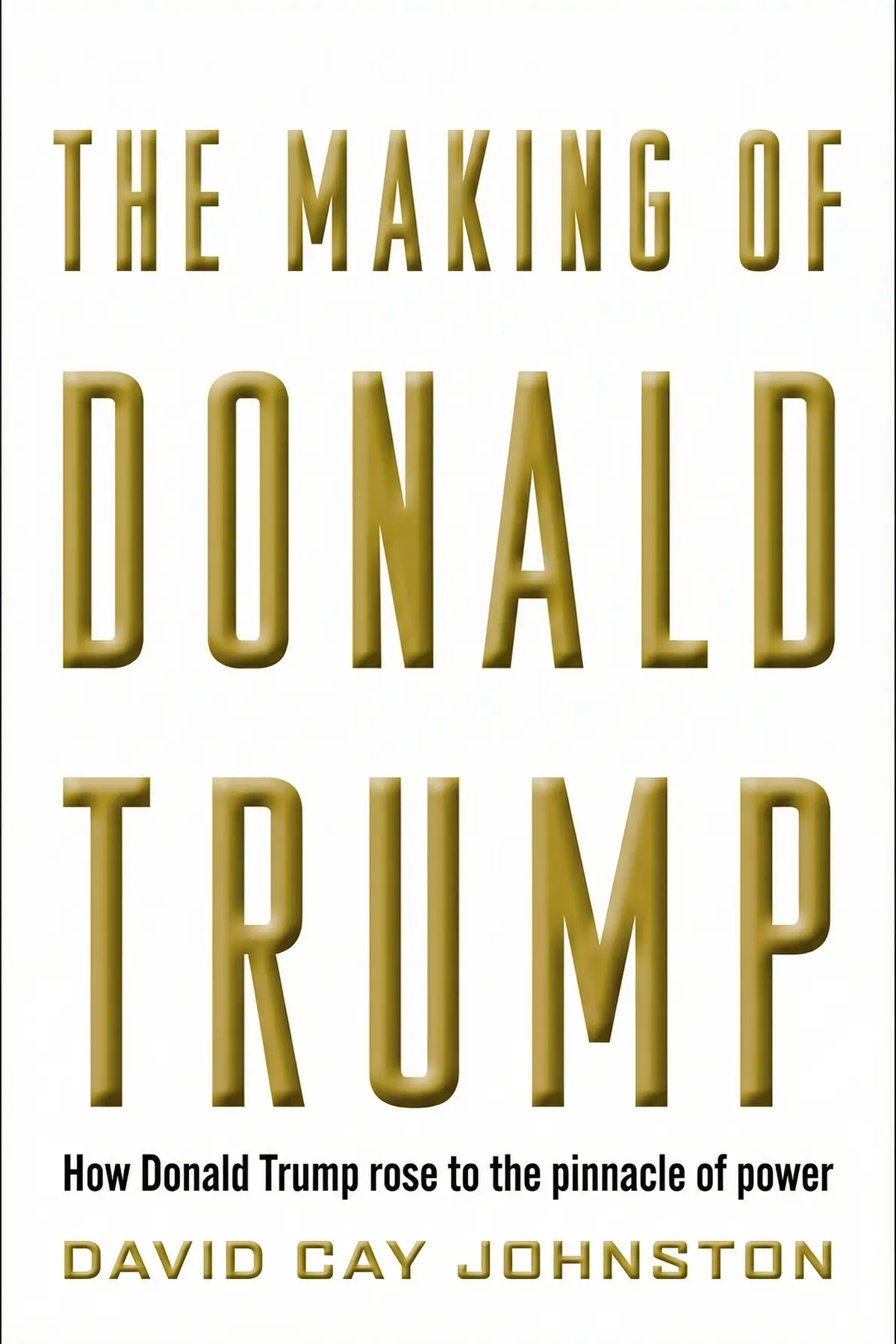
Table of Content
1. Introduction
56 sec
Most of what people believe about a famous businessman comes from stories he helped write. In The Making of Donald Trump, investigative journalist David Cay Johnston, who has followed Trump for more than 30 years, argues that the public figure, a dealmaker who turns every project to gold, was assembled for the press. A very different man, he says, appears in the records of Trump’s thousands of legal battles.
Trump reached the presidency from real estate and reality television, with no political or diplomatic experience. If he meant to run the country like a business, Johnston reasons, his business history is where to judge him: how he picks allies, treats enemies and handles facts. Along the way, the book teaches a reporter’s habits worth keeping for any public figure: how staged news is built, how legal threats silence writers, and why a public promise deserves a second look months later.
2. Spot a staged story before you repeat it
1 min 43 sec
A campaign launch packed with cheering fans, a vice president calling a newspaper, an assistant boasting about movie stars. Each looked like ordinary news at the time. Johnston explains what was really behind them.
3. Lawsuits can silence critics without winning
1 min 47 sec
A writer questioned how rich Trump really was, and the court eventually threw out Trump’s case against him. Trump still called it a success. Johnston explains why losing in court can serve a purpose.
4. Tell real expertise from confident improvisation
1 min 41 sec
Johnston once invented gambling rules on the spot to see what Trump would do with them. The answer, and a later moment on a debate stage, raise a harder question about how Trump treats facts at all.
5. Read the paper trail behind the brand
1 min 39 sec
A tower bearing his name and a school that promised to teach the real estate business. Both carried the Trump name, and both left behind lawsuits that tell a story the brochures never did.
6. Judge a builder by the allies he keeps
1 min 50 sec
Work on the tower kept going during the 1982 cement-workers strike, and a drug trafficker got a far lighter sentence than others in his case. Johnston connects both events to the people Trump chose to work with.
7. Check whether a public promise was kept
1 min 43 sec
Millions pledged to the homeless, the sick and veterans made headlines twice. Johnston follows the money months later and finds that what was announced and what was paid tell two different stories.
8. Character shows in how enemies are treated
1 min 35 sec
Trump wrote an entire chapter on getting even, and the stories in it are only the start. A family dispute over an inheritance shows how far, in Johnston’s account, the urge for revenge could reach.
9. Conclusion
1 min 10 sec
Johnston’s book reads like a second biography written in the margins of the first. One is the story Trump told reporters: the golden touch, the billions, the generous heart, the man with every answer. The other sits in court files, testimony and tax records. In Johnston’s telling, it shows someone who paid extras to cheer, sued to exhaust a critic, let unpaid workers wait 18 years and cut medical care for a sick infant during a family feud. His verdict is blunt: a petty, vengeful man willing to break the law and endanger others to save money or get even.
Whatever a listener thinks of the politics, the method carries over. When a story arrives fully built, ask who built it. When a pledge is made in public, look again months later, as the Washington Post did with the veterans’ money. When someone sounds completely sure, ask the follow-up only real knowledge could answer, the way Johnston did with his invented craps rules.
An image is made for the moment it is seen. A record stays, waiting for someone patient enough to read it.
About this book
What is this book about?
When Donald Trump entered politics, he had no political or diplomatic experience. What he had was an image: a billionaire with a golden touch, a sharp mind and a generous heart. If he planned to run the country like a business, then his record as a businessman was the fairest place to judge him. David Cay Johnston, a Pulitzer Prize winning reporter who followed Trump for more than 30 years, goes to that record. He shows how Trump fed ready-made stories to busy reporters, invented spokesmen on the phone, and used lawsuits to wear down critics. He then turns to the business files: an unpaid demolition crew, Trump University, ties to a mob-connected lawyer and a convicted drug trafficker, charity pledges that never arrived and a tax loss that wiped out income tax for years. The result is a sharp, openly critical portrait built from court documents and testimony. Readers get a clear account of Trump's business past and a set of reporter's habits for testing any public figure's image against the paper trail.
Book Information
Who it's for
Curious about Trump's business
Readers who want to understand Donald Trump's business past through court records rather than headlines.
Curious about public images
Journalists, students and researchers interested in how public images are built and defended.
Wanting to test claims
Professionals who want sharper habits for testing a confident claim or a public promise.
About the Author
David Cay Johnston
David Cay Johnston is an American investigative journalist who specializes in economics and tax. He won the 2001 Pulitzer Prize for Beat Reporting, worked as a reporter for The New York Times, later wrote a column for Reuters and has taught at Syracuse University's law and management schools. His book Perfectly Legal was a New York Times bestseller, and he also wrote Free Lunch and The Fine Print. He has followed Donald Trump's career for more than 30 years.
Ratings & Reviews
Ratings at a glance

What people think
Listeners find the material informative and accessible, highlighting the meticulous research and quality prose. This revealing narrative comes from a Pulitzer Prize-winning author, and one listener remarks that it offers a transparent look at Donald Trump.
Top reviews
Jan
Picked this up during a weekend trip and found myself completely unable to put it down because the level of detail is staggering. The chapters on the Atlantic City casinos and the high-stakes baccarat battle with Akio Kashiwagi are worth the price of the book alone. Johnston, a Pulitzer Prize winner, uses his expertise in tax law to dismantle the myth of the self-made billionaire with surgical precision. Personally, I found the story of the Bedminster golf course goats to be a hilarious yet disturbing example of how the wealthy manipulate tax codes. The book is well-written and serves as a vital record of a man who views the world as a game of "winning" at any cost. This is the kind of investigative journalism that is desperately needed in our current era of misinformation and surface-level takes. Truly a masterclass in uncovering the hidden connections between business and the underworld.
Show moreKrisada
The chapter on Trump's early business deals with mob-linked figures really opened my eyes to the complexities of the New York real estate world. Johnston spent thirty years filling Banker's Boxes with this stuff, and that level of dedication shows in every single page of this investigative work. I was particularly struck by the "Eleventh Commandment" philosophy of not getting caught, which seems to guide every transaction and legal battle described in the text. From the destruction of the USFL to the baccarat tables in Atlantic City, the narrative reveals a consistent pattern of ruthless self-interest over any public good. Some might find the episodic structure a bit disjointed, but each segment serves as a distinct piece of a much larger and darker puzzle. It is an essential read for anyone trying to understand the intersection of celebrity and power. I felt like I was reading a gritty crime novel, except it was all true.
Show morePete
Gotta say, the section regarding the USFL lawsuit and how it essentially destroyed a whole football league was a masterclass in narrative non-fiction reporting. Johnston manages to take dry court proceedings and turn them into a gripping story of ego, rash decisions, and the absolute refusal to admit a mistake. While some critics say the author's voice is too prominent, I found his proximity to the events added a layer of authenticity that a more detached biographer would lack. The descriptions of the Atlantic City casino wars, especially the high-stakes games with Akio Kashiwagi, read like something out of a Scorsese movie. It’s a thorough, well-documented account that explains the "winning" brand in a way that feels both grounded and incredibly alarming. This isn't just news; it is a historical record of a very specific kind of American ambition that values optics over reality.
Show moreJun
David Cay Johnston brings a level of scrutiny that you just don't see in standard cable news segments or quick online articles. For three decades, he has been digging through Banker’s Boxes full of investigative materials to uncover the financial shell games that built the Trump brand. The truth is, the reporting here is incredibly thorough, focusing heavily on tax fraud and the aggressive use of legal loopholes that allowed for massive wealth accumulation. I was particularly struck by how the book details the way he used his 1,000 lawyers to keep his empire from collapsing during the nineties. It is an eye-opening account that reads more like a financial thriller than a standard biography. While the prose is easy to follow, I did feel that some chapters were a bit episodic and lacked a smooth chronological flow. Still, if you want to understand the reality behind the reality-star persona, this is the book to get.
Show moreWit
Ever wonder how someone can owe over $300 million and still negotiate a $450,000 monthly allowance from their creditors while regular people lose their homes? Johnston’s breakdown of the "fragile" deal hammered out by a literal army of one thousand lawyers is one of the most eye-opening chapters I’ve encountered recently. It really highlights a different world where rules are suggestions and the legal system is just another tool for leverage. The pacing is fast and the language is accessible even when he’s diving into the weeds of complex tax law or real estate loopholes. Frankly, this book serves as a disturbing non-fiction thriller that leaves you questioning the stability of our financial institutions. It isn't just a biography; it's a warning about the power of myth maintenance. I highly recommend it for the financial insights, even if the tone is occasionally repetitive.
Show moreTar
Look, regardless of your politics, Johnston’s deep dive into the financial shell games is undeniably impressive and well-documented. He manages to explain how the Trump name became a commodity used to sell everything from steaks to degrees at a fraudulent university. The reporting is thorough and the writing is sharp, making it an easy read despite the dense subject matter of tax codes and bankruptcy laws. I appreciated the specific examples, like the manipulation of the USFL lawsuit, which showed a clear pattern of behavior that persists to this day. There is a sense of urgency in the writing that keeps the reader engaged, even during the more technical financial sections. My only real gripe is that the author’s personal dislike for his subject occasionally bleeds through too much. However, the facts presented are difficult to ignore and provide a clear-eyed look at a very public life.
Show morePisit
As someone who has followed the New York real estate scene for years, I found Johnston’s archive of research truly reflected in the density of this text. He compares his subject to a modern P.T. Barnum selling tickets to a "Feegee Mermaid," and the evidence he presents for this fraud is overwhelming and meticulous. The book operates as a non-fiction thriller, moving quickly through scams, tax-fraud allegations, and the frequent use of intimidation tactics against both business rivals and family members. I was particularly moved by the story of the health care allowance being cut off for a sick nephew during a family estate dispute. It's a tough read emotionally, but the insight provided into the "deal-making" process is invaluable for understanding modern politics. Johnston has done a service by laying out these facts so clearly for the public, even if the writing style isn't always my favorite.
Show moreJirapat
To be fair, I expected a more traditional biography rather than what feels like a relentless series of investigative reports gathered over three decades. While the writing is clear, I was disappointed that we find so little about the formative years or the inner thoughts of the subject. Johnston is clearly a talented reporter, yet the book occasionally feels like a focused collection of "gotcha" moments instead of a holistic portrait. The section on his interpretation of the Bible as an "eye for an eye" was fascinating but deeply unsettling to read in a modern context. It’s an informative read for those interested in financial scandals, though it lacks the psychological depth I was hoping to find. I wanted to see more of the man, not just the balance sheets and the court filings.
Show moreMichael
After hearing so much about this book on social media, I finally sat down with it to see if the hype was justified. It’s an informative read, and Johnston clearly knows his stuff when it comes to investigative journalism and financial reporting. However, I found the organization of the book to be somewhat scattered, with chapters jumping between decades without a strong narrative thread. Some sections, like "Golf and Taxes," felt a bit like filler compared to the weightier investigations into casino racketeering and mob connections. It is definitely eye-opening, but it doesn't quite reach the level of a definitive biography for me. If you’re looking for a quick, punchy summary of various scandals, this works perfectly. If you want a deep psychological profile of the man, you might find yourself wanting more than what’s offered here.
Show moreSuphan
Not what I expected from a Pulitzer winner, as the book often borders on a smear campaign rather than providing the objective reporting I anticipated. The author seems to have an ego that rivals his subject's, frequently inserting his own prowess into the narrative which distracted me from the facts. While the financial details regarding the 1990s bankruptcies are staggering, I found the overall tone to be quite unbalanced and lacking in any real nuance. It is frightening if even ten percent is true, but the presentation makes it hard to distinguish between journalistic integrity and personal vendetta. I would have preferred more analysis on why these systems allowed such antics to continue for so many years. It felt less like a biography and more like a collection of grievances aired by a reporter who has been obsessed with his subject for too long.
Show moreQuestions about this book
What is The Making of Donald Trump about?
David Cay Johnston compares Donald Trump’s public image with the record of his business life. He argues that Trump fed ready-made stories to the press, used lawsuits to wear down critics and invented facts to cover gaps in knowledge. Court files and testimony, Johnston says, reveal illegal labor, the misleading Trump University, ties to mob-linked figures, unpaid charity pledges and acts of revenge.
What does Johnston say about Trump University?
Johnston writes that it was a company selling real estate courses. New York officials ordered it to stop using the word university, but it kept the name for five years. Trump could not name any of the promised hand-picked teachers, who turned out to be salespeople, many with no real estate experience. A three-day seminar cost nearly $1,500, and consumer-fraud investigators found the material had no practical value.
Did Trump donate the money he promised to charity, according to the book?
Johnston finds a gap between pledges and payments. Royalties from The Art of the Deal, estimated at about $4 million, were promised to the homeless, Vietnam veterans and the seriously ill, but he traced only $2 million into Trump’s own foundation. A 2016 pledge of $6 million for veterans produced $5.6 million overnight, only after Trump learned The Washington Post was about to report on it.
How can I apply the lessons of The Making of Donald Trump?
The book models a reporter’s habits. Treat fully packaged stories with suspicion and ask who prepared them. Check public promises months later, as The Washington Post did. Test confident speakers with a follow-up only real knowledge could answer, like Johnston’s invented craps rules. And notice that a critical story may be missing because legal threats made it too costly to publish.
Who should read The Making of Donald Trump?
It suits readers who want a documented account of Trump’s business career before the presidency, built from lawsuits and testimony by a reporter who followed him for more than 30 years. It also serves students of journalism and media, and anyone curious about how a public image can be manufactured and defended against people who question it.
Readers also enjoyed
Age of Anger: A History of the Present
Pankaj Mishra

A Promised Land
Barack Obama

Age of Propaganda: The Everyday Use and Abuse of Persuasion
Anthony Pratkanis


A River in Darkness: One Man’s Escape from North Korea
Masaji Ishikawa

A Spy Among Friends: Philby and the Great Betrayal
Ben Macintyre

21 Lessons for the 21st Century
Yuval Noah Harari


AUDIO SUMMARY AVAILABLE
Listen to The Making of Donald Trump in 15 minutes
Get the key ideas from The Making of Donald Trump by David Cay Johnston, plus 5,000+ more nonfiction titles.
- 5,000+ titles
- Listen as much as you want
- 7-day free trial
- Cancel anytime









