

13 min 10 sec
Available in: English
The Lost Art of Connecting: The Gather, Ask, Do Method for Building Meaningful Business Relationships
Shows how to turn awkward networking into lasting business relationships by clarifying your goals, using the contacts you already have, offering help first, asking for small specific favors and following up with real care.
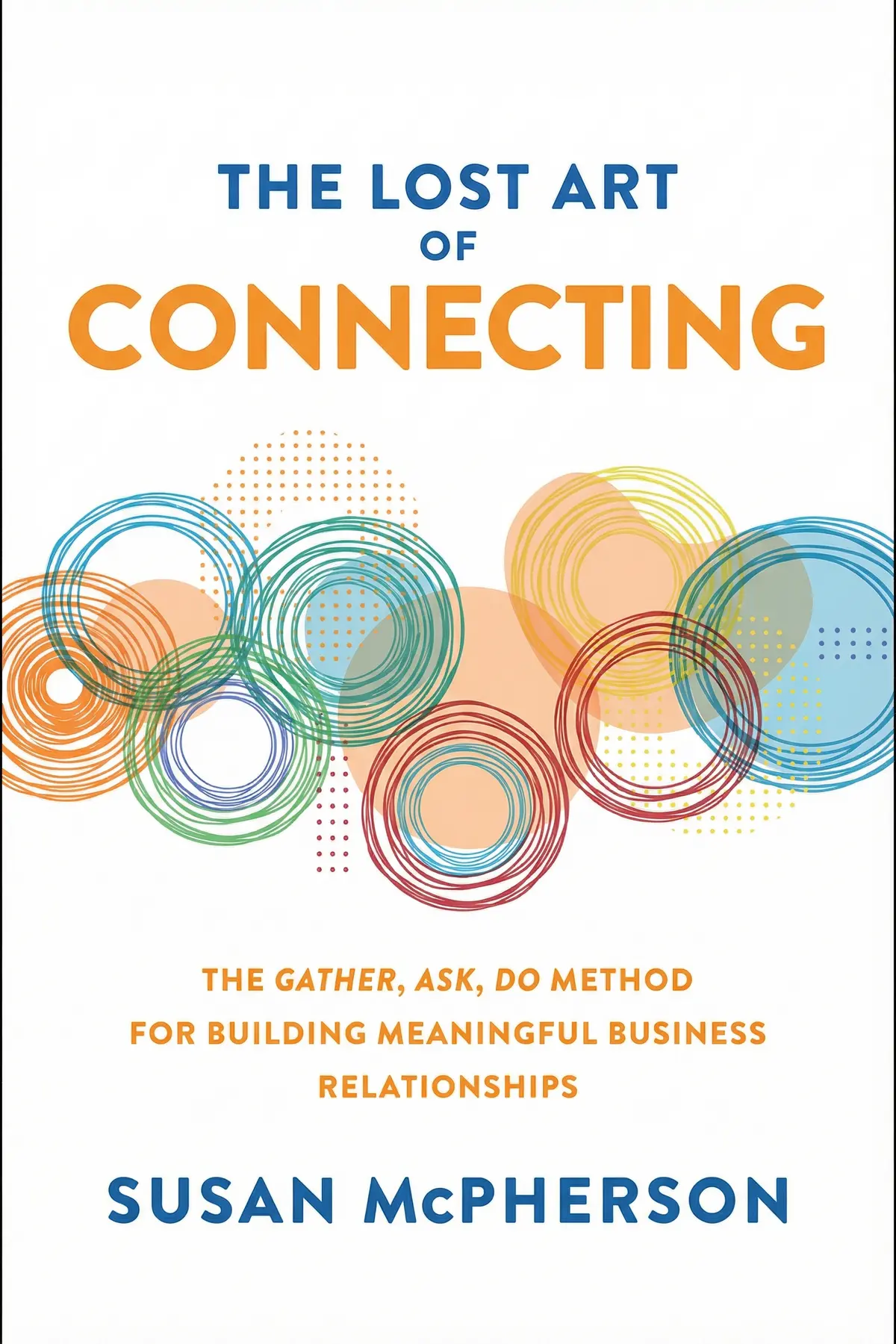
Table of Content
1. Introduction
1 min 08 sec
If networking makes your stomach tighten, or your online following never turns into real opportunities, the fix may be smaller than you expect. In The Lost Art of Connecting, communications consultant Susan McPherson argues that strong business relationships begin with one question: how can I help? She calls herself a serial connector, yet a room full of strangers still makes her anxious.
Her answer to that fear is a method in three phases, Gather, Ask and Do. First you get clear on what you want and who you already know. Then you reach out generously and ask for small, precise favors. Finally you listen closely and keep following up. Her case is that lasting relationships are built deliberately, by giving first and coming back, not collected at events. The payoff, she argues, is better work and, statistically, a longer and fuller life. Follow her method and a vague wish to network better becomes a weekly practice, from a five-minute ask to a dinner that brings strangers to your table.
2. Know what you want before you network
1 min 47 sec
Walking into a room full of strangers sets off panic even in confident people. McPherson’s first defense against that fear has nothing to do with the room, and it starts with a look at the night sky.
3. Find the connections already within your reach
1 min 56 sec
We can message almost anyone on the planet, yet the number of people we truly confide in has been shrinking. The fix McPherson proposes involves people you have probably already written off.
4. Walk in asking how you can help
1 min 43 sec
Traditional networking events leave almost everyone counting the minutes until they can leave. McPherson traces the problem to one habit of mind, and swapping it out also makes the anxiety easier to bear.
5. Ask so a busy person says yes
1 min 47 sec
A teenager with no credentials persuaded accomplished women to give her their time, and it led to an award-winning media platform. The way she framed her request is something anyone can copy.
6. Turn a first meeting into a real conversation
1 min 55 sec
Talking about the weather feels safe and wastes the one chance you have with a new contact. A four-step listening method from a communications expert shows what to do once the deeper questions start.
7. Keep relationships warm with small, steady gestures
1 min 46 sec
One woman built ties across doctors, bankers, artists and politicians and used them to reshape a major city. Her habit was simple, and most of us skip it the moment a good meeting ends.
8. Conclusion
1 min 08 sec
McPherson’s method turns networking from a hunt into a habit of attention. The anxious newcomer at a first meeting and the celebrated connector in Chicago are doing the same thing at different scales: noticing people, giving before asking, and coming back. The constellation image fits because no single meeting creates one. The pattern only appears once enough small lines are drawn, and kept.
The book points to a few moves worth trying soon. Write down one goal, then list the people you already know who could help with it or whom you could help, including the ones who seem off topic. Before your next request, find something you can offer, and shrink the ask to five minutes with a clear date attached. After any good conversation, send a note the same day.
When you are ready to widen the circle, McPherson suggests a dinner. Invite a few people you know and ask each to bring someone you have never met. If only two bring a colleague, five people sit down at your table. Then ask the newcomers to do the same, and watch the lines between you multiply.
About this book
What is this book about?
Many professionals find networking draining. Events feel like a scramble for business cards, and online contacts rarely become anything more. Susan McPherson, a communications consultant who calls herself a serial connector, argues that the problem is the transactional mindset behind most networking, and that a slower, more generous approach works better for careers and for people. Her method has three phases. Gather means getting clear on your goals, understanding how you build trust, and mapping the network you already have, including friends of friends. Ask means reaching out to help others first, moving relationships offline and making requests small, specific and time-bound. Do means listening well and following up quickly and steadily, so a single meeting grows into a relationship. McPherson draws on research from the Pew Research Center and the Journal of Applied Psychology, ideas from Esther Perel and Julian Treasure, and the stories of media founder Rhonesha Byng and Chicago connector Lois Weisberg. Readers get a practical routine: a written goal, a list of existing contacts, five-minute asks, better questions, a listening method and simple ways to stay in touch.
Book Information
Who it's for
Professionals dreading networking events
Professionals who dread networking events and want a calmer, more generous way to build contacts.
Job hunters, career switchers
Job seekers and career switchers whose online connections never turn into real opportunities.
Founders and independent workers
Founders and freelancers who need partners, advisers and clients but hate feeling transactional.
About the Author
Susan McPherson
Susan McPherson describes herself as a serial connector. She founded and leads McPherson Strategies, a consultancy offering storytelling, partnership building and visibility to corporations, NGOs and social enterprises. Over more than two decades she has worked in marketing, public relations and sustainability communications, and her writing has appeared in the Harvard Business Review, Fast Company and Forbes. She is also an angel investor who has backed and advised women-led technology start-ups. She lives in Brooklyn.
Ratings & Reviews
Ratings at a glance
What people think
Listeners find the book offers excellent practical advice and is a straightforward listen, with one listener noting its specific utility for onboarding new staff. They value the emphasis on developing significant relationships in both private and professional environments, and one review highlights how it motivates people to engage with others from a place of authenticity. Listeners characterize the work as uplifting, with one listener describing how it helps spread love and joy, and another noting how it triggers ideas for collaboration and creativity.
Top reviews
Arjun
This book is a refreshing antidote to the transactional networking culture that dominates LinkedIn and professional mixers today. Susan McPherson argues for a deeper, more intentional approach to building relationships, centered on the simple yet profound question: 'How can I help?' Truth is, I started using this mindset immediately, and the shift in how people respond is palpable and immediate. The chapters move quickly, blending personal anecdotes with actionable steps that don't feel like typical corporate jargon. It’s particularly useful for those of us re-entering social spaces after years of isolation. While some might find the 'just do it' vibe a bit simplistic, the underlying philosophy of 'Gather, Ask, Do' provides a solid roadmap for anyone feeling rusty. It feels less like a textbook and more like a warm conversation with a mentor who genuinely wants you to succeed. I’ve already recommended it to several colleagues who struggle with small talk.
Show moreMai
Picked this up on a whim and ended up devouring it in two sittings because the energy is just so infectious. Susan McPherson isn't just telling you to exchange business cards; she’s teaching you how to build a legacy of kindness and mutual support. The 'Gather, Ask, Do' methodology is brilliant in its simplicity, emphasizing that we should listen more than we speak—two ears and one mouth, as she says. I’ve started implementing her 'How can I help?' approach in my weekly team meetings, and it’s already sparking more collaboration and creative problem-solving. It’s rare to find a business book that feels this soulful and grounded in real human experience. The advice is tangible, the tone is encouraging, and the results are real if you actually put in the work. This should be required reading for every leadership onboarding program out there.
Show moreSom
Wow. This book actually made me feel excited about the prospect of meeting new people again! Susan McPherson writes with such vulnerability and passion that you can't help but feel inspired to go out and build your own 'constellation' of connections. She moves away from the 'greasy' feeling of traditional networking and moves toward a model based on service and empathy. I love the idea of 'Gather, Ask, Do' because it provides a clear beginning, middle, and end to the process of building a bond. The book is filled with hope and real-world experience, making it feel incredibly authentic and trustworthy. It’s not just about career success; it’s about spreading joy and making a social impact through the people you know. I’ve already bought copies for my entire team to help us stay aligned as we return to the office.
Show morePatchara
Ever wonder why networking feels so draining and insincere most of the time? McPherson tackles this head-on by refocusing the lens on altruism and authentic curiosity about others' lives. The book was clearly written during the height of the pandemic, which gives its message about the 'art' of connecting a sense of urgency. I particularly loved the 'two words' exercise—asking people what two words describe their current feelings instead of the standard 'how are you?' Look, it’s a small change, but it breaks the script of robotic social interactions in a really beautiful way. The author’s warmth shines through every page, making the advice feel attainable rather than intimidating. My only gripe is that a few sections felt a bit padded with anecdotes that didn't always land for me. Still, it’s a fantastic tool for anyone looking to build a 'constellation' of meaningful professional and personal ties.
Show moreGai
The chapter on the power of listening really hit home for me. We often go into networking events thinking about our own pitch, but McPherson flips that on its head. She reminds us that every person we meet is a gateway to a new skill, a new idea, or a new version of ourselves. Frankly, I needed the reminder to slow down and be more present in my conversations. The book is structured perfectly with clear takeaways, making it easy to revisit specific tips when you’re prepping for a big conference. While the 'just do it' approach might feel a bit daunting for the extremely shy, her 3-3-3 rule for introverts provides a manageable safety net. It’s a very practical guide that balances high-level philosophy with 'do-this-tomorrow' instructions. It isn't a long read, but it’s one that sticks with you long after you close the cover.
Show morePrapaiwan
After hearing so much buzz about this title, I finally sat down with it and found it to be a very helpful guide for the post-lockdown era. McPherson emphasizes that connecting isn't about what you can get, but what you can give. This shift in perspective is exactly what's needed to foster genuine relationships in a world that’s become increasingly digital and transactional. I particularly appreciated the tips on how to follow up effectively without being a nuisance, as that's where most people (myself included) tend to drop the ball. The book is energetic and optimistic, which makes it a pleasure to read during a morning commute. Some of the advice is definitely common sense, but having it laid out in such an organized fashion makes it much easier to implement. It’s a great resource for anyone feeling a bit socially awkward after years of Zoom calls.
Show moreRohan
As someone who manages a large team, I found it surprisingly applicable to internal company culture. The advice isn't just for external networking; it’s about how we treat our colleagues and how we onboard new employees with a sense of belonging. McPherson’s emphasis on the 'two ears, one mouth' rule is something every manager should take to heart. The book encourages us to be more than just nodes in a network; it asks us to be active participants in each other's growth. Not gonna lie, I was skeptical at first, thinking it might be another fluffy self-help guide, but the actionable tips are actually quite grounded. The writing style is conversational and fast-paced, which I appreciated. It's an inspiring read that pushes you to be more proactive in your relationships without feeling like a chore.
Show moreWacharapol
As someone who has worked in sales and marketing for over a decade, much of this felt like a refresher course rather than a revelation. Susan definitely knows her stuff, and her 'Gather, Ask, Do' framework is a clean way to organize relationship-building, but I didn't find many ground-breaking insights here. To be fair, the writing is incredibly accessible, and the sub-headings make it a breeze to skim for the most relevant parts. I did appreciate the specific advice for introverts, like the goal of meeting three people and sharing three ideas at an event. However, some of the stories felt a bit repetitive, and the advice occasionally veered into 'just be nice' territory. It’s a solid 3-star read that would be absolutely perfect for a recent college grad or someone starting their first corporate job. If you’re already a 'super-connector,' you might find yourself nodding along rather than taking notes.
Show moreTeng
Gotta say, the layout of this book is its strongest point. The headings and sub-headings are very clear, which makes the information very easy to digest and refer back to later. Susan's 'How can I help?' philosophy is a great starting point for anyone, though it can feel a bit repetitive by the middle of the book. I appreciated the focus on being a 'serial connector,' but I wish there were more examples of how to handle difficult or one-sided connections. Sometimes people just take and don't give back, and the book doesn't offer much on how to navigate those tricky waters. It's a very positive, 'glass-half-full' kind of book, which is nice, but it occasionally lacks a bit of grit. Still, it’s a helpful read for anyone looking to polish their social skills or find new ways to be of service.
Show moreMason
Not what I expected based on the glowing blurbs, to be honest. While Susan McPherson is clearly a lovely person with a vast network, the book felt quite thin on actual strategy and heavy on platitudes. I was hoping for more deep-dive psychology on human connection, but instead, I got a lot of 'be yourself' and 'ask how you can help.' In my experience, real-world networking in high-stakes environments requires a bit more nuance than what is presented here. The stories about her own successes were okay, but they started to feel a bit self-congratulatory after a while. I did find the 'two words' check-in idea interesting, but that’s about the only thing I took away from the entire experience. It’s an easy read, but it felt more like a long-form magazine article than a full-fledged book. If you're new to the workforce, this might be helpful, but seasoned professionals can probably skip it.
Show moreQuestions about this book
What is the main idea of The Lost Art of Connecting?
Susan McPherson argues that meaningful business relationships come from a deliberate, generous process instead of transactional networking. Her Gather, Ask, Do method asks you to clarify your goals and map the network you already have, reach out by offering help and making small specific requests, then listen well and keep following up so each connection deepens over time.
What is the Gather, Ask, Do method?
Gather means knowing yourself and your professional goals, then listing the people in your existing network, including friends of friends. Ask means leading with how you can help, moving relationships offline and making requests specific, measurable and time-bound. Do means listening closely, using Julian Treasure’s RASA method of receive, appreciate, summarize and ask, then following up quickly and steadily.
How do you ask a new contact for help, according to Susan McPherson?
Keep the request to about five minutes and say exactly what you want and by when, such as a review of your CV by next Tuesday or five minutes of advice on your elevator pitch. McPherson points to Rhonesha Byng, who as a teenager confidently asked accomplished women for fifteen minutes to share their stories and later founded Her Agenda.
How soon should you follow up after meeting someone?
McPherson recommends following up right after the first meeting, before the connection grows stale. A short message saying you enjoyed hearing about their work, or offering help, is enough. After that, keep up small gestures for the life of the relationship, such as sharing resources, sending cards or suggesting coffee now and then.
Who should read The Lost Art of Connecting?
It suits anyone who finds networking intimidating or whose contacts never go anywhere: new employees facing a room of strangers, job seekers, career changers and founders looking for partners or advisers. Its tools are small and practical, from writing down one goal to hosting a dinner where each guest brings someone you have never met.
Readers also enjoyed




60 Seconds & You’re Hired!
Robin Ryan




Be A Free Range Human: Escape the 9 to 5, Create a Life You Love,
Marianne Cantwell
AUDIO SUMMARY AVAILABLE
Listen to The Lost Art of Connecting in 15 minutes
Get the key ideas from The Lost Art of Connecting by Susan McPherson, plus 5,000+ more nonfiction titles.
- 5,000+ titles
- Listen as much as you want
- 7-day free trial
- Cancel anytime









