

12 min 44 sec
Available in: English
The Long View: Career Strategies to Start Strong, Reach High, and Go Far
Shows how to plan a working life of about 45 years in three stages: getting in and learning, standing out with the right team, and passing on what you know without fading out.
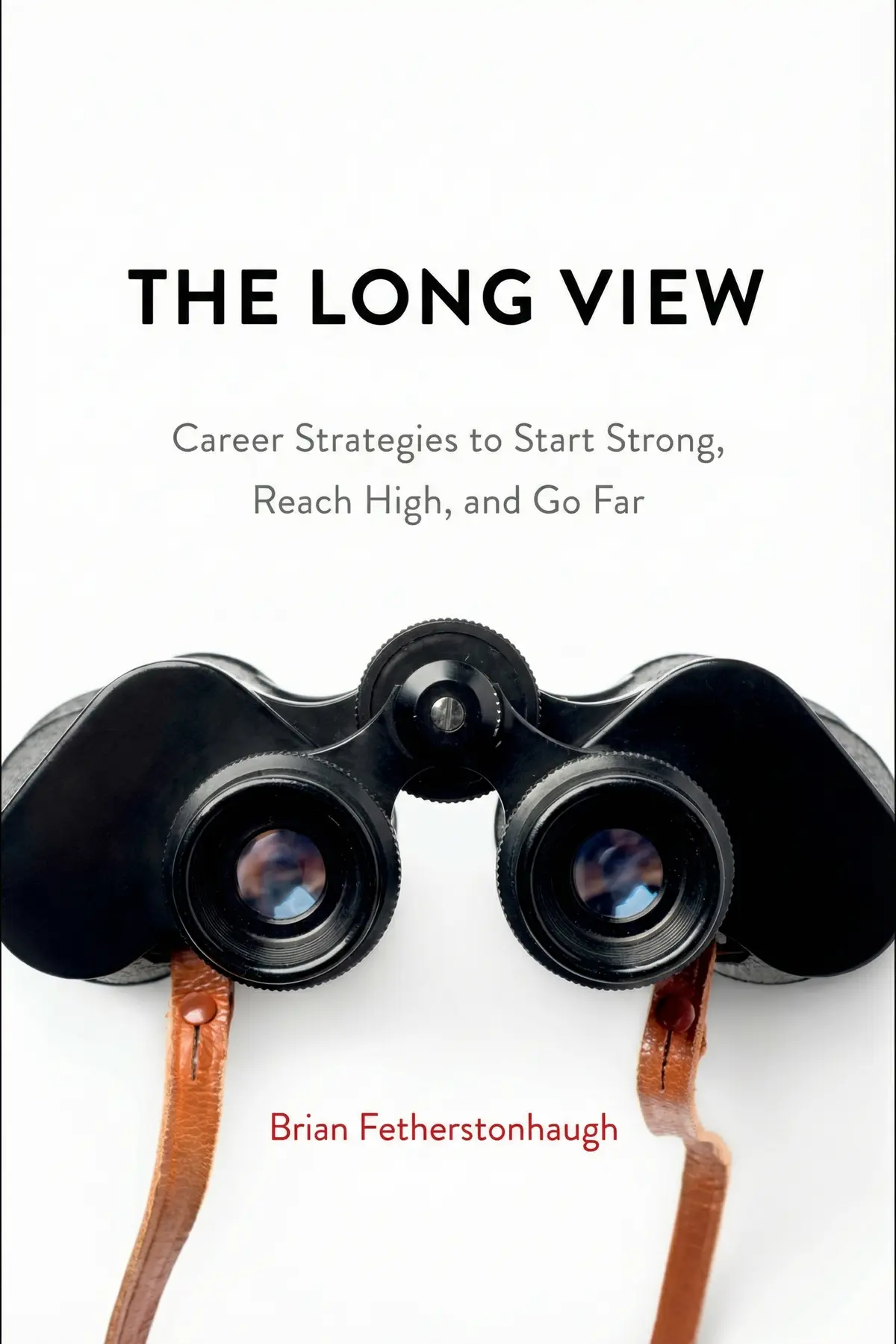
Table of Content
1. Introduction
1 min 00 sec
Most people treat their careers like a race to be won by thirty, then wonder why they feel spent by forty. In The Long View, Brian Fetherstonhaugh, former CEO of the marketing agency OgilvyOne Worldwide, points to a figure that changes the pace: according to the Survey of Consumer Finances, somewhere between 85 and 90 percent of a person’s wealth tends to arrive after their fortieth birthday.
His argument is that a working life of roughly 45 years should be run like a marathon. Split it into three stages of about fifteen years each, and spend your time on what pays off at every stage: skills you can carry anywhere, experiences that widen your judgment and relationships that last.
What follows is a plan for each stage, from landing a first job with a spreadsheet and a few short phone calls, to finding the work only you do best, to handing your knowledge on without fading out.
2. Build a career that pays and still feels good
1 min 29 sec
A large poll found people saying two things that seem impossible to hold at once about money and happiness. The way both answers can be true points to a different way of choosing your next job.
3. Pace yourself, because the big rewards come later
1 min 30 sec
Friends in flashier jobs may seem years ahead of you. One number about when wealth is actually built suggests the early race matters far less than it feels, and that rushing it carries a real cost.
4. Collect skills and experiences you can take anywhere
1 min 42 sec
Picture losing your job at forty and starting over alone. What would you still have that someone would pay for? The answer depends on choices most people make, or skip, in their twenties and thirties.
5. Sort your contacts into four levels and invest wisely
1 min 37 sec
A thousand online connections can still leave you with nobody to call when it counts. Fetherstonhaugh’s four levels of work relationships show which people deserve your time, and what each of them can actually do for you.
6. Get into the game during your first fifteen years
1 min 19 sec
Sending applications into silence is how many first job hunts begin and end. A simple spreadsheet and a request for twenty minutes of someone’s time change the odds, and they teach you about yourself along the way.
7. Find your sweet spot and build a complementary team
1 min 25 sec
There comes a point when working harder on your weaknesses stops paying. The middle of a career calls for a different bet, one that depends as much on the people beside you as on your own talent.
8. Pass on what you know and keep learning
1 min 32 sec
For many people, work is the reason to get up in the morning, so retirement can feel more like a loss than a prize. The final stage offers a way to keep contributing, and staying relevant is part of it.
9. Conclusion
1 min 10 sec
The Long View asks you to change the clock you measure yourself against. Measured over a year, a career looks like a scramble for the next title. Measured over 45 years, it looks like a marathon where the strongest runners hold something back, and where most of the money arrives after forty. Against that clock, a slower, more curious start is often the smart one.
What the book supports is steady investment in a few things that compound: skills that move with you, experiences that sharpen your judgment, and relationships you tend at four different levels. Each stage then has its own task. First you get in and learn, then you stand out with a team around you, and finally you pass on what you know while still learning yourself.
A good place to begin is one the author recommends directly: request feedback from your manager and coworkers. Should your employer offer no performance reviews, propose holding them on a regular basis. Their view of your strengths and weaknesses tells you which stage you are really in and what to build next.
This year is one mile of many. Run it at a pace you can hold.
About this book
What is this book about?
Many people run their careers like a sprint, chasing the next title or raise and burning out long before the finish. Brian Fetherstonhaugh, a former agency CEO who has mentored thousands of people, argues that this misreads the race. A working life lasts roughly 45 years, takes up more hours than sleep, and delivers most of its wealth after age forty. His answer is to pace a career like a marathon. He splits it into three stages of about fifteen years each. The first is for getting into the game and finding your strengths. The second is for becoming known for your sweet spot and building a team around your gaps. The third is for handing your expertise to the next generation while you keep learning. Across all three, he says, time is best spent on transferable skills, meaningful experiences and relationships at four distinct levels. Readers get practical tools for each stage, from a spreadsheet method for landing a first job to ways of documenting a succession, along with a calmer way to judge progress when friends seem to be moving faster.
Book Information
Who it's for
Early-career and feeling behind
Graduates and early-career professionals who feel behind friends in faster or better-paid jobs.
Mid-career workers weighing strengths
Mid-career workers deciding whether to keep fixing weaknesses or build expertise and a team around their strengths.
Senior professionals planning succession
Senior professionals planning a succession and wondering how to stay useful and current.
About the Author
Brian Fetherstonhaugh
Brian Fetherstonhaugh was CEO of OgilvyOne Worldwide, a marketing agency that serves large businesses. Over his career he has mentored thousands of people, and he has lectured on career strategy at universities including Yale, Harvard and Columbia. That mix of running a global agency and advising people at every stage of working life shapes the practical, stage-by-stage advice in The Long View.
Ratings & Reviews
Ratings at a glance
What people think
Listeners find this guide to career management practical and organized, with one individual noting its relevance across all life and professional stages. The content is easy to follow, captivating, and motivating, while one listener shared that the book helped them achieve greater mental clarity.
Top reviews
Ding
Finally got around to reading this after a mentor suggested it, and it really shifted my perspective on the next few decades. Fetherstonhaugh argues that we treat careers like sprints when they are actually 45-year marathons, which is a stressful but necessary realization for someone in their early thirties. The 'career math' section was eye-opening because it forces you to look at the social currency you’ve built rather than just your bank balance. I loved the breakdown of the three stages, though I suspect the advice for Stage 3 might be a bit idealistic for most workers. Still, the concept of 'career fuel'—skills, experiences, and relationships—is something I will be thinking about for a long time. It’s a well-structured guide that avoids most of the typical self-help fluff. Highly recommended if you feel stuck in the day-to-day grind.
Show moreIff
Ever wonder why you feel so burnt out despite having a 'good' job? Fetherstonhaugh suggests it’s because we are pacing ourselves poorly for the marathon that is our professional life. I found the 100-hour test to be a brutal but necessary reality check on how I actually spend my time versus where I want to go. The idea of building a 'talent ledger' of people you’ve mentored is a beautiful way to think about one's legacy. This isn't just about making money; it's about the intersection of impact, learning, fun, and reward. To be fair, you have to be willing to do the exercises to get the most out of it. It’s a very engaging read that helped clarify many of my messy thoughts about my future direction. This is the kind of career advice I wish I’d received back in college.
Show moreWaree
Wow. I didn't realize how much I needed a book that looks at the big picture until I sat down with this one. The Long View isn't about landing your next job; it's about building a life that is fulfilling and sustainable over many decades. Fetherstonhaugh writes with a lot of wisdom, emphasizing that social currency and emotional intelligence are just as vital as technical skills. I loved the part about 'succession planning' in Stage 3, as it’s something people rarely talk about in career guides. The tone is encouraging and the math exercises are actually quite fun once you get into them. Honestly, it’s one of the few books that helped me feel optimistic about aging in a fast-paced economy. If you are feeling short-sighted or overwhelmed by your current workload, this will give you the perspective you need to breathe.
Show moreFinn
As someone who has pivoted industries twice, I found the emphasis on transportable skills incredibly validating and practical. The book is essentially a blueprint for building a resilient professional life that can survive market shifts and personal changes. Fetherstonhaugh’s tone is encouraging yet realistic, emphasizing that we accumulate most of our wealth after age forty. I particularly appreciated the 'Career Inventory' exercise, which helped me identify gaps in my current ecosystem that I hadn't noticed. My only gripe is that some of the corporate examples feel a little dated in the age of remote work and the gig economy. However, the core principles regarding enduring relationships remain timeless and essential for anyone looking to scale greater heights. It’s a solid, no-frills reference book that I’ll likely revisit as I enter my next fifteen-year stage.
Show moreDylan
Picked this up on a whim and was pleasantly surprised by how much the 'Career Path Navigator' helped me visualize my trajectory. The author breaks down the journey into manageable 15-year blocks, which makes the daunting idea of a lifelong career feel much more attainable. I especially liked the focus on 'meaningful experiences,' like working abroad or in e-commerce, to diversify your professional portfolio. The writing is simple to understand and engaging, though it does lean heavily on corporate terminology that might annoy some. Look, it’s a practical guide that focuses on long-term sustainability rather than quick hacks or overnight success. I’ve already started asking for more direct feedback from my colleagues as suggested in the actionable advice sections. It’s a very solid four-star read for anyone feeling like they are just drifting from job to job.
Show moreHenry
After hearing about the 'three stages' concept from a friend, I decided to give the full book a try to see if it lived up to the promise. The breakdown of 15-year cycles is a great mental model that helps reduce the anxiety of needing to 'arrive' by age thirty. I found the section on 'career fuel' to be the most valuable part, specifically the focus on enduring relationships over simple networking. Gotta say, the author’s perspective on personal brand management is a bit aggressive, but it’s probably necessary in today’s competitive market. The book is well-structured for the most part, even if some sections on 'career math' feel a little gimmicky. It’s an inspiring read that pushed me to take a harder look at my volunteer work and how it fits into my overall ecosystem. Definitely a useful tool for those who want to be more deliberate about their professional growth.
Show moreLena
This book offers some decent perspective on playing the long game, but I found the discussion a bit shallow in certain chapters. While the three-stage framework is a helpful way to organize a forty-five-year journey, the actual advice for mid-career professionals felt somewhat repetitive. Truth be told, it feels like it’s written primarily for high-level executives at major firms rather than the average person. I enjoyed the section on becoming a 'talent magnet' and the importance of storytelling, yet the organization of the tools felt a bit scattered at times. It’s not a bad read by any means, but it didn't provide the 'eureka' moment I was hoping for based on the rave reviews. If you are just starting out, you might get more value from the 'Stage 1' advice than I did at my current level.
Show moreEthan
The chapter on transportable skills was the highlight for me, as it provided a clear list of what actually matters across different industries. However, I have to say that the rest of the book felt a bit like it was skimming the surface of much deeper topics. Brian Fetherstonhaugh is clearly an expert, but the advice is so general that it’s hard to apply to specific, niche career paths. I appreciated the '100-hour test' for time management, but I'm not sure how helpful the suggestions for Stage 3 are for anyone not in a board-level position. In my experience, the book works best as a high-level conceptual framework rather than a step-by-step manual. It’s a scrupulous account of career creation, but the no-frills style can be a bit dry at times. It’s worth a skim for the career math, but don't expect a life-changing revelation.
Show moreArthit
Frankly, I have mixed feelings about this one because while the 'career fuel' framework is solid, the execution is a bit hit-or-miss. On one hand, the emphasis on persuasive communication and storytelling as transportable skills is spot on for the modern era. On the other hand, the book can feel a bit repetitive, and some of the 'meaningful experiences' suggested are clearly tailored for a specific type of white-collar professional. The truth is, it’s a bit shadow in some areas where I wanted more depth, especially regarding the transition between the stages. I did find the 'Career Inventory' questions useful for reflecting on my current job's impact and fun levels. It’s a decent reference for creating a springboard for your career, but it’s not without its flaws. I’d recommend it as a secondary resource rather than your primary career bible.
Show moreIsaiah
Not what I expected given the hype, and frankly, it felt like an updated version of a speech I've heard a dozen times before. The premise that we need constant retraining and multiple jobs is a bit of a cliché in the 21st century. I found the 'Career Math' section to be overly simplistic, and the advice for Stage 1 felt incredibly basic for anyone who has already entered the workforce. It’s somehow simultaneously brand new in its branding and totally obsolete in its actual content. While there are a few interesting tips about public speaking and EQ, they are buried under layers of corporate-speak. I struggled to stay engaged because the structure felt poorly organized and the tone was a bit too 'executive' for my taste. You might be better off reading a few blog posts on the same topics. Skip this one unless you really love Ogilvy-style corporate philosophy.
Show moreQuestions about this book
What is the main idea of The Long View by Brian Fetherstonhaugh?
Fetherstonhaugh argues that a career lasts about 45 years and should be paced like a marathon, not run as a sprint. Since 85 to 90 percent of personal wealth is usually built after forty, he says the early years are best spent on transferable skills, varied experiences and lasting relationships. He then divides a working life into three stages of roughly fifteen years, each with its own task.
What are the three career stages in The Long View?
The first stage is about getting into the game: landing a job through inside contacts, discovering your strengths and working on weaknesses. The second is about finding your sweet spot, where your skills, your interests and what you can offer the world overlap, and building a team that covers your gaps. The third is about passing on your expertise through succession, mentoring or teaching while you keep learning.
How does The Long View suggest finding a first job?
Fetherstonhaugh suggests a spreadsheet listing around 20 companies you would like to join. Research each one and find a contact inside through LinkedIn or your alumni network. Send a short email with your resume asking for 15 to 20 minutes about their work. The call reveals the skills the company wants, its culture and the job’s ups and downs, and an inside connection improves your chances of an interview.
What are the four levels of relationships in The Long View?
Basic contacts are everyone you know, including social media connections, useful for spreading a message widely. Experts hold specific knowledge that may one day solve a problem, and you keep them close by sharing your own. Critical colleagues, such as your boss, shape your pay, promotions and happiness at work. Champions are a small group of mentors and supporters who deserve regular appreciation.
How can I apply The Long View right away?
Start by asking your boss and colleagues for feedback, and if your company has no performance reviews, suggest regular ones. That feedback shows your strengths and weaknesses. Then match your actions to your stage: build a list of target companies if you are starting out, define your sweet spot and fill your gaps with teammates in mid-career, or document your knowledge and mentor others later on.
Featured in
Readers also enjoyed

60 Seconds & You’re Hired!
Robin Ryan



Be A Free Range Human: Escape the 9 to 5, Create a Life You Love,
Marianne Cantwell
Be the Unicorn: 12 Data-Driven Habits That Separate the Best Leaders from the
William Vanderbloemen
AUDIO SUMMARY AVAILABLE
Listen to The Long View in 15 minutes
Get the key ideas from The Long View by Brian Fetherstonhaugh, plus 5,000+ more nonfiction titles.
- 5,000+ titles
- Listen as much as you want
- 7-day free trial
- Cancel anytime









