

60 Seconds & You’re Hired!
Robin Ryan
 English
A practical guide for people working away from the office. It shows how to stay focused, communicate clearly, get credit for your work without bragging, and look after yourself while working from anywhere.
1 min 05 sec
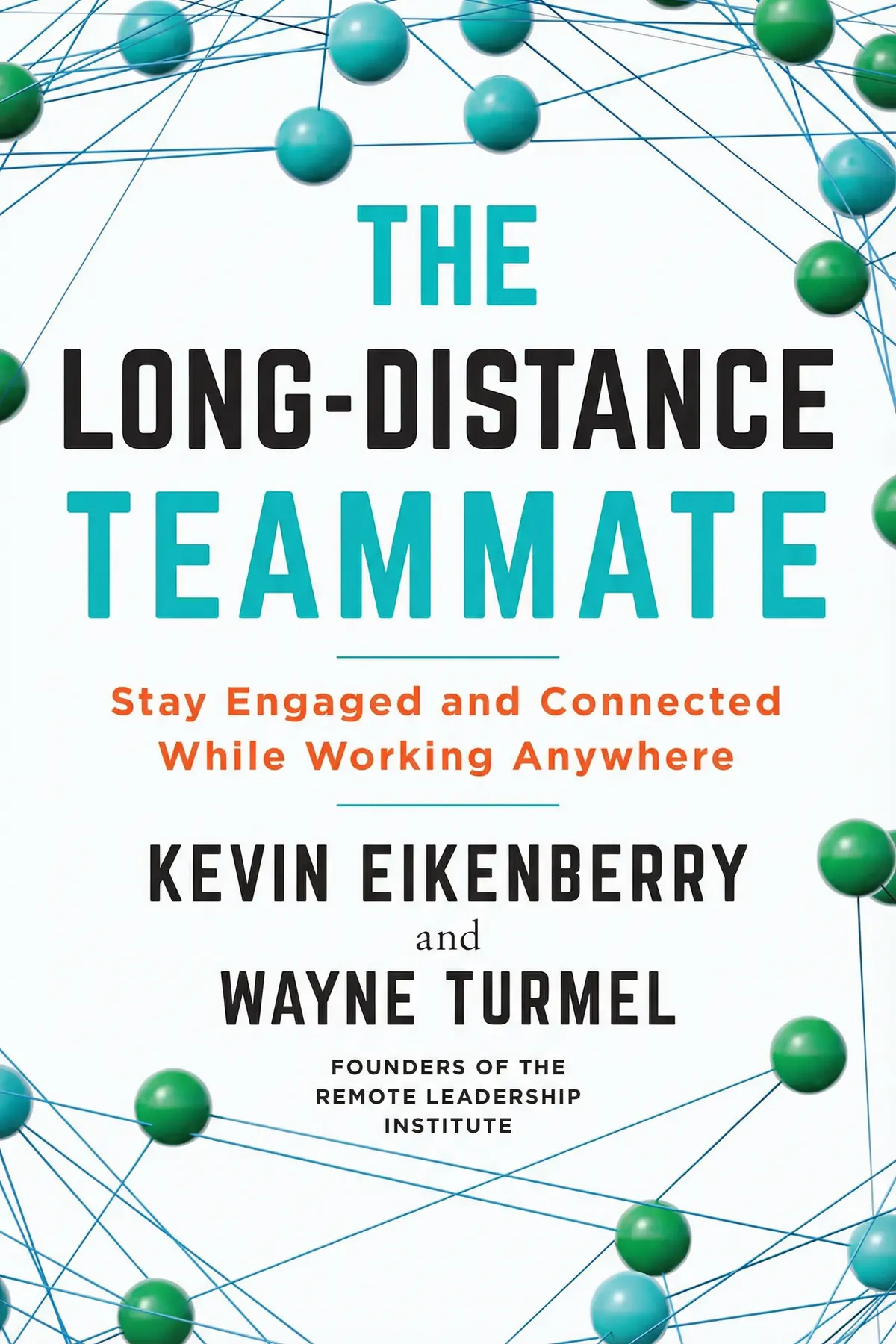
Working from home can leave you doing solid work that nobody sees, for colleagues you rarely talk to. In The Long-Distance Teammate, leadership expert Kevin Eikenberry and remote-work author Wayne Turmel offer a first fix that costs nothing: redefine your job as your own work plus the work of helping your teammates succeed. Distance does not remove that second half. It only means you have to do it on purpose.
That is the thread of the whole book. On a distributed team, connection rarely happens by accident, so a good teammate builds it deliberately, for others and for themselves. The authors turn the idea into daily moves: a three-part model of what makes a teammate valuable, four questions for a focused day, a way to pick between email, phone and video, and a method for getting credit without bragging. By the end, your next meeting, your next message and your next evening off will each look a little different.
1 min 34 sec
Alone at a home desk, the job can shrink to whatever sits in your inbox. The authors argue that this narrow view is exactly what makes remote work feel lonely, and they offer a wider one.
1 min 42 sec
Driving instructors teach new drivers to look far down the road. The same habit, the authors argue, separates a merely competent remote colleague from one the whole team trusts, and it comes with two companions.
1 min 48 sec
You can sit at your desk from morning to night and still finish nothing that matters. The authors explain why home makes this so common, and which four questions pull you back on course.
1 min 47 sec
Sending a message feels like communicating, yet the authors say it is only the first of three steps. The other two are the ones remote workers skip, and technology makes them easy to miss.
1 min 56 sec
Out of sight can turn into out of mind, and that hurts careers. Yet nobody wants to be the colleague who boasts in every call. The authors describe a third path that sits between the two.
1 min 39 sec
Remote work often returns nothing but a brief email or a thumbs-up for hours of effort. The authors argue that every teammate, not only managers, can change that, and they show what separates helpful feedback from noise.
1 min 44 sec
Remote workers tend to move less, feel lonelier and carry more stress, and their work suffers for it. The authors make the case that looking after yourself belongs on the list of teammate duties.
1 min 04 sec
The picture that emerges from Eikenberry and Turmel is of a teammate who does not wait for the office to create connection, because there is no office to do it. Every link that once formed by chance in a hallway now has to be made on purpose: the question to a manager about what they need, the channel chosen for a hard conversation, the word we in place of I, the specific note of praise, the walk at lunch. None of it is dramatic. Each piece fits into an ordinary day, and over weeks they turn an isolated worker back into a member of a team.
The easiest place to begin is the end of your next meeting. While it is still fresh, send the follow-up question or action item to the person who needs it. Then mute the chat for one focused hour, and before you log off, tell one colleague exactly what they did well.
Distance changes how a team holds together. It does not change the fact that people remember who showed up for them.
Working from home solved the commute but created a quieter problem. Colleagues are out of sight, good work goes unnoticed, and a day at the desk can feel busy without producing much. Kevin Eikenberry and Wayne Turmel argue that being a good teammate from a distance is a skill you build deliberately, because the hallway chats that once did the work are gone. Their starting point is a new definition of the job: your own work plus teamwork, the effort of helping colleagues and the wider mission succeed. From there they offer a three-part model of productivity, proactivity and potential, four pivot questions for staying focused at home, a simple way to choose between text, audio and video, and a framework they call ethical visibility for getting recognized without seeking the spotlight. The book also covers giving and receiving feedback with kindness and openness, and it treats sleep, movement and life outside work as part of the role. Readers get a set of small, concrete habits for being connected, useful and well while working anywhere.
Remote and hybrid employees who do good work but feel invisible to their manager.
New or junior team members trying to build relationships with colleagues they rarely meet in person.
Home workers whose days feel busy yet unproductive, and whose evenings keep disappearing into work.
Kevin Eikenberry has worked for many years with organizations in North America and with leaders around the world on leadership, learning, teams and communication. Inc.com has twice named him among its top 100 leadership and management experts in the world, and he has written or contributed to nearly 20 books. Wayne Turmel, born in Canada and now based in Las Vegas, writes non-fiction about remote work, including The Long-Distance Leader and Meet Like You Mean It, a book on virtual meetings.
Listeners consider the guidance in this book to be realistic and focused, with one listener mentioning that it offers concrete methods for improving communication. The subject matter is well-regarded, as one listener calls it an outstanding tool for people in remote positions.
This book came to me at the exact right moment when I was struggling to find a sustainable routine while working from my kitchen table. I was feeling that specific type of "ennui" the authors describe—that restlessness that comes from lacking a clear purpose and feeling disconnected from the organizational mission. The chapter on "Ethical Visibility" changed my entire perspective on how to share my wins without sounding like I was bragging or being self-centered. It’s about making sure your contributions are seen in the context of the team's goals, which is so hard to do when you aren't in the office. Honestly, the reflection questions at the end of each chapter are worth the price of the book alone. They forced me to stop and actually process how I was showing up for my coworkers every day.
Show moreAs someone who has struggled with the isolation of remote work, I found this to be a fantastic resource for recalibrating my mindset. The authors really nail the difference between just being a "team member" on a roster and being a "teammate" who is emotionally invested in the group's success. I’ve started implementing the communication tips, like using multiple channels and making relationship-building a priority rather than just a transaction. It takes a lot of discipline to follow these "habit sets," but I can already feel a difference in how my colleagues respond to me. Taking care of your personal health and sanity is also emphasized, which is a relief because so many business books ignore the human element of WFH. This is essential reading for anyone who wants to thrive long-term while working from a distance.
Show moreWow, this was a much-needed guide that helped me establish much better boundaries between my professional and personal life. The "3-P model" of Productivity, Proactivity, and Potential gave me a language to describe the burnout I was feeling and a way to work through it. I particularly enjoyed the section on "Ethical Visibility" because it teaches you how to be seen and valued without being the person who constantly screams for attention. By focusing on organizational success and using "we" and "us," I’ve found it much easier to integrate with my team even though we are spread across three time zones. The reflection questions at the end of each section are perfect for journaling and really help the concepts stick. If you’re feeling disconnected, this book provides the guidance and rules you need to find your way back.
Show morePicked this up because my team went fully remote last year and I felt like I was losing my edge. Eikenberry and Turmel do a solid job of breaking down the shift from just being a "team member" to actually being a "teammate." The distinction is subtle but vital if you want to maintain a real emotional connection with colleagues you only see on Zoom. I particularly appreciated the 3-P model—Productivity, Proactivity, and Potential—as it forced me to think about my long-term career growth rather than just clearing my daily task list. While some of the advice feels like common sense, the structured approach makes it much easier to implement when you’re feeling isolated at your home desk. It's a quick, actionable read that provides exactly the kind of framework I needed to start feeling engaged again.
Show moreFinally got around to reading this, and I have to say the practical tips for building interpersonal connections are quite strong. In my experience, most remote work books focus too much on the tech side, but this one prioritizes the "mindset" and "habit sets" needed for success. I loved the idea that engagement isn’t something your manager does to you, but rather something you choose to do for yourself. The authors offer a great list of ways to bolster relationships, like letting people into your world and assuming positive intent during text-based conversations. It’s easy to get cynical when you’re working in a vacuum, so these reminders were very timely. I did think some of the sections on "productivity" were a little basic, but the overall message about being a "teammate" vs. a "team member" is really powerful.
Show moreDirect and persuasive, this book offers a clear path for anyone feeling lost in the transition to permanent remote work. I really appreciated the focus on "Proactivity," which is often the first thing to slip when you aren't being physically observed by a supervisor. The advice on giving feedback was especially relevant to me, as it’s so much harder to read the room over a webcam or a phone call. Stick to the facts, be specific, and make it a two-way conversation—these are simple rules, but they are incredibly effective when put into practice. My only minor gripe is that the book can feel a bit repetitive at times, as if it’s hammering the same points over and over. Still, the core message about taking personal responsibility for your engagement is something every remote worker needs to hear.
Show moreAfter hearing a lot of hype about "The Long-Distance Teammate," I expected something a bit more revolutionary than what was actually delivered. It is a decent guide for the current WFH era, but it often repeats the same points about "intentionality" and "proactivity" until they lose their impact. The 3-P model is a helpful mental framework, especially the "Potential" aspect which reminds you that your current work habits dictate your future trajectory. However, the tone is a bit too "HR-friendly" for my taste, and I found myself skimming through the parts about basic communication etiquette. It’s not a bad book, and the tips on giving feedback over video calls are certainly practical for the modern workplace. Just don't go into it expecting groundbreaking psychological insights or a manifesto on the future of remote labor.
Show moreThe chapter on getting clear expectations was probably the most useful part of this entire book for me. Most of us just assume we know what our boss wants, but Eikenberry and Turmel provide a specific list of questions to ask to ensure you’re actually aligned. While the 3-P model is easy to remember, the rest of the book felt a little bit like it was treading water to hit a specific page count. Look, if you need a structured set of rules to help you navigate the lack of boundaries at home, this is a very safe bet. The writing style is simple and the chapters are short, which makes it an easy read for busy professionals. It’s a solid 3-star book—helpful and functional, even if it isn't particularly exciting or bold in its delivery.
Show moreEver wonder if someone just took a handful of LinkedIn articles and stretched them into a 200-page book? To be fair, there are a few decent nuggets regarding ethical visibility and how to communicate more effectively with your boss, but the writing style is incredibly dry. It feels more like sponsored corporate blog content than a deep dive into the psychology of remote collaboration. I was looking for more insight into where the future of work is headed, but instead, I got a basic review of best practices that most professionals have already figured out by now. If you are brand new to the workforce, you might find some value here. For anyone with a few years of experience, you’re better off just skimming a summary of the 3-P model and moving on to something more substantial.
Show moreNot what I expected at all, and frankly, I’m surprised by all the high praise this one is getting. It reads like a manual for someone who has never worked in an office, let alone a remote environment, and lacks any real depth. The authors spend so much time explaining that you need to be "connected" and "engaged," but they never offer anything beyond surface-level platitudes. I found the "Ethical Visibility" section to be particularly grating because it felt like it was teaching adults how to use "we" instead of "I" as if we’re in grade school. If you have any professional common sense, you won’t find anything new here that hasn't been covered in a thousand free blog posts. Save your money and just focus on your output; you don't need a 200-page book to tell you to be kind to your coworkers.
Show moreKevin Eikenberry and Wayne Turmel explain how to be an engaged, connected member of a team when you work away from the office. Their core idea is that your job equals your own work plus teamwork, the effort of supporting colleagues and the wider mission. They then cover staying focused at home, choosing the right communication tools, getting recognized through ethical visibility, handling feedback and looking after your health.
The authors describe a great remote teammate through productivity, proactivity and potential. Productivity means doing the best work possible in the time available while helping the team. Proactivity means spotting obstacles early and acting before they arrive, much like a careful driver looking far down the road. Potential means weighing the long-term effects of your choices, such as helping a colleague with a small project that could later pay off.
Ethical visibility is the authors’ framework for getting credit without self-promotion. You frame your ideas and achievements around the team’s goals, using words like we and us. You add value in meetings, volunteer for extra tasks, avoid taking over your manager’s attention and build relationships through congratulations and casual chats. A prompt follow-up with a manager or teammate right after a meeting is one simple way to practice it.
The authors suggest four pivot questions. Where is your focus right now, and can you block distractions such as group chat? Considering the goals behind each task, how can your time be spent most effectively? How can you teach others to avoid interrupting you, for example with a status message? Which habits help or hurt you? Start small with habits and reward yourself when you succeed.
It suits anyone who works remotely or in a hybrid setup and wants to feel and be part of a team: employees whose work goes unnoticed, newer colleagues building relationships from a distance and people whose home workdays blur into evenings. Its advice is small and concrete, from muting a chat to sending a specific note of praise or taking a short daily walk.
Robin Ryan




Margaret Heffernan


AUDIO SUMMARY AVAILABLE
Get the key ideas from The Long-Distance Teammate by Kevin Eikenberry, plus 5,000+ more nonfiction titles.









