
14 min 44 sec
Available in: English
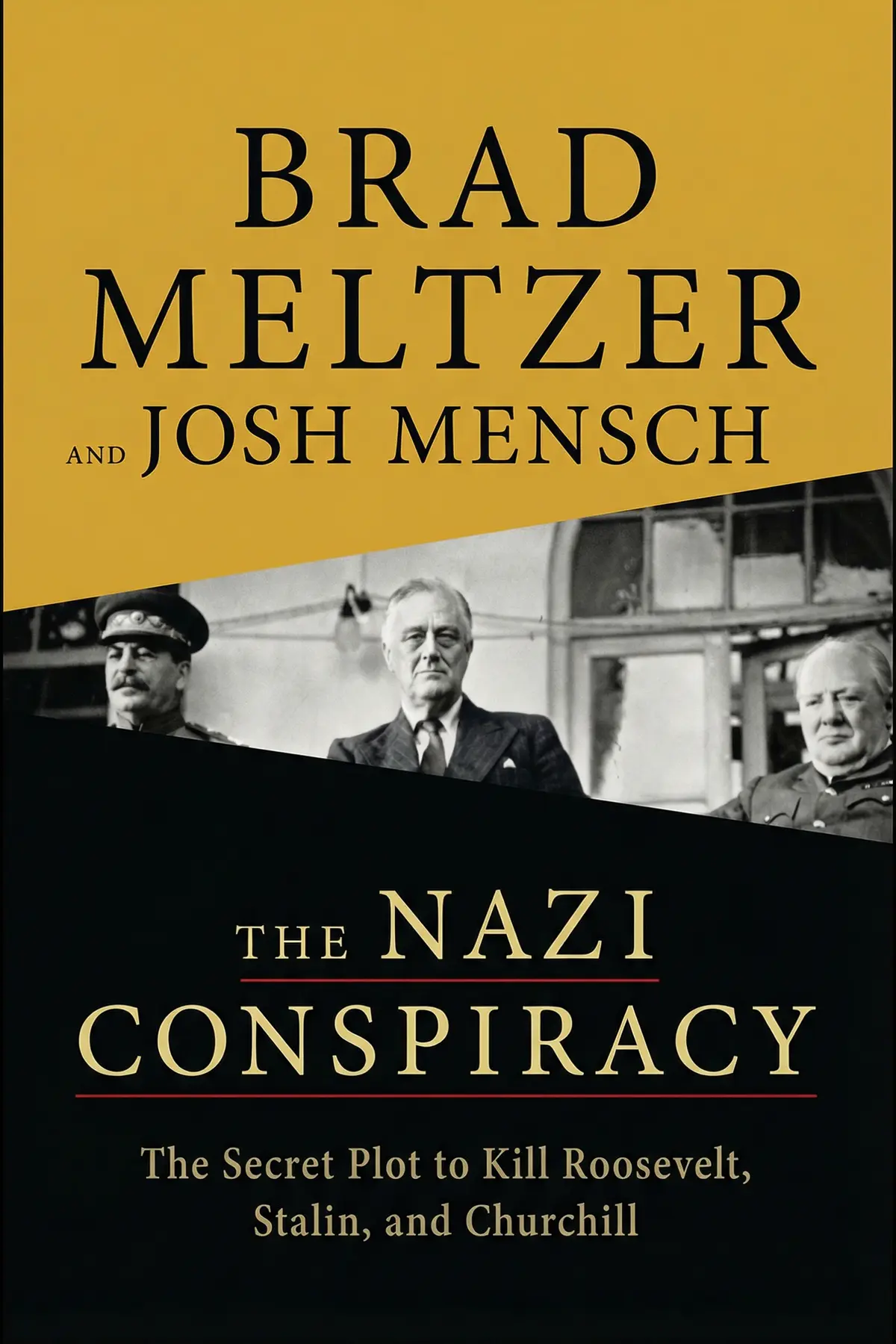
The Lincoln Conspiracy: The Secret Plot to Kill America's 16th President – and Why It Failed
The true story of a plot to shoot Abraham Lincoln in Baltimore before he took office, and the detectives, disguises and night train that got him to Washington alive.
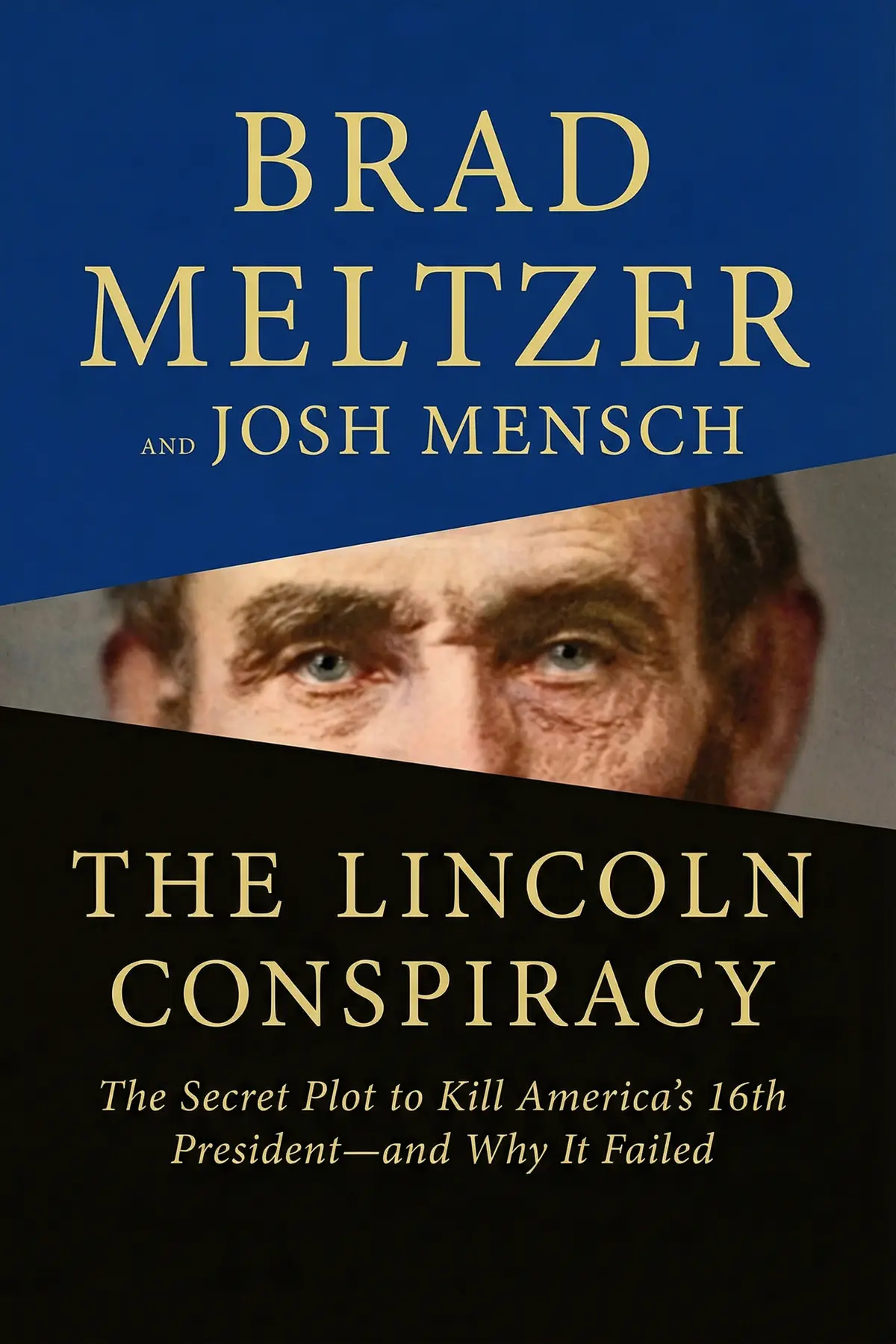
Table of Content
1. Introduction
55 sec
Most people know that Abraham Lincoln was shot in a theater in 1865. Far fewer know that men in Baltimore planned to shoot him four years earlier, before he had even taken the oath of office. In The Lincoln Conspiracy, Brad Meltzer and Josh Mensch tell how that plot was uncovered and beaten.
Their story shows that the presidency which ended slavery hung on a handful of private citizens: a railroad owner who took a rumor seriously, a detective who went undercover, and the country’s first female detective, who booked a sleeper berth for an invalid brother who was really the president-elect. Courage mattered, but so did patience, disguise and timing.
Follow the plot from a barber shop to a midnight train and you get a vivid lesson in why warnings are ignored, what finally gets them believed, and how close the country came to a very different history.
2. See how a mocked outsider earned the nomination
1 min 45 sec
Newspapers could not even spell his first name, and he lost the race that made him famous. Yet the very qualities that lifted this gawky country lawyer would soon make him a target.
3. Recognize when a divided country starts arming itself
1 min 47 sec
A barber from Corsica, a senator beaten on the floor of Congress and a party that split in fistfights. The South’s rage was growing, and its own quarrels were about to hand it the outcome it feared most.
4. Find the one person who can connect the clues
1 min 52 sec
Death threats arrived by the dozen, states began leaving the Union, and Baltimore’s own police chief shrugged off a warning. A Philadelphia railroad owner decided to go around him, and his choice of ally mattered enormously.
5. Infiltration that turned rumors into a firm date
1 min 56 sec
Fake accents, a borrowed identity and long nights in Baltimore’s bars. Pinkerton’s agents went looking for proof among the secessionists, and an impulsive gift of cash opened a door none of them expected.
6. Learn why true warnings are so hard to believe
1 min 51 sec
Pinkerton’s first warning reached Lincoln’s team and changed nothing. It took a crushing crowd, a second messenger and a code name no president would choose before anyone agreed to act.
7. A disguise and a timetable that outwitted assassins
1 min 46 sec
The killers had a date, an hour and a police chief on their side. Pinkerton had a felt cap, a sleeper berth and one dark night, and the most dangerous moment came four blocks from the barber shop.
8. One safe arrival changed millions of lives
1 min 44 sec
Lincoln reached Washington to mockery from the press, and a far deadlier war lay just weeks ahead. What did slipping past Baltimore actually buy the country? The answer is measured in millions of lives.
9. Conclusion
1 min 08 sec
Lincoln’s rescue had no battle in it. It turned on small, human acts: a railroad owner who refused to ignore a rumor, a cash gift handed over at the right moment, a woman who would not be pushed into sharing secrets, and a felt cap in place of a top hat. Meltzer and Mensch credit teamwork, luck and well-practiced Southern accents. Notice who held official power in the story, like Baltimore’s police marshal: they were part of the danger. The people who saved the day held no office at all.
The lesson worth keeping concerns warnings. Judd had seen so many threats that a real one looked like more of the same, and it took a named date, a named city and a trusted messenger to move him. When danger hides in a flood of noise, look for the warning that arrives with specifics, and ask who gains when an official waves it away.
Four years later, Booth finished what the barber had started. By then, though, more than three million people had been declared free, a future first protected on a dark rail line through Baltimore at half past three in the morning.
About this book
What is this book about?
Most people know that Abraham Lincoln was killed in 1865. Far fewer know that a group of armed secessionists in Baltimore planned to shoot him in February 1861, weeks before he could even take the oath of office. Brad Meltzer and Josh Mensch tell that story as a race against the clock. They begin with Lincoln's rise from a little-known Illinois lawyer to the Republican nominee, and with the fury his victory set off in the South: death threats by the dozen, states leaving the Union and a secret society of armed men. Then they follow Allan Pinkerton, the country's first private detective, and his agents, including Kate Warne, its first female detective, as they work undercover, trace the plot to a barber named Ferrandini and persuade a doubtful Lincoln team to change plans. The result reads like a thriller but rests on a serious point. Lincoln's presidency, and the Emancipation Proclamation that freed more than three million enslaved people, depended on a handful of people who listened closely to a warning others dismissed.
Book Information
Who it's for
History buffs
History lovers who know how Lincoln died but not how close he came to never serving.
Thriller fans
Thriller readers who want a true story of undercover detectives, code names and a midnight train.
Civil War students
Students of the Civil War looking for a vivid, human entry point to 1861.
About the Author
Brad Meltzer
Brad Meltzer is a best-selling author of thrillers and history, including The First Conspiracy and The Nazi Conspiracy. He won an Eisner Award for his Justice League of America comics and hosted the History Channel show Brad Meltzer's Decoded. Josh Mensch writes historical nonfiction, has co-written four books with Meltzer and produces documentary television about history and culture. He is a Princeton University graduate.
Ratings & Reviews
Ratings at a glance
What people think
Listeners find this an absorbing experience that feels like a spy thriller, highlighting its remarkable writing and depth of research. Furthermore, they value the historical content, with one listener noting how it brings Lincoln to life. The quality of the storytelling also earns praise, with one review describing it as history that reads like a suspense novel. However, the pacing receives mixed reactions; one listener describes it as fast-paced while another finds it slow-moving.
Top reviews
Manee
I never thought a history book could feel this much like a high-stakes thriller, but Meltzer and Mensch have managed to turn a dusty historical footnote into a heart-pounding narrative. The way they detail Allan Pinkerton’s undercover work in Baltimore makes you forget you already know the ending of the story. It reads less like a dry textbook and more like a John le Carré novel, filled with secret societies and midnight train rides. I was particularly impressed by the short, punchy chapters that kept the momentum moving even during the heavy research sections. Some might find the buildup a bit long, but the tension is palpable throughout every page. If you think history is boring, this book is specifically designed to prove you wrong.
Show moreWatcharee
Picked this up on a whim and ended up finishing the whole thing in two sittings because the suspense was just that addictive. The authors have a gift for taking real people like Kate Warne and making them feel like modern-day protagonists in a blockbuster movie. I loved learning about the logistical nightmares of 19th-century travel, especially the part where train cars had to be ferried across rivers. It’s those small, authentic details that really bring the era to life and make the danger feel much more immediate and physical. The conspiracy itself is terrifying when you realize how close they actually came to changing the course of history forever. Highly recommended for fans of the authors or anyone who likes a good mystery.
Show moreWanphen
The way this book humanizes Abraham Lincoln during those tense days leading up to his inauguration is truly remarkable and moving. We often see him as a stoic marble statue, but here he is a man under immense pressure, facing death threats before he even takes the oath of office. The authors do a brilliant job of balancing the political maneuverings with the boots-on-the-ground detective work of the Pinkerton agency. Every chapter ends on a bit of a cliffhanger, which is a clever way to keep the reader engaged with historical facts. It’s a fascinating look at the 'hidden' history of the Civil War era that most school primers completely skip over. Truth is, I haven't been this entertained by a non-fiction book in a very long time.
Show moreVarinee
Ever wonder how the Pinkerton Detective Agency became a household name? This book provides the answer through a gripping account of their most important early case: protecting the President-elect. The undercover tactics used by Pinkerton’s team, including the trailblazing Kate Warne, are genuinely fascinating and ahead of their time. I loved how the authors painted a picture of Baltimore as a tinderbox of southern sympathy and potential violence. It makes the decision to sneak Lincoln through the city in disguise seem not just wise, but absolutely essential for the survival of the Union. The writing is accessible and fast-paced, perfect for someone like me who doesn't usually read a lot of non-fiction. This is historical storytelling at its very best.
Show moreAria
After hearing about the Baltimore plot for years, I was surprised by how little I actually knew regarding the gritty details and the sheer number of conspirators involved. This book does a fantastic job of illustrating the atmosphere of a divided America, where the President-elect was practically a ghost in his own country. The authors focus heavily on the Knights of the Golden Circle, and the level of research into their inner workings is truly impressive to see. To be fair, some of the middle sections felt a little like filler when they veered into broader Civil War history, but the core narrative remained strong. It’s a great pick for anyone who loves Lincoln or just enjoys a well-constructed political drama.
Show moreYindee
Meltzer and Mensch have a real knack for finding these forgotten pockets of American history and making them feel incredibly urgent to a modern audience. This isn't just a biography of Lincoln; it’s a deep dive into the vitriol and radicalism that defined the early 1860s. You get a real sense of why the conspirators felt justified in their actions, which makes the threat feel much more credible and scary. I appreciated the inclusion of Frederick Douglass toward the end, as it added a necessary layer of gravitas to Lincoln’s eventual arrival in Washington. My only complaint is that the prose occasionally drifts into being a bit too melodramatic for my personal taste. Still, the storytelling is top-notch and kept me hooked until the final page.
Show moreHemp
Not many authors can maintain the pacing of a spy novel while adhering to historical facts, but this duo pulls it off quite well in their second collaboration. The tension surrounding the Baltimore plot is built up expertly, making the reader feel the claustrophobia of Lincoln’s secret train journey. I found the sections on Allan Pinkerton's early career to be the highlight of the book, as his methods were so unorthodox for the time. Some critics might say the book relies too much on secondary sources, but for a general reader, the narrative flow is what matters most here. It serves as a stark reminder of how fragile democracy can be, even at its inception. It’s definitely worth the read for the insights into the Knights of the Golden Circle alone.
Show moreAkosua
If my high school history classes had been even half as engaging as this narrative, I probably would have majored in the subject back then. Meltzer and Mensch have a gift for making the past feel like it’s happening in real-time right in front of your eyes. The details about the 'Knights' and their fanatical plot to stop Lincoln at all costs were eye-opening and deeply unsettling. While the ending is obviously a matter of historical record, the journey to get there is filled with unexpected twists and logistical hurdles. I did feel that some of the dialogue felt a bit reconstructed for dramatic effect, which can be a turn-off for purists. However, for the average reader, this is a fantastic and informative ride through a dark corner of American history.
Show moreEleanor
While the writing is crisp and the research is clearly top-tier, I struggled with the fact that the central event never actually transpired. It is a bit of a paradox to write a 400-page thriller about a conspiracy that was thwarted before anything could happen, leading to a climax that feels slightly anti-climactic. The authors definitely use a lot of 'what if' scenarios to keep the reader engaged, which works for a while, but eventually, the repetitive warnings of danger felt forced. Look, it’s a good read for a rainy afternoon if you are a history buff who wants to know more about Pinkerton. However, I’m not sure there was enough substance here to warrant a full-length book instead of a long-form article.
Show moreHarper
To be fair, the research is exhaustive, but the narrative felt stretched thin to meet a book's length, making it a bit of a slog. I found myself checking how many pages were left because the 'impending doom' was repeated so often that it lost its effectiveness. It feels like the authors are trying to turn a very small historical incident into a grand epic, and it doesn't quite land for me. The short chapters, which many people seem to like, actually made the reading experience feel disjointed and choppy. If you are already very familiar with Lincoln’s journey to D.C., you won’t find much new information here to justify the price. It’s not a bad book, but it certainly didn't live up to the hype of being a 'page-turning thriller.'
Show moreQuestions about this book
What is The Lincoln Conspiracy about?
Brad Meltzer and Josh Mensch tell the true story of a plot to shoot Abraham Lincoln in Baltimore in February 1861, before his first inauguration. Detective Allan Pinkerton and his agents, including Kate Warne, went undercover among secessionists, discovered the plan led by barber Cypriano Ferrandini, and sneaked Lincoln through the city on an overnight train, hours before the plotters expected him.
Who was behind the Baltimore Plot against Lincoln?
The book points to a circle of Baltimore secessionists who met at Cypriano Ferrandini’s barber shop. Ferrandini swore in members and planned to shoot Lincoln as he changed train stations on February 23, with police marshal George Kane ensuring there was no proper escort. Many plotters were linked to the Knights of the Golden Circle, but none was ever identified for certain.
How did Pinkerton get Lincoln safely through Baltimore?
Pinkerton moved Lincoln through Baltimore at night, well before his announced arrival. Lincoln wore a soft felt cap instead of his top hat, traveled from Harrisburg on a chartered train, then boarded a public sleeper in Philadelphia, booked by Kate Warne as her invalid brother. Around 3:30 a.m. horses pulled his car between Baltimore’s stations, and he left for Washington about 4:30 a.m.
Why does the Baltimore Plot matter to history?
Meltzer and Mensch contend that had the plot worked, Lincoln would never have signed the Emancipation Proclamation, which on January 1, 1863, freed over three million enslaved people. The episode also shows how close the country came to losing its leader before the Civil War began, and how a group linked to the plotters later spread the ideas that shaped John Wilkes Booth.
Readers also enjoyed
A History of Iran: Empire of the Mind
Michael Axworthy

A History of the World in 6 Glasses
Tom Standage

A Long Way Gone: Memoirs of a Boy Soldier
Ishmael Beah




A Splendid Exchange: How Trade Shaped the World
William J. Bernstein

A Spy Among Friends: Philby and the Great Betrayal
Ben Macintyre


AUDIO SUMMARY AVAILABLE
Listen to The Lincoln Conspiracy in 15 minutes
Get the key ideas from The Lincoln Conspiracy by Brad Meltzer, plus 5,000+ more nonfiction titles.
- 5,000+ titles
- Listen as much as you want
- 7-day free trial
- Cancel anytime









