
14 min 56 sec
Available in: English
The Joy of Movement: How Exercise helps us find Happiness, Hope, Connection, and Courage
Kelly McGonigal shows why the brain rewards movement with calm, generosity and courage. She also explains how music, nature, moving in time with others and hard challenges turn exercise into a source of real happiness.
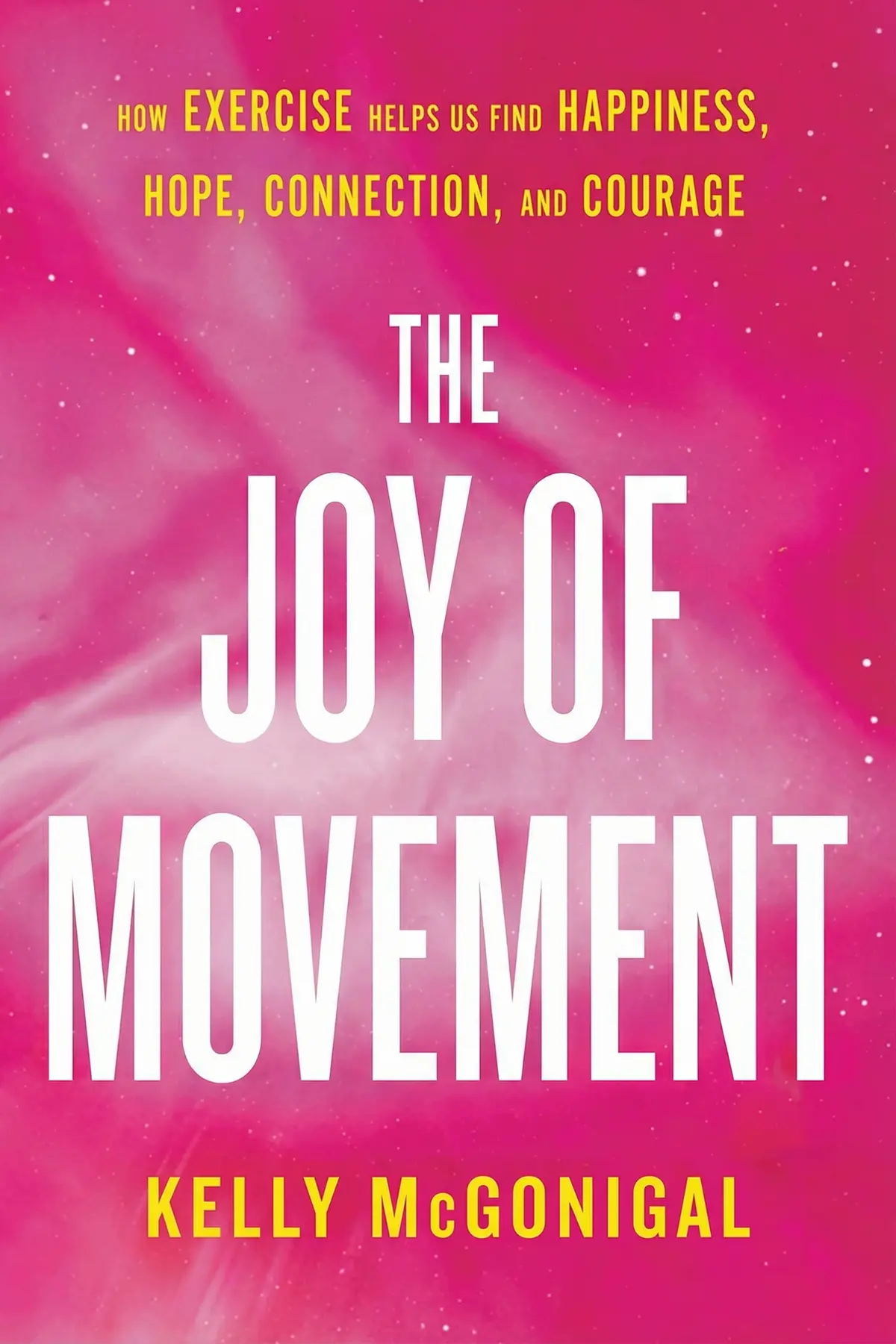
Table of Content
1. Introduction
58 sec
If exercise feels like a chore you owe your body, The Joy of Movement suggests you have it backwards. Kelly McGonigal, a Stanford lecturer and longtime group exercise teacher, argues that the human brain was built to reward movement: about twenty minutes of steady effort releases the same family of chemicals that cannabis imitates, easing pain and lifting mood.
Her central claim is that movement, rooted in our evolutionary past, is a source of happiness, connection, courage and hope, and that its benefits reach well beyond physical health. The reward grows when we move with other people, to music, outdoors, or against a challenge that scares us. The evidence ranges from a Scottish philosopher writing in 1885 to a woman with lupus who trained her way back behind the wheel of a car. By the end, you will know how long it takes for exercise to become its own reward, and how to pick an activity and a dose that lift your mood.
2. Get a real mood lift from twenty minutes of effort
1 min 53 sec
A failed diet pill and a sedative-strength anxiety test both point to the same hidden system in the brain. It switches on during exercise, and it has nothing to do with burning calories.
3. Train four times weekly for six weeks to love exercise
1 min 49 sec
Researchers once could not pay regular exercisers enough to take a break. The reason looks a lot like addiction, with one difference that makes this the rare habit worth catching.
4. Move in step with others to feel closer
1 min 49 sec
Babies barely old enough to walk will help a stranger after one simple shared activity. The same instinct explains why some fitness crazes catch on and why moving together feels bigger than moving alone.
5. Build a playlist that makes hard work feel lighter
1 min 44 sec
One of the fastest runners in history asked stadium officials for a single favor before a record-breaking race. It cost them nothing, and some scientists would call it doping.
6. Take your workout outside to break the worry loop
1 min 54 sec
Brain scans show your mind settles into a different default depending on whether a ceiling is over your head. The indoor version leans toward worry, and people report a better mood after just five minutes of exercise outdoors.
7. Turn a scary physical challenge into lasting courage
1 min 49 sec
People pay to run through electrified wires, and a woman who lost the use of her legs set herself a target she thought was impossible. Both stories show what really changes when the body does something hard.
8. Endurance training builds hope and lasting mental resilience
1 min 51 sec
Many of the world’s best ultrarunners have struggled with depression, anxiety or addiction. The reason may lie in proteins your muscles make during long effort, which scientists have given an unusually hopeful name.
9. Conclusion
1 min 09 sec
The Joy of Movement changes what exercise is for. The usual pitch is fitness: weight, heart health, a longer life. McGonigal’s evidence points somewhere more personal. Bodies shaped by generations of hunting and gathering still reward us for moving, with chemicals that ease anxiety, lift mood, make us more generous and keep us going when things get hard. Those rewards grow when we move beside other people, to a strong beat, under open sky, or against an obstacle we were sure would beat us.
What follows is gentler than any training plan. Find an activity you might enjoy, keep it going past twenty minutes, and stay with it four times a week for six weeks before you judge it. If the gym leaves you cold, plan a weekly walk in a park or join a class that moves together. If walking is out of reach, music still works: put on a song you love and move whatever you can.
Gebrselassie broke his record with the legs he already had. What changed was the song filling the stadium, and the joy it set running.
About this book
What is this book about?
Most people treat exercise as a duty: something owed to the heart, the waistline or the doctor. Kelly McGonigal, a Stanford lecturer who has taught group fitness for years, makes a different case. Our brains were shaped by ancestors who spent their days hunting and gathering, and they still pay us for moving with chemicals that ease pain, calm anxiety, lift mood and make us more generous toward other people. McGonigal follows that reward into the places where it grows strongest. People who move in time with others feel bound to them, and the right song can push a runner to a world record. A walk outdoors shifts the brain out of worry. Facing a frightening physical challenge can rewrite how people see themselves, and endurance work fills the blood with proteins scientists now call hope molecules. Readers learn how long it takes for exercise to become a habit that keeps getting more rewarding, and what makes a good workout song. They also get evidence that any activity, at the right dose, can lift mood, from a park walk to dancing to a favorite track.
Book Information
Who it's for
Desk workers disliking exercise
Desk workers who see exercise as a chore and want a reason to enjoy it.
Stressed, low or worried
People dealing with stress, low mood or worry who want a practical, physical way to feel better.
Instructors and team leads
Fitness instructors and team leads looking for ways to make group movement more motivating.
About the Author
Kelly McGonigal
Kelly McGonigal is an award-winning science writer and a lecturer at Stanford University. Her research looks at how mind and body connect and at how people build resilience and compassion. She has taught dance, yoga and group exercise in the San Francisco Bay Area since 2000, alongside lecturing at Stanford. Her books include the international bestseller The Willpower Instinct and The Upside of Stress.
Ratings & Reviews
Ratings at a glance
What people think
Listeners value the scholarly authority of the work, with one person highlighting the thorough research and its effective combination of academic and global viewpoints. Furthermore, the text offers profound explorations of movement culture, and listeners find the content highly inspiring, as one individual notes a significant increase in their drive to exercise. Finally, listeners appreciate the author's take on physical activity, specifically noting how it can rewire the brain.
Top reviews
Samuel
Ever wonder why a simple walk can completely shift your perspective? Kelly McGonigal bridges the gap between hard neuroscience and the human experience in a way that feels both rigorous and deeply moving. It is more than a workout manual; it is a deep dive into how our internal chemistry supports our social connections. By exploring the biology of 'collective effervescence,' she illustrates how movement functions as a social glue that has helped humanity survive for millennia. This book provides a surge of enthusiasm for anyone who has lost their spark for exercise. I found the academic credibility here to be refreshing because it wasn't just another 'fitspo' guide. Instead, it offers a worldly perspective on why our bodies were literally built to find joy in persistence.
Show moreNora
Picked this up during a major rut and found the sections on nature-based activity to be absolutely transformative for my mental health. McGonigal’s explanation of 'green exercise' and how our brains shift from toxic rumination to 'soft fascination' when outdoors changed my entire morning routine. The academic research cited is extensive, yet the writing remains accessible to a casual reader looking for inspiration. Not gonna lie, I was skeptical about the evolutionary theories at first, but the evidence regarding 'foraging cognition' is hard to argue with. This book serves as a powerful reminder that our bodies are not just machines to be maintained, but vessels for experiencing connection and awe. It gave me the motivation to step outside again.
Show moreTom
Finally got around to reading this and now I miss my group fitness classes more than I ever thought possible. McGonigal captures the essence of 'joy' perfectly by focusing on connection rather than just the physical mechanics of a workout. She explains why moving together in a room full of strangers creates a sense of belonging that is hard to find elsewhere. The science behind how exercise mimics the effects of certain sedatives was particularly eye-opening for my own anxiety management. It’s a beautifully written, hopeful book that challenges the idea that exercise is just about burning calories. I’ve already recommended this to several friends who struggle with feeling isolated. It’s a surge of enthusiasm in book form.
Show moreNew
After hearing McGonigal speak on a podcast, I knew I needed the full story on how movement impacts our psychological well-being. This book provides a compelling personal narrative alongside peer-reviewed studies that prove exercise is essentially a 'hope' molecule for the brain. The research on how 20 minutes of movement can trigger endocannabinoids is life-changing for anyone dealing with low mood or social anxiety. I love how she highlights the 'Green Gym' initiatives and other community-focused projects that use movement for social good. It is a rare book that manages to be both intellectually stimulating and deeply heart-centered at the same time. If you need a reminder of why your body is a gift, this is the perfect read.
Show moreBank
Kelly McGonigal has a knack for translating complex psychological studies into something that feels deeply personal and urgent. I was particularly fascinated by the discussion on how physical activity can actually rewire the brain to be more resilient against despair. The chapters on 'movement culture' and how we bond through synchronized action made me look at my local yoga studio in a completely new light. While the prose can occasionally lean a bit too hard into sentimental anecdotes, the underlying research remains solid and convincing. It isn't a book about weight loss or aesthetics, which is a massive relief in this genre. I appreciate that it treats movement as a fundamental human right and a tool for mental health rather than a chore for vanity.
Show morePlernpiriya
As someone who has always viewed exercise as a boring chore, reading about the persistence high was the wake-up call I desperately needed. The book explains how movement triggers a chemical cascade that makes us more generous and less anxious. It’s fascinating to realize that our ancestors survived because their brains rewarded them for the physical struggle of the hunt. McGonigal does a great job of blending this evolutionary history with modern psychological needs. My only minor complaint is that the writing can be a bit too optimistic at times, ignoring the very real barriers many people face. Still, the core message about rewiring your brain through consistent activity is incredibly powerful and well-supported by the latest clinical trials.
Show moreRotjanee
The idea that movement can actually rewire your brain’s response to stress is such a powerful and underutilized concept in modern wellness. Personally, I found the discussion on the 'persistence high' to be the highlight of the entire book because it reframed exhaustion as a gateway to joy. McGonigal presents a worldly perspective, looking at how different cultures around the globe use dance and collective movement to heal. While I would have liked more 'how-to' steps for beginners who aren't already active, the inspiration factor is undeniable. It’s a great blend of academic credibility and emotional storytelling. This book will definitely make you want to call up a friend and go for a long, meaningful hike together.
Show moreKom
Frankly, there is some fascinating science here, but it is often buried under an avalanche of sentimental anecdotes that don't always land. I enjoyed learning about endocannabinoids and why they make us more social and cooperative after a long run. However, the pacing of the book felt uneven, with some chapters dragging on through personal stories that felt repetitive after the first few pages. It feels a bit like a long-form magazine article that was stretched to meet a book's word count. If you are looking for a deep, academic breakdown of kinesiology, you might be disappointed by the 'feel-good' tone. It is a decent read for general motivation, but I found myself skimming through the more flowery sections to find the actual data.
Show moreRoongsak
This book unfortunately failed to deliver on its primary marketing hook, which was to show us how to 'fall in love' with moving. To be fair, if you already enjoy the gym, you will love reading the science that validates your hobby. However, for those of us who feel nothing but dread at the thought of a treadmill, this offers very little practical help. It is essentially a collection of cute stories about ultra-runners and dancers that assumes everyone can access a 'runner’s high' with enough effort. The truth is, I wanted a roadmap for the unmotivated, but I got a scientific explanation for why other people are happy. It felt like being a hungry person watching a documentary about how much other people enjoy five-course meals.
Show moreKae
Look, I expected a rigorous scientific exploration of human movement, but what I got instead was a collection of self-congratulatory stories and Buzzfeed-style lists. It felt incredibly shallow compared to the author's previous work, which I genuinely enjoyed and respected for its intellectual depth. The prose is far too bubbly and assumes that every reader has the physical ability and privilege to just 'go outside and play.' There is a frustrating lack of empathy for people with chronic pain or those who find movement to be a source of trauma. This felt more like a cheerleading pamphlet than a serious book on psychology. I honestly feel like I wasted my time waiting for a 'why' that never moved beyond the surface level.
Show moreQuestions about this book
What is the main idea of The Joy of Movement?
Kelly McGonigal argues that the human brain evolved to reward physical activity. Steady effort releases chemicals such as endocannabinoids, dopamine and endorphins that ease pain, lift mood, reduce anxiety and make us more cooperative. These benefits grow when we move with others, to music, outdoors or against a hard challenge, so exercise becomes a source of happiness, connection, courage and hope as well as fitness.
What causes the runner's high according to Kelly McGonigal?
McGonigal links it mainly to endocannabinoids, natural brain chemicals whose effects cannabis imitates. A long run raises them sharply, and they lift mood and trigger dopamine and endorphins. The feeling is not limited to running: any moderately tiring activity lasting more than 20 minutes, such as swimming, cycling or fast walking, can produce it. That is why she prefers the name persistence high.
How long does it take for exercise to become a habit you enjoy?
According to the research McGonigal describes, people tend to become hooked once they have worked out four times weekly for six weeks. Mice running daily for two weeks showed no dependence, but after six weeks they kept running on their own. Unlike drugs, regular exercise makes the brain more sensitive to its rewards over time, adding endocannabinoid receptors and making dopamine cells more responsive.
How can I apply The Joy of Movement if I dislike the gym?
McGonigal’s advice is to find the right activity at the right dose. Try a weekly walk in a park, since even five minutes of exercise in nature lifts mood. Join a dance class or group session where people move in time together. Build a playlist at 120 to 140 beats per minute with motivating lyrics. If walking is hard for you, dancing to a favorite song still counts.
Who should read The Joy of Movement?
It suits people who exercise out of duty and want to enjoy it, people looking for physical ways to handle anxiety or low mood, and instructors or managers who organize group activity. Its stories range from Haile Gebrselassie’s record run to a woman with lupus training at an adaptive gym, so it speaks to beginners and athletes alike.
Featured in

Readers also enjoyed



ADHD an A-Z: Figuring It Out Step by Step
Leanne Maskell






Alcoholics Anonymous
Alcoholics Anonymous World Services

Ali: A Life
Jonathan Eig
AUDIO SUMMARY AVAILABLE
Listen to The Joy of Movement in 15 minutes
Get the key ideas from The Joy of Movement by Kelly McGonigal, plus 5,000+ more nonfiction titles.
- 5,000+ titles
- Listen as much as you want
- 7-day free trial
- Cancel anytime









