

14 min 02 sec
Available in: English
 ไทย
EnglishไทยThe Joy of Less: A Minimalist Guide to Declutter, Organize and Simplify
By Francine Jay
A practical guide to clearing out a home and keeping it clear: first loosen your attachment to things, then apply a ten-step method, room by room, that the whole household can keep going.
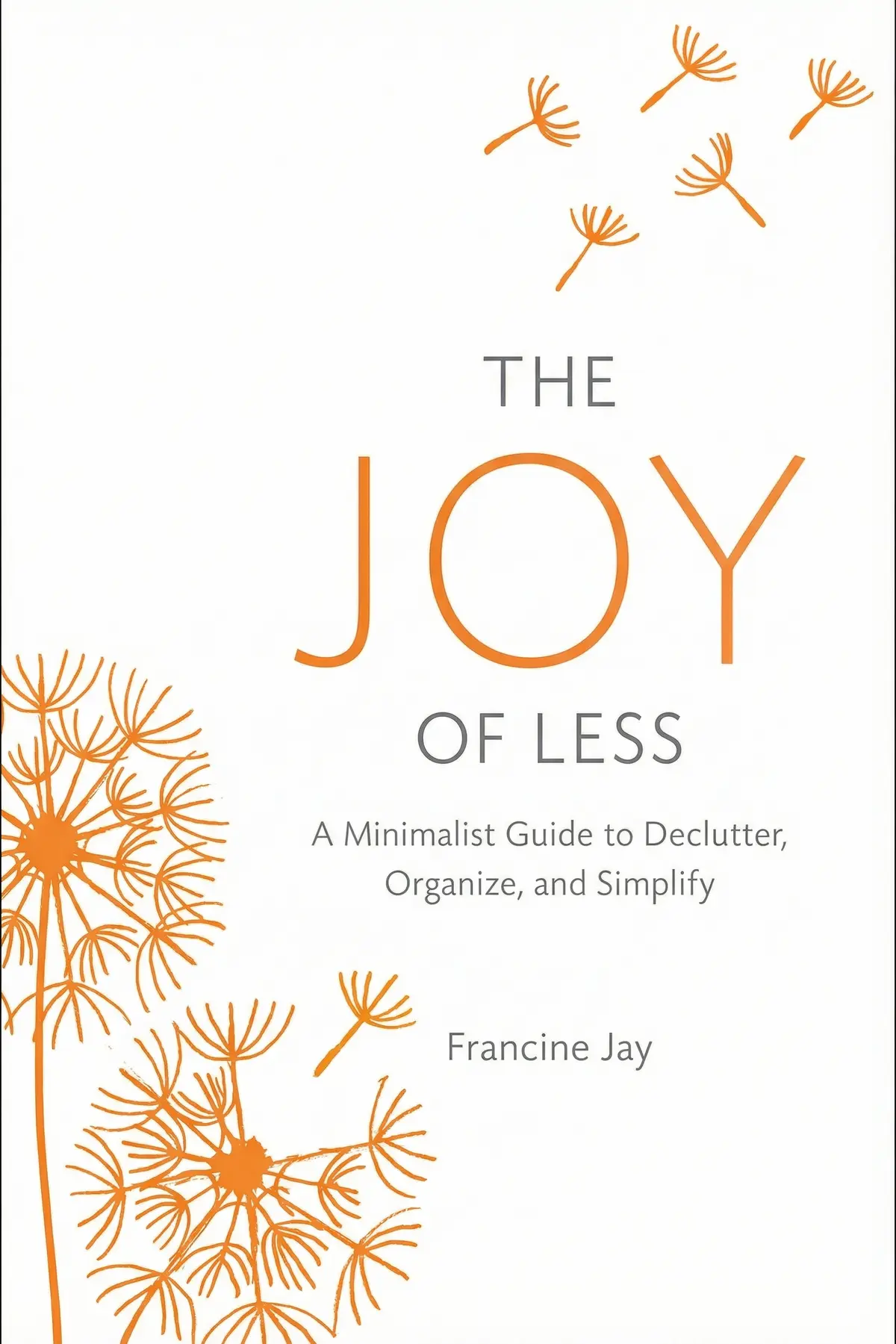
Table of Content
1. Introduction
57 sec
If your home feels like it runs you, the place to start is your attitude toward what you own. In The Joy of Less, Francine Jay, the writer behind the Miss Minimalist blog, argues that clutter starts in the mind: accepting that your belongings are not the most important things in your life is the first step to decluttering successfully.
Picture a fire alarm in the middle of the night. Nobody runs for the laptop. You run for the people. Jay builds her whole approach on that instinct. She first changes how you see your things, then gives you a ten-step method spelled STREAMLINE, then applies it room by room and shows how the whole household can keep it going through daily habits.
The argument is simple: let go of attachment, and a clear system can keep a home light for good. Along the way you get a quick test for judging any object, a rule for where it lives if it stays, and habits that stop new clutter at the door.
2. Loosen your grip on what you own
1 min 32 sec
Every object in a crowded drawer seems to have a good case for staying. Jay changes the question before you touch a single thing, using a scene almost everyone can picture in an instant.
3. Sort any drawer into three honest piles
1 min 23 sec
There is one pile where almost everyone cheats, holding on to things for a day that never comes. Jay’s opening moves make that habit visible and give each survivor a test to pass.
4. Store things by how often you reach for them
1 min 33 sec
A lot of clutter is made of perfectly good things sitting in the wrong spot. One question about your own habits decides where each item should live, and why some surfaces must stay empty.
5. Stop clutter from creeping back in
1 min 36 sec
Most tidy homes slide back into mess within months. The second half of Jay’s method is built for exactly that drift, and one of its rules asks only that you throw away one item each day.
6. A bedroom built for sleep and calm
1 min 29 sec
Jay and her husband pared their bedroom down further than most people would dare. Their choices show what a room looks like when it does only its real jobs, and how the wardrobe follows.
7. Clear shared rooms and a desk that helps you work
1 min 30 sec
Jay once lived without a couch or a television, and it suited her perfectly. The question that led her there works in any living room, and paper on a desk gets an equally firm rule.
8. A kitchen and bathroom holding only what you use
1 min 29 sec
That dream kitchen in the showroom may be closer than it looks. Jay’s route there runs through a forgotten gift from years ago and a cheap powder that does several jobs at once.
9. Bring the whole family into the habit
1 min 26 sec
One tidy person cannot hold back a household’s worth of stuff. Jay’s proudest parenting moment came from a three-year-old, and it shows which approach to children works better than any rule.
10. Conclusion
1 min 07 sec
The Joy of Less is a book about objects that turns out to be about priorities. Jay’s method works because it starts before the mess. The fire alarm at night tells you what you already value, and the three categories give you words for everything else. STREAMLINE then turns that attitude into routine, from the first emptied drawer to the ten-minute evening tidy, so that a light home no longer depends on one exhausting weekend.
Her closing exercise is a good place to begin. Imagine you are moving abroad for good and must decide whether a battered guitar or a moldy teddy bear earns a spot in the luggage. A fixed limit like that forces you to judge each thing by how useful it is, how long it will last and what it truly means to you. Run that test on a single closet. Then pick one rule to live by, perhaps one item out for every one in, or one thing leaving the house each day.
What you gain is more than floor space. A lighter home frees attention for the people you would carry out of that burning house first.
About this book
What is this book about?
Many homes slowly fill with things nobody uses, and the mess brings stress and, often, spending that strains the budget. Francine Jay argues that decluttering begins with how we think about our belongings, not just with the objects themselves. Her approach has two parts. The first is a mindset: sort everything you own into useful, beautiful or sentimental, and accept that none of it matters as much as the people you live with. The second is STREAMLINE, an acronym for ten moves that take you from emptying a drawer to sorting what is in it, giving each kept item a place by how often you use it, and setting rules that stop clutter from returning. Jay then walks through the home one room at a time, from bedroom and wardrobe to living room, home office, kitchen and bathroom, with her own household as an example. She closes with ways to bring partners and children into the effort, so that a clear home becomes a shared daily habit and not a one-off project.
Book Information
Who it's for
Overwhelmed by accumulated stuff
People who feel overwhelmed by years of accumulated stuff and keep tidying without lasting results.
Parents wanting calmer homes
Parents who want a calmer home and children who care less about possessions.
Before downsizing or moving
Anyone preparing to downsize or move who needs a clear way to decide what stays.
About the Author
Francine Jay
Francine Jay writes as Miss Minimalist and created the blog missminimalist.com. The Joy of Less became a bestseller and has been translated into twenty languages. In 2009 she and her husband sold their home and belongings and left for abroad with one suitcase each, and she then spent three years traveling as a digital nomad. She has since written a follow-up book on simple living and a new translation of the Dao De Jing, and her advice has appeared in outlets including CNN, the BBC, The New York Times and The Guardian.
Ratings & Reviews
Ratings at a glance
What people think
Listeners find this manual on minimalist living both useful and inspiring, as it provides excellent advice for each room while helping them change how they view their belongings. The content offers straightforward and beneficial instructions that move through the process gradually, making it a fast and transformative experience. They value the way it facilitates house decluttering systematically and serves as an incredible introduction to minimalism, making it especially good for those just beginning their minimalist path.
Top reviews
Rose
Finally got around to tackling the 'doom closet' in my hallway after reading this guide. Francine Jay’s approach is incredibly practical and serves as a fantastic kick in the butt for anyone drowning in clutter. I especially loved the "maybe box" technique where you store items for a year before donating them unopened; it takes the anxiety out of the purging process. Every room is addressed with clear, actionable steps that don't feel overwhelming if you take them one at a time. This isn't just about cleaning; it’s about fundamentally shifting how you view the objects that occupy your daily space. My bedroom already feels lighter after donating ten bags of stuff I didn't even know I had. Not gonna lie, I feel a lot more mindful about my spending habits now too. If you need a clear roadmap to reclaim your home, this is the guide you've been looking for.
Show moreThitima
As someone who has struggled with chronic disorganization, this was a life-altering experience. The author breaks down the daunting task of decluttering into manageable chunks that actually feel doable. I love how she reframes our relationship with possessions, moving away from guilt and toward joy and freedom. The step-by-step instructions for each room kept me focused when I usually would have given up after ten minutes. Truth is, I’ve read a lot of these guides, and this is the one that finally clicked for me. It’s practical, encouraging, and written in a very conversational tone that makes you feel like a friend is helping you clean. Following the "one in, one out" rule has already saved me so much money on impulse purchases. My house finally feels like a sanctuary instead of a storage unit. Five stars for the motivation alone!
Show moreFinn
Wow. This was exactly the motivation I needed to finally deal with my overflowing guest room. The "maybe box" strategy is absolute genius and has saved me so much mental energy. I no longer feel paralyzed by the fear of "what if I need this later?" because the box is there as a safety net. The book is written in a very accessible, conversational style that makes the whole process feel joyful rather than stressful. It’s a quick read that packs a punch, offering a clear roadmap for a total home transformation. I’ve already recommended it to three of my friends who are also struggling with clutter. If you want to change your relationship with stuff, buy this book. It truly delivers on its promise of more joy through less baggage. My house has never looked better!
Show morePhimwan
Can a book about cleaning really be life-altering? In the case of Francine Jay’s work, I think the answer is a resounding yes. It’s not just about getting rid of old clothes; it’s about a fundamental shift in how we consume and exist in the world. I found the sections on environmental awareness and the spiritual side of letting go to be very engaging and thoughtful. The "one in, one out" rule is such a simple, efficient way to make sure the clutter doesn't creep back in. Gotta say, I feel so much lighter after going through my living room and bedroom using her techniques. The advice is well thought out and provides a sense of peace that I didn't expect from a simple tidying book. It’s a wonderful guide for anyone looking to simplify their life and focus on what truly matters. Highly recommended!
Show moreThawee
Is it groundbreaking? Not exactly, but it’s a solid refresher for anyone looking to downsize. I consider myself a rational minimalist, so I appreciated that the author doesn't demand you live in a white box with one chair. The "one in, one out" rule is a game-changer for maintaining a tidy home long after the initial purge is over. I did find the middle section a bit repetitive as it goes through every single room in the house. You could probably skim some of those chapters if you already have a handle on basic organization. Still, the message of environmental awareness and mindful living resonated deeply with me. It’s a great companion to Marie Kondo’s work, though perhaps a bit more focused on the practical logistics of sorting than the spiritual side. I feel much more prepared to tackle my garage now.
Show moreChee
The chapter on the 'STREAMLINE' method provides a fantastic framework for those who don't know where to start. I’ve been trying to downsize for a move, and Jay’s practical tips have been a lifesaver. Look, it’s not reinventing the wheel, but the way she organizes the process makes it feel much less like an onerous chore. I particularly appreciated the advice on emptying every space entirely before sorting. It’s amazing how much junk you realize you have when it’s all piled in the middle of the floor. My only gripe is that the book is a bit longer than it needs to be. Some of the "why" sections felt like they were just filling space to meet a page count. Overall, it’s a solid 4-star guide that helped me clear out twenty boxes of useless items. I feel much lighter and more focused now.
Show moreRohan
After hearing so much about the minimalist lifestyle, I decided to give this a shot to help with my kitchen clutter. The strategies are solid, especially the focus on only keeping what you actually use or truly love. I managed to get rid of three sets of mismatched dishes and a dozen gadgets I never touched. Personally, I found the author's tone a bit too "self-helpy" and exclamation-point heavy at times. It can feel a little preachy, like minimalism is the only path to true happiness. However, the results are hard to argue with when you see your clear countertops for the first time in years. It’s a great guide for beginners who need a step-by-step plan for every room in the house. I’d recommend it to anyone feeling suffocated by their own belongings, just be prepared for some repetition.
Show moreNam
This book serves its purpose as a motivational tool, but it struggles with some dated assumptions. Frankly, the writing feels heavily directed at a very specific demographic of women in traditional relationships, which felt a bit exclusionary. Why are we still using these tired gender stereotypes in a book about decluttering? Despite that annoyance, the core strategies for reducing stuff are mechanically sound and easy to follow. I liked the idea of completely emptying a drawer before deciding what goes back in, as it forces a fresh perspective. The prose is quite simple, almost as if the author thinks we’ve never held a vacuum cleaner before. It’s a quick read, which is good because it repeats the same three points for about two hundred pages too long. It’s fine for a library checkout, but I wouldn't clutter my own shelf with a physical copy.
Show moreAroha
The irony of a three-hundred-page book preaching the virtues of simplicity is not lost on me. While I appreciated some of the room-by-room breakdowns, the text felt cluttered with unnecessary repetition and fluff. To be fair, Francine Jay provides a solid foundation for those who are completely overwhelmed by their belongings. However, her tone often veers into being overly chirpy and even a bit aggressive regarding the strict philosophy of minimalism. I found the advice about being intentionally less enthusiastic about handmade gifts from friends to be particularly cold. Minimalism should enhance your life and relationships, not make you a rude friend or an obsessive record-keeper of every spoon in your drawer. If you have read any other book in this sub-genre, you can probably skip this one. It feels like a lot of words to say "throw things away," which is the exact opposite of the core message.
Show morePrayoon
Honestly, I found this book to be an exercise in frustration rather than a path to peace. It is incredibly ironic that a book about "less" is so wordy and repetitive. I felt like the author was nagging me through every chapter, explaining basic concepts as if I were a child. The tone is overly chirpy, bordering on aggressive, and the focus on minimalism as a strict identity felt shallow to me. Most of the advice is common sense that could have been summarized in a ten-page pamphlet. I also really disliked the suggestions on how to handle gifts, which felt cold and transactional. If I wanted to be lectured on how to be a "pure" minimalist, I would have looked elsewhere. This didn't motivate me to clean; it just motivated me to return the book to the library as quickly as possible. Definitely not for me.
Show moreQuestions about this book
What is the main idea of The Joy of Less?
Francine Jay argues that decluttering lasts only when it starts with a change of mindset. You sort belongings into useful, beautiful and sentimental, and accept that none of them matter as much as the people you live with, as a night-time fire alarm makes obvious. Then a ten-step method called STREAMLINE turns that attitude into daily habits, room by room.
What does STREAMLINE stand for in The Joy of Less?
Each letter stands for a single step, beginning with Start Over, then Trash, Treasure or Transfer, next a Reason For Each Item, after that a spot where Everything in its Place applies, and then keeping All Surfaces Clear, followed by Modules and Limits, the principle that when One Comes In, One Goes Out, then Narrow Down, and last the habit of Everyday Maintenance. The first five help you clear a space and give each kept item a home. The last five stop clutter from returning.
How do I decide where to store things, according to Francine Jay?
Ask how often you use each item. Things you handle daily, such as a toothbrush or laptop, go in the Inner Circle, reachable without bending or stretching. Occasional items like specialty kitchen tools or nail clippers go to the Outer Circle, such as upper cabinets or under the bed. Rarely used things like holiday decorations or bulk toilet paper go to Deep Storage in the basement or garage.
How can I get my family to keep the house decluttered?
Jay suggests four approaches. Set an example by not making shopping or possessions the center of family life. Tackle big jobs like the garage together. Give each person their own area and reassure them that not everything has to go. And hold a short daily ritual between dinner and bedtime when everyone puts things away and lets one item go, which she says takes ten minutes at most.
Readers also enjoyed

A High-Performing Mind: Strengthen Your Mind and Live Your Best Life
Andrew D. Thompson


Abundance: The Inner Path to Wealth
Deepak Chopra


59 Seconds: Change Your Life in Under a Minute
Richard Wiseman




AUDIO SUMMARY AVAILABLE
Listen to The Joy of Less in 15 minutes
Get the key ideas from The Joy of Less by Francine Jay, plus 5,000+ more nonfiction titles.
- 5,000+ titles
- Listen as much as you want
- 7-day free trial
- Cancel anytime









