

59 Seconds: Change Your Life in Under a Minute
Richard Wiseman
 English
Shows how a learned lens of beliefs keeps recreating the same frustrations, and gives a practice for watching your thoughts, pausing before you react and using each trigger to find and replace an old belief.
1 min 00 sec
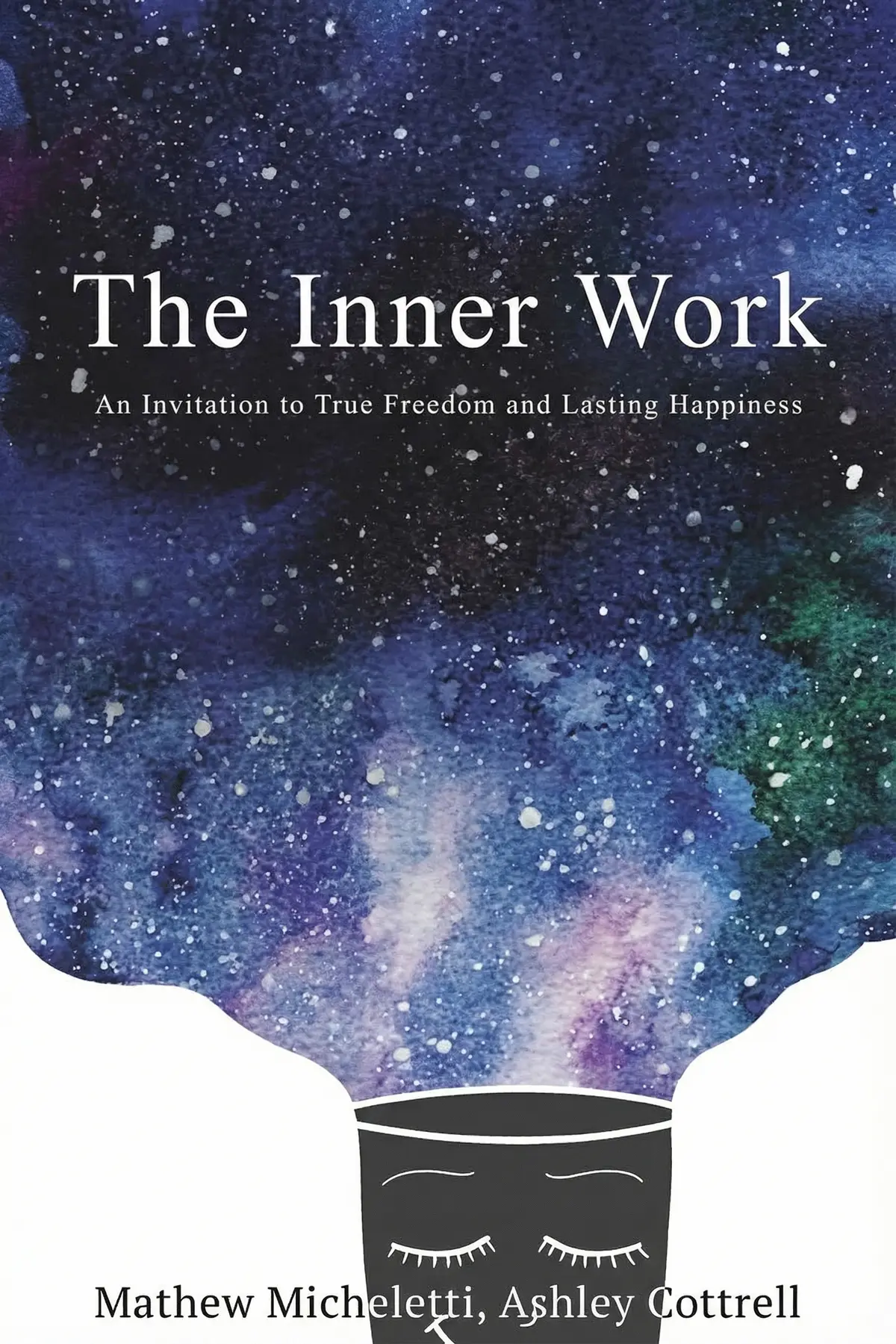
If the same frustration keeps finding you, with a new partner, a new boss or a new bill, the cause may be something you carry from place to place. In The Inner Work, counselor Mathew Micheletti and yoga teacher Ashley Cottrell argue that recurring problems grow from an inner lens of beliefs, formed early in life, that tints every experience. They call it your theme of consciousness, and they hold that outer change begins once that lens shifts.
The couple split the work between them: Mat brings psychology, Ash brings Eastern teaching. Their path starts with giving yourself permission to want a good life, moves through watching your own thoughts from a calm distance, and ends with treating every flash of irritation as a clue to an old belief. On the way you meet a Cherokee grandfather, an insight from Viktor Frankl and photographs of frozen water. What you get is a plain routine for the next moment something sets you off, and a different way to hear the voice in your head.
1 min 51 sec
Before any technique, there is a question most people never ask out loud. The authors say the answer decides whether you even let yourself try, and a few spoken words can reveal it within seconds.
2 min 02 sec
Anxiety, shame and regret can feel like facts about who you are. The authors trace them to a blueprint drawn long before you could choose it, and an old story explains how that blueprint can be redrawn.
2 min 09 sec
Your mind may be stuck on a few familiar stations, worried and critical. A survivor of the Holocaust pointed to a small gap where the dial can turn, and the authors build a whole practice around it.
2 min 03 sec
A Japanese researcher froze water after exposing it to music and words, then photographed what formed. The authors read his images as a mirror for the mind, and draw a practical rule for your playlist and your company.
1 min 53 sec
An alarm clock, a surprise bill, a scene in public that draws stares. Each one can ruin an hour. The authors argue each is also pointing at something specific, if you know how to read it.
1 min 23 sec
The Inner Work rests on a single wager: the life you keep meeting is shaped by the lens you look through, and because that lens was learned, it can be unlearned. Micheletti and Cottrell ask you to stop waiting for a partner, a job or a purchase to settle you, and to look instead at the beliefs that make the same scene play out again and again.
The practices they support are modest. When an affirmation sounds false, treat the resistance as information. Give meditation a few regular minutes and let them grow. Watch which inputs leave you jangled and which leave you calm, and choose accordingly. Above all, use the space Frankl described. When the alarm, the bill or a stranger’s stare sets you off, pause, find the belief underneath and replace it with one that leaves you whole. Each can start small, the way a brief but regular meditation grows longer over time, though the work itself asks for steady, conscious effort.
None of this asks you to become someone else. In the authors’ view, it uncovers the person who existed before the conditioning, the one whose calm has been there all along, under the layers.
The grandfather’s answer still holds. Two wolves are always fighting, and every reaction you choose is a meal for one of them.
Many people feel they are falling short of who they could be, held back by doubt, fear and the same frustrations returning in new forms. Mathew Micheletti and Ashley Cottrell argue that the cause is rarely the partner, the job or the bill. It is an inner lens of beliefs, formed early by family, culture and major events, which they call your theme of consciousness. It colors how you read everything that happens. The couple combine Mat's training in psychology with Ash's grounding in Eastern teaching. They ask readers to treat thoughts as a tool and stop mistaking them for identity, to use the space between an event and a reaction, to build presence through regular meditation and to choose the influences their minds absorb. Their illustrations include an old Cherokee tale of two wolves, an insight from Viktor Frankl and Masaru Emoto's photographs of frozen water. The practical core is a three-step method for triggers: name what sets you off, find the belief underneath and replace it with one that leaves you whole. Readers get a way to meet irritation, embarrassment and worry with a choice instead of a reflex.
People who keep hitting the same frustrations in work and relationships and suspect the pattern starts inside.
Anyone whose anxious or self-critical inner voice runs the day, and who wants a simple way to pause it.
Meditators and yoga students looking for a plain method that joins psychology and Eastern teaching.
Mathew Micheletti and Ashley Cottrell are a married couple who teach together as The Yoga Couple and have more than 1.5 million followers online. Mat earned a psychology degree at 20, worked in inpatient psychiatry, studied Jungian depth psychology and counseling, and spent ten years immersed in Dr. Hawkins's research on consciousness. He counsels individuals and couples around the world. Ash became a certified yoga teacher at 21, studied Eastern philosophy and religion, opened two yoga studios in Las Vegas and developed her own Inner Work yoga method.
Listeners describe the work as insightful, guiding them to observe their own thoughts while offering a fresh perspective. Many find it life-changing, as it aids in soul healing and provides actionable tools for daily use. The quality of writing is praised; one listener highlights that it avoids dense scientific jargon. It is also considered uplifting, with one person noting it helps foster a more optimistic mindset. Regarding readability, feedback is varied; some find the content simple to grasp, while others describe it as difficult to read.
Finally got around to reading this after seeing it everywhere on social media. It genuinely feels like a roadmap for anyone feeling stuck in their own head. The authors do a great job of explaining how our perspectives shape our reality without getting bogged down in overly complex scientific jargon. I found the section on recognizing ego-mind triggers especially helpful for my daily anxiety. While some might find the 'yoga couple' vibe a bit much, the core message about healing your soul through awareness is powerful. It’s not just theory; the book provides actual tools to shift your mindset toward something more positive and uplifting. My copy is already full of highlights and notes.
Show moreWow, I didn't expect to be so moved by the 'Yoga Couple,' but here we are. This book arrived exactly when I needed a shift in my perspective. It takes you on a deep journey of self-discovery, helping you identify the mental cages you’ve built for yourself over the years. I’ve read countless spiritual books, yet this one made the concepts of 'inner work' feel practical rather than just philosophical. The authors guide you through the process of soul healing with a tone that is both gentle and firm. It isn’t always easy to face your own judgments and opinions, but the rewards of lasting happiness are worth the effort. Frankly, it’s one of the most uplifting things I’ve read in a long time.
Show morePicked this up on a whim and it ended up being exactly the soul-medicine I needed. There’s something so comforting about the way the authors describe the process of moving from fear-based living to a state of love. I’ve been on a healing journey for years, and this book gave me a new vocabulary for the things I was feeling but couldn't name. It’s well-written without being pretentious, which made it easy for me to integrate the lessons into my morning routine. I really appreciated the focus on brain plasticity and the idea that we aren't stuck with our old patterns forever. It’s an uplifting read that genuinely makes you feel like lasting happiness is a choice you can make every single day.
Show moreDirect, punchy, and surprisingly profound. This book doesn't waste time with fluff; it gets straight to the heart of how our minds work against us. I loved how the authors took 'woo-woo' concepts and made them feel like practical, everyday tools for living better. It’s helped me recognize my judgments for what they are—just ego-mind attempts to stay in control. After reading this, my outlook on life has become significantly more positive and I feel more equipped to handle stress. It’s truly a life-changing read if you’re actually willing to put in the work they suggest. Don't let the simple language fool you; there's a lot of power in these pages for those ready to receive it.
Show moreAfter hearing several friends rave about this, I finally dove in. The way the authors discuss the journey from fear to freedom is both beautiful and practical. It’s not just about 'thinking positive'; it’s about a fundamental shift in how you recognize and process your thoughts. I found the book to be incredibly uplifting and it has genuinely helped me heal parts of my soul I didn't know were still hurting. To be fair, you have to go in with an open mind, especially during the more spiritual chapters. But if you do, the perspective you gain is invaluable. It’s well-written, easy to digest, and offers a blueprint for a much more meaningful life. Highly recommend this for anyone serious about their personal growth.
Show moreThis book offers a fascinating look at the levels of consciousness that dictate how we interact with the world. To be fair, some of the 3D versus 5D language felt a little too 'woo-woo' for my personal taste at first. However, once I looked past the terminology, the underlying concepts about moving from fear to love really resonated with me. The writing style is approachable and makes deep spiritual work feel attainable for the average person. I especially appreciated the emphasis on how our internal stories aren't necessarily the truth. It’s a solid four-star read, though it can get a bit repetitive in the middle chapters. If you’re looking for a fresh perspective on trauma and healing, this is a great place to start.
Show moreThe chapter on ego-mind triggers was a total game-changer for me. It’s rare to find a self-help book that actually explains how to catch yourself in the middle of a negative thought loop. While the readability can be a bit hit-or-miss—some sections felt a bit dense and hard to push through—the overall message is incredibly valuable. Micheletti and Cottrell provide a unique framework for understanding how we can move toward unconditional freedom. I liked that it wasn't overly academic, making the path to a more positive outlook feel much more accessible. I did find myself skimming some of the later parts that felt a bit vague. Still, the practical tools for daily application make it a worthwhile addition to any bookshelf.
Show moreEver wonder why you keep reacting to the same triggers over and over again? 'The Inner Work' dives deep into those subconscious patterns that keep us stuck in a 'victim role.' Personally, I found the framing of the different levels of consciousness to be the most helpful part of the entire book. It gives you a clear language for where you are and where you want to go. I’ll admit that some of the 5D talk felt a bit far-fetched, and I would have liked more scientific backing for some of the claims. However, the core message about taking responsibility for your own happiness is one that everyone needs to hear. It’s a solid guide for anyone ready to do the heavy lifting of self-reflection.
Show moreAs someone who has spent years in therapy, I found this to be a bit hit-or-miss. There are definitely some insightful nuggets of truth scattered throughout the pages, particularly regarding the plasticity of the brain. However, I couldn’t help but feel that the authors write from a place of significant privilege that isn't fully acknowledged. Many of the solutions presented feel overly simplified for people dealing with deep, systemic trauma or complex mental health issues. It’s a very basic introduction to self-help that might be life-changing for a twenty-year-old but feels regurgitated for seasoned readers. I enjoyed the quotes, but the lack of citations for their inspiration was a bit frustrating. It’s a decent entry-level guide but lacks the nuance I was hoping for.
Show moreNot what I expected given the massive hype surrounding it on social media. Truth is, I felt like I was being sold a beautiful marketing scheme rather than a groundbreaking piece of literature. Most of the concepts are things you’ve likely already heard if you’ve ever picked up a book by Louise Hay or other spiritual giants. The writing is annoyingly vague in parts, especially during the third act where things get way too abstract for my liking. It lacks the citations and depth needed to back up some of the more 'revolutionary' claims the authors make. For a book about deep work, it felt surprisingly surface-level and simplified. If you’re brand new to spirituality, you might like it, but otherwise, you can probably skip this one.
Show moreMathew Micheletti and Ashley Cottrell argue that recurring problems grow from a theme of consciousness: a set of beliefs about yourself and the world, formed early by family, culture and major events. That lens colors every experience. By observing your thoughts, using the pause before each reaction and examining your triggers, they say you can shift the lens and find a peace that was already within you.
It is the authors’ name for your ingrained assumptions about yourself and the world. It takes root early, works like a blueprint for interpreting new experiences, and grows stronger through repeated thoughts. The couple link it to harmful behavior and sabotaged relationships, and note that even rebelling against parents can strengthen their influence. You find it by tracing recurring negative thoughts back to their source.
The authors offer three steps. First, identify what sets you off, such as an alarm, an unexpected bill or an embarrassing scene in public. Second, find the belief or theme underneath the reaction. Third, release that belief and replace it with a more supportive one, for example telling yourself that the feeling will pass and that other people’s opinions do not set your worth.
Say an affirmation such as I am already worthy aloud and notice whether it feels false; that resistance shows a limiting belief. Begin short, regular meditation and lengthen it gradually. Audit your media, music and conversations for what leaves you tense. And when something upsets you, pause before reacting, as Viktor Frankl suggested, and ask which old belief is speaking.
It suits readers who feel they are not living up to their potential and keep meeting the same doubts, fears or conflicts. It also fits people drawn to meditation and yoga who want those practices linked to psychology, since Mat brings training in psychology and counseling and Ash brings years of study in Eastern philosophy and yoga.
Richard Wiseman

Pico Iyer


Alcoholics Anonymous World Services




William B. Irvine


Andrew D. Thompson
AUDIO SUMMARY AVAILABLE
Get the key ideas from The Inner Work by Mathew Micheletti, plus 5,000+ more nonfiction titles.









