

16 min 21 sec
Available in: English
The Heartbeat of Wounded Knee: Native America from 1890 to the Present
By David Treuer
A history of Native America after the 1890 massacre at Wounded Knee, showing how tribes survived boarding schools and land loss, fought in two world wars, won legal power and are flourishing today.
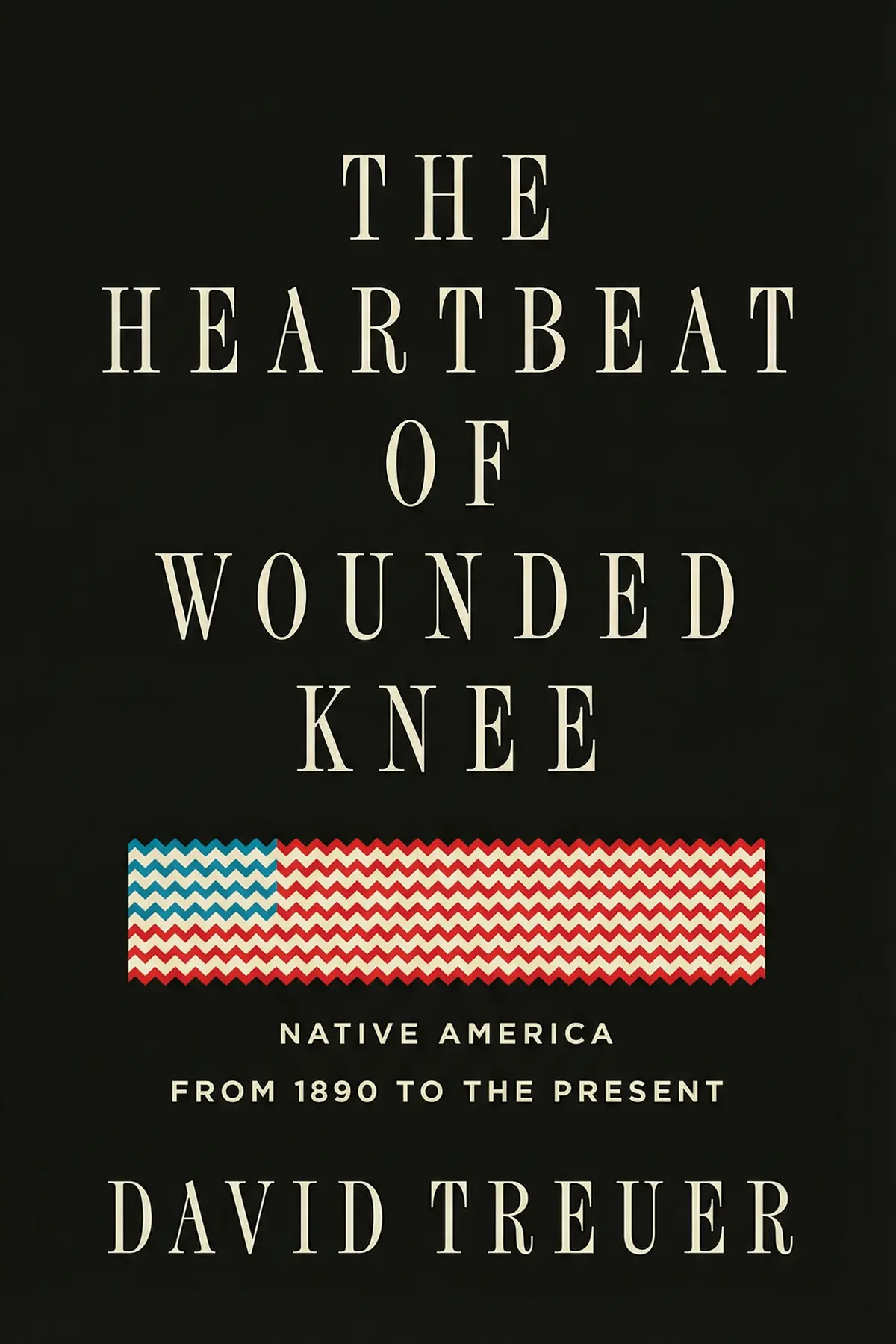
Table of Content
1. Introduction
1 min 03 sec
Most people carry a picture of Native American history that stops at Wounded Knee Creek in 1890, as if the cavalry’s cannons closed the story for good. In The Heartbeat of Wounded Knee, Ojibwe writer and scholar David Treuer calls that picture one of the most damaging clichés about Native peoples. The 129 years since then, he shows, hold tragedy, hard trade-offs and real triumph.
His case is simple to state. Native America did not end at Wounded Knee. It adapted, resisted and, in many places, is flourishing now. Treuer follows that claim through boarding schools built to erase tribal identity, a land policy that took two thirds of Native holdings, two world wars, a militant protest movement, a small tax dispute that became a casino industry, and a new generation of cooks and organizers. By the end, you can tell the modern story of Native America to anyone who still thinks it stopped in 1890.
2. See past the myth that ended at Wounded Knee
2 min 00 sec
A frozen creek in South Dakota became the place where many believe Native American history closed. The events there were real and terrible, but the meaning later attached to them may be the bigger mistake.
3. Understand what boarding schools took from Native children
2 min 03 sec
A government promised to rescue Native children from poverty and took some of them at four years old. The schools did lasting harm, yet they also produced something their founders never planned.
4. See how breaking up shared land deepened poverty
1 min 55 sec
Officials believed private ownership would lift reservations out of poverty. Within decades, tribes had lost most of their land, and the best lake shores and farmland belonged to someone else.
5. Learn why Native veterans came home demanding equality
1 min 51 sec
Two tribes in New York declared war on Germany on their own, and Choctaw Indians from Oklahoma turned their language into a weapon. Their service raised a question the country was slow to answer.
6. See how protest forced Native poverty into the news
2 min 07 sec
A few friends in Minneapolis started by following police cars. Within years they had taken over a federal building in Washington, and the president chose to negotiate rather than send in force.
7. Follow a $148 tax bill to a $26 billion industry
2 min 10 sec
A Minnesota couple refused to pay a small county bill and took it all the way to the highest court. The ruling changed Native economies, though not as evenly as the headlines suggest.
8. Meet the cooks and runners rebuilding Native health
1 min 59 sec
A chef refuses sugar, pork and chicken. A journalist fights diabetes with workout videos. A shop owner organizes runs on Facebook. Together they suggest what flourishing looks like after a century of loss.
9. Conclusion
1 min 13 sec
The Heartbeat of Wounded Knee works by moving one date. Once 1890 stops being the end, the century after it reads differently. The boarding schools and the Dawes Act are no longer an epilogue to defeat; they are attacks that Native people outlasted. The code talkers, the Iroquois envoy on the steps of Congress, the caravan to Washington and the Bryans with their $148 bill become actors in a story still moving. Oppression stays in the picture, as Treuer insists, but only as one part of it, next to resilience and real achievement.
That shift is worth carrying into daily life. When a film, a classroom or a conversation treats Native Americans as a people of the past, remember the Minneapolis chef cooking with wild rice and tamarack blossoms, and the runners organizing on Facebook. When a policy promises to rescue people by remaking them, recall the cut hair at Carlisle and the 168-acre parcels that left tribes with a third of their land.
Many of Spotted Elk’s people died on a frozen creek in 1890. Their nations did not.
About this book
What is this book about?
Many people treat Native American history as a story that stopped in December 1890, when the US Seventh Cavalry massacred Lakota men, women and children at Wounded Knee Creek. After that, the familiar version goes, Native people faded into poverty and silence on their reservations. David Treuer, an Ojibwe writer and scholar, argues that this ending is one of the most damaging clichés about Native Americans. He follows the 129 years since Wounded Knee: boarding schools that tried to erase tribal identity, a land policy that cut Native holdings by two thirds, record rates of military service in both world wars, the militant American Indian Movement, and a $148 tax dispute that grew into a casino industry worth billions. The result is a history of tragedy, hard bargains and real achievement, ending with chefs, journalists and runners who are reshaping Native life today. Readers come away able to tell the modern story of Native America and to see through the myth that it ended in 1890.
Book Information
Who it's for
Taught the 1890 ending
Readers who learned Native American history as a story that ends with the frontier in 1890.
Wanting the skipped decades
Teachers and students looking for the twentieth-century chapters that school courses often skip.
Curious about Native policy
Anyone curious how boarding schools, land policy and casino law shaped Native life today.
About the Author
David Treuer
David Treuer, born in 1970, is Ojibwe, with roots on the Leech Lake Reservation in northern Minnesota. He studied at Princeton with Toni Morrison, Paul Muldoon and Joanna Scott, and later earned a PhD in anthropology. He has written the novels Little, The Hiawatha and The Translation of Dr. Apelles, along with the criticism Native American Fiction: A User's Manual, and has received a Pushcart Prize. A literature professor at the University of Southern California since 2010, he works with his brother Anton on preserving the Ojibwe language.
Ratings & Reviews
Ratings at a glance

What people think
Listeners view this work as exceptionally educational and thoroughly documented, offering a lucid examination of Native American history. Furthermore, the quality of the writing is superb; one listener highlights the sophisticated yet accessible language and regards the title as vital reading for every American. Opinions on the storytelling are varied, as some celebrate the masterful narrative while others feel it is interrupted by trivial specifics. The volume also earns praise for being thought-provoking and deeply inspiring to those who experience it.
Top reviews
Finn
David Treuer has accomplished something truly monumental here by reframing the narrative of indigenous people as one of persistence rather than just tragedy. While Dee Brown’s 'Bury My Heart at Wounded Knee' was a necessary text for its time, it left readers with a sense of finality that Treuer brilliantly dismantles. He traces the 'And yet' of Indian life, showing how tribes didn't just survive—they adapted, fought, and thrived through the 20th century. The writing is elegant and non-technical, making complex legal battles over sovereignty feel accessible and urgent. It’s an exhaustively researched piece of reportage that should be mandatory reading in every American history class. Frankly, it changed how I view the current political landscape.
Show moreWillow
Wow, this was a powerful reminder that Native American history didn't simply end at a snowy trench in 1890. Treuer's central thesis—that we shouldn't view his people as mere victims of history—is a breath of fresh air. He explores everything from the 1978 American Indian Religious Freedom Act to the rise of tribal gaming with a clear-eyed analysis that doesn't shy away from complexity. The prose is beautiful and often poetic, especially when he reflects on his own family’s history on the Leech Lake Reservation. It’s a dense read, for sure, but every page feels essential. This book doesn't just inform; it transforms your understanding of what it means to be an American today.
Show moreSven
This book is an absolute necessity for anyone trying to understand the current landscape of the United States. Treuer provides a clear-eyed analysis of how government policies intended to 'civilize' or 'disappear' tribes actually ended up fostering a new kind of pan-Indian consciousness. The way he discusses sovereignty—not as an abstract legal concept but as a way of being 'Indian and modern simultaneously'—is brilliant. His writing is elegant and authoritative without being overly academic. Not gonna lie, I teared up a few times reading about the resilience of the tribes in the face of such systemic violence. It’s easily one of the most informative books I’ve read this decade.
Show moreBenjamin
Treuer’s prose is elegant and non-technical, allowing the exhaustively researched history of the 20th century to shine through without being buried by jargon. He tackles the paradoxes of reservation life—the poverty and the pride, the casinos and the culture—with a nuance that few other authors could manage. I was fascinated by the story of the Choctaw code talkers in WWI and the massive contribution of Native soldiers in subsequent wars. This book is an act of reclamation, giving voice to a people who have been silenced for too long. It’s an inspiring read that makes you think deeply about what 'progress' really looks like in America.
Show moreRay
After hearing so much about the 'tragic Indian,' it was incredibly refreshing to read a narrative that centers on survival and modern success. David Treuer doesn't ignore the trauma of the past, but he refuses to let it be the only story we tell. The book covers so much ground, from the 19th-century genocides to the Standing Rock protests, always returning to the theme of resilience. It’s a masterpiece of storytelling that blends the author's own life with a broader national history. Gotta say, the maps and photos in the physical copy are worth the purchase alone. This is essential reading for every resident of North America who wants the full story.
Show moreJavier
Picked this up after seeing it on a few 'best of' lists and found the sheer depth of research to be staggering. Treuer moves beyond the 'vanishing Indian' myth to show a vibrant, modern culture that is using digital tools and legal sovereignty to reclaim its place. Some parts are a bit slow, reading almost like a textbook, but the personal stories from his own Ojibwe community keep the heart of the book beating. Truth is, I was surprised by how much I didn't know about Native involvement in the World Wars. My only real complaint is that the narrative structure jumps around quite a bit, making it hard to follow the timeline in the middle chapters.
Show moreDuang
Finally got around to reading this, and it’s essentially the 'Part 2' of American history that my high school teachers completely skipped over. Treuer does a fantastic job showing how Native identity isn't a relic of the past but a lived experience that evolves. I particularly enjoyed the sections on the 'Digital Indian' and how technology is being used to preserve languages and culture. Look, it’s a heavy book with a lot of legal and political detail, so don't expect a quick read. However, the blend of memoir and reportage makes the historical facts feel much more personal and immediate. It’s a necessary counter-narrative to the tragedy-porn we usually get.
Show moreConnor
Ever wonder why our history books treat Native Americans like they disappeared into the sunset after the frontier closed? This book answers that question by filling in the massive 128-year gap between Wounded Knee and the present day. Treuer’s account is meticulously researched and provides a much-needed update to Dee Brown’s classic. Personally, I found the chapters on the Red Power movement and the occupation of Alcatraz to be the most engaging, though the book does get bogged down in the mid-section with very specific tribal anecdotes. It requires some patience to get through the 500+ pages, but the reward is a much more complete picture of our country’s history.
Show morePreeda
Let me start by saying the information in these pages is vital, yet the structure made it a difficult slog at times. I opted for the audiobook and found the choice of a female narrator very distracting for a book written from a male perspective with so much personal memoir included. In my experience, it pulled me out of the narrative. The book is incredibly dense and exhaustively researched, which is a strength, but Treuer’s tendency to drift into long anecdotes about leeches and pine cones felt like a detour from the broader history. It’s an important contribution to the field, but it lacks the narrative drive that would make it a true page-turner.
Show morePot
The first hundred pages promised a sweeping history, but the book quickly devolved into what felt like a disjointed memoir about the author's personal travels. I found the inclusion of Bobby Matthews particularly grating; why spend so much time on an outdoorsman who sees nature as 'money' while ignoring giants like Vine Deloria or John Trudell? Treuer seems almost obsessed with a version of indigenous life that fits neatly into capitalism, specifically when defending casinos. To be fair, the early sections on the pre-1890 era were informative, but the latter half felt like a series of inane details that lacked a cohesive historical argument. If you're looking for a rigorous history of the American Indian Movement, this isn't it.
Show moreQuestions about this book
What is The Heartbeat of Wounded Knee about?
David Treuer tells the history of Native America from the 1890 massacre at Wounded Knee Creek to the present. He argues that the common belief that Native history ended there is a damaging myth. The book follows boarding schools, the allotment of reservation land, Native service in both world wars, the American Indian Movement, the rise of tribal casinos and the people reshaping Native communities today.
What happened to Native American land under the Dawes Act?
The Dawes Act of 1887 split shared reservation land into private parcels of 168 acres per head of family. Treuer describes a corrupt process in which agents saved the best land for white buyers and sold the leftover surplus to settlers. Many families also sold parcels to survive. By 1934, Native-owned land had shrunk by 66 percent, when the Indian Reorganization Act finally ended allotment.
How did Native American casinos begin?
It started with a $148 county tax bill sent in 1972 to Helen and Russell Bryan on Minnesota’s Leech Lake Reservation. Their appeal reached the US Supreme Court, which ruled that states could not tax or regulate Native Americans on reservations. The Seminole then won the right to run a high-stakes bingo hall in Florida, and the Indian Gaming Regulatory Act of 1988 set the industry’s rules.
Did casinos end poverty for Native Americans?
No. Between 1988 and 2009 tribal gaming revenue rose from $100 million to $26 billion, surpassing Las Vegas and Atlantic City put together, yet Treuer stresses that the profits were divided very unevenly. Some people benefited enormously while most did not, and between 1989 and 1995 the poverty rate in tribal gaming areas fell by only two percent.
Who should read The Heartbeat of Wounded Knee?
It suits readers who know Native American history mainly through frontier stories and want the modern chapters. Students and teachers get a clear thread through twentieth-century policy, war service and activism. Readers interested in how communities recover from long oppression will find examples running from protest in Washington to a chef reviving Indigenous ingredients in Minneapolis.
Readers also enjoyed
Alexander the Great
Philip Freeman




A History of Iran: Empire of the Mind
Michael Axworthy
Afropean: Notes From Black Europe
Johny Pitts

A History of the World in 6 Glasses
Tom Standage


A Long Way Gone: Memoirs of a Boy Soldier
Ishmael Beah
AUDIO SUMMARY AVAILABLE
Listen to The Heartbeat of Wounded Knee in 15 minutes
Get the key ideas from The Heartbeat of Wounded Knee by David Treuer, plus 5,000+ more nonfiction titles.
- 5,000+ titles
- Listen as much as you want
- 7-day free trial
- Cancel anytime









