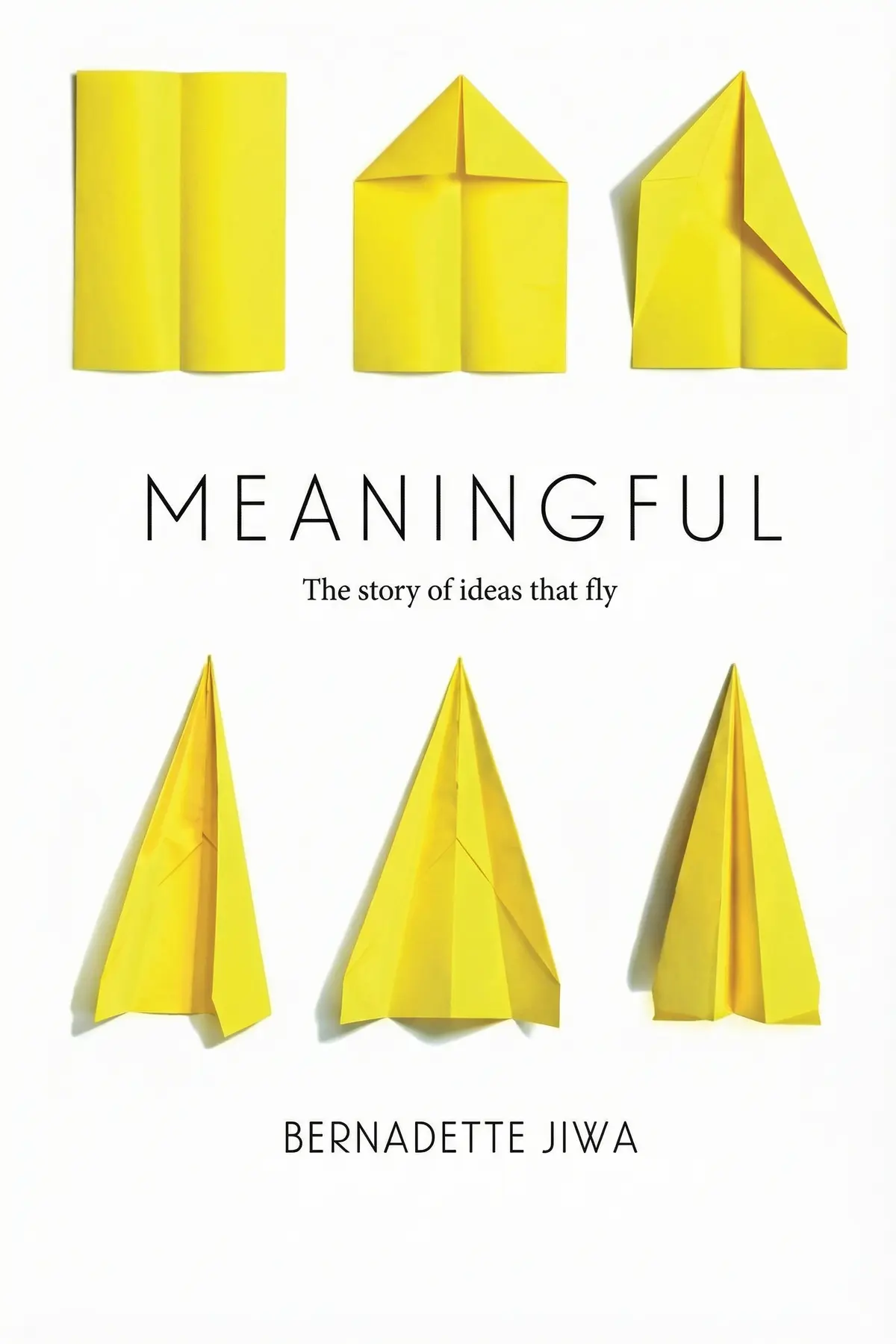
Meaningful: The Story of Ideas That Fly
Bernadette Jiwa
 English
Shows business owners and marketers why a good product alone is easy to copy, and how to build the story around it: a clear purpose, a flexible vision, honest values and a matching place and voice.
1 min 00 sec
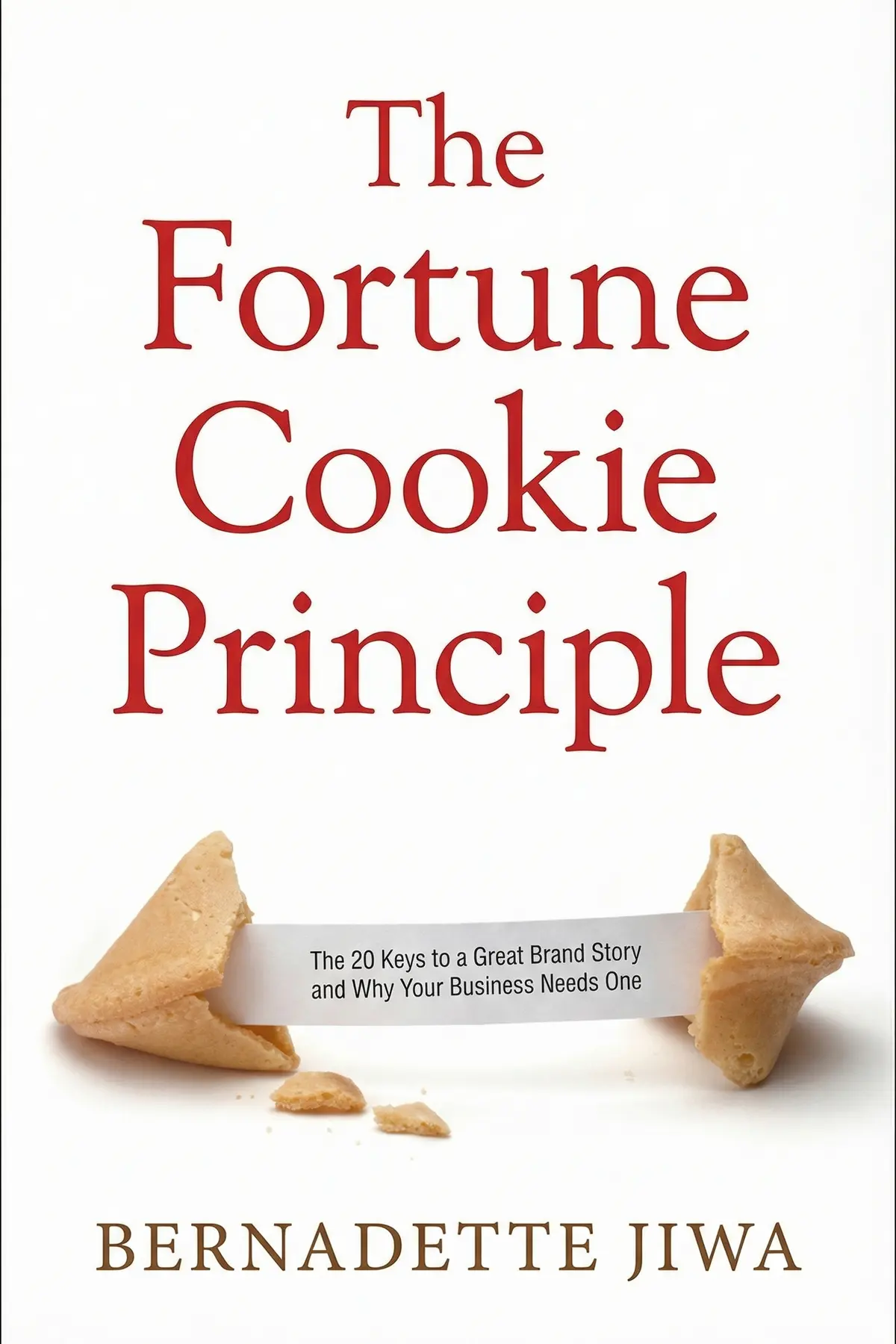
If your business rests on having the best product, a rival can take your place with a better one tomorrow. In The Fortune Cookie Principle, business adviser Bernadette Jiwa argues that the companies that last sell something no competitor can copy: a story about what they believe and why they exist. She pictures every brand as a fortune cookie. The cookie is the product, solid and easy to match. The fortune is the meaning folded inside, and that is what customers carry home.
Jiwa’s claim is that the fortune is built from a few deliberate choices: a purpose, a vision, a set of values, and a place and voice that fit them. Her cases run from a Lego turnaround worth hundreds of millions of dollars to Patagonia telling shoppers not to buy its jacket. Anyone who runs or markets a business will finish with a handful of questions that reveal whether their brand is all cookie and no fortune.
1 min 40 sec
A clever new product can be beaten by a cleverer one within days. Jiwa splits every brand into two parts, and only one of them is safe from the competitor waiting to launch next week.
1 min 54 sec
Fifty fast-growing companies outpaced their rivals by a wide margin, and a famous toy maker nearly sank. Jiwa traces both outcomes to the same factor, one that many owners never write down.
1 min 48 sec
A nonprofit building schools and two founders renting out beds both needed a picture of where they were going. One of those pictures had to change fast, and Jiwa explains why that is allowed.
1 min 48 sec
An outdoor brand once told shoppers not to buy its own jacket, and a beloved café lost its regulars after it put profit ahead of the values that made it special. Both stories hinge on the same promise, kept or broken.
1 min 51 sec
A coffee place can sell plenty of lattes on a luxury shopping street and still lose something it cannot buy back. A hometown bakery makes a similar mistake with a single ad.
1 min 10 sec
Jiwa’s argument comes down to a simple trade. Products give a business something to sell, and stories give customers a reason to choose it again after a rival offers something shinier. The fortune, in her picture, lives in the gap between what a company makes and what it means. That meaning is not invented in an advertising meeting. It is the sum of choices a company keeps making: the purpose that rescued Lego, the vision that let Airbnb grow from conference beds to castles, the values Patagonia put ahead of a sale.
The work starts with a sentence. Write why your business exists in terms of what it does for people, then hold one real decision up against it, a new product line, a hire or a cheaper supplier, and see whether the decision serves that purpose or pulls away from it. After that, walk through your shop, your website and your latest ad as a stranger would, and check that each one tells the same story.
The café regulars never read a mission statement. They simply noticed the morning the brownies stopped being homemade, and that was the morning the fortune disappeared.
Every year, new companies arrive with excellent products, many of them fail, and only a handful reach the top. Bernadette Jiwa argues that the few who rise to the top rarely owe it to luck or a huge marketing budget. They owe it to a story that customers connect with, and she believes any business can build one step by step. Her central image is the fortune cookie. The cookie is the product: real, solid and easy for a rival to match. The fortune is the meaning inside it, a story about the company's purpose, vision and values that customers come to adopt as part of themselves. Jiwa draws on cases from Lego's collapse and recovery to Airbnb's growing ambitions and Patagonia's campaign telling shoppers not to buy its jacket. Readers get a set of practical questions for finding a purpose, shaping a vision, holding on to values when profit tempts them away, and making sure a shop's location, advertising and even its name all tell the same story.
Founders and small business owners whose products keep getting copied or undercut by competitors.
Marketers who need a clear story to hold their advertising, content and naming together.
Owners of local shops and cafés weighing growth against the values their regulars love.
Bernadette Jiwa was born in Dublin and now lives in Melbourne, Australia. She has published nine best-selling non-fiction books and has advised entrepreneurs, companies and business leaders. After about ten years of writing non-fiction, she turned to fiction. Her debut novel, The Making of Her, came out in 2022 and was named one of the New York Post's best books of that year. Her second novel, Every Shade of Love, followed in 2025, and the novella Happy as We Are in 2026.
Bernadette Jiwa
Listeners find this book to be a brief and articulate guide that offers practical instances throughout its chapters. They value the narrative-driven method for developing a brand and see it as a helpful tool for entrepreneurs, with one listener highlighting the way it clarifies ideas using anecdotes and inquiries. Listeners characterize the text as motivating and deep, with one stating it revealed fresh viewpoints to them.
Ever wonder why some brands just "click" while others with better products fail to gain any real traction? Jiwa answers this by focusing on the "fortune" inside the cookie—the emotional narrative that connects us to what we buy. I’ve read my fair share of business books, but this one stands out because it doesn’t hide behind jargon or overly complex frameworks. The case studies are relevant and the "Questions for you" sections are worth the price of admission alone. Frankly, it changed how I approach my content strategy by moving the focus away from "me" and toward the "them" of the customer experience. It's a short book, but every page feels intentional and avoids the fluff that usually plagues the leadership genre. If you want to build a brand that actually means something, start here.
Show moreThe chapter on product design versus emotional resonance really hit home for me during a time when my startup was stalling. Bernadette Jiwa has this incredible gift for making you realize that you’re not just selling a commodity; you’re selling a feeling or a transformation. I especially appreciated the rapid-fire style of the writing, which feels urgent and inspiring without being overly "salesy" or aggressive. Each example she uses, from global brands to tiny startups, reinforces the idea that meaning is the new currency in the modern marketplace. Personally, I think the "Questions for you" at the end of each chapter are the highlight because they transform the book into a workbook. It’s an essential guide for anyone who wants to stop competing on price and start competing on value and connection.
Show moreHonestly, I didn’t think a book this short could have such a profound impact on my marketing philosophy. It challenges the traditional "shouting" method of advertising and replaces it with a more subtle, powerful way of engaging with customers through shared values. The metaphor of the fortune cookie—where the product is just the wrapper for the message—is brilliant and easy to remember when making daily business decisions. I’ve started applying the "fortune" concept to my personal branding as well, and the results in how people respond to my pitches have been immediate. The truth is, we are all looking for meaning, and this book shows you how to provide it. It’s a quick read, but the ideas stay with you long after you’ve finished the last page.
Show morePicked this up after seeing Bernadette Jiwa's work cited in several marketing blogs. It’s a breezy, quick read that manages to distill complex brand storytelling into a very digestible metaphor about the "fortune" being the story and the "cookie" being the product. The truth is, while it doesn't offer a deep dive into data-driven analytics, its strength lies in those reflective questions at the end of each section. These prompts really forced me to look at my own small business from the customer's emotional perspective rather than just the features list. I did feel some of the case studies were a bit light on the "how-to" aspect, almost as if the success was inevitable rather than strategic. Still, for a solo founder looking to find their voice, this provides a solid roadmap. It reminds you that people buy how you make them feel, not just what you’re selling.
Show moreAs someone who is currently struggling to differentiate a service-based business, this book provided a much-needed perspective shift. Jiwa argues that marketing isn't something you do to people, but something you do for them by creating value through storytelling. I found the section on the 20 different brand touchpoints to be incredibly practical for auditing my own customer journey from start to finish. Look, it’s not a 500-page academic tome, and that’s exactly why it works for busy entrepreneurs who need actionable insights fast. My only gripe is that some of the Australian-specific references might feel a bit foreign to US readers who aren't used to the same cultural context. However, the core message remains universal: your story is your competitive advantage. It’s a compelling argument for human-centric marketing in a digital age.
Show moreFinally got around to reading this, and I was pleasantly surprised by how much I enjoyed the simplicity of the message. We often overcomplicate marketing with funnels and algorithms, but Jiwa reminds us that it’s actually about human connection and the "fortune" we provide. I love how she breaks down the brand into different elements like name, delivery, and customer service, showing that the story is told in every interaction. To be fair, it’s a bit basic if you’ve already read a lot of Seth Godin or Simon Sinek, but the framework is still quite useful for a quick refresh. The layout is beautiful and the tone is encouraging, making it a book you can return to whenever you feel stuck. It’s a reminder that being "good" isn't enough; you have to be meaningful to your audience.
Show moreI've been following Bernadette’s blog for a while, so I knew the writing would be top-notch, and this book certainly delivered. It’s a refreshing departure from the data-heavy business books that often lose sight of the actual human being at the other end of the transaction. While I agree with other reviewers that more "hard" evidence would have been nice, the anecdotal evidence is quite compelling in its own right. The book acts as a mirror, asking you tough questions about why your business exists and what story you are actually telling the world. Got to say, the "Questions for you" are the most valuable part because they prevent the book from being just another passive reading experience. It’s a great resource for anyone looking to inject some soul back into their brand.
Show moreThis book feels like a long-form blog post expanded into a physical volume, which isn't necessarily a bad thing if you like Seth Godin's style. I found the central concept—that the "extra" thing you give customers is what actually matters—to be insightful but perhaps a bit repetitive after the third chapter. To be fair, the writing is punchy and keeps you moving, but I was constantly waiting for a deeper level of business analysis that never quite arrived. It’s great for beginners or those who need a quick spark of inspiration, yet seasoned marketers might find it a bit "intro level." The examples are charming, ranging from Nando's to local bakeries, though they sometimes feel like they're cherry-picked to fit the narrative. It’s a nice afternoon read, but don’t expect a comprehensive manual on corporate strategy.
Show moreAfter hearing so much buzz about the "Fortune Cookie Principle," I finally sat down with it this weekend. It’s a solid introduction to brand storytelling, but I can’t help but feel it stays an inch deep and a mile wide. The author touches on so many different stories that you never really get to see the "messy middle" of how these brands actually scaled or overcame failure. In my experience, business is rarely as clean as these anecdotes suggest, and I wanted more evidence to back up the claims. That said, the book is incredibly easy to read and would be a fantastic gift for a graduate or a first-time solopreneur. It’s positive, thought-provoking, and definitely makes you want to be a better communicator. Just don’t expect it to be the only marketing book you’ll ever need.
Show moreNot what I expected given the high praise from industry titans. While the writing is undeniably crisp and the metaphor is catchy, the book suffers from a lack of empirical depth that left me feeling underwhelmed. It relies heavily on anecdotal success, assuming a company is thriving purely because of a smile or a nice story without looking at the logistics or market conditions. Not gonna lie, it felt a bit like looking at a successful restaurant and saying they're winning solely because of the decor. I would have preferred one deep-dive case study over dozens of shallow ones that only scratch the surface of why these businesses actually work. If you're looking for research-backed strategies like in Blue Ocean Strategy, you won't find that level of rigor here. It’s more about vibes than hard-nosed business reality.
Show moreBernadette Jiwa argues that a great product is no longer enough, because a rival can always release a better one. She compares a brand to a fortune cookie: the cookie is the product, and the fortune is the story about the company’s purpose, vision and values. Customers connect with that story and adopt it as part of themselves, which gives the business an advantage competitors cannot easily copy.
The cookie is the tangible product or service, something with a fixed value that anyone could match. The fortune is intangible: the meaning and story that link a customer to the product. Jiwa uses Apple as her example. The company sold a device for playing music, but what people valued was having thousands of songs in their pocket, ready with one click.
Jiwa says Lego lost sight of its purpose by spreading into ventures such as a theme park and computer games, which led it to neglect its supply chain. By 2003 its deficit had reached 300 million dollars. In 2004, new chief executive Jørgen Vig Knudstorp refocused the company on inspiring creativity in children, and within a year it made a profit of 110 million dollars.
Start by writing down why your business exists beyond making money, then test real decisions against that purpose. Use Jiwa’s three vision questions about your impact on the future, how daily work supports it, and how customers will feel and act. Finally, check that your location, your advertising and your company name all tell the same story, in a voice your customers recognize.
AUDIO SUMMARY AVAILABLE
Get the key ideas from The Fortune Cookie Principle by Bernadette Jiwa, plus 5,000+ more nonfiction titles.