
11 min 58 sec
Available in: English
Meaningful: The Story of Ideas That Fly
Shows how companies earn lasting loyalty by starting from what customers need, value and believe, using cases from Google, Apple, Patagonia, GoPro and IKEA, plus a four-step way to build a story around them.
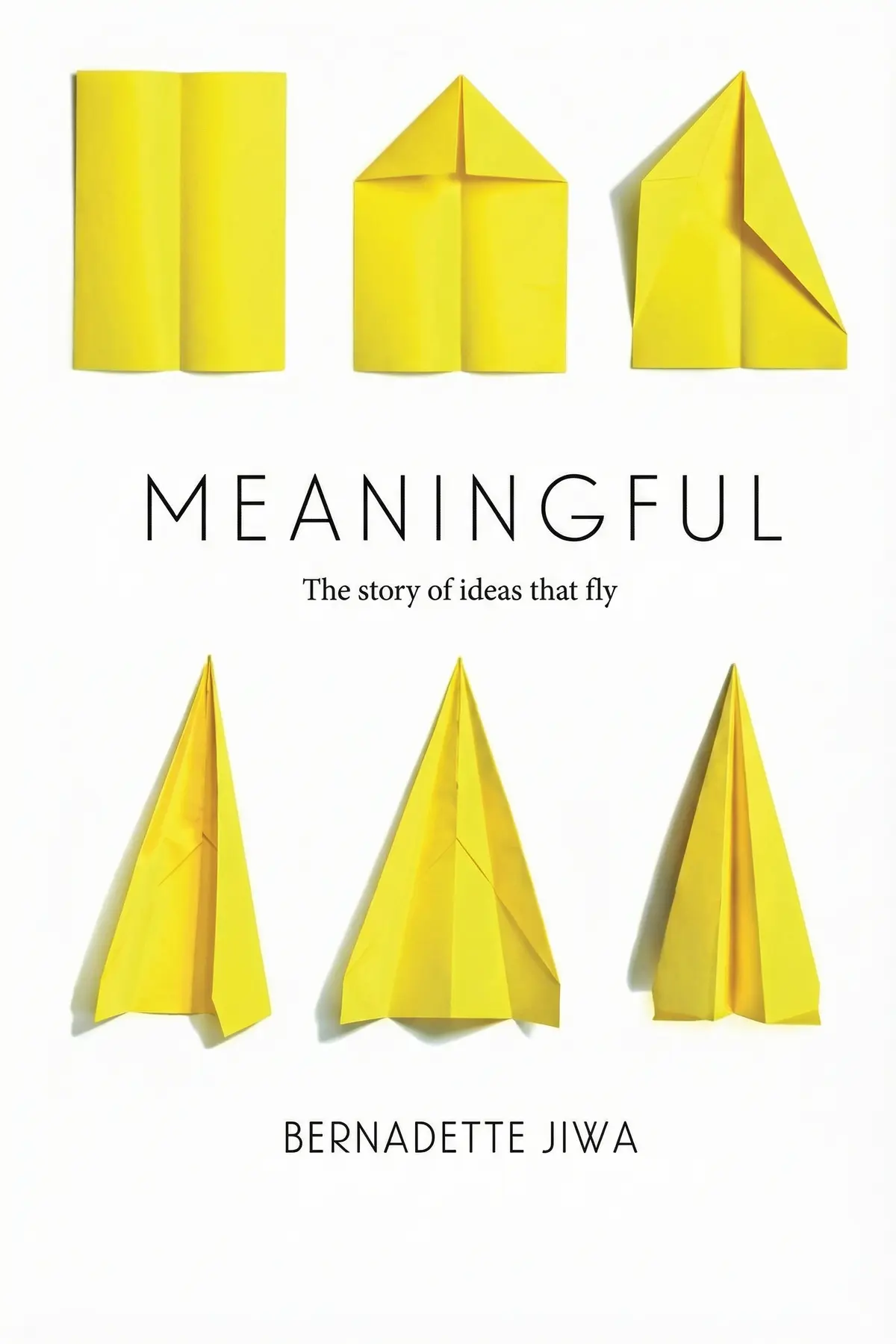
Table of Content
1. Introduction
1 min 00 sec
If you build products, run a business or try to sell an idea, it is tempting to make the thing first and then go looking for people who need it. In Meaningful: The Story of Ideas That Fly, Bernadette Jiwa argues that the companies people love work the other way round, starting from what customers need and what matters to them. Her evidence begins with a dress. When Jennifer Lopez wore a sheer Versace gown to the 2000 Grammy Awards, so many people searched for photos of it that Google built an image search.
Jiwa’s case is that a product becomes meaningful when it grows out of the customer’s life, feelings and view of the world. Her stories include a windshield wiper invented by a woman riding a streetcar, an album nobody asked for, and a clothing company that pays dozens of people to mend old jackets. Each one leaves you with a question worth asking before your next launch, and a habit that keeps you close to the people you serve.
2. Stay relevant by seeing what customers really want
1 min 52 sec
Taxi drivers once had no reason to care whether a passenger enjoyed the ride. One small change in how rides are measured flipped that, and a famous red-carpet moment shows how the same shift made a search engine a household name.
3. Watch real people use your product first
1 min 57 sec
One tiny feature on the Apple Watch came from simply observing people glance at their wrists. The same company later handed every iPhone owner a gift that backfired badly, and the reason is a trap any team can fall into.
4. Win loyalty by sharing your customers' values
2 min 01 sec
An outdoor brand pays a full-time team to fix clothes it sold years ago, and it calls that smart business. A famous cake maker learned the same lesson the expensive way, once shoppers stopped taking advertising at its word.
5. Find the problems people stopped noticing
1 min 58 sec
Some of the most valuable business ideas hide inside annoyances so familiar that nobody complains about them anymore. A rainy street in 1902 and a frustrated surfer show how to see what everyone else has learned to ignore.
6. Shape your story around how customers see the world
2 min 00 sec
A furniture giant spent six years studying one country before opening a single store there, and it prints dozens of versions of its catalogue. Jiwa turns that patience into a four-step method any business can follow.
7. Conclusion
1 min 10 sec
Jiwa’s book is finally an argument about where ideas should begin. The companies in it did not win through the cleverest engineers or the loudest ads. Google watched what people searched for. Patagonia mended what people loved. Mary Anderson looked at a rainy street until the problem became visible, and IKEA spent six years learning a country before selling to it. Even Apple, admired for its care with users, slipped the moment it assumed its own taste was its customers’ taste.
That makes meaning something a business earns by paying attention. Before your next launch, watch a handful of real people use the thing, the way Apple’s team watched wrists rise and fall. Ask what your customers believe about how products should be made, and whether yours shows it. Keep a running list of the small troubles they have stopped mentioning, and collect the stories and reactions that never appear in a spreadsheet.
A company without customers is nothing. A company that truly understands them gets to build the thing they will wish they had asked for.
About this book
What is this book about?
Many companies still work backward. They build a product, then spend their marketing budget trying to convince people they need it. Bernadette Jiwa argues that the businesses people actually love do the opposite: they find out what their customers need and care about, and they build from there. Her case runs through well-known stories. Google Images grew out of the huge wave of searches for one famous dress. Apple designed a small Apple Watch feature by watching how people raise their wrists, then stumbled when it pushed an unwanted album onto every iPhone. Patagonia pays a full team to repair old clothes. Mary Anderson invented the windshield wiper after watching traffic on a rainy New York street, and a surfer who could not film himself built the GoPro. The book ends with a practical method: learn your customers' worldview, imagine how to improve their lives, turn that into product and marketing choices, and decide how they should feel when they use what you make. It is a short, example-rich guide for anyone who wants their next idea to matter to the people it is for.
Book Information
Who it's for
Builders hoping customers follow
Founders and product teams who keep building things first and hoping customers follow.
Marketers struggling to connect
Marketers whose campaigns feel loud but fail to connect with the people they target.
Owners of small businesses
Small business owners who want loyal customers without a giant research budget.
About the Author
Bernadette Jiwa
Bernadette Jiwa was born in Dublin and lives in Melbourne, Australia. She has written nine best-selling non-fiction books and has worked as an adviser to entrepreneurs, companies and business leaders. After about ten years of business writing she turned to fiction: her debut novel, The Making of Her, appeared in 2022 and was named one of the New York Post's best books of that year, followed by Every Shade of Love in 2025 and the novella Happy as We Are in 2026.
Ratings & Reviews
Ratings at a glance

What people think
Listeners find this book to be a brief and perceptive read, valuing the inclusion of actual examples and case studies. They also appreciate the narrative-driven style, with one listener observing its focus on listeners' stories. Furthermore, the work receives praise for its actionable content; one review highlights how it helps businesses thrive, and another mentions how it provides context for current marketing trends. Listeners also value the meaningful approach and its effectiveness in connecting with target audiences.
Top reviews
Brooklyn
Finally got around to finishing this, and I’m kicking myself for waiting so long to dive in. For anyone building a startup, this is basically a blueprint for how to actually care about your users instead of just looking at them as metrics. Jiwa has this incredible way of using storytelling to illustrate why some ideas take off while others just sink without a trace. Truth is, the case studies she includes are punchy and provide exactly the kind of context you need when you're feeling stuck in your own head. It’s a quick read—perfect for a morning commute—but the ideas stay with you much longer. I particularly appreciated the focus on making people feel valued. If you’re struggling with your marketing pitch, this might be the reality check you need to stop selling and start connecting.
Show moreJackson
Wow, Jiwa really hit the nail on the head with this one! I love how she emphasizes the importance of making your users 'awesome' rather than just focusing on the product itself. The book is packed with real-world examples and case studies that make the abstract concepts feel very tangible and achievable for a small business owner. I’ve been using the blueprint provided at the end to rethink my own startup’s approach, and the clarity it provides is invaluable. It’s not just about marketing; it’s about empathy and understanding the human being on the other side of the screen. Some of the quotes she includes are genuinely inspiring and helped me find the motivation I was lacking. It’s rare to find a business book that feels this heartfelt and practical at the same time. Definitely a favorite for this year.
Show moreAubrey
Picked this up during a particularly rough week with my startup, and it was exactly the shot in the arm I needed. I loved the philosophy and the thoughtfulness that went into every page; it’s clear the author practices what she preaches. The blueprint included is incredibly useful and provides a clear path for anyone trying to build something that actually matters to people. Unlike many business books that are 300 pages of fluff, this is concise and respects the reader's time. I found the discussion on how bookstores and supermarkets are evolving to be particularly insightful, despite what some other reviewers might say. It’s about more than just 'giving people what they want'—it’s about creating a sense of value and belonging. I’ll definitely be recommending this to my entire team.
Show morePan
Ever wonder why some brands just seem to 'get it' while others feel like they’re shouting into a void? Jiwa breaks this down by focusing on the narrative we create around our products rather than just the features themselves. This book is a wonderful reminder for entrepreneurs that we should be creating things that solve real problems and make users feel understood. Personally, I found the examples very relatable, especially the parts about how we interact with technology in the digital realm. The writing style is easy to digest, though some might find it a bit repetitive if they’ve already read her previous work on branding. It’s more of a philosophical guide than a technical manual, but that’s exactly what I needed to rethink my current strategy. It really helps you get your marketing pitch-perfect by putting the buyer’s eyes at the center of the story.
Show moreEarn
The chapter on how BuzzFeed tailors content for the 'social sharing generation' was particularly eye-opening for me. While I understand why some people might be skeptical of that model, Jiwa uses it to illustrate a larger point about meeting people where they are. This book is an important reminder that our job isn't to convince people to want things, but to understand what they already need. It’s very concise, which I appreciate, though I do wish she had delved a bit deeper into the privacy concerns that come with this level of customer intimacy. However, the storytelling approach makes it much more engaging than your typical dry business text. It’s helped me provide better context for our current marketing trends and has definitely influenced how I plan to approach our next product rollout.
Show moreFort
After hearing so many people rave about Bernadette Jiwa, I decided to see what the fuss was about. The book is full of meaning—it forces you to stop and ask why you’re doing what you’re doing. It’s less about the 'how-to' and more about the 'who-for,' which is a perspective a lot of us lose when we're bogged down in daily operations. The real-world examples are great, and they help bridge the gap between abstract branding theories and actual practice. I did find some of the Steve Jobs quotes a bit cliché, but to be fair, they do fit the narrative she’s building. It’s a relatable, easy-to-digest guide that helps businesses thrive by focusing on the customer's story. If you feel your marketing is slightly off-pitch, this will help you find your rhythm again.
Show moreJib
As someone who has read a lot of business literature this year, I’d say this one is a bit of a mixed bag. On one hand, it’s an incredibly quick read with short, punchy chapters that make it very easy to consume in small bursts. On the other hand, the core message is essentially 'love your customers,' which isn't exactly a groundbreaking revelation in the modern economy. The truth is, the book reminds me a lot of Kathy Sierra’s work, which I personally preferred because it felt more technically grounded. Jiwa is great at storytelling, but I found myself wanting more data and fewer emotional headlines from successful companies. It’s a decent enough primer for a beginner, but seasoned entrepreneurs might find the content a bit too surface-level. Still, it’s a good enough refresher to flip through over a weekend.
Show morePrayoon
Look, this isn’t a revolutionary masterpiece, but it’s a solid enough read if you’re looking for a quick boost of inspiration. The book is essentially a collection of stories about why certain ideas gain traction, and while the examples are interesting, they are somewhat limited in scope. I felt like the author focused too much on a very small window of time, which makes it hard to say if these trends are actually sustainable. Gotta say, the writing style is very accessible and the 'one minute' chapter format is great for people with short attention spans. I didn't find it to be 'lazy,' but it certainly isn't an academic study of innovation. It’s a light, encouraging book that reminds you to keep the human element in your business planning.
Show moreGioia
To be fair, the author writes with a lot of enthusiasm, but the substance just isn't there for me. This book claims to tell the story of 'ideas that fly,' yet it mostly feels like a simplified version of a customer journey map that you could easily find for free online. It’s quite a tiny work, and I found it surprisingly hard to get through because the anecdotes felt so cherry-picked to fit a specific agenda. The implication that traditional institutions are merely 'obsolete' because they don't track our every move like a mobile app is a bit much to swallow. It feels like it was written specifically to catch the current entrepreneurial wave without offering any truly meaningful insights. If you want something that will actually help you innovate, look elsewhere. This felt more like a vehicle for the author’s personal philosophy than a practical business guide.
Show moreThawee
Not what I expected at all, and frankly, I’m disappointed by the lack of original thought in these pages. The book feels like a shallow collection of business headlines that have been retrofitted to support a very weak narrative about digital relevance. I found it incredibly frustrating to read her take on the decline of newspapers; suggesting it’s just about 'irrelevance' while praising BuzzFeed’s 'social sharing' strategy feels remarkably shortsighted. It champions a hyper-consumeristic viewpoint without ever acknowledging the downsides of data privacy or the cultural cost of infinite fragmentation. Every chapter is barely a minute long, which sounds convenient but actually prevents any deep exploration of the concepts. It’s an inauthentic piece of work that offers 'warm and fuzzy' anecdotes instead of actual strategy. Save your money and buy a real business book like Blue Ocean Strategy instead.
Show moreQuestions about this book
What is the main idea of Meaningful by Bernadette Jiwa?
Jiwa argues that a business becomes meaningful by understanding its customers: what they need, what they value and how they see the world. Instead of creating demand for a product already made, successful companies observe and consult customers, then build products and stories around them. She illustrates this with Google Images, the Apple Watch, Patagonia’s repair team, the GoPro and IKEA’s country-by-country catalogues.
What are invisible problems in Meaningful?
The term comes from Tony Fadell, chief executive of Nest. Invisible problems are difficulties people meet so often that they stop seeing them as problems. Jiwa argues that innovation depends on spotting them. Mary Anderson noticed drivers struggling to see through rain-covered windshields in 1902 and gave the world windshield wipers. Surfer Nick Woodman could not film himself on the waves and created the GoPro.
What is Bernadette Jiwa's story strategy blueprint?
It has four steps. First, look past demographics to understand how customers fill their days and which hidden problems they face, ideally by speaking with them every day. Second, think about how you could improve their lives and what they really want. Third, use those insights to choose the product, service and marketing style. Fourth, be clear about how customers should feel when they use what you offer.
How can I apply the ideas in Meaningful?
Watch real people use your product before you finalize it, as Apple did with the Apple Watch. Check whether your offer reflects what customers value, the way Patagonia’s repairs reflect a belief in clothes that last. Collect soft data such as feedback, stories and body language alongside hard numbers; Black Mill Clothing, for example, checks Pinterest preferences before releasing a collection.
Who should read Meaningful?
It suits founders, product managers, marketers and small business owners who want customers to care about what they make. It is especially useful for teams that tend to fall in love with their own ideas, since Jiwa shows through Apple’s unwanted U2 album how even admired companies go wrong when they assume customers share their enthusiasm.
Readers also enjoyed



7 Powers: The Foundations of Business Strategy
Hamilton Helmer





Alibaba: The House That Jack Ma Built
Duncan Clark


AUDIO SUMMARY AVAILABLE
Listen to Meaningful in 15 minutes
Get the key ideas from Meaningful by Bernadette Jiwa, plus 5,000+ more nonfiction titles.
- 5,000+ titles
- Listen as much as you want
- 7-day free trial
- Cancel anytime









