

A Promised Land
Barack Obama
 English
Retells Muhammad's life as a human story: an orphan's childhood, a terrifying vision at forty, two years of doubt, rejection by his own clan and the patient strategy that united Mecca and Medina.

58 sec
Most people know Muhammad only as a name on a page or a symbol in the news, and that distance makes it easy to forget he was a man who struggled. In The First Muslim, the journalist and author Lesley Hazleton tells his life as a human story: an orphan raised by strangers, a quiet husband who feared he was losing his mind, a reluctant speaker pelted with garbage in the streets of his own city.
Her throughline is that Muhammad’s path to founding a new faith ran through loss, doubt and rejection, and that patience and stubborn persistence carried him across it. His story also shows how tightly religion and politics were tied together from the very first sermons.
Follow it and you gain a clear picture of one of history’s most influential lives, a sense of how a turning point at forty can begin in terror, and a lesson about waiting through silence that reaches well beyond religion.
1 min 54 sec
Before Muhammad was born, his father’s life hung on a throw of arrows beside a sacred stone. The bargain that saved him reveals how much of the prophet’s fate was decided before he could choose anything.
1 min 44 sec
A bedouin wet nurse in a drought year, a boy with no father to claim him, and a strange vision of angels at age five. The prophet’s early years were anything but the start of a success story.
1 min 35 sec
The vision that founded a world religion did not feel like a calling at first. It felt like madness, and the person who made sense of it was not the man on the mountain.
1 min 38 sec
After the vision on the mountain came nothing at all, for two long years. Hazleton calls it the darkest stretch of his life, and what ended it says a great deal about waiting.
1 min 59 sec
An uncle who walked out of dinner, a cousin who stood up alone, and two powerful clans who barred a whole family from trade and marriage. Preaching turned out to be the easy part.
1 min 37 sec
Garbage thrown in the street convinced Muhammad that his own city would never listen. The way out came from six strangers on pilgrimage, and leaving came at a price families paid.
1 min 40 sec
Years of fighting left Mecca and Medina deadlocked. Then Muhammad walked toward his enemies’ city without weapons, and the rules his opponents lived by left them with no good answer.
1 min 06 sec
Hazleton’s Muhammad is no distant saint carved in stone. He is a boy who lost his father before birth, a man who thought he was going mad on a mountain, a husband who needed his wife to believe him, a speaker whose uncle walked out of dinner, and an exile whose followers were dragged home by their own families. The faith he founded grew out of all of that, and the author treats his humanity as the heart of the story: the doubts and setbacks are what give the ending its weight.
Hold on to the two dark years after Mount Hira the next time a bold start is followed by nothing; waiting, in this story, is part of the work. And when you read about religion and public life, remember that many of Muhammad’s later revelations took sides on wealth, corruption and the poor, so faith and politics were deeply intertwined in his world.
His grandfather’s arrows kept falling against Abdullah until a hundred camels saved him. The son born of that bargain spent his life refusing to leave his fate to chance.
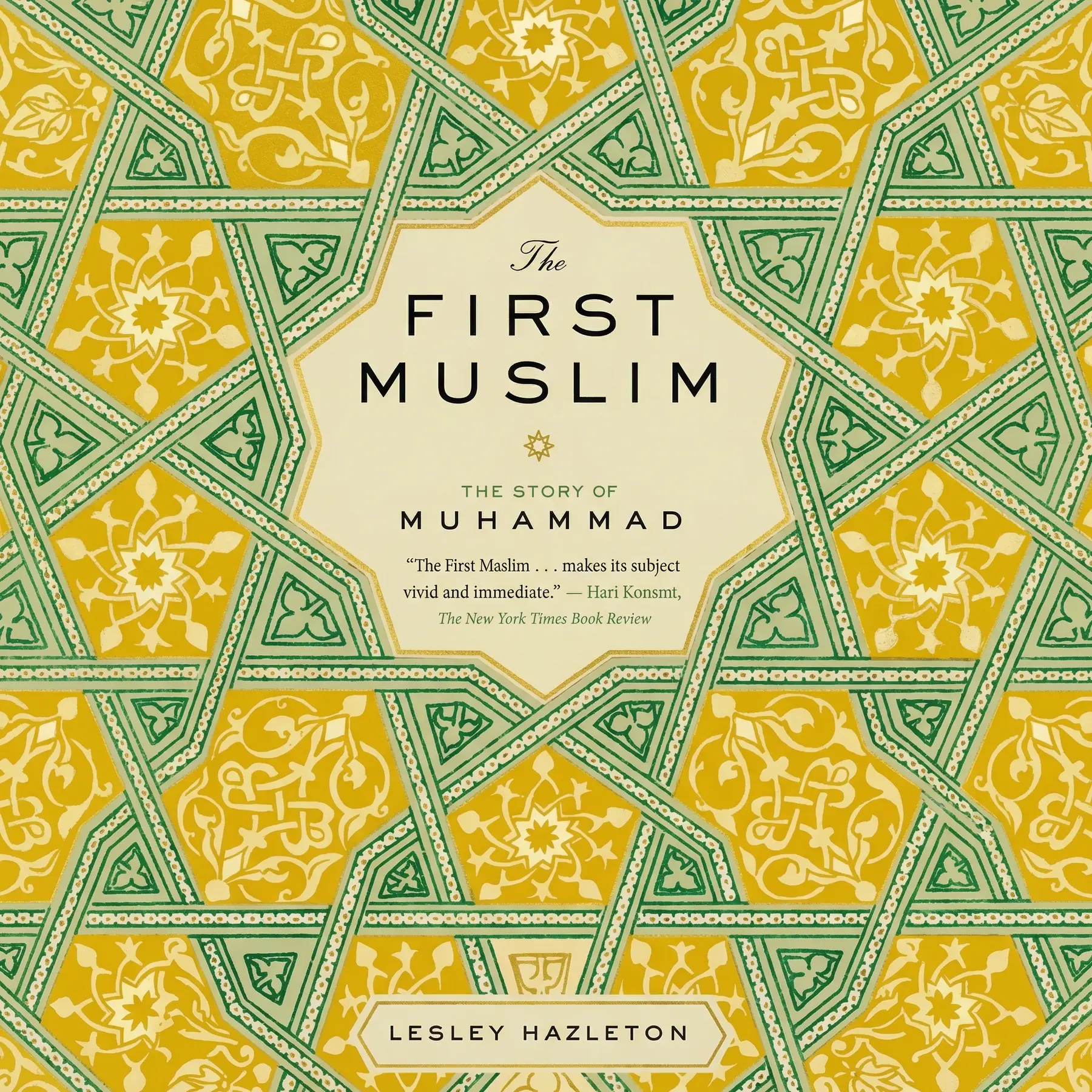
To many people, Muhammad is a name in the news or a symbol in a history book, and the man behind it is hard to see. Lesley Hazleton sets out to close that distance. She tells the life of Islam's prophet as the story of a person who struggled, doubted and was rejected long before he was followed. Her account begins with a grandfather's vow that nearly cost Muhammad's father his life, then moves through a desert childhood with a bedouin nurse who raised him, an unremarkable youth as an outsider in Mecca, and a vision on Mount Hira at forty that left him convinced he was going mad. Two silent years of doubt follow, then dinners where his own uncle walked out, a boycott of his clan, an exile to Medina, an unarmed pilgrimage that won a truce, and finally a march that took Mecca. Readers get a clear, human portrait of one of history's most influential lives, a lesson in patience through silence, and a sharper sense of how closely faith and politics were joined from Islam's very first sermons.
Curious readers who know Muhammad only as a name and want the human story behind it.
Students of history and religion looking for a clear account of how Islam began in Mecca and Medina.
Anyone facing a long stretch of doubt or rejection who wants a historic example of patience.
Lesley Hazleton was born in Reading, Berkshire, in 1945 and died in 2024. She began her career reporting from Israel, lived in the Middle East for many years and moved to the United States in 1979, later settling in the Pacific Northwest. Her articles appeared in Time, The Jerusalem Post and The New York Times, on subjects from automobiles to history, politics and religion. Her books include The First Muslim, After the Prophet and Jezebel.
Listeners find this biography to be thoroughly researched and accessible, depicting Muhammad’s life through a modern lens. It receives acclaim for its storytelling, with one listener observing that it makes historical figures feel alive again, and listeners also admire the book's respectful tone and moral foundation. The writing also earns praise, with one review emphasizing the author's diligent investigative work. Nevertheless, views on the book's objectivity are split, with some listeners viewing it as an honest account while others remain skeptical of its accuracy.
Hazleton has a gift for taking dry, dusty history and turning it into a vivid, breathing narrative. This biography doesn't just list dates; it manages to evocatively transport the reader back to the 7th-century Arabian landscape. I found the 'Orphan' section particularly moving, as it highlights the Prophet’s early vulnerability and his deep pursuit of the spiritual in the solitude of the Cave of Hira. To be fair, she writes with an agnostic's eye, but she remains incredibly respectful of the moral values and the profound weight of the revelations. The storytelling is so cinematic that it feels more like a novel than a traditional hagiography. It brings historical figures like Khadija to life with a contemporary style that makes their struggles feel immediate and real. While some might find the lack of pious restraint jarring, I found it refreshing. It is a brilliant, well-researched look at the man behind the faith.
Show moreAs someone who grew up with the traditional hagiographies, this book felt like a breath of fresh air. It’s an excellent analysis that challenges the 'force-fed' versions of history we often receive. Hazleton doesn't claim to be a believer, which allows her to explore the political and emotional biases of the time without the usual restraint. The truth is, many of the events she describes are backed up by the Bukhari and Muslim narratives, even if we find them uncomfortable to contemplate today. Her writing is poetic and admiring where it counts, especially regarding the bond between Muhammad and Khadija. This isn't just a religious text; it's a study of leadership, resilience, and the human spirit under extreme pressure. It makes you realize that the protagonists were real people facing impossible choices. I highly recommend it to any critical thinker looking for a deeper understanding of Islam's origins.
Show moreWhat a profound journey into the heart of a man who changed the world forever. Hazleton’s 'The First Muslim' is a masterpiece of storytelling that manages to be both critical and deeply respectful. I loved the focus on the early years—the nights of meditation under the stars and the terrifying weight of the first revelations. It makes the story of Islam feel less like a dry list of conquests and more like a transformative spiritual movement. The author’s background as an agnostic actually helps the narrative by providing a sense of distance that makes the human elements shine brighter. She presents the Prophet as a receiving vessel, overwhelmed by his task, which is a perspective I hadn't encountered before. It’s a well-researched, contemporary biography that brings a much-needed level of humanity to a figure often shrouded in myth. Absolutely essential reading for anyone interested in history.
Show morePicked this up after hearing mixed things, and I must say the contemporary style is what kept me turning the pages. Hazleton does a remarkable job of humanizing a figure that is often presented in either purely devotional or overly clinical terms. The way she describes the social dynamics of Medina and the complex dealings with the Jewish tribes is fascinating, even if it feels a bit lopsided at times. Look, she isn't a traditional scholar, and her tendency to ignore the hierarchical system of hadith literature is obvious in the 'Exile' section. However, the book excels at providing context for the political and emotional landscape of the time. It’s an uncomfortable read for some because it treats the protagonists as humans with real biases. Despite the occasional over-analysis, it’s a compelling look at the origin of Islam that forced me to think critically about the history I was taught.
Show moreCan a biography be both rigorously researched and read like a high-stakes political thriller? This book certainly tries, and for the most part, it succeeds brilliantly. The writing style is immersive, bringing the desert heat and the tension of the early converts right to your doorstep. I appreciated how Hazleton handled the 'Leader' phase of the Prophet’s life, even when she drew somewhat forced parallels to Machiavelli or modern politics. To be fair, there are moments where her own liberal arts background colors the assessment of tribal warfare and marriages. But the central strength of the book is its ability to make these historical figures feel like flesh and blood rather than static icons. It’s a respectful approach that doesn't shy away from the 'unsavoury' episodes often skipped in religious texts. A very solid four stars for the sheer quality of the storytelling and the extensive research involved.
Show moreThe way Hazleton describes the Arabian landscape makes the environment feel like a character itself. Her prose is elegant, and the book is remarkably easy to read compared to more academic biographies. I was particularly impressed by the first part, 'Orphan,' which captures the desolation and solitude of the Prophet’s early years with such grace. Personally, I didn't mind the speculation on his state of mind as much as others did; it helped bridge the gap between the facts and the lived experience. However, her treatment of the Medina period did feel a bit rushed and occasionally lacked the necessary nuance when dealing with tribal conflicts. She tends to favor controversial statements to keep the narrative moving, which can be a bit misleading. Still, it’s a well-researched and deeply humanizing portrait that brings a significant historical era back to life for a modern audience.
Show moreFinally got around to reading this and I appreciate how it attempts to bridge the gap between religious devotion and secular history. The book is incredibly well-written, almost novel-like in its pacing and structure. Hazleton brings figures like Abu Sufyan and Abd-Allah ibn Ubayy to life, giving them motivations and voices that are often missing from shorter accounts. Got to say, the Freudian analysis of Muhammad's thoughts was a bit much at times, but it did make the story more accessible. The author provides references for almost everything, which helps ground the more speculative parts of the text. It’s an honest, if occasionally biased, look at the moral values and political struggles that defined the early Muslim community. While I still prefer the factual depth of Armstrong, this is a fantastic companion piece for anyone who wants a more emotive and personal look at the Prophet's life.
Show moreWhile the prose is undeniably beautiful and easy to read, I struggled with the author's frequent attempts to psychoanalyze a 7th-century figure. Frankly, I don't know how a writer in the 21st century can claim to know exactly what was going through Muhammad's mind during specific periods of his life. Hazleton adopts a Freudian style of analysis that often feels like pure speculation rather than historical fact. For those looking for a purely objective, factual biography, this might be frustrating. I would suggest Karen Armstrong’s work if you want something that feels a bit more grounded in rigorous scholarship. The book is certainly well-written and engaging, but the constant 'he felt' or 'he thought' moments made me question the accuracy of the narrative. It’s a readable history, but one that requires a healthy dose of skepticism regarding the author's creative leaps.
Show moreFew books manage to be this engaging while simultaneously making me want to fact-check every other page. Hazleton is a fantastic storyteller, but her tendency to juxtapose contemporary notions of society on a 7th-century milieu is frequently off-putting. For instance, her references to 'Bullish Wall Street' and other modern analogies felt incredibly tone-deaf in a biography of this nature. Not gonna lie, the 'Exile' section was a bit of a slog because the author seemed to accept or reject historical evidence based on what fit her narrative. She ignores the complex hierarchy of hadith and instead relies on her own instincts to fill in the gaps. While it’s a readable history for a beginner, it lacks the rigor required for a truly authoritative biography. It’s a decent introductory text, but it should be read alongside more traditional sources to get a balanced view.
Show moreDisappointing is an understatement for a book that prioritizes narrative flair over historical objectivity. I found the author’s bias particularly glaring during the chapters regarding the Banu Qurayza and the Medinan Jews. She indirectly portrays the Muslims as barbaric while ignoring the nuances of betrayal that historians like Adil Salahi cover much more fairly. The most frustrating part, however, is the 'Freudian' attempt to read the minds of people who lived over a millennium ago. It felt like she was projecting her own 21st-century values onto a society where a man’s word was his bond. Furthermore, some sections felt like they were simply lifted from her previous work, 'After the Prophet,' which felt lazy. If you want a factual, unbiased biography, look elsewhere. This felt more like an impressionistic account fueled by the author's personal conjectures than a serious piece of historical scholarship.
Show moreIt tells the life of Muhammad as a human story rather than a portrait of a remote saint. Hazleton follows him from his grandfather’s vow and his fatherless childhood, through his first vision on Mount Hira at forty and two years of silent doubt, to his clan’s boycott, his move to Medina and his entry into Mecca in 630 as the leader of a new religion.
In 610, during Ramadan, Muhammad went to a cave on Mount Hira to pray and met the angel Gabriel, who told him he was God’s messenger and must recite. Terrified, he thought he had gone mad and even considered throwing himself from the mountain. His wife Khadija calmed him, and the words he repeated became the opening of the Qur’an.
His revelations broke tribal custom and challenged the powerful. Naming his young cousin Ali as his representative violated the rule that sons obey fathers, and his preaching at the Kaaba criticized corruption and wealth while siding with the poor. The heads of the Makhzum and Umayyad clans responded by having his whole Hashim clan boycotted from trade and marriage.
After years of inconclusive fighting, he led unarmed followers to Mecca as pilgrims. Meccan law forbade blocking a pilgrim, so the cities agreed a ten-year truce and tribes could choose whom to follow. When bedouin allies of each city later clashed, Muhammad marched on Mecca on January 11, 630, and took it without real resistance.
Hazleton’s account highlights patience: Muhammad endured two years of silence after his first revelation before more came. It also shows persistence through rejection, from a walkout by his own uncle to exile in Medina, and how religion and politics were intertwined from the start, since his earliest message took the side of the poor against the powerful.
Barack Obama


Masaji Ishikawa


Ben Macintyre

Daniel Goleman



James Shapiro

Eckhart Tolle
AUDIO SUMMARY AVAILABLE
Get the key ideas from The First Muslim by Lesley Hazleton, plus 5,000+ more nonfiction titles.









