

13 min 08 sec
Available in: English
The First Minute: How to Start Conversations that Get Results
A short, repeatable way to open any work conversation, email or escalation: name the topic, state what you need, lead with the key fact, summarize as goal, problem and solution, and check time first.
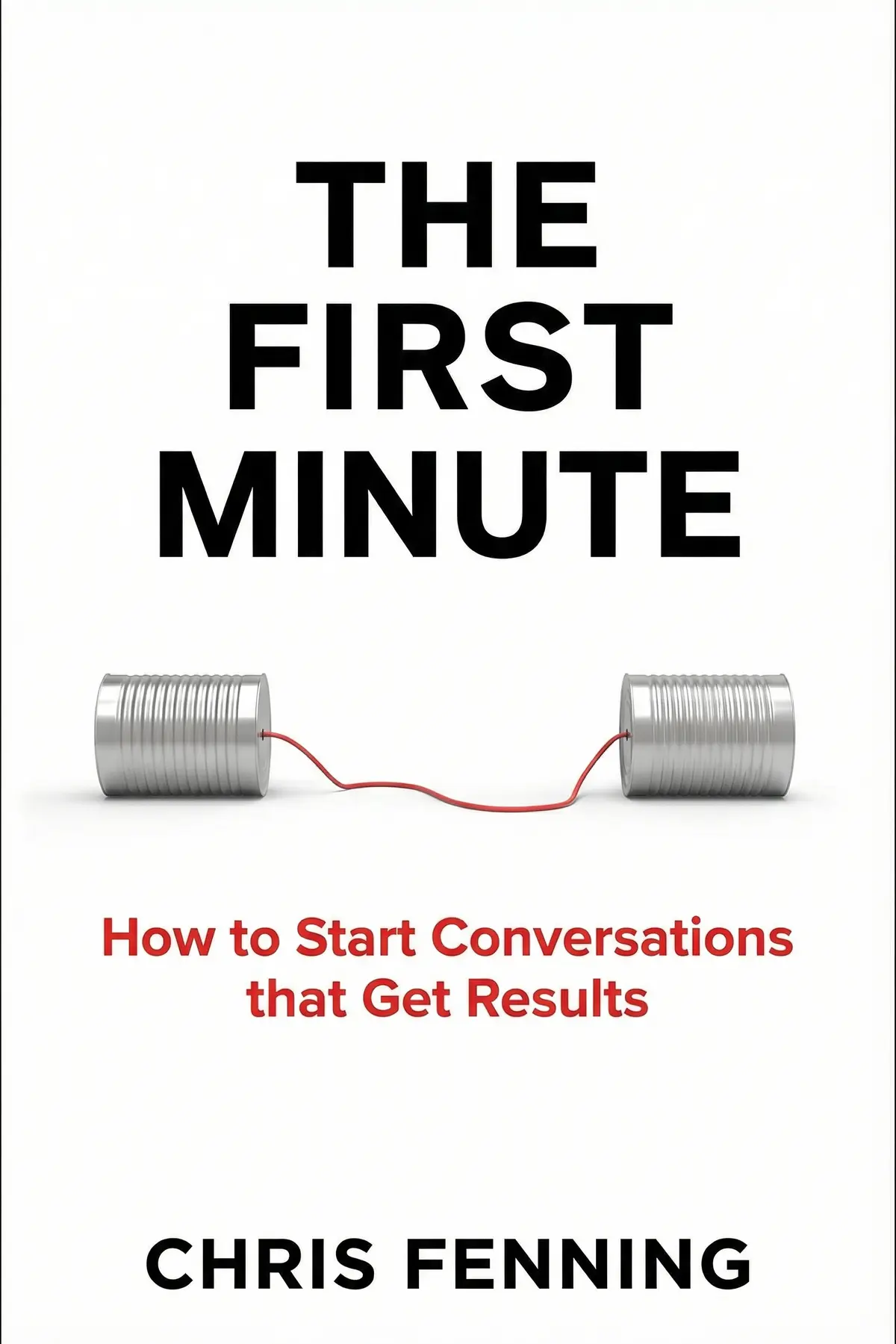
Table of Content
1. Introduction
1 min 02 sec
Most people at work lose their listener before they reach the point, because they open with the backstory instead of the reason they came. In The First Minute, Chris Fenning, who spent more than 15 years managing teams and projects at international companies, argues that the first sixty seconds of a work conversation decide whether it goes anywhere. His fix is a short opening you can repeat every time: name the topic, say what you need from the listener and give the one thing they must know, all before any detail.
The idea running through the whole book is simple. Give people structure before substance, and check that they can actually listen, and conversations get shorter, clearer and more likely to end in action. The tools are small: a three-part frame, a goal, problem and solution summary, an honest request for time and a quick check that you have the right person. Each one works in a hallway chat, an email, a meeting invite or a tense escalation, and you can try any of them tomorrow morning.
2. Stop losing listeners before your point arrives
1 min 47 sec
You prepared well, your facts are right, and the room still looks lost within minutes. The cause is rarely what you said. It is a habit almost everyone at work shares, and it starts in your first sentence.
3. Open with context, intent and key message
2 min 02 sec
Fifteen seconds is enough to turn a confusing project meeting into a focused one. Fenning breaks that opening into three parts, and one of them matters far more than people expect.
4. Summarize anything as goal, problem, solution
1 min 53 sec
Retelling events in the order they happened feels natural and loses almost every listener. A three-word method borrowed from navigation gives complex topics a route people can follow without stripping out what makes them hard.
5. Ask for the time you really need
1 min 43 sec
The most common way to start a talk at work is also one of the most misleading. Two small checks, one before you begin and one in the middle, can save a relationship and a wasted afternoon.
6. Make every email and invite clear at a glance
1 min 48 sec
A busy reader gives your message a few seconds before deciding whether it matters. Fenning shows where context, intent and summary belong in emails, invites, slides and chat, and why the casual channels are the hardest.
7. Keep your structure when the pressure rises
1 min 45 sec
An unexpected interview question, a challenge in the middle of a presentation, a problem your manager must hear today. These are the moments people ramble most, and the same simple opening turns out to help most.
8. Conclusion
1 min 08 sec
The First Minute makes an argument that sounds modest and turns out to be demanding: most of what goes wrong in work conversations is decided before the real content begins. A listener who does not know the topic, the request or the key fact spends the meeting guessing. A listener who was never asked for time, or who cannot approve what you want, will not act, however good your idea is. Every one of Fenning’s tools fixes the opening instead of the middle.
That makes them easy to start. Before you speak or write, decide the topic, what you need and the one thing they must know, and say those first. Shape the substance as a goal, the problem in its way and your solution, and hold back the history unless someone asks for it. Ask for the real number of minutes you need, and pause after your summary to confirm you have the right person at the right moment.
Keep it up and colleagues stop bracing for a long story. They know your first sentence will tell them why you came, and that is a reputation worth more than any single slide.
About this book
What is this book about?
Many work conversations go wrong before the real content begins. Someone opens with background and every detail, the listener can't tell where it's going, and the meeting turns into rounds of clarifying questions. Chris Fenning spent more than 15 years managing teams and projects at international companies, and he watched this habit slow down ideas that deserved to move fast. His answer is to put the most effort into the first minute. A three-part frame tells listeners the topic, what you need from them and the one fact they must know. A structured summary built on goal, problem and solution gives them the whole arc before any detail. An honest request for time, and a later check that you have the right person, make sure someone is actually able to act on what you say. Fenning then applies the same order to emails, meeting invites, presentations, instant messages, unexpected questions, escalations and even good news. Readers get a small set of habits they can use in their next conversation, along with a reputation as someone whose first sentence always explains why they came.
Book Information
Who it's for
Workers with sidetracked updates
Professionals whose updates get lost in follow-up questions and side discussions.
IT and project teams
Project and IT people who need quick decisions from busy managers and other teams.
Juniors preparing to speak
Early-career staff preparing for interviews, escalations and their first presentations.
About the Author
Chris Fenning
Chris Fenning spent more than 15 years managing teams and projects at international companies, where he saw how poor communication can hold up good ideas. He now advises on communication, mainly on helping business and IT teams stay aligned, and has worked with individuals and teams around the world, from start-ups to Fortune 50 and FTSE 100 companies. The First Minute won several awards in 2021, including a Best Book Award from AmericanBookFest and an Axiom Business Book bronze medal. He lives in the Netherlands.
Ratings & Reviews
Ratings at a glance
What people think
Listeners find the guidance in this book to be actionable and well-organized, featuring authentic scenarios that are simple to use in everyday life. Additionally, they appreciate the instruction on vital communication techniques that help workplace conversations go more smoothly. This work is brief and accessible, with one listener pointing out that the first minute can make a big difference.
Top reviews
Grace
This book should be required reading for every new hire in the corporate world. Fenning manages to strip away all the usual business fluff, leaving only the most actionable advice for effective communication. I particularly loved the CIK framework—Context, Intent, Key Message—as it provides a concrete blueprint for those high-stakes first seconds of a conversation. Honestly, I wish I had discovered these techniques earlier in my career instead of learning the hard way through trial and error. To be fair, while some might find the second half slightly less punchy than the first, the overall impact is undeniable. It is a slim volume of about 100 pages that respects your time while teaching you how to respect others'. If you want to be the person who gets a 'yes' before the meeting even really starts, buy this immediately.
Show moreIsaiah
Wow, I did not expect a book on business communication to be such an absolute page-turner. I grabbed my highlighter early on and basically didn't put it down until the end. The advice here is instantaneous in its impact; you can read a chapter and immediately apply the framing techniques to your next Zoom call. I especially appreciated the distinction between asking for extra work versus asking for insight or advice. It’s a subtle shift in language that completely changes how the listener processes your information. In my experience, most business books are 300 pages of fluff around 10 pages of ideas, but this one is pure substance from start to finish. It’s the perfect length for a busy professional who needs results now.
Show moreSomchai
After hearing about this guide for months, I'm glad I finally took the plunge and added it to my shelf. There is zero fluff here, just 100 pages of actionable advice that you can start using the very same day. I particularly resonated with the idea of 'framing' meetings by stating the goal and the required decision within the first fifteen seconds. It prevents that awkward phase where everyone is trying to figure out why they are even in the room. This should be a recommended read in workplace settings for all aspiring managers and team leads. Personally, I found the GPS method for reporting outcomes to be the most useful part of the entire book. It turns a boring status update into a narrative of success and forward-looking solutions. Highly recommended.
Show moreLeah
As someone who manages a large, fast-paced team, I am constantly looking for ways to streamline our internal communications. Fenning’s focus on the first fifteen seconds of an interaction is brilliant because that is where clarity is truly won or lost. Using framing to steer a conversation toward a specific decision or piece of input is a simple tool, yet it is incredibly powerful when applied correctly. My only minor gripe is that the CIK mnemonic isn't quite as 'sticky' as the GPS one. Still, the real-world examples provided make the concepts easy to visualize in a corporate structure. Truth is, if everyone on my team read this, we would probably save five hours of meeting time every single week. It is a very concise and practical guide that delivers exactly what the title suggests.
Show moreLogan
Finally got around to reading this after seeing it recommended on LinkedIn multiple times by folks I respect. The book is incredibly concise, which I appreciate, though the second half is a bit harder to follow than the punchy opening chapters. The CIK (Context, Intent, Key message) method is a great way to ensure your boss knows exactly why you're standing in their doorway. I've already noticed that by stating my intent upfront—whether I'm looking for a decision or just venting—the responses I get are much more helpful. To be fair, this style of communication might not work for every single persuasive situation, but for day-to-day operations, it’s a game-changer. It’s a short, helpful guide that focuses on making workplace interactions smoother and more productive.
Show moreSomporn
The chapter on 'Framing' alone is worth the price of admission for this book. Fenning explains how our brains take a few moments to process incoming information, and how we can help others by providing clear signposts. I used to just dive into the details of a problem, but now I start by stating the project name and exactly what I need from the listener. It sounds simple, but the shift in how people react to me has been significant. I’ll definitely listen to the audiobook version of this again just to let the GPS and CIK methods really sink in. Not gonna lie, I wish a simple chart of when to use each tool had been included at the end. Despite that, it's a very practical resource for anyone looking to improve their professional presence.
Show moreNina
Look, we all know that the first sixty seconds of a conversation can make or break a project proposal, and this book gives you the tools to win that window. The writing is direct and clear, mirroring the exact communication style Fenning advocates for. I found the section on the three types of problem situations—needing a solution, recommending one, or reporting an outcome—to be particularly enlightening. It helps you categorize your thoughts before you even open your mouth. While I agree with other reviewers that it could have been even shorter, the repetition does help the mnemonics stick in your mind. This is a very practical look at how to communicate with impact. It’s a great resource for anyone who feels like their messages are getting lost in the noise of a busy office.
Show moreChee
Ever wonder why some meetings feel like a massive waste of time because the speaker simply cannot get to the point? This book promises to fix that, and for the most part, it offers a solid foundation for more direct workplace interactions. The 'GPS' (Goal, Problem, Solution) method is a fantastic, easy-to-remember initialism that I’ve already started using in my weekly status updates. However, I found the text to be a bit dragged out and repetitive in certain sections, which is ironic for a book preaching brevity. Frankly, the entire message could have been summarized in a long-form blog post. I used a Hoopla credit on this, and while I don’t regret the time spent, it didn't quite live up to the massive hype for me. It is a helpful guide, but keep your expectations grounded.
Show moreBenjamin
To be fair, the core message here is incredibly valuable, even if the delivery feels a bit thin at times. It is a short and helpful guide to talking more directly, which is something almost everyone in corporate America needs to work on. I liked the focus on the initial moments of interaction and how that sets the tone for everything that follows. However, I think the book struggles to stay engaging once it moves past the primary frameworks. Some of the real-world examples felt a bit forced or overly simplified for complex office politics. It’s a good read if you want a quick hit of inspiration, but don't expect a deep dive into the psychology of persuasion. It’s a solid 3-star read that does its job without much fanfare.
Show moreTak
Not what I expected given the rave reviews I had seen online. For a book that emphasizes how important clear and quick messages are, the writing itself felt surprisingly repetitive and circular. I found myself skimming through several chapters because the author kept hammering the same two or three points over and over again. Look, the core concepts like the GPS framework are definitely useful, but they don't justify a full book. I felt like I was wasting my time reading through examples that were all variations of the same scenario. If you’re already a decent communicator, you probably won’t find much new here. It might be okay for someone just starting their first office job, but for seasoned pros, it feels a bit elementary and stretched thin.
Show moreQuestions about this book
What is the main idea of The First Minute by Chris Fenning?
Fenning argues that the opening minute of a work conversation decides whether it succeeds. Instead of starting with background and detail, he recommends a short frame of context, intent and key message, followed by a summary built on goal, problem and solution. Add an honest request for time and a check that you have the right listener, and conversations get shorter, clearer and more likely to end in action.
What is the GPS method in The First Minute?
GPS stands for Goal, Problem, Solution. Before going into any detail, you say what you want to achieve, what obstacle blocks it and the way you suggest solving it. Fenning presents it as a cure for retelling events in the order they happened. It keeps complex topics such as budgets or technical obstacles intact while making the path from problem to solution easy to follow.
How do you frame a conversation at work?
Fenning’s frame has three parts delivered in about the first fifteen seconds. Context names the project or topic. Intent says what you need from the listener, such as input, a decision or simple awareness. The key message is the single fact they must know, like a missed milestone. When you have several topics, give each one its own small frame as you reach it.
Why shouldn't you ask a colleague if they have a minute?
Because the minute often turns into ten or twenty and disrupts their schedule. Fenning suggests stating the actual time you need, so the listener can decide honestly. Later, after your summary, a validation checkpoint confirms that they are the right person to help and still have the attention to continue. That way you avoid, for example, pitching an expense to someone who cannot authorize it.
How can I use The First Minute in emails and meetings?
Put the context in the email’s subject line and the intent in its first sentence, then set out goal, problem and solution as short points. Meeting invites should state the purpose and expected outcome at the top. Presentations open with a brief summary, and even quick chat messages should make the intent clear. The same order helps with escalations, unexpected questions and sharing good news.
Readers also enjoyed




60 Seconds & You’re Hired!
Robin Ryan



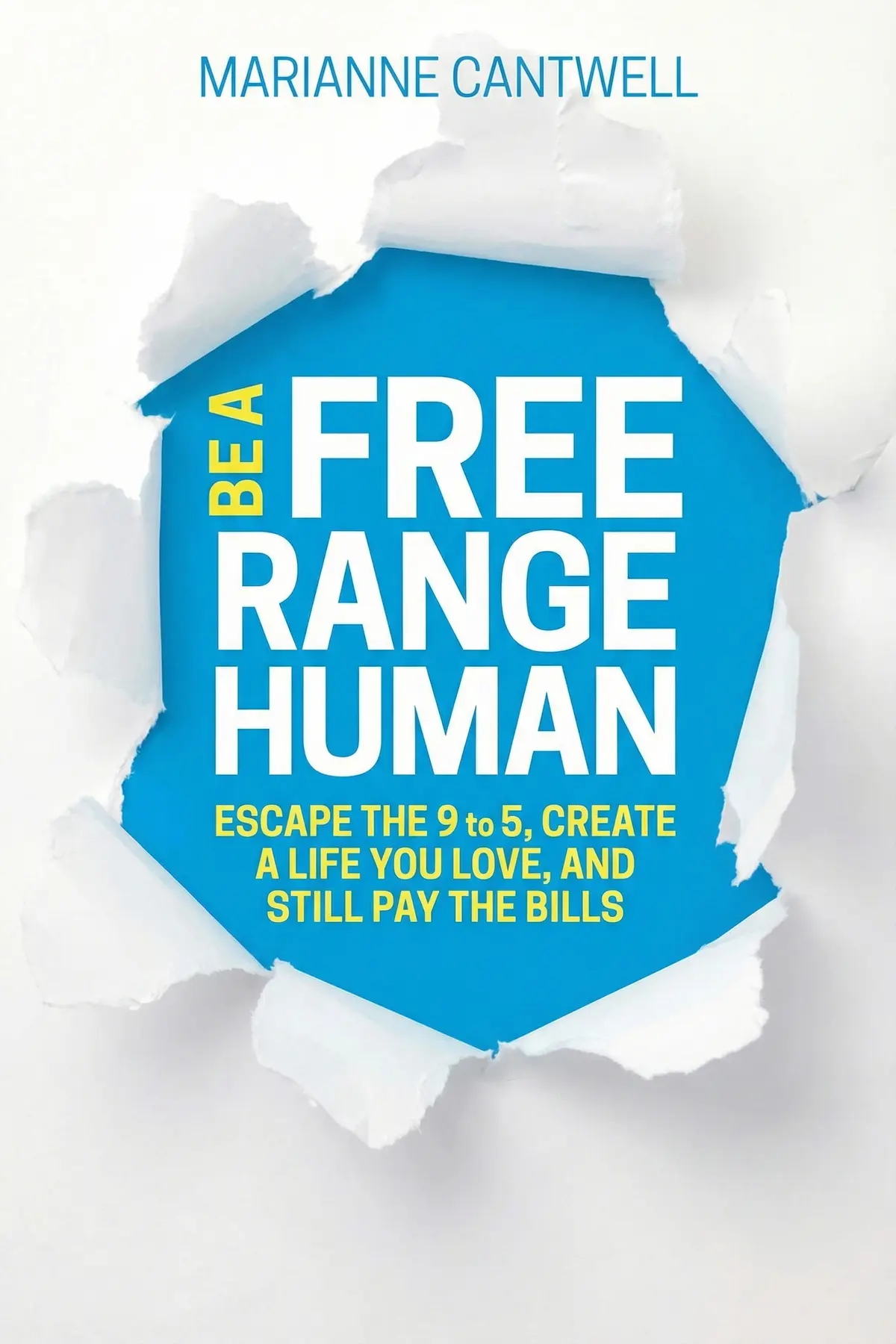
Be A Free Range Human: Escape the 9 to 5, Create a Life You Love,
Marianne Cantwell
AUDIO SUMMARY AVAILABLE
Listen to The First Minute in 15 minutes
Get the key ideas from The First Minute by Chris Fenning, plus 5,000+ more nonfiction titles.
- 5,000+ titles
- Listen as much as you want
- 7-day free trial
- Cancel anytime









