

A Promised Land
Barack Obama
 English
Paul Newman's posthumous memoir traces how a showpiece childhood left him guarded and split in two, and how drinking, fame, loss and late generosity slowly brought the two halves of him together.
1 min 07 sec
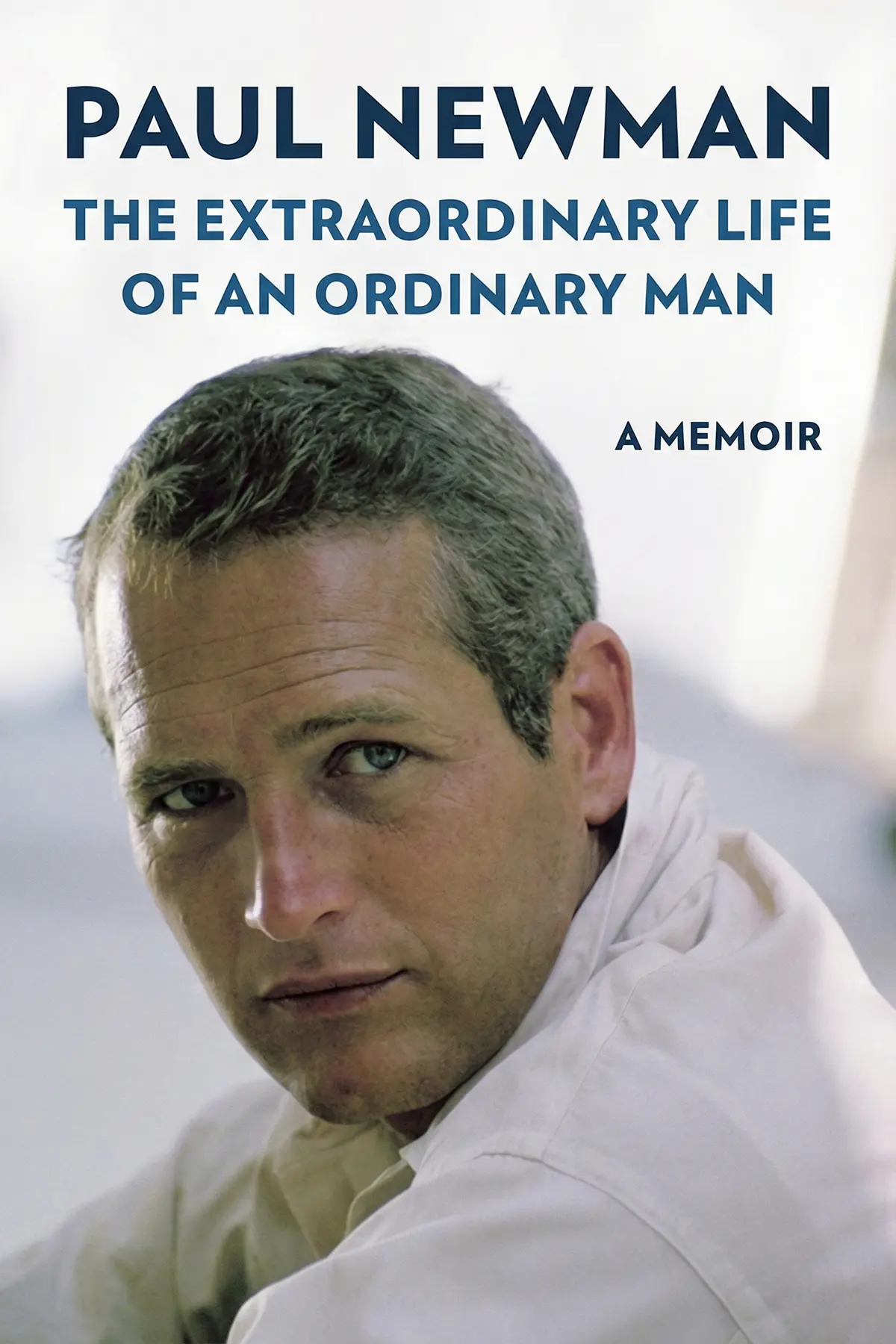
Many of us carry a polished version of ourselves, built to please someone else, and Paul Newman believed his nearly crowded out the real one. In The Extraordinary Life of an Ordinary Man, the actor describes himself as two people: a decorative boy his mother dressed up and showed off, and an orphan underneath who never learned who he was.
Between 1986 and 1991, Newman dictated his life story to tape, helped by his friend, the screenwriter Stewart Stern, who also interviewed family and friends. The transcripts then sat in storage, and only in 2019 did the family start finding the pieces. The book skips most Hollywood gossip. It follows one idea: a man the world adored spent sixty years letting the hidden orphan catch up with the boy everyone saw. Along the way it gives a frank account of how a cold, showy household echoed through his drinking, his marriages and his parenting, and of the late repairs he still managed to make.
2 min 02 sec
A spotless house, a mother who treated her son like an ornament, and a father who drank in the basement. Newman found a name for what that home did to him, and it explains much of what came later.
2 min 00 sec
Audiences praised his Shakespeare at college, yet the stage left him cold. The achievement he actually treasured from those years involved soap, slogans and free drinks, and it says a lot about who he really was.
2 min 10 sec
A rushed marriage, a dying father and a sudden escape to drama school. Newman’s career began to move fast during these years, but something inside him refused to move with it.
2 min 18 sec
A director told him he was missing the one quality the lead role demanded. A fellow actor supplied it, and the result launched his career while tearing his first family apart.
2 min 16 sec
Fame gave Newman a seat at a United Nations conference and a racing team that won again and again. It also reached into his family, and he openly wonders whether his children would have fared better had he chosen another career.
2 min 10 sec
After three decades of feeling like a fraud among great actors, Newman finally found ease on screen. The role that did it, and the causes he built afterward, drew on the very things that had hurt him most.
1 min 11 sec
Newman’s memoir is an unusual thing: a movie star telling the world that the face it loved was partly a costume made at home. Its value lies in how plainly he draws the line from a spotless house in Shaker Heights to the walls he built, the beer he drank, the guilt of his first marriage and the son he lost. He tells it without polish. He also does not stop at the damage, and that is what makes the story useful to people who will never stand on a film set.
His life suggests a few things worth watching for in your own. Notice the difference between the work people praise and the work that truly makes you proud, the way a laundry with free beer meant more to him than his Petruchio. Ask whether moving fast is really a way of running away. And take seriously the idea that repair can start late: he was past sixty, talking into a tape recorder, still trying to understand himself.
The camp may be the image to keep. A boy once displayed like a decoration ended up building a place where seriously ill children could feel what it is to accomplish something.
Behind the blue eyes and the famous roles, Paul Newman felt like two people. One was the decorative boy his mother dressed up and showed off. The other was an orphan underneath who never learned who he was. Between 1986 and 1991 he dictated his life story to tape, and after his death his family recovered the material and assembled it into this memoir. Newman skips most Hollywood gossip. Instead he follows the line from a spotless, tense home in Shaker Heights, Ohio, through the Navy, a beer-soaked college career, a hasty first marriage, the Actors Studio and his affair with Joanne Woodward, to stardom. He is frank about the cost: heavy drinking, guilt, a sense of being emotionally numb, and the overdose death of his son Scott. Readers get an honest account of how family patterns echo through work, love and parenting, and of the repairs Newman still made late in life, from his finest performance in The Verdict to Newman's Own and a camp for seriously ill children.
Fans of classic films who want the inner life behind Cool Hand Luke and The Verdict.
Adult children of controlling or alcoholic parents trying to understand patterns they carry.
High achievers who feel admired for the wrong things and want to see how one man made peace with it.
Paul Newman (1925 to 2008) was an American actor and filmmaker who won the Academy Award for Best Actor for The Color of Money and starred in Butch Cassidy and the Sundance Kid and The Sting. He also won several national titles as a road racing driver with the Sports Car Club of America. He co-founded Newman's Own, a food business that gives its after-tax profits and royalties to charity, and later started the SeriousFun Children's Network and the Safe Water Network.
Listeners consider this memoir a remarkable and elegantly crafted work that offers a deep, personal glimpse into Paul Newman’s life and connections. The narrative is candid and perceptive, with one listener mentioning the contributions made by his family and friends. Listeners value the storytelling quality, as one listener called it a sincere chronicle of a man on a journey. The pacing draws varied opinions; some find it moving, whereas others describe the experience as raw.
This book is a masterclass in vulnerability from a man I thought I knew everything about. It isn't a glossy Hollywood promo piece. Instead, it feels like a raw autopsy of a soul, reconstructed from tapes Newman recorded decades ago with Stewart Stern. I was struck by how little he actually liked himself. Despite the fame, the legendary blue eyes, and the success of Newman’s Own, he seemed perpetually haunted by a sense of inadequacy. The way he discusses his struggle with alcohol and the tragic loss of his son, Scott, is painfully honest. It’s a heavy read but incredibly rewarding for anyone who appreciates a memoir that refuses to pull punches. You walk away feeling like you finally met the person behind the movie star facade.
Show moreNot what I expected from a Hollywood legend’s life story, especially given how private Newman was during his actual lifetime. This is a deeply personal, almost diary-like look at a man who never felt he deserved his luck. The project was originally meant for his children, and you can feel that intimacy in every page. The way he navigates the 'decoration' of his public image versus the 'orphan' inside is profoundly moving. It’s clear he did a lot of work in therapy to understand his mother’s influence and his own predispositions toward addiction. For a man of his generation to be this emotionally articulate is rare. It’s a beautiful, painful, and ultimately extraordinary legacy that his family was right to share with the world.
Show moreWow, I didn't realize how much of this was based on transcripts from the 80s that were only recently recovered from a storage unit. It feels like a voice from the grave, and a very honest one at that. Newman’s obsession with the truth is the driving force here. He wanted to strip away the tabloid version of his life and leave something real for his kids. His reflections on aging, the 'blue eyes' curse, and his genuine passion for philanthropy are handled with such grace. It’s one of the few celebrity memoirs that actually feels like it has a soul. I finished it in two sittings. Highly recommended for anyone who values substance over sizzle.
Show moreListening to the audiobook version narrated by Jeff Daniels added a whole other layer of intimacy to the experience. Daniels captures that weary, thoughtful tone perfectly. It’s fascinating to hear Newman’s life through the eyes of his contemporaries too, as the book incorporates several other voices from his inner circle. To be honest, I was surprised by how much time he spent in therapy and how deeply it influenced his worldview. He doesn't shy away from his failures as a father or a husband. While some sections regarding his early acting career dragged slightly, the insights into his philanthropy and his refusal to buy into his own hype were incredibly refreshing. It's a solid, thoughtful account of a very complex man.
Show morePicked this up knowing him mainly as the 'salad dressing guy' from the grocery store aisles, and I was blown away by the depth of his character. I had no idea about his racing career or the sheer scale of his charitable work. This book does a great job of showing how he tried to level the playing field for others. The segments about his marriage to Joanne are lovely, even if they show the cracks and the 'lusty machismo' he struggled with. It’s a very humanizing portrait. My only gripe is that it feels a bit fragmented in the later chapters. However, seeing how much he cared about being a 'good man' rather than a 'famous man' made me a lifelong fan.
Show moreThe chapter on his relationship with his son, Scott, was absolutely gut-wrenching to get through. You can tell Newman carried that weight until the day he died. This isn't an industry memoir filled with gossip; it’s a study of character and the contradictions of a man who was both a loner and someone who needed people around constantly. I loved the inclusion of outside perspectives from his ex-wife Jackie and his colleagues. It provides a necessary counterbalance to Paul’s own harsh self-assessment. He was clearly a much better man than he gave himself credit for. The prose is sharp and the insights into his 'method' acting are a treat for cinema buffs. A very worthy read.
Show moreAfter hearing about this project on NPR, I was curious how his family would piece together his unfinished reflections, and they did a remarkable job. It’s a thoughtful and often somber look at a 'Hollywood giant' who preferred the company of race car mechanics. The book successfully captures his search for excellence and his constant battle with his own vanity. To be fair, the second half loses some of the narrative drive of the first, turning into more of a collection of essays on specific topics like parenting and alcohol. Still, the honesty is staggering. It makes you want to go back and watch his entire filmography with a new understanding of the man behind the roles.
Show moreTo be fair, Paul Newman was incredibly hard on himself, almost to the point where it becomes uncomfortable to read. I picked this up expecting stories about movie sets and Golden Age Hollywood glamour, but it’s much more of a psychological self-dissection. He speaks about himself like he’s trash at times, which is jarring considering how much the world adored him. I appreciated the honesty regarding his drinking and his relationship with Joanne Woodward, but the tone is relentlessly self-deprecating. It lacks the charm I expected. It’s a valuable historical document for fans, certainly, but I found myself wishing for just a little bit more joy to balance out the internal gloom and guilt he seemed to carry.
Show moreEver wonder what it’s like to be the most famous man in the world and still feel like an absolute fraud? That is the core of this book. While I found Newman’s self-reflection interesting at first, it eventually felt like he was circular-sawing his own ego for 300 pages. He almost refuses to take credit for anything good he did. The structure is a bit hit-or-miss since it’s compiled from old interviews, meaning some life events are detailed extensively while others are barely mentioned. I enjoyed the bits about his friendship with Stewart Stern and his early days in New York. It’s worth a read for the history, but don't expect a traditional, upbeat celebrity autobiography.
Show moreFrankly, I found the structure of this posthumous memoir to be a bit of a mess. I wanted to love it because I admire Newman’s acting, but the transition from a linear childhood narrative to a jumble of random anecdotes in the second half just didn't work for me. The project was abandoned for a reason. It feels like the publishers were trying to squeeze blood from a stone by stitching together unfinished transcripts from a storage unit. While there are glimpses of wisdom, the constant jumping between voices—friends, family, and Paul himself—makes it hard to find a consistent rhythm. If you’re a die-hard fan, you might find it 'raw,' but to me, it just felt incomplete and repetitive.
Show moreIt is Paul Newman’s memoir, dictated to tape between 1986 and 1991 and assembled by his family after his death. Rather than Hollywood gossip, it explores how a childhood as his mother’s showpiece left him split between a decorative boy and a hidden orphan, and how that split shaped his drinking, marriages, fatherhood, acting and later charity work.
The decorative boy is the child his mother Tess dressed up, fussed over and showed off, a son treated as an extension of her. The orphan is his core self, confused about who he was. Newman says he spent about fifty years trying to deal with that upbringing, and only late in life did he feel the two sides becoming one person.
Yes, openly. Newman wonders whether his father’s hidden alcoholism played a part in his own heavy drinking, which first took off at Kenyon College. Even after therapy he could drink a case of beer a day before it eventually fell to a small glass of wine. He also writes about his son Scott’s long addiction and fatal overdose in 1978, and wonders whether his career harmed his children.
The book shows how early family patterns follow people into work, love and parenting, and that change can still begin late. Newman found his most natural acting in The Verdict, playing an alcoholic lawyer, and in his fifties and sixties turned to giving through Newman’s Own and the Hole in the Wall Gang Camp for seriously ill children.
Barack Obama


Masaji Ishikawa

Ben Macintyre


James Shapiro


Ben Macintyre

AUDIO SUMMARY AVAILABLE
Get the key ideas from The Extraordinary Life of an Ordinary Man by Paul Newman, plus 5,000+ more nonfiction titles.









