

13 min 03 sec
Available in: English
 ไทย
EnglishไทยThe Explosive Child: A New Approach for Understanding and Parenting Easily Frustrated, Chronically Inflexible Children
Shows parents and caregivers why rewards and punishments fail with easily frustrated children, and how to replace them with a calm, step-by-step conversation that finds the real cause of each meltdown and solves it together.
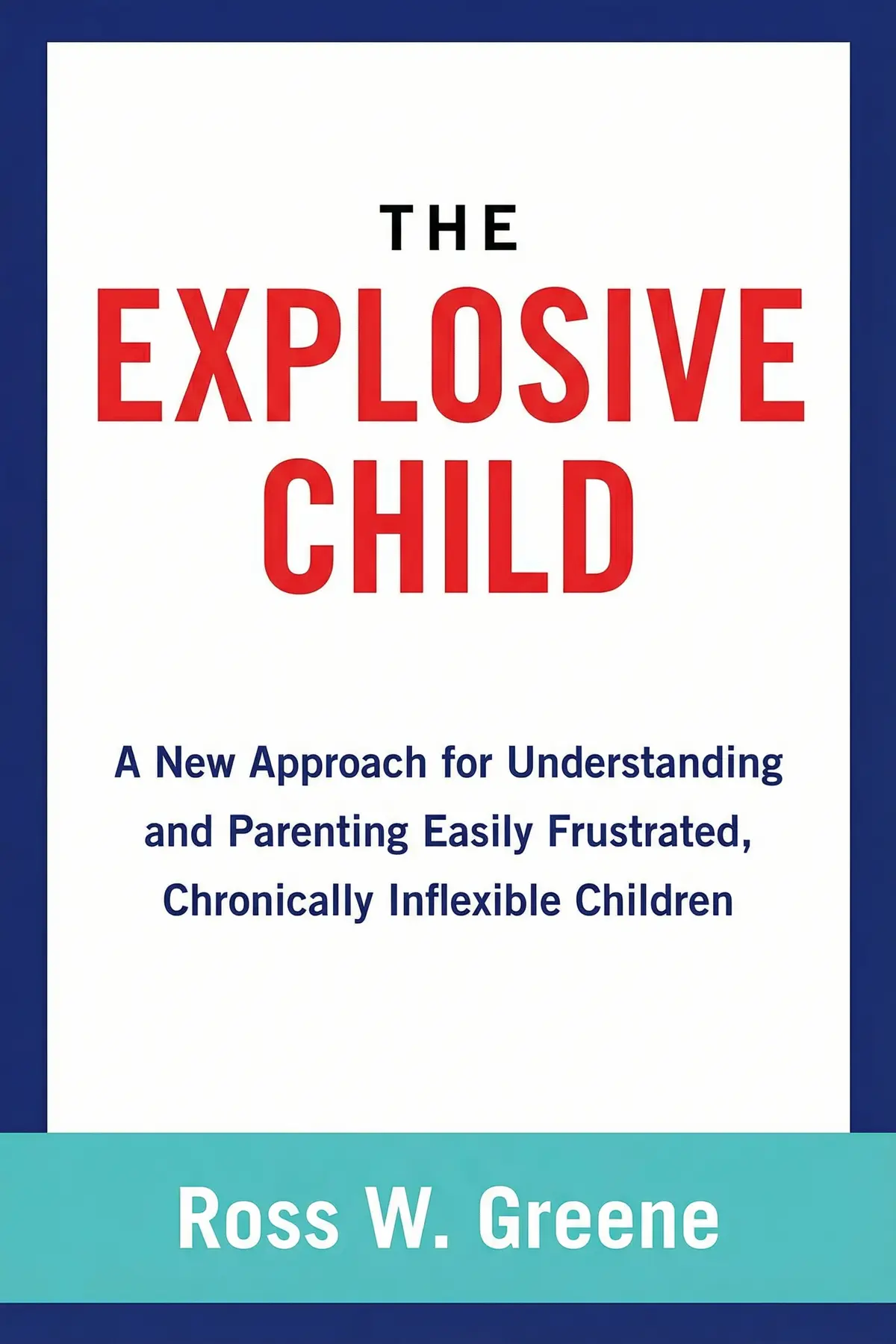
Table of Content
1. Introduction
1 min 02 sec
If every request at home, from brushing teeth to switching off a game, ends in screaming, more rewards and punishments are probably not the fix. In The Explosive Child, clinical child psychologist Ross W. Greene argues that a child who melts down usually lacks skills such as flexibility, frustration tolerance and problem solving. The wish to behave is already there. His guiding line is short: kids do well if they’re able to.
Take that seriously and the job changes. A parent stops pushing on willpower and starts spotting the specific moments where expectations outrun a child’s abilities, then works through each one with the child, calmly and ahead of time. Greene’s method rests on a few steps and a few plain phrases, starting with I’ve noticed and What’s up. Followed through, the nightly fights over homework or pajamas turn into a short list of problems that parent and child can solve together.
2. Stop treating meltdowns as a motivation problem
2 min 07 sec
Sticker charts, timeouts and lost privileges are the standard toolkit, and for some children they never make a dent. A morning fight over three waffles shows what that toolkit misses about why certain kids keep exploding.
3. Turn daily blowups into a short, solvable list
1 min 58 sec
Calling a child manipulative or attention seeking feels accurate in the moment and leads nowhere. Greene replaces those labels with a precise way of writing down trouble spots, and the exact wording turns out to matter more than most parents expect.
4. Pick the right plan before the next meltdown
1 min 54 sec
Most parents default to laying down the law, and sometimes that is exactly right. Greene describes three ways to respond to any unsolved problem, explains when each one fits, and argues that the least familiar one leaves the parent most in control.
5. Listen for what your child can't yet say
1 min 48 sec
A child screaming about homework rarely knows how to explain what is really wrong. Two short phrases and a few patient questions can turn a vague complaint into a cause so specific that the fix almost suggests itself.
6. Explain why the rule matters to you
1 min 28 sec
Parents can spend years enforcing a rule without ever saying out loud why it exists. Greene suggests voicing that reason with phrases like “My concern is,” and he notes that the parent still stays in charge throughout Plan B.
7. Find a fix you both can live with
1 min 24 sec
Asking a child to help solve their own meltdowns sounds like handing over the keys. Greene sets two firm conditions on any solution, and they explain why the most obvious fixes, from either side, usually fail.
8. Conclusion
1 min 22 sec
Greene’s book changes the question a parent asks at the worst moment of the day. Instead of how to make a child behave, it becomes which skill is missing and which problem is still unsolved. Rewards and punishments assume a child who chooses to explode. Greene sees a child who is overwhelmed, frustrated by an expectation they cannot yet meet, and he answers with curiosity, a clear statement of the adult’s concern and an invitation to solve it together.
Look again at Jennifer and the waffles. Through Greene’s lens, the shouting and the thrown plate point to a problem that could be written down calmly, without blame, and raised on a quiet afternoon when nobody is hungry or angry.
The method starts small. Write your child’s trouble spots as difficulty followed by a verb, with no behavior and no theory inside. Choose two to work on and let the rest wait. Then, when everyone is calm, open with I’ve noticed and ask what’s up, and keep listening longer than feels natural before you offer anything.
Greene’s closing point is that his principle covers adults too: parents also do well when they have the skills. A few practiced phrases are a good place to build them.
About this book
What is this book about?
Some children turn ordinary moments into battles: a toothbrush, a pair of pajamas or a missing waffle can end in screaming, hitting and thrown plates. Their parents have usually tried everything the experts recommend, from sticker charts to timeouts, and the explosions keep coming. Clinical child psychologist Ross W. Greene starts from a different premise. He argues that these children already want to behave well. What they lack are skills such as flexibility, frustration tolerance, problem solving and emotional control. When an expectation asks for more than they can manage, they blow up, and punishment only adds fuel. From that premise Greene builds a practical method. Parents learn to list their child's lagging skills, to write each trigger as a precise unsolved problem, and to choose between imposing a decision, setting a problem aside or solving it together. The heart of the book is that collaborative option: a three-step conversation in which the parent listens until the real cause comes out, explains their own concern, and invites the child to find a solution that works for both. Readers get the exact phrases to start it and the common mistakes that derail it.
Book Information
Who it's for
Parents out of ideas
Parents whose child melts down over teeth, homework or bedtime and who have run out of rewards and timeouts to try.
Teachers, grandparents and caregivers
Teachers, grandparents and caregivers who handle frequent outbursts and want a calmer way to respond.
Wanting a problem-solving script
Adults who want a step-by-step script for solving problems with a child instead of imposing on them.
About the Author
Ross W. Greene
Ross W. Greene is a clinical child psychologist and New York Times bestselling author who created the evidence-based Collaborative and Proactive Solutions model, a non-punitive way to understand and reduce challenging behavior in children. He spent more than 20 years on the faculty at Harvard Medical School, then founded the non-profit Lives in the Balance, which offers free resources on his approach and advocates for children with behavioral challenges and their caregivers. He also speaks out against suspension and expulsion in schools.
Ratings & Reviews
Ratings at a glance

What people think
Listeners consider this guide to be educational and skillfully composed, offering lucid illustrations and actionable methods. They value its accessibility and impact, especially regarding kids of school age, with one listener mentioning that the book helped shift their perspective on kids who struggle with behavior. The work earns praise for its communicative framework, including one listener who emphasized the focus on bonding through play, and listeners overall find the instructions logical and simple to implement.
Top reviews
Rose
Ever wonder why traditional time-outs and sticker charts only seem to escalate the drama with your behaviorally challenging child? Greene explains that these kids aren’t being manipulative or purposeful in their outbursts; they simply lack the cognitive flexibility to handle frustration. The collaborative problem-solving approach is a total game-changer for anyone dealing with school-age meltdowns. It turns out that when the demands of the environment exceed a kid’s skills, explosions happen. By focusing on 'Plan B'—which involves empathy and shared solutions—we finally started seeing a shift in our household dynamic. This book is informative, well-written, and offers a compassionate lens that is often missing from typical parenting guides.
Show morePridi
Wow, I finally understand what is happening in my seven-year-old’s brain when he refuses to turn off the TV or finish his homework. The focus on finding a middle ground through 'Plan B' conversations is much more effective than the constant power struggles we used to have. It’s informative without being overly preachy about past mistakes parents might have made. Every parent with a 'difficult' child should give this a fair shot because it reframes the entire parent-child relationship. We stopped focusing on the behavior and started focusing on the cause. The change in our family atmosphere has been remarkable since we stopped treating every fit as a battle to be won.
Show moreWyatt
Finally got around to reading this after a particularly rough week of school transitions and emotional meltdowns that left me exhausted. The author’s tone is incredibly empathetic toward both the frustrated child and the parent who is at the end of their rope. I love the emphasis on building a partnership rather than just demanding obedience through threats or rewards. It’s a refreshing take on behavioral psychology that treats children like human beings with lagging skills rather than monsters to be tamed. The section on the 'ALUP' (Assessment of Lagging Skills and Unsolved Problems) was particularly helpful for organizing my thoughts before talking to my daughter's teachers.
Show moreJirapat
This manual offers a radical departure from the 'my way or the highway' style of parenting that many of us grew up with. It’s straightforward and filled with transcripts that make the concepts feel grounded in reality, even if some of the dialogue feels a bit scripted. I appreciated how it targets specific triggers instead of just offering vague advice about discipline. While it requires a massive amount of patience to implement these collaborative conversations, the results are much more sustainable than temporary punishments. My son responded well to being part of the solution rather than just being the problem. It really helped me rephrase our daily struggles into 'unsolved problems' we can tackle together.
Show moreAva
After hearing so many recommendations, I finally dove into this book and it completely altered how I view my son's chronic irritability. The phrase 'kids do well if they can' has become my new mantra during difficult morning transitions. It turns out his 'defiance' was actually just a lack of skills to process change and manage frustration. The book is straightforward and easy to navigate, focusing on playful connection rather than power struggles. I did notice that the author almost exclusively uses 'he' throughout the book, which felt a bit dated. However, the strategies for identifying triggers are top-notch and have helped us reduce the frequency of his outbursts significantly.
Show moreClara
Look, I’ll be honest: the first few chapters were a bit repetitive as Greene hammers home his core philosophy that kids do well if they can. Once you get into the actual strategies, though, the value of the book really starts to shine through with clear examples. It’s not a quick fix, and you certainly won’t see results overnight, but the long-term shifts in communication are worth the effort. My only gripe is that the author almost exclusively uses male pronouns for the children throughout the text. It felt a bit dated for a modern edition, but the psychology itself remains top-notch for school-age kids and their weary parents.
Show moreSeksan
As someone who works in a classroom setting, I found the discussion about 'lagging skills' to be profoundly helpful for my practice. It shifts the focus from 'bad behavior' to 'unsolved problems,' which is a much more productive way to help students succeed. The book is quite detailed, though some sections feel a bit clinical for the average reader who just wants a quick solution. Implementing collaborative problem solving in a class of thirty is a massive challenge, but the mindset shift alone is valuable. This book provides a much-needed bridge between psychological theory and the daily reality of dealing with inflexible children who struggle to adapt to school demands.
Show moreJai
Gotta say, I was skeptical about the idea of negotiating with a child who is currently screaming at the top of their lungs. However, the book clarifies that these collaborative conversations happen when things are calm, not in the heat of the moment. That distinction made all the difference for our family’s success with the program. It's a very practical and well-structured guide that avoids the trap of blaming parents for their child's temperament. While some of the scenarios seem a bit 'Disney' in their resolution, the underlying principles of empathy and problem-solving are solid. It really helps you see the 'grays' in your child's behavior.
Show morePloy
The chapter on the three plans—A, B, and C—is worth the price of the book alone for any parent. It gives you a clear framework for deciding which battles are worth fighting and which ones can be set aside for later. My child responded almost immediately to the feeling of being heard, even if we didn't solve every single issue on the first try. To be fair, it is a lot of work and requires you to change your own behavior just as much as the child's. If you are looking for a magic wand, this isn't it, but it is a very effective tool for long-term growth.
Show moreScarlett
The truth is, while the core message is beautiful, the actual implementation feels incredibly daunting for a busy parent with multiple children. Greene uses a lot of clinical jargon like 'shifting cognitive set' or 'separation of affect' which might require a psychology degree to fully grasp without frustration. I found the sample dialogues a bit unrealistic for a child in the middle of a full-blown explosion, almost like a script from a polite TV show. It’s a great theory for the 'calm' moments, but it’s hard to stay calm enough to use it when your house is in total chaos. I wanted more practical tips for what to do 'during' the heat of the moment.
Show moreQuestions about this book
What is the main idea of The Explosive Child?
Ross W. Greene argues that kids do well if they’re able to. Children who explode over everyday tasks are not short of motivation; they lack skills such as flexibility, frustration tolerance, problem solving and emotional control. When an expectation demands more than they can manage, they melt down. So the fix is to identify those unsolved problems and solve them with the child, instead of adding rewards and punishments.
What are Plan A, Plan B and Plan C in The Explosive Child?
They are Greene’s three ways to handle an unsolved problem. In Plan A the adult decides alone, which suits emergencies like a child running toward a car but often adds frustration. In Plan B parent and child work out a solution together, and Greene favors it. In Plan C the problem is set aside for now, so the family can focus on a few priorities at a time.
How do you start a Plan B conversation with an explosive child?
Choose a calm moment, not the middle of a meltdown. Name the unsolved problem without blame, using Greene’s openers: I’ve noticed, followed by the difficulty, then What’s up? If the child shuts down, reassure them they aren’t in trouble and try later. If they answer, keep asking open questions and reflect their words back until the real cause appears, then share your own concern and invite ideas for a solution.
Why don't rewards and punishments work for explosive children?
Greene’s view is that if consequences were going to work, they would have already. These children already like rewards and dislike punishment, so motivation is not the gap. The problem is a missing skill, and a consequence cannot teach it. Worse, realizing in the middle of an outburst that a reward is about to be lost tends to make the explosion bigger.
Readers also enjoyed




AUDIO SUMMARY AVAILABLE
Listen to The Explosive Child in 15 minutes
Get the key ideas from The Explosive Child by Ross W. Greene, plus 5,000+ more nonfiction titles.
- 5,000+ titles
- Listen as much as you want
- 7-day free trial
- Cancel anytime









