
12 min 38 sec
Available in: English
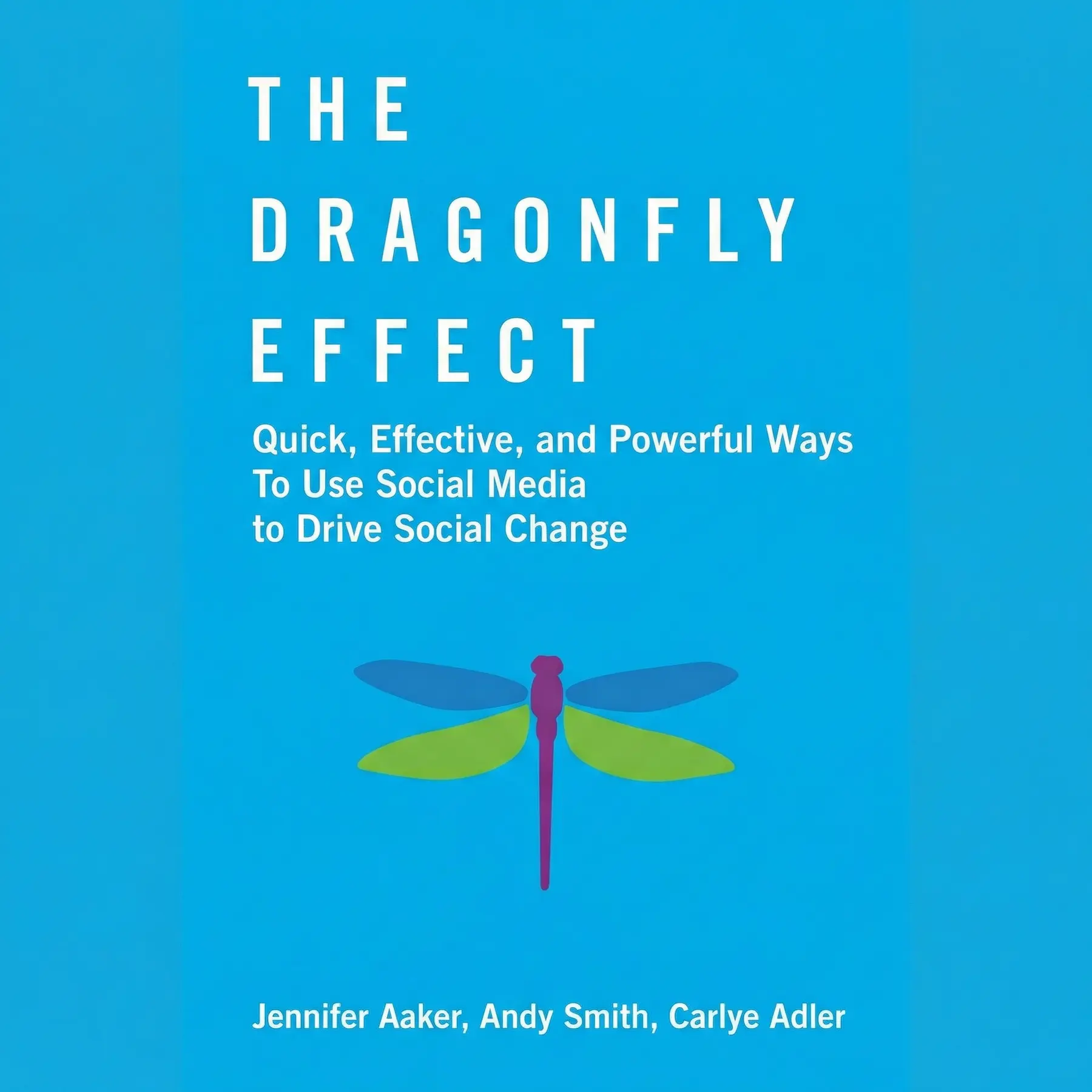
The Dragonfly Effect: Quick, Effective, and Powerful Ways To Use Social Media to Drive Social Change
Shows how to turn a cause into a campaign people actually join. You set one clear goal, get noticed in a crowded feed, make people care through stories and give them a simple, rewarding way to act.
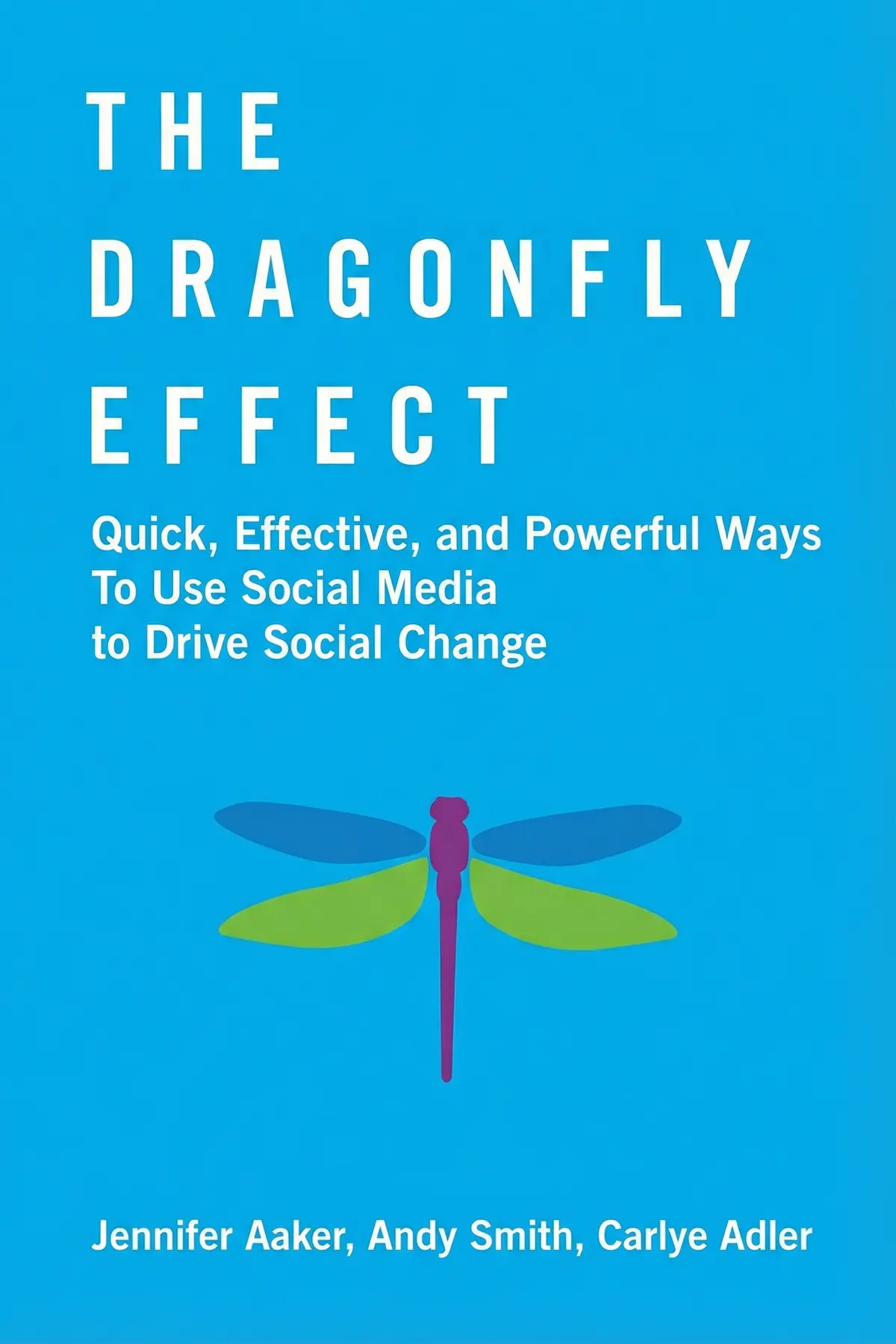
Table of Content
1. Introduction
1 min 05 sec
If you care about a cause but your posts disappear into a feed that never stops, the problem is rarely that people don’t care. In The Dragonfly Effect, Stanford professor Jennifer Aaker, marketing adviser Andy Smith and journalist Carlye Adler argue that attention is now the scarce resource, and that you win it by design. Every minute, they note, twenty hours of video land on YouTube, and hundreds of tweets go out each second. A message sent without a plan is simply lost.
Their answer comes from an insect. A dragonfly can dart in any direction because its four wings move in concert, and a campaign for change needs four matching moves: a clear focus, a way to grab attention, a reason to engage and an easy path to action. When all four work together, ordinary people can rally others across the world. Along the way, a Kenyan charity, a Japanese lunch campaign, a microlending site and a girl with a lemonade stand add up to a checklist for your next cause, pitch or presentation.
2. Four moves that make a cause take off
1 min 53 sec
One charity found a way to let supporters with very different resources all take part. Its approach reveals why most campaigns stall, even the ones with a good goal or a viral moment.
3. Set one goal people gladly work toward
1 min 36 sec
Big, inspiring goals often produce almost no action at all. A five-letter test, whose first letter echoes how some consumer companies now start from users’ needs, helps you shape a goal people will want to work for.
4. Get noticed by people scrolling on autopilot
1 min 50 sec
Most messages are not rejected. They are never really seen. A Japanese charity owed much of its success to a creative name and a simple logo, and the lesson behind it is worth applying to your own messages.
5. Make strangers care with one real story
1 min 47 sec
Facts can convince people a problem is real and still leave them unmoved. A microlending site found a way to make lending to someone on another continent feel personal, and a poet explains why it works.
6. Turn agreement into an easy first step
1 min 39 sec
Plenty of people nod along with a cause and then do nothing. The gap between agreeing and acting turns out to depend less on conviction than on how the request itself is built.
7. Learn from a lemonade stand that raised 80 million dollars
1 min 40 sec
A four-year-old with cancer, a table and a pitcher should not add up to a global movement. Yet her small idea kept growing long after her, because it got four things right at once.
8. Conclusion
1 min 08 sec
The Dragonfly Effect rests on a hopeful claim: you do not need money or influence to move people, only a message built with care. Today’s social tools let almost anyone share a story that can reach across the world, but only if it survives the flood. The four wings are how it survives. Focus gives it a destination, attention gets it seen, engagement makes it felt, and a simple action turns feeling into results.
The authors’ most direct advice concerns the next thing you present. Tell it as a story, and use pictures. When you are about to write a document explaining a plan, consider recording a short video instead, with the same facts carried by a narrative and images, because the authors believe people engage with and remember that version far better. Before any campaign, test the goal against HATCH, and shrink the request until a stranger could act on it in minutes.
Alex Scott began with a pitcher of lemonade and a goal she could say in one breath. The cup was small. Because all four wings moved together, the reach was not.
About this book
What is this book about?
Millions of people post, comment and share every day, so a message about a cause you care about can easily disappear. Jennifer Aaker, Andy Smith and Carlye Adler argue that the problem is rarely indifference. Attention has simply become very hard to win, and winning it takes design. Their model takes its name from the dragonfly, an insect that can dart in any direction because its four wings work in concert. A campaign for change needs four matching moves. It needs a focused goal that passes their HATCH test, a way to grab attention that is personal, surprising and visual, a story that makes people engage, and a call to action that is easy, meaningful, fun and open. The authors show each wing at work in real organizations: Samasource, which finds digital work for unemployed people in poor countries, the Japanese charity Table For Two, the microlending site KIVA, and Alex's Lemonade Stand Foundation, which started with one sick four-year-old girl. Readers get a practical checklist for any cause, pitch or presentation, and a hopeful message: ordinary people can mobilize others across the world.
Book Information
Who it's for
Nonprofit teams seeking supporters
Nonprofit staff and volunteers whose campaigns get likes but few real supporters.
Small-budget founders and marketers
Founders and marketers with small budgets who need people to notice and act.
Team leads and presenters
Team leads and presenters who want their plans to be remembered and followed.
About the Author
Jennifer Aaker
Jennifer Aaker is the General Atlantic Professor at the Stanford Graduate School of Business. She studies how ideas spread through social networks, how storytelling shapes decisions, and how purpose and meaning guide choices. Andy Smith runs Vonavona Ventures, advising technical and social ventures on customer strategy and marketing, after leading teams at Dolby Labs, Intel, Polaroid and PriceWaterhouseCoopers. Carlye Adler is a journalist whose work has appeared in BusinessWeek, Fortune, Forbes, TIME and Wired. She has coauthored many books, four of them New York Times bestsellers.
Ratings & Reviews
Ratings at a glance
What people think
Listeners find this social media guide engaging and well-crafted, valuing the way it merges impactful ideas with real-world illustrations. The book is also praised for focusing on core principles and actionable content, with one listener highlighting its power to drive social change. However, reactions are split among listeners regarding the specific step-by-step approach.
Top reviews
Jom
After hearing so much about the 'GET' framework, I finally dove into this book and found it both challenging and deeply inspiring. The authors do an amazing job of showing how to orchestrate a campaign that moves people from passive observers to active participants. Frankly, the metaphor of the dragonfly's wings being interconnected is perfect; if you miss one part of the body, the whole thing fails to fly. I was particularly struck by the emotional weight of some of the stories shared throughout the chapters. It's a well-written guide that feels very action-oriented, providing the exact tools needed to foster radical change in a noisy world. It’s a must-read for anyone trying to make a difference on a budget.
Show moreCarter
Finally got around to reading this, and the metaphors used here are just stunningly effective. I found The Dragonfly Effect both moving and practical, which is a rare combination in the business section. The authors do an amazing job of breaking down the enormity of a major campaign into manageable pieces so you can begin where you are. It’s a short, easy read that manages to pack a lot of heart into its pages. The use of individual stories makes the advice feel grounded and real rather than just theoretical. If you want to use social media to foster and promote change, this is the blueprint. Read this book and then go make some changes in your world!
Show moreBoss
Wow. This isn't just another dry business manual or a list of tricks to get more clicks. The Dragonfly Effect focuses on the psychological levers of social change through the lens of the 'four wings'—Focus, Grab Attention, Engage, and Take Action. I found the storytelling regarding individual organizations particularly moving, as it illustrates how digital tools can drive real-world impact. While some of the flow charts felt a bit forced and unnecessary, the overall guiding principles are incredibly solid. It is a quick read that doesn't waste time on fluff. If you're looking to actually do something meaningful with your online presence rather than just posting for the sake of it, this is a fantastic starting point. It bridges the gap between on-line and off-line efforts seamlessly.
Show moreOmar
Picked this up on a whim for a local NGO project I'm helping with. It turned out to be exactly what we needed to get our thoughts organized. The authors provide a clear guide for anyone looking to use social media as a tool for social good rather than just a megaphone. I love how it emphasizes that you want to focus on both on- and off-line media to be effective. The 'Focus + GET' model is simple to understand and easy to implement right away. Some sections felt a bit like they were trying too hard to make the metaphor work, but the practical examples are gold. It's a quick, easy read that I managed to finish in a single afternoon.
Show moreWit
As someone who works in digital outreach, I found the GET framework surprisingly intuitive and well-organized. The truth is, most books on this subject are either too academic or too superficial, but this one hits a nice middle ground. The authors guide the reader through each facet of the metaphor, showing how to leverage social networking tools for tangible results. It’s a compelling read that focuses on guiding principles rather than just fleeting trends. I did think the second half dragged slightly, but the early chapters on grabbing attention are worth the price of admission alone. It’s a solid resource for groups trying to create social change without a massive marketing budget. Definitely worth a look.
Show morePaisley
In my experience, most social media guides age poorly because they focus on specific platforms, but Aaker and Smith focus on the underlying psychology of engagement. This makes the book much more evergreen. The Obama case study remains a powerful example of the 'Dragonfly' principles in action. I found the 'Focus' wing especially relevant, as so many organizations try to do too much and end up doing nothing well. Gotta say, the writing style is very accessible and fast-paced. While some of the flow charts felt like filler, the core message about creating social change is compelling and well-written. It’s an action-oriented manual that actually gives you a path forward. A solid 4-star read for any aspiring change-maker.
Show moreSomchai
Ever wonder how certain social movements explode while others barely get a retweet? This book attempts to answer that by breaking down the mechanics of viral campaigns. To be fair, the Obama case study was fascinating and provided some genuinely interesting marketing lessons that apply well to the non-profit world. However, the book felt like it was written for someone completely fresh to the digital landscape. If you've spent any significant time managing a brand online, much of this will feel like common sense dressed up in a dragonfly metaphor. The first half was quite engaging, but the second half dragged on a bit too long for such a small book. It’s a decent primer, but maybe not for seasoned pros.
Show moreSamira
To be fair, the first half of this book is absolute gold for anyone working in the non-profit sector. The way it breaks down the 'four wings' provides a helpful structure for planning campaigns. However, I found that the book started slow and then the flow charts on action seemed a bit forced. I personally found myself skipping over some of the more technical diagrams to get back to the stories. The Obama case study is definitely a highlight, but it’s been covered so much elsewhere that it didn't feel entirely fresh. It’s a helpful book with some useful tools, but it didn't quite live up to the 'revolutionary' tag for me. Good for beginners, but maybe too basic for others.
Show moreJoshua
Not what I expected, but still a solid primer for the uninitiated. I’ve seen these marketing lessons applied in various places, but having them consolidated into the 'four wings' model is helpful for organization. Look, the book is very short and easy to read, which I appreciated. But I have to agree with other reviewers that the second half loses some of the momentum of the first. The diagrams and step-by-step methods received mixed reactions from my team; some liked the structure, others felt it was too rigid for the fluid nature of social media. It’s a good guide for a very specific audience—namely, non-profits just starting out with their digital strategy.
Show moreChee
The chapter on action-oriented flow charts really missed the mark for me, as they felt largely unnecessary and over-complicated a simple message. While the book starts with a few good marketing tips, it quickly becomes repetitive. Not gonna lie, I found the second half of the book to be a total drag compared to the promising introduction. It’s a very short read, which is a plus, but even at 211 pages, it felt stretched thin. Unless you are brand new to the idea of using social media for a cause, you probably won't find many new insights here. The examples are fine, but they don't justify the hype surrounding the 'Dragonfly' method. It felt more like a long blog post than a full book.
Show moreQuestions about this book
What is the main idea of The Dragonfly Effect?
Jennifer Aaker, Andy Smith and Carlye Adler argue that anyone can use social media to drive social change without being rich or famous. Because attention is so scarce online, a campaign needs four moves working together, like a dragonfly’s four wings: focus on one clear goal, grab attention, engage people through stories and make it easy for them to take action.
What is the HATCH rule in The Dragonfly Effect?
HATCH is the authors’ test for a good campaign goal. It should be humanistic, built on understanding the people you want to reach. It should be actionable, broken into small steps. It should be testable and clear, with milestones you can measure. And it should make your audience happy to work for it, meaning the goal feels worthwhile to them and not only to you.
How do you grab attention on social media according to the book?
The authors suggest being personal, for example adding an individual note to an event invitation. Be unexpected, creating what Seth Godin calls a purple cow, so people snap out of autopilot. Show rather than tell, since people remember images better than words, as the Japanese charity Table For Two did with its logo of one full and one empty table. Music and other senses add emotion.
How can I apply The Dragonfly Effect at work?
The authors’ key piece of advice is to tell a story and use visuals when you present. Instead of writing a long document about a plan, consider making a short video that carries the same information as a story. For any campaign, write the goal in one sentence, check it against HATCH and make the call to action simple enough for a stranger to finish quickly.
Who should read The Dragonfly Effect?
It suits anyone trying to rally people behind a cause with limited resources: nonprofit workers, volunteers, founders and marketers. It also helps managers and presenters who want their ideas remembered. Its examples, from Samasource and KIVA to Alex’s Lemonade Stand Foundation, show small organizations and even one child reaching people across the world.
Readers also enjoyed





AUDIO SUMMARY AVAILABLE
Listen to The Dragonfly Effect in 15 minutes
Get the key ideas from The Dragonfly Effect by Jennifer Aaker, plus 5,000+ more nonfiction titles.
- 5,000+ titles
- Listen as much as you want
- 7-day free trial
- Cancel anytime









