

15 min 25 sec
Available in: English
Dear Founder: Letters of Advice for Anyone Who Leads, Manages, or Wants to Start a Business
Practical advice from a former eBay executive and Yahoo chairman on the basic mistakes that sink most startups: setting limits, choosing investors, delegating, hiring and firing, and keeping calm when rivals or crises strike.
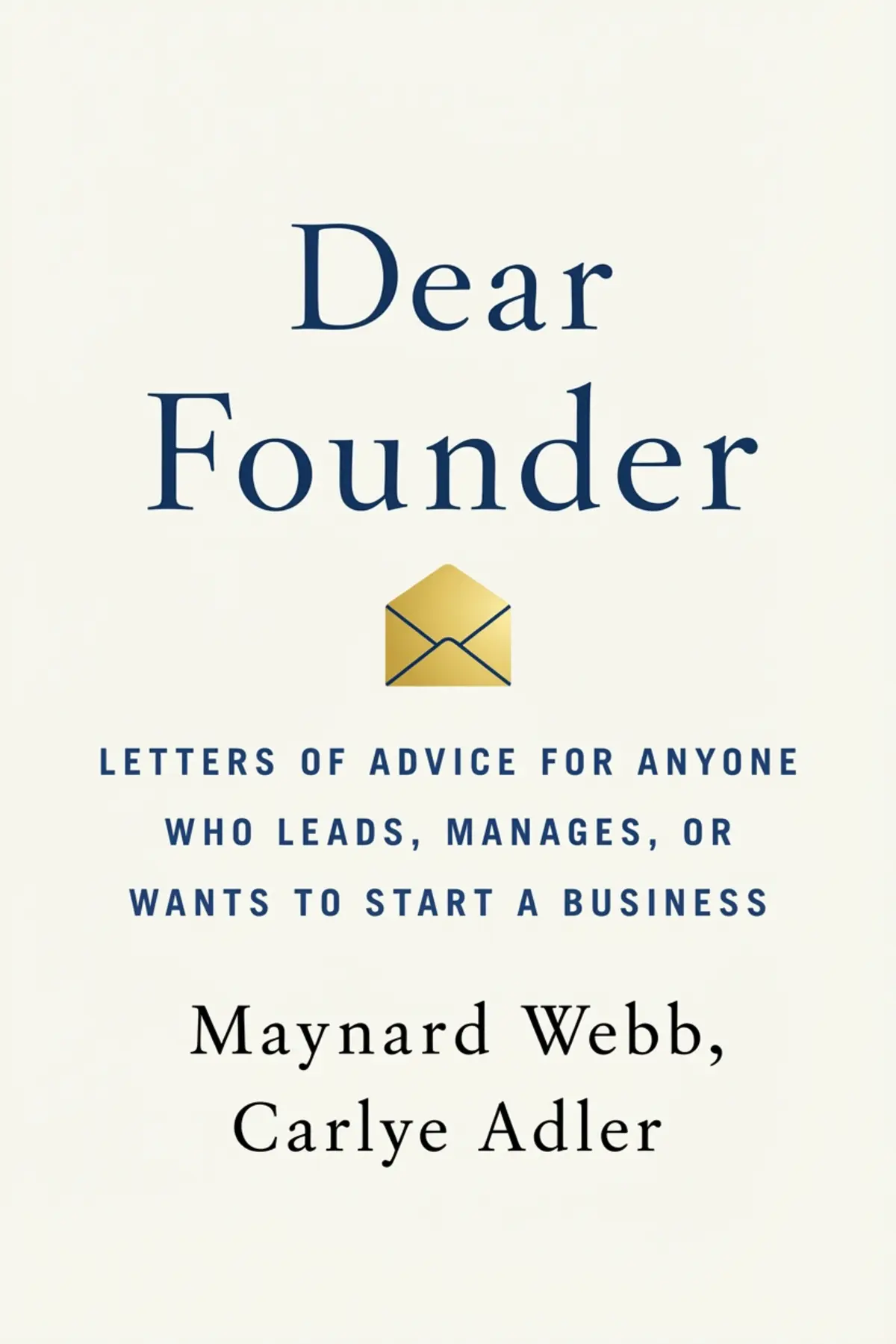
Table of Content
1. Introduction
1 min 04 sec
Founders tend to fear that their idea is not good enough, yet most young companies die of something plainer: basic, common mistakes an experienced operator would catch early. In Dear Founder, Maynard Webb, once chief operating officer of eBay and chairman of Yahoo, writes with journalist Carlye Adler to pass on that operator’s eye, in letters of advice for anyone who leads, manages or wants to start a business. Their case is that a founder’s odds improve by mastering a few fundamentals: committing with limits, choosing investors carefully, letting the team own its work, hiring patiently and judging a crisis before reacting.
None of this depends on genius. Each piece is a skill. Along the way come a four-question tool for handing off work, a nine-point scale for sizing up trouble, and an eBay team that solved in six months a problem that normally could have taken up to eighteen. By the end, you will know where your own company is most exposed and what to fix first.
2. Set your money and time limits before launch
1 min 28 sec
Commitment is what carries founders through the worst months, yet the authors insist it needs a ceiling. The trick is deciding where that ceiling sits while you still feel optimistic, long before the hard choice arrives.
3. Raise money from investors who open doors
1 min 39 sec
Founders often chase every investor who might write a check, then wonder why months pass with nothing to show. A different kind of list, and a different way of hearing no, can change how fast money arrives.
4. Build a team that solves problems without you
1 min 41 sec
Holding every decision feels like protecting the company, but the authors argue it can do the opposite. An eBay crisis, and a team that refused to wait for permission, shows what the alternative looks like.
5. Delegate cleanly by answering four questions
1 min 34 sec
One manager stopped micromanaging and swung straight into a different failure. His story shows why handing off work is harder than it sounds, and why a simple four-letter model keeps both extremes in check.
6. Hire slowly and let underperformers go quickly
1 min 47 sec
An IBM interviewer laughed out loud at a young Webb’s answer about firing people. The reason behind that laugh explains why startups must treat every hire with unusual care, and every weak hire with unusual speed.
7. Turn a stressful morning into a calm plan
1 min 36 sec
Flu, a locked laptop and a long drive to an early meeting: Webb’s worst morning could have spiraled. What he did next is so simple it is easy to overlook, and it scales to far bigger problems.
8. Keep investors steady when a giant enters
1 min 43 sec
When a company the size of Google announces it is coming for your market, staff panic and investors start asking pointed questions. The authors’ advice on what to do next runs against most founders’ instincts.
9. Size up a crisis before you fight it
1 min 39 sec
Overreacting to a small glitch wastes a team, and underreacting to a real emergency can sink a company. A scale borrowed from earthquakes, and a carmaker’s swift recall, show how to tell the two apart.
10. Conclusion
1 min 14 sec
What Dear Founder adds up to is a hard truth with a hopeful edge. Starting a company is brutal, and more startups fail than succeed, yet what sinks most of them is ordinary: an unclear goal, the wrong investors, a founder holding every decision, a weak hire kept too long, panic standing in for judgment. Each of these, the authors insist, can be learned. Determination, long hours and a steady head do the rest.
They press one more habit on readers. Most managers judge their company against last year or against competitors. Webb and Adler see that as a path to mediocrity, and urge founders to measure themselves against what the business could become and against the very best in their field.
Start where it costs least. Put a limit on your money and your time before you need one. Give the next project a named owner low in the hierarchy, and stay informed without taking it back. When something breaks, give it a number on your scale before you decide how hard to react.
A brilliant idea cannot rescue a company that skips the basics. Learning them is what gives the idea a chance to matter.
About this book
What is this book about?
Starting a company has never been easier, yet most young companies still fail early. Maynard Webb and Carlye Adler argue that the cause is rarely a weak idea. It is a short list of common mistakes that even a brilliant concept cannot survive. Webb, who has spent roughly four decades in technology, including senior roles at eBay and Yahoo, offers his advice as letters to founders and managers. He covers deciding in advance how much money and time to risk, targeting investors who know your industry and can open doors, and building a culture where people fix problems without waiting for the boss. He also explains a four-question model for delegating, why startups must hire slowly and act quickly on underperformers, and how to stay steady when stress, a powerful competitor or a real emergency arrives. Readers get concrete tools they can use at once: putting numbers on your commitment, the RACI model, a four-step response to stress and a one-to-nine scale for rating any crisis before deciding how hard to respond.
Book Information
Who it's for
New founders
First-time founders who want to avoid the common mistakes that end most startups early.
Managers hoping to delegate
Managers who keep getting pulled into every decision and want to delegate without losing control.
Operators facing hard problems
Operators facing a new competitor, a tough fundraise or a hire that is not working out.
About the Author
Maynard Webb
Maynard Webb has worked in the technology industry for roughly four decades, serving as chief operating officer of eBay, chief executive of LiveOps and chairman of the board at Yahoo, with board seats at Salesforce and Visa. In 2010 he founded Webb Investment Network, a seed investment firm backing entrepreneurs, and he mentors young founders. Carlye Adler is a journalist whose work has appeared in Fortune, Forbes, Wired and TIME, and she has coauthored many books, four of them New York Times bestsellers.

Ratings & Reviews
Ratings at a glance
What people think
Listeners find the book’s guidance exceptionally practical and actionable, with one individual noting that it helps improve their leadership skills. Additionally, the material is easy to digest and listeners consider it a worthwhile investment, with one person highlighting it as a must-read for founders.
Top reviews
Chatri
Finally got around to reading this, and I’m kicking myself for not picking it up sooner. Maynard Webb captures the essence of the entrepreneurial struggle through these short, impactful letters that feel incredibly personal. While some business books get bogged down in dense theory, this one stays remarkably practical and easy to digest. I especially loved the section on boldness versus hubris; it's a fine line that many founders trip over. The advice on focusing extra attention on your top performers rather than just fixing the 'broken' ones was a total game-changer for my management style. It’s the kind of book you keep on your desk to flip through when a specific crisis hits. To be fair, it doesn't solve every technical problem, but as a roadmap for leadership, it's gold.
Show moreRose
This is exactly what every first-time CEO needs on their desk for those lonely days at the top. The structure follows the company lifecycle perfectly, from the initial spark of an idea to the eventual exit or legacy phase. I found the advice on 'finding a busy person and trying to break them' to be a provocative but useful way to think about talent development. It’s refreshing to read something that emphasizes vulnerability and input-seeking over the typical 'hero founder' narrative. Not every chapter hit home for me right now, but I know I'll be revisiting the sections on fundraising and operational excellence as we grow. Webb’s tone is supportive yet firm, like a spiritual uncle who has seen it all. Highly recommend for anyone looking to build a sustainable team culture.
Show moreStella
Wow, I didn't expect to feel so inspired by a business book. Most management texts are dry as toast, but the warmth in these letters really shines through. Webb and Adler have created something that feels like a legacy piece, something you’d hand down to a younger colleague. It covers the conception of an idea all the way to leaving a legacy, which is a perspective often missing from startup literature. The focus on boldness and thoughtful strategy really resonated with my current situation. Frankly, it’s a relief to read something that isn't just about 'growth at all costs.' The emphasis on being a good human while being a great leader is something more founders need to hear. This is a must-read that I'll be gifting to several friends this year.
Show moreRiley
As someone currently navigating the messy middle of a startup, this book feels like having a seasoned mentor on speed dial. The letter format makes it highly actionable, allowing you to jump straight to the topic that’s keeping you up at night. Webb’s background at eBay and LiveOps gives his words a weight that younger 'gurus' just lack. I found the guidelines on sales quotas and team incentives particularly grounded in reality. However, I’ll admit that the brevity can be a double-edged sword. Some complex financial topics are brushed over quickly, leaving you to Google the specifics of liquidation preferences yourself. Despite that, the framework for scaling a company from conception to legacy is solid. It’s a fast read that helps you up your leadership game without wasting your time.
Show moreSaengdao
After hearing several mentors recommend this, I used it as a supplemental guide alongside The Hard Thing About Hard Things. While Horowitz gives you the raw war stories, Webb offers a more organized, systematic approach to the various stages of growth. Each letter is brief, which is perfect for a busy founder who only has ten minutes between meetings. I particularly liked the meditation on scheduling time for 'Important but Not Urgent' tasks like vision-casting and blogging. It’s easy to let those slide when you’re firefighting every day. Look, it’s not a comprehensive textbook on business law or finance. If you're looking for that, look elsewhere. But if you want a practical guide on how to lead people and manage your own psychology during the startup journey, this is a very worthy addition to your shelf.
Show moreMint
Maynard Webb brings a lot of credibility to the table here, and it shows in his focus on operational excellence. This isn't just a book about 'hustle'—it’s about the systems required to scale a real business. The advice is extremely easy to read, and the variety of topics covered is impressive, ranging from hiring co-founders to dealing with poor performers. I appreciate how he slips in wisdom about investing in your best people rather than obsessing over the bottom 10%. My only minor criticism is that some letters feel a bit repetitive in their encouragement. Still, the practical takeaways outweigh the fluff. It helped me rethink our current hiring strategy and how we communicate our long-term vision to the team. Definitely worth reading if you’re in a leadership role.
Show moreChatchai
The letter format is a neat idea, but it often feels more like a gimmick than a functional choice. While I appreciate the 'Dear Founder' approach, it sometimes limits the depth of the advice provided. For instance, Webb mentions the importance of understanding cap tables and pro rata rights but never actually explains how they work in practice. It’s a bit like a doctor telling you to 'stay healthy' without giving you a prescription. That being said, the sections on identifying product-market fit were helpful for framing our current challenges. Truth is, it’s a decent reference manual for high-level concepts, but don't expect a deep dive into the technical weeds of venture deals. It’s more about the 'what' and 'why' rather than the specific 'how' for several key milestones.
Show moreLayla
Ever wonder what a seasoned pro would say if you had five minutes of their time? That’s basically what this book is—sixty different five-minute conversations. It’s a good reference for when you’re in a pickle and need a quick perspective shift. However, it’s definitely not meant to be read cover-to-cover; the repetitive 'All the best' signatures start to grate after a while. Personally, I found the advice a bit too high-level at times. It’s great for inspiration, but less so for implementation. For example, the section on fundraising gives you the 'vibe' you should project but skips the nitty-gritty of term sheets. It’s a solid 3-star book that serves its purpose as a quick-start guide, though it shouldn't be the only business book you ever read.
Show moreNim
To be fair, it's a decent reference guide even if it's not a cover-to-cover read. I found myself skipping the letters that didn't apply to my current stage, which is exactly how the authors suggest using it. The writing style is very accessible, and the tone is encouraging without being overly sugary. I did find the physical production of the book a bit odd, though. There's a lot of 'padding' with the layout that makes it look thicker than it actually is. In terms of content, it’s a bit of a mixed bag. Some letters offer profound insights into human behavior, while others just state the obvious in a slightly different way. It’s a helpful tool to have on the shelf for situational advice, but don't expect it to be a revolutionary manifesto.
Show moreHarper
I wanted to like this more, but the layout felt like a high school essay project trying to meet a page count. The font is huge, the margins are massive, and the 'letters' are often just two or three pages of common-sense platitudes. If you’ve read any other management books like High Output Management, you might find this content a bit superficial. Telling a founder they need to 'avoid nasty surprises' or 'focus on what's important' isn't exactly a revelation; it's just basic common sense. There is so much fluff here that the actual substance could have been a long-form blog post. Not gonna lie, it’s frustrating to pay for a full-sized book that is mostly white space. It might be okay for a complete novice who has never managed a single person before, but it lacked the grit I expected.
Show moreQuestions about this book
What is the main idea of Dear Founder?
Maynard Webb and Carlye Adler argue that most startups fail because of simple, common mistakes, not because of weak ideas. Drawing on Webb’s years at companies like eBay and Yahoo, they offer advice on committing with clear limits, finding investors who bring expertise and contacts, delegating without micromanaging, hiring carefully, dealing quickly with underperformers and staying calm when competitors or crises appear. Each of these, they say, is a skill a founder can learn.
What is the RACI model in Dear Founder?
RACI is a delegation tool built on four roles. The person Responsible makes the day-to-day decisions and should sit as low in the hierarchy as possible. The person who Approves holds a veto, usually the manager delegating. Those Consulted give needed input without a final say. Those Informed are stakeholders affected by the decisions. The authors advise that when in doubt, it is better to inform more people than fewer.
How does Dear Founder say to handle a business crisis?
First, confirm the crisis is real and measure its size, which starts with listening to employees who often spot trouble first. At eBay, Webb rated problems on a one-to-nine scale modeled on the Richter scale, from a single user’s computer bug to a backup failure during a power outage. For the most serious problems, the authors advise raising the alarm and acting at once, as Tesla did with its 2015 seatbelt recall.
What advice does Dear Founder give on hiring and firing?
Hire slowly and act quickly. The authors say managers typically find about 80 percent of their hires were right, leaving roughly a fifth who underperform. Startups cannot afford that weight, and one weak performer lowers the morale of strong colleagues. A timely, supportive conversation may turn the person around; if not, let them go. To prevent the problem, treat each hire like giving away a scarce Super Bowl ticket.
Who should read Dear Founder?
It suits people thinking about starting a company who want to know what to settle before they leap, such as how much money and time to risk. It also serves founders and managers already running teams who struggle with delegation, fundraising, a tough hire or a threatening competitor. The advice is concrete, from a four-step plan for stressful moments to a scale for rating how serious a problem is.
Readers also enjoyed


A Bigger Prize: How We Can Do Better Than the Competition
Margaret Heffernan





A Year with Peter Drucker: 52 Weeks of Coaching for Leadership Effectiveness
Joseph A. Maciariello


AUDIO SUMMARY AVAILABLE
Listen to Dear Founder in 15 minutes
Get the key ideas from Dear Founder by Maynard Webb, plus 5,000+ more nonfiction titles.
- 5,000+ titles
- Listen as much as you want
- 7-day free trial
- Cancel anytime









