

14 min 18 sec
Available in: English
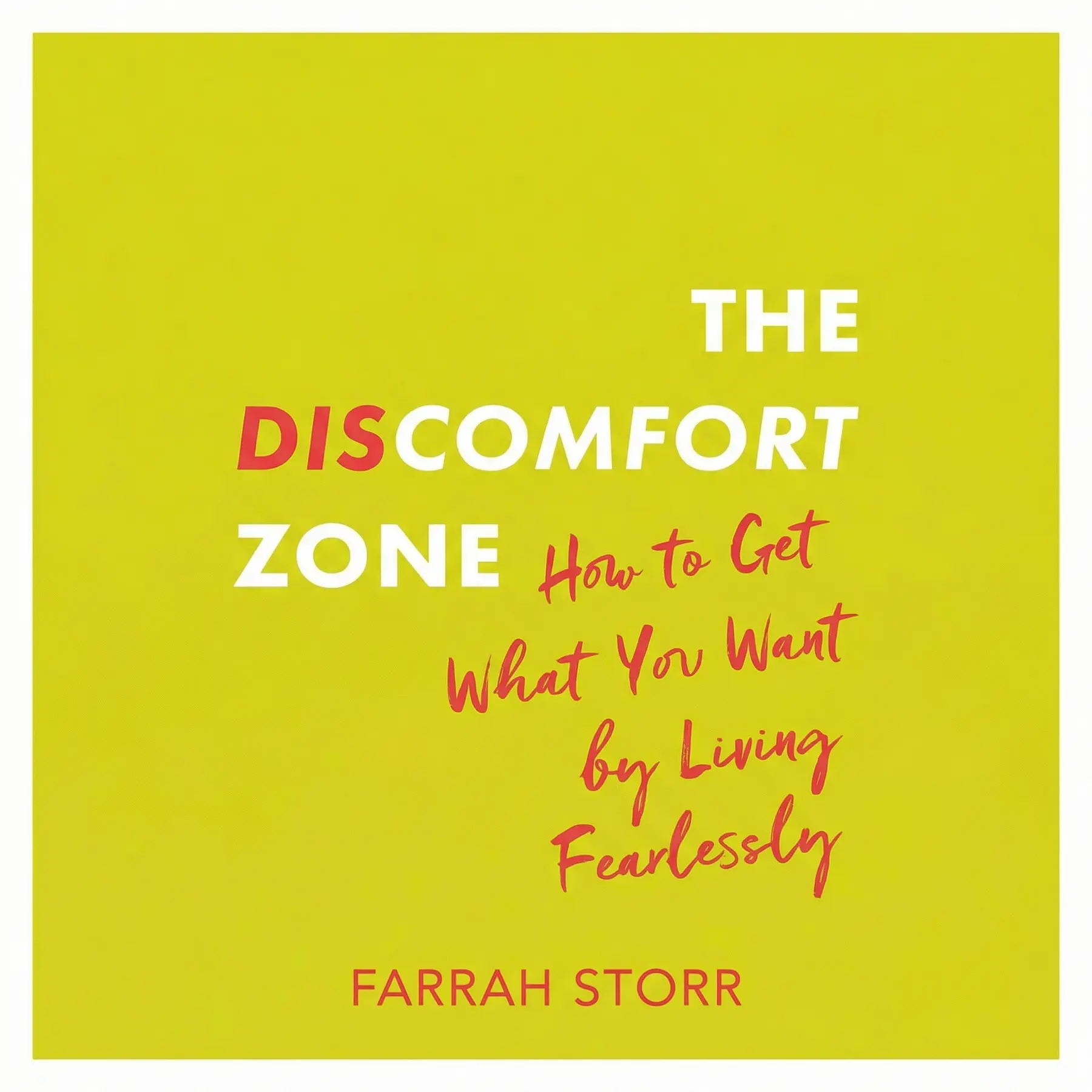
The Discomfort Zone: How to Get What You Want by Living Fearlessly
By Farrah Storr
Shows how to treat fear and discomfort as useful signals. Nerves become better performance and setbacks become new routes, while criticism, tight limits and failure become fuel for getting what you want.

Table of Content
1. Introduction
55 sec
Most people let a racing heart make their decisions. Sweaty palms before an interview feel like a warning, so they back away from the very things that would move their lives forward. In The Discomfort Zone, journalist and former Cosmopolitan editor Farrah Storr argues that the same rush can be read as readiness, and that people who read it that way perform better.
Her case is that discomfort is a short, survivable feeling that appears whenever you try something new, and learning to sit with it is how you get what you want. She tests that idea on stage fright, setbacks, trauma, criticism, tight deadlines, failed launches and awkward requests. Her stories include a ballet star who started at 14, a commuter who survived a bombing and a pizza chain that aired its worst reviews. Each kind of fear ends up paired with a move you can make the next time it shows up.
2. Turn pre-exam nerves into fuel for performance
1 min 29 sec
Two students can feel the same pounding heart before an exam, yet one walks in expecting to win. The difference lies in a single interpretation, and Storr shows how anyone can learn to make it.
3. Stop performing for an audience that isn't watching
1 min 31 sec
Fear of looking foolish keeps people silent at work and at parties. A finding from psychology suggests the audience you are performing for is far smaller than you think, and there is a second remedy.
4. Find another door when the first one shuts
1 min 30 sec
A teenager froze in his acting audition and walked out with a place at the school anyway. His move reveals the three habits most people use to dodge obstacles without noticing.
5. Draw meaning from your hardest experiences
1 min 39 sec
A London commuter survived a bombing because a crowd pushed her into a different car. What she did with that experience shows how even the worst events can give a life new purpose.
6. Get honest feedback from someone on your side
1 min 43 sec
A pizza chain put its harshest customer reviews on national television and saw sales climb. Storr explains why criticism is like sex, and how to set up feedback you can actually use.
7. Tight limits make your work bolder and more creative
1 min 33 sec
A broken mechanical shark nearly stalled one of cinema’s best-known films. What the young director did instead points to a counterintuitive way to rescue any project that has lost its energy.
8. Fail smart and learn from every flop
1 min 34 sec
That gold-labeled perfume at the cosmetics counter is not quite what it seems. It points to a kind of failure worth seeking out, and to the one question that makes a flop useful.
9. Ask for what you want by offering something back
1 min 24 sec
Steve Jobs told people to simply ask for what they want, but most people find that painfully awkward. The founder of Spanx found a way to make asking feel much more like giving.
10. Conclusion
1 min 00 sec
What links Storr’s stories is how brief the hard part usually is. A pounding heart before an interview, the silence after frank criticism, the moment you ask for a favor: each lasts a few moments, even when it feels much longer. Underwood bluffed to a dance examiner that he could do anything she showed him. Beyond it lay a career.
Storr’s closing tool is built for those instants, which she calls brief moments of discomfort. When one arrives, name the fear to yourself, because ignoring it makes it grow. Find one small thing that steadies you right then, such as a sip of water to buy thinking time in an interview. Then read the rush as energy, the same adrenaline the confident exam taker feels.
Try it this week on something that matters to you: a presentation, a request or a hard question for someone you trust. The feeling will come. It will also pass, and you will still be standing in the room.
About this book
What is this book about?
Fear holds most people back every day. It keeps them from the course they wanted to take, the trip they wanted to make alone or the honest words they wanted to say. Farrah Storr argues that the way past it is open to anyone, including people who would never call themselves brave: get comfortable with discomfort. Storr, a former magazine editor, builds her case from vivid stories. A teenager turns a failed acting audition into a place at a performing arts school. A London commuter who survived a suicide bombing on July 7, 2005 founds a charity against extremism. Domino's broadcasts its customers' worst reviews to rescue its pizzas, and Steven Spielberg turns a broken mechanical shark into a famous scene. Readers get a specific tool for each kind of fear. They learn to rehearse success to enter a challenge state and to use the spotlight effect to worry less about judgment. They also learn to recruit a care coach for honest feedback, add constraints to stalled projects, study failures without blaming anyone and ask for help by offering something back.
Book Information
Who it's for
New professionals who freeze
Early-career professionals who freeze before interviews, presentations or big requests.
Managers and founders
Managers and founders who want honest feedback and a way to restart stalled projects.
Recovering from a setback
People recovering from a failure, rejection or loss who want to turn it into direction.
About the Author
Farrah Storr
Farrah Storr is a British journalist who has worked across several UK magazines. As editor-in-chief of Cosmopolitan she won a PPA Award and a BSME Award in 2018, and she later edited the UK edition of Elle. In 2017 she was named among the UK's 1,000 most influential people. The Discomfort Zone, written in 2018, is her first book. She has also served as head of Substack for the UK and Europe.
Ratings & Reviews
Ratings at a glance
What people think
Listeners find that *The Discomfort Zone* provides a perceptive look at viewing failure differently and overcoming daunting work-related obstacles. Even though views differ regarding how the book is organized, many listeners value the actionable advice for handling social nerves and professional development. Furthermore, the presence of motivating interviews and personal stories reinforces the writer’s main point. Listeners also highlight the worth of the book’s distinct mantras, and one listener points out that it acts as a deep manual on how to "give discomfort meaning" and advance through adversity.
Top reviews
Supachai
Ever wonder why some people thrive under pressure while others crumble at the slightest hint of conflict? Storr tackles this head-on by reframing failure as a necessary modality of success rather than something to be feared. I went in thinking this would be a David Goggins style 'embrace the pain' marathon, but it’s actually much more relatable for the average professional. The concept of the 'care coach' was a total game-changer for how I view my own support system. Not gonna lie, I’ve already started implementing the advice on choosing whose feedback actually matters. The stories of people overcoming massive professional hurdles are incredibly inspiring and grounded. This isn't just a book; it's a profound toolkit for anyone who feels paralyzed by the fear of looking stupid.
Show moreYui
This is exactly what I needed to read during a particularly difficult transition in my professional life. Farrah’s perspective on overcoming hurdles is strangely comforting, even though she’s pushing you to do the exact opposite of what feels safe. The book is filled with unique mantras that I’ve started writing down in my daily journal to stay focused. I loved the emphasis on how we can give our discomfort a specific meaning to propel us forward. The examples provided are highly relevant to the modern workplace, making the advice feel fresh and applicable. It’s one of those rare books that actually makes you want to go out and fail at something just to see what you can learn. If you're feeling stuck in your comfort zone, this is your wake-up call.
Show moreGiulia
Finally got around to reading this after seeing it everywhere on LinkedIn. Storr’s take on professional growth isn't about working harder; it’s about leaning into those moments that make your stomach turn. The practical tips for navigating intimidating meetings were genuinely useful, though the prologue felt a bit fluffy and took a while to get to the point. I appreciated the specific strategies for handling feedback from the right people instead of just absorbing every criticism that comes your way. It’s not a revolutionary manual on psychology, but as a guide for career momentum, it hits the mark. The writing style is breezy, almost like a long-form editorial, which makes it easy to finish over a weekend. While some sections could have been tightened up, the core message about giving discomfort a specific meaning stuck with me.
Show moreAlejandra
As someone who struggles with social anxiety in corporate settings, I found this perspective to be incredibly refreshing. Storr doesn't suggest that we should eliminate fear, but rather that we should learn to enjoy the failure that comes from trying. The way she discusses the Discomfort Zone as a place of growth is much more accessible than most 'tough love' self-help books. I particularly enjoyed the sections on how we build entire industries just to avoid feeling confused or stressed. Truth is, we often blame the obstacle because it's easier than facing our own limitations. The writing is engaging and moves quickly, though I agree with others that it lacks a bit of academic weight. Still, the practical advice on navigating career-stalling fears makes it a worthy addition to your shelf.
Show morePloy
The chapter on feedback completely shifted how I interact with my management team at work. I used to view every piece of criticism as a personal attack, but Storr helps you realize it's just part of the growth process. The book provides a few very specific, practical tips that you can use immediately, which is rare in this genre. I do think the author's voice can come across as a bit young, but the insights from her interviewees add a layer of sophistication. It’s not quite as academic as I expected, focusing more on anecdotal evidence than hard data. Despite that, the message about not letting the fear of social discomfort hold you back is powerful. It’s an engaging read that provides a necessary push for anyone looking to level up their career.
Show moreNoah
Not what I expected at all, but in a very good way. I picked this up thinking it would be about physical endurance, yet it’s actually a deep dive into the psychology of social fear. The idea that we choose to respond to distress in specific ways was a major eye-opener for me. Storr explains that discomfort is just a part of life that we need to stop avoiding if we want to see any real progress. Personally, I found the section on 'care coaches' to be the most valuable part of the entire book. While some of the author’s personal stories felt a little avoidable, the broader lessons on resilience are universal. It’s a quick read that packs a punch and leaves you with plenty of food for thought.
Show moreSiriporn
If you're looking to level up your career, this book offers a compelling roadmap for navigating intimidating professional hurdles. The author does a great job of explaining why we get stuck in our ways and how to break free by embracing the awkward. I appreciated the mix of personal stories and interviews, even if the organization felt a bit loose in the middle sections. The truth is, most of us are held back by a fear of looking foolish, and this book tackles that head-on. It’s an insightful guide that reframes failure as a learning modality rather than an end-point. While it could have been more concise, the core message is vital for anyone working in a high-pressure environment. Definitely worth a read for the practical tips alone.
Show moreRodrigo
Look, this book is a bit of a mixed bag for me. While Farrah Storr offers some fantastic mantras about avoiding 'easy absolutes,' the actual structure of the writing left me frustrated. It often felt like a collection of loosely connected magazine articles rather than a cohesive, academic exploration of stress and growth. I was particularly bothered by the story where she had to speak to 20,000 people without knowing—that felt more like a lack of preparation than a 'discomfort zone' lesson. To be fair, the interviews with high-achievers were the highlight and provided much-needed depth. If you want a deep dive into the science of trauma or grit, look elsewhere. However, if you need a quick push to stop avoiding your boss or that scary project, there’s enough value here to justify the read.
Show moreJoseph
In my experience, self-help books fall into two categories: the scientific ones and the 'Malcolm Gladwell' school of storytelling. This book definitely falls into the latter, using singular data points and anecdotes to prove a broader point. While the stories are engaging, I found the methods weren’t entirely new or revolutionary if you’ve read any grit-based literature before. The writing itself was difficult to digest at certain points because the structure felt a bit woolly and unfocused. However, there are some significant pearls of wisdom to be found if you’re willing to dig. The discussion about why we avoid stress and how that stunts our growth was particularly thought-provoking. It’s a solid 3.5-star read that offers a few practical tips without reinventing the wheel.
Show moreLook
The premise sounded incredible, but the execution felt immature and lacked the intellectual rigor I was hoping for. Many of the situations described by the author seemed entirely avoidable with basic communication, making the 'discomfort' feel self-inflicted and unnecessary. I found the language a bit juvenile at points, almost like it was written by someone who just discovered self-help for the first time. The book suffers from poor organization, jumping between anecdotes without a clear, logical thread to tie the concepts together. Frankly, the advice could have been condensed into a single, punchy article rather than stretched across several hundred pages. While there are a few interesting interview nuggets buried in there, they aren't enough to save the overall experience. It’s a pass for me.
Show moreQuestions about this book
What is the main idea of The Discomfort Zone by Farrah Storr?
Farrah Storr argues that fear and discomfort limit most people because they read those feelings as danger signals. In her view, the feelings usually appear when you try something new and only last a few moments, so learning to tolerate them opens the way to growth. She applies this to nerves, obstacles, trauma, social pressure, feedback, creative limits, failure and asking for help, with a practical tool for each.
What is a challenge state in The Discomfort Zone?
A challenge state is how confident people respond to stress. Their bodies flood with adrenaline like anyone’s, but they read a racing heart and sweaty palms as preparation for success. Imagining success activates the brain’s reward center, which reduces fear and raises blood oxygen for quick, reliable decisions. Storr suggests entering it by visualizing a strong performance in detail beforehand, such as a job interview, and replacing negative self-talk with encouragement.
What is a care coach and how do I find one?
A care coach is Storr’s name for a trusted, impartial person who gives you regular feedback. She sees hers at a café in the morning, when her energy is at its peak, for around half an hour once every few weeks. She advises choosing someone who knows both your work and your life, keeping a fixed schedule, sending around three specific questions in advance and thanking the coach, for example with flowers or wine.
How does the BMD method help with fear?
Storr’s BMD method handles brief moments of discomfort. First, acknowledge the fear, since ignoring it makes it more overwhelming. Next, find something that makes you more comfortable right then, such as sipping water to buy thinking time in an interview. Finally, reframe the feeling as an energizing rush of adrenaline. Because these moments pass quickly, tolerating them lets you reach the challenge waiting on the other side.
Readers also enjoyed


A Guide to the Good Life: The Ancient Art of Stoic Joy
William B. Irvine


A High-Performing Mind: Strengthen Your Mind and Live Your Best Life
Andrew D. Thompson


Abundance: The Inner Path to Wealth
Deepak Chopra


60 Seconds & You’re Hired!
Robin Ryan

AUDIO SUMMARY AVAILABLE
Listen to The Discomfort Zone in 15 minutes
Get the key ideas from The Discomfort Zone by Farrah Storr, plus 5,000+ more nonfiction titles.
- 5,000+ titles
- Listen as much as you want
- 7-day free trial
- Cancel anytime









