

13 min 17 sec
Available in: English
The Diet Compass: The 12-step Guide to Science-based Nutrition for a Healthier and Longer Life
By Bas Kast
A clear guide through contradictory nutrition research. It shows which fats, carbohydrates, proteins and drinks help the body, how your metabolism changes the answer, and why the timing of meals matters too.
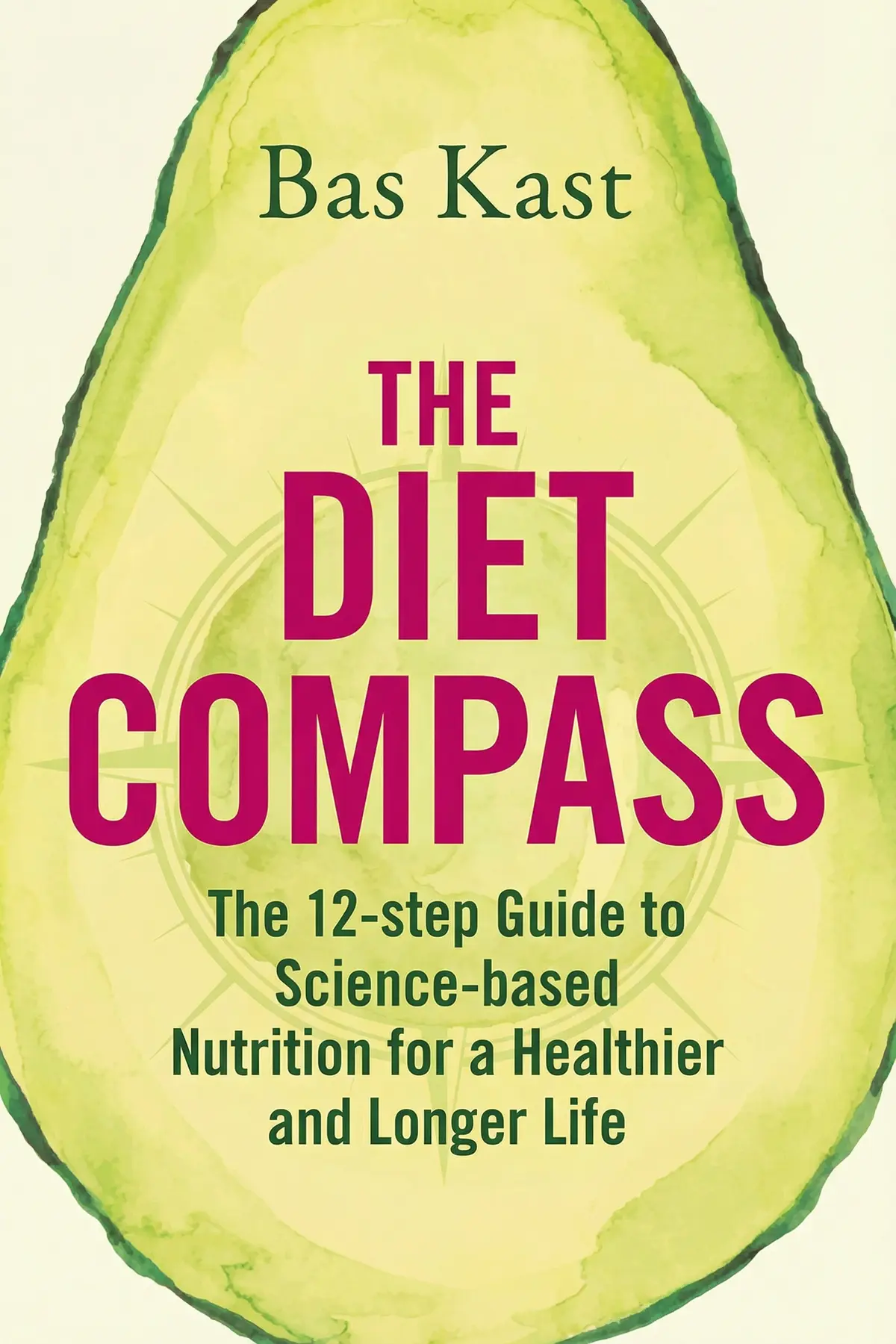
Table of Content
1. Introduction
59 sec
If you have ever changed your breakfast because of one headline and changed it back after the next, you know the problem: nutrition advice seems to reverse itself every few weeks. In The Diet Compass, science writer Bas Kast explains why. Some 250 nutrition studies appear around the world each day, and for almost any finding there is another paper claiming the opposite.
Kast’s answer is that much of the confusion comes from asking the wrong questions. The long fight over fat versus carbohydrates, for example, misses that both can be healthy, depending on which kind you eat and whose body is eating it.
That idea runs through everything that follows: good eating is a matter of quality, personal fit and timing, not of banning one nutrient. Along the way you will hear why your coffee habit can stay, why a glass of orange juice is less healthy than it looks, and how a simple window on the clock gives your cells time to clean house.
2. Stop picking sides in the fat versus carb war
1 min 47 sec
Two diet camps have fought for decades, and both can point to piles of studies. A carb-heavy island diet and an oil-rich coastal one suggest the argument itself may be the mistake.
3. Match your carbs to the way you burn sugar
2 min 12 sec
Two people can eat the same bowl of pasta and get very different results. One hormone decides whether those carbohydrates become fuel or a spare tire, and age shifts the balance for everyone.
4. Get enough protein, mostly from plants
1 min 52 sec
Protein keeps you full and builds your cells, so more should be better. Kast finds a turning point where the same nutrient starts to age the body, and the source of the protein changes everything.
5. Fats that help your body build and repair
2 min 00 sec
Butter, olive oil and frozen pizza all count as fatty food, yet they sit at opposite ends of Kast’s ranking. One oil even prompts your cells to take out their own trash.
6. Keep the coffee, rethink the juice and milk
1 min 50 sec
A breakfast of orange juice, milky coffee and a single careful cup sounds sensible. Kast would keep the part most people feel guilty about and question the parts they think are healthy.
7. A long nightly break that lets cells clean up
1 min 28 sec
Two groups of rats ate exactly the same amount of food, and one grew much fatter. The difference was the clock, and it points to a habit you can start with tonight’s dinner.
8. Conclusion
1 min 09 sec
The Diet Compass leaves you with a way to read the next confusing headline. Fat or carbs is the wrong fight. The useful questions are which kind, for which body, and at what time of day. Olive oil and butter are both fat, oatmeal and sweetened cornflakes are both carbohydrate, and legumes and steak both deliver protein, yet in Kast’s account each pair lands on opposite sides of the line.
Much of his advice comes down to a kitchen habit. Choose foods with short ingredient lists and cook them yourself, and sugar and trans fats mostly leave your diet without a struggle. Build meals around plants, eat fish more often than other meat, and leave a long, regular break between dinner and breakfast. When you are unsure about a carbohydrate, look up its glycemic value: the University of Sydney offers a directory at glycemicindex.com, and the lower the number, the healthier that food is.
Kast saves his most important rule for last: eat food you enjoy. In his view, a longer life would hardly be worth having on a diet of gruel.
About this book
What is this book about?
Every day brings new nutrition studies, and almost every finding seems to have another study claiming the reverse. Eggs, coffee, spinach: the familiar wisdom about each may have been turned on its head. Most people end up following whichever headline they read last. Science writer Bas Kast argues that much of this confusion comes from asking the wrong questions. Fat versus carbohydrates is a false contest, since traditional diets built on either can be very healthy. What matters is which fats and which carbohydrates, how well your own body handles sugar, and how much of your protein comes from plants rather than animals. He also looks at drinks and supplements, from orange juice and milk to coffee, alcohol and vitamin pills, and at the growing evidence that the timing of meals affects how cells clean and repair themselves. Readers get a practical compass instead of a strict diet: tests for good carbohydrates, a ranking of fats, a protein target, a short list of supplements worth taking, an eating window, and rules simple enough to use in an ordinary kitchen.
Book Information
Who it's for
Tired of diet headlines
People worn out by contradictory diet headlines who want one clear way to judge food.
Dieting without lasting results
Anyone trying to lose weight who has tried low-fat or low-carb without lasting results.
Professionals short on time
Busy professionals who want simple kitchen rules for a longer, healthier life.
About the Author
Bas Kast
Bas Kast, born in 1973 in Landau, studied psychology and biology, with time at the University of Konstanz and MIT. He started as a freelance writer for the weekly Die Zeit and other magazines, then became an editor and reporter at Der Tagesspiegel in Berlin. Several of his popular science books became bestsellers translated into many languages, and Bild der Wissenschaft named The Diet Compass its Science Book of the Year.
Ratings & Reviews
Ratings at a glance

What people think
Listeners find The Diet Compass to be an approachable manual that translates intricate nutritional studies into manageable tips for those looking to enhance their health. While perspectives fluctuate on the author's analysis of certain scientific papers, listeners value the wide-ranging content covering intermittent fasting and the metabolic effects of various food groups. Additionally, they describe the narrative as both captivating and orderly, with one listener pointing out that the concluding "12 rules" act as a particularly helpful practical guide. They also note that the text serves as a great entry point for novices hoping to comprehend the biological drivers behind weight management and longevity.
Top reviews
Ratree
This book arrived at exactly the right time in my life, right when I was feeling sluggish and overwhelmed by the sheer amount of nutritional noise online. Bas Kast doesn't just tell you what to eat; he explains the biological processes behind why certain foods impact our longevity and waistlines. I found the section on interval fasting particularly enlightening because it felt grounded in actual research rather than just trendy hype. Truth is, his personal story about his health scare at age 40 makes the whole narrative feel much more urgent and relatable. The way he synthesizes complex metabolic data into the '12 rules' at the end is a masterclass in organization. It is a powerful, digestible read that now has a permanent spot on my kitchen counter for quick reference. Highly recommended for anyone tired of the junk food cycle.
Show moreTalia
Wow, I didn't expect a book about metabolism to be such a total page-turner! I’ve been struggling to understand why my old eating habits weren't working anymore, and this book provided the 'map' I desperately needed. The chapter on the metabolic impact of different food groups was a total eye-opener for me, especially regarding how we process proteins versus carbs. Personally, I loved that he doesn't push a one-size-fits-all agenda but instead offers a scientific compass to navigate your own path. Those 12 concluding rules are incredibly practical and easy to implement immediately. If you want to understand the 'why' behind healthy eating instead of just following a strict list of forbidden foods, this is the one. It really makes you rethink every trip to the grocery store.
Show moreJin
The Diet Compass is easily the most comprehensive guide I’ve encountered for understanding the link between food and aging. I was particularly fascinated by the discussion on how certain foods can essentially 'eat yourself young' by triggering cellular repair mechanisms. Kast has a gift for making scientific goobledygook feel accessible to the average person without losing the underlying complexity. While some might find his disdain for red meat a bit extreme, his arguments are backed by a mountain of interesting observational data. The book is well-organized, transitioning smoothly from macro-nutrients to specific dietary habits like timing. Not gonna lie, I've already started swapping my morning cereal for the yogurt-based suggestions he mentioned to help with visceral fat. It feels like a lifestyle shift rather than a temporary diet.
Show moreSomkid
Ever wonder why every new diet seems to contradict the last one you tried? Bas Kast actually takes the time to filter through those contradictions to find the common threads that actually matter for our health. Look, I’ve read a dozen health books this year, but this one stands out because it focuses on the long game rather than quick fixes. The sections on how different liquids impact our insulin levels were particularly helpful for me. I also appreciated that he included a chapter on the importance of when we eat, not just what we eat. The writing style is very engaging and doesn't feel like a dry textbook at all. It’s the kind of book you’ll want to highlight and return to whenever you feel your habits slipping. Truly a game-changer for my mental health and energy levels.
Show moreLayla
Bas Kast has done the heavy lifting for us by filtering through thousands of academic papers to create this incredible resource. The way he explains the correlation between certain foods and age-related ailments is both terrifying and motivating. I’ve always known that junk food was bad, but seeing the specific biological processes it triggers was the wake-up call I needed. The book is refreshingly original because it doesn't just push one specific fad like Keto or Paleo; it looks at the broader picture of human nutrition. I especially liked the tips on how to lose weight efficiently without feeling like I'm starving myself. This should honestly be on every individual's bookshelf as a standard reference for living a long, healthy life. It’s an accessible, powerful read that I've already recommended to my entire family.
Show moreFon
Not gonna lie, I was skeptical about another 'science journalist' telling me what to eat, but Kast really won me over. His exploration of how yogurt can help with visceral fat reduction was enough to make me change my breakfast habits the next day. The book is perfectly organized, moving from the big picture of macronutrients down to the nitty-gritty of specific beverages and supplements. I loved that he addressed the ethical side of eating without being preachy, focusing instead on what is objectively best for the human body. The 12 rules are the perfect way to wrap up such a data-heavy book, providing a practical anchor for all that research. It’s an engaging and surprisingly funny look at a topic that usually feels quite dry. If you're looking for a starting point to improve your health, this is it.
Show moreSkylar
Finally got around to finishing this massive synthesis of nutritional science and I have mixed but mostly positive feelings. On one hand, Kast is a fantastic writer who makes reading about amino acids and protein ratios feel like a detective novel. He does a great job of breaking down how our metabolism shifts as we age. However, to be fair, some of his interpretations of clinical studies felt a bit oversimplified to fit his narrative. For example, his stance on Vitamin D supplements seemed slightly outdated compared to the most recent large-scale trials I’ve followed. Still, his core advice—focusing on unprocessed, plant-heavy foods—is solid and hard to argue with. It’s an engaging guide that provides a helpful starting point for beginners without being too patronizing, though I'd suggest cross-referencing his specific supplement advice with a doctor.
Show morePatcharaporn
After hearing so many conflicting things about red meat and dairy, this book provided some much-needed clarity on how to balance animal proteins. Kast’s deep dive into the 'Blue Zones' and what long-lived colonies actually eat was fascinating and gave me a lot to think about regarding my own longevity. I appreciated the nuance he brought to the carb debate, explaining why some people thrive on high-carb diets while others don't. My only real gripe is that he sometimes presents common knowledge, like eating more vegetables, as if it were a revolutionary discovery. To be fair, though, the way he connects these habits to specific biological outcomes is quite unique. It's an accessible guide that synthesizes a lot of complex info into something you can actually use daily. Good for anyone wanting to take control of their health.
Show moreAmara
Picked this up on a whim and was pleasantly surprised by how digestible the information is, even for someone who hated science in school. The author's journey from a health collapse to a nutritional expert is compelling and adds a layer of authenticity to his advice. I found the breakdown of the metabolic impact of various fats to be the most useful section, especially the focus on nuts and seeds. Gotta say, I do think he overreaches a bit with the Vitamin D recommendations without emphasizing the need for blood tests. However, the '12 rules' at the end are so clear that they make the rest of the book's density much easier to manage. It's a solid, well-researched resource that avoids most of the 'garbage' found in typical diet books. Definitely worth a read for the health-conscious.
Show moreKanokwan
As someone with a background in biology, I found Kast’s approach a bit patronizing at times, and his 'science journalist' tone occasionally slid into know-it-all territory. He tends to treat animal and cell studies with the same weight as long-term human trials, which can be quite misleading for a lay audience. Frankly, the way he dismisses certain experts while making his own bold claims about alcohol and specific supplements felt a little hypocritical. That said, the book isn't without merit; the summary of interval fasting research is quite decent and well-organized. It’s a good introductory text for someone who has never thought about nutrition, but the lack of a rigorous citation style makes it hard to verify his claims. It’s an okay read, just take the 'scientific' absolutes with a very large grain of salt.
Show moreQuestions about this book
What is the main idea of The Diet Compass by Bas Kast?
Kast argues that nutrition research seems contradictory because people ask the wrong questions. Fat versus carbohydrates is a false choice: both can be healthy, as the carb-rich Okinawa diet and the fat-rich Mediterranean diet show. What matters is which fats, carbs and proteins you eat, how your own metabolism handles them, and when you eat.
Is low carb or low fat better according to The Diet Compass?
Neither wins outright. Kast says it depends on your body. People who are insulin resistant burn little fat while blood sugar stays high, so they do better cutting carbohydrates. Others digest carbs well. He suggests trying low carb for a few weeks if you want to lose weight, and switching methods if it does not work for you.
What does Bas Kast say about coffee, milk and alcohol?
Coffee, especially filter coffee, comes out well: three to five cups a day do no harm and may slow aging. Milk is good for young children but should be drunk sparingly by adults, since it can speed cell aging; yogurt and cheese are usually better. One drink of alcohol a day is linked to longer life, with harm beginning beyond three glasses.
Which supplements does The Diet Compass recommend?
Very few. Kast says a sound diet gives the body the vitamins it needs, and some supplements, such as vitamin A and beta-carotene, have been shown to be harmful. His two exceptions are vitamin D for people who get little direct sunlight, and vitamin B12 from time to time for vegetarians and vegans, since plant foods hardly contain it.
How can I apply The Diet Compass in daily life?
Cook more at home with foods that have short ingredient lists, which removes most sugar and trans fats. Make plants the base of your meals and get around 15 percent of calories from protein, mostly plant-based. Favor olive oil, nuts and fish. Eat within a fixed daily window, such as seven to seven, and check carbohydrates’ glycemic values.
Readers also enjoyed


AUDIO SUMMARY AVAILABLE
Listen to The Diet Compass in 15 minutes
Get the key ideas from The Diet Compass by Bas Kast, plus 5,000+ more nonfiction titles.
- 5,000+ titles
- Listen as much as you want
- 7-day free trial
- Cancel anytime









