

14 min 04 sec
Available in: English
 ไทย
EnglishไทยThe Diary of a CEO: The 33 Laws of Business and Life
Shows how to build a career in the right order, find discipline for what matters, face problems early, frame questions and offers so people act, and keep the people who make a team better.
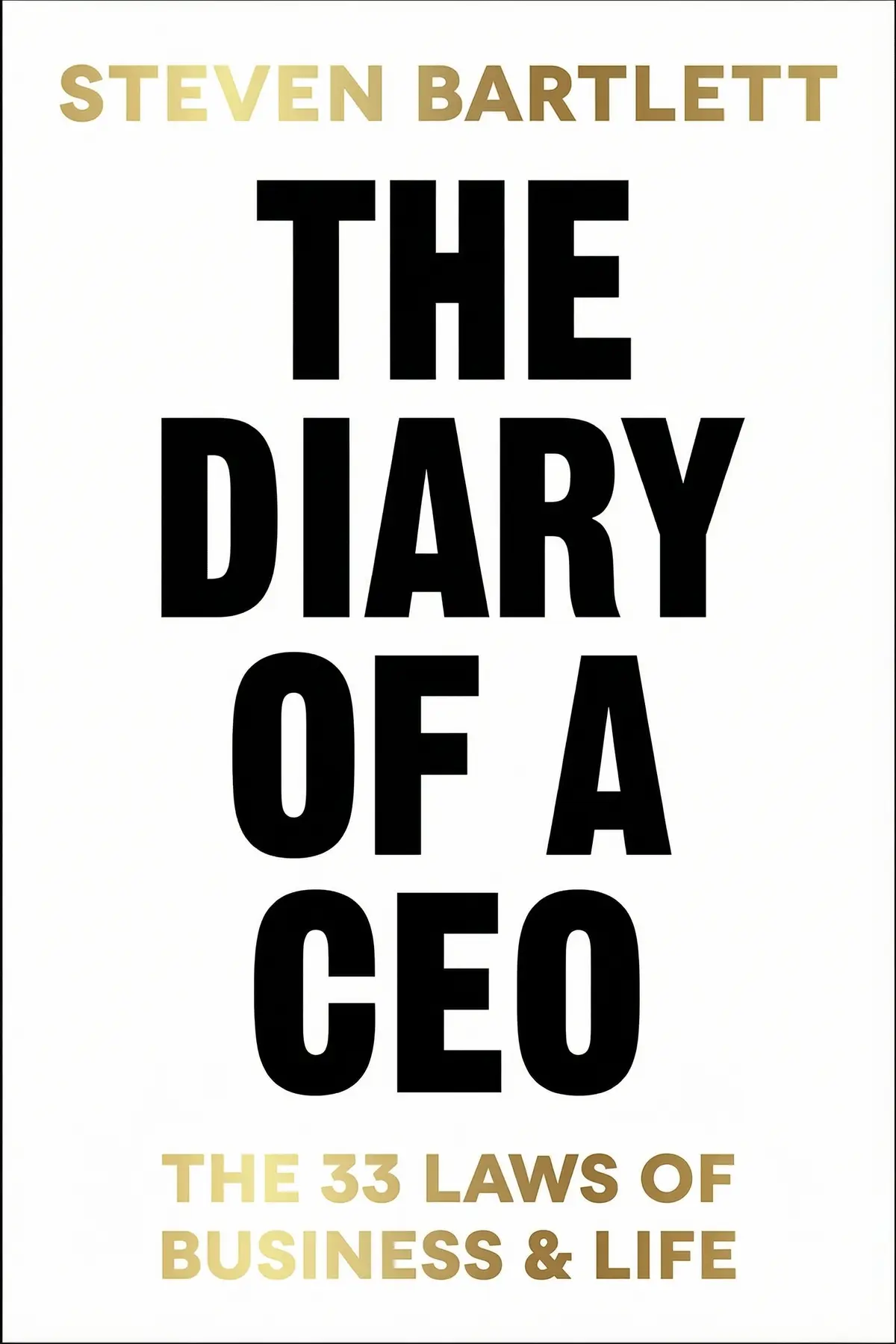
Table of Content
1. Introduction
1 min 04 sec
Many ambitious people work hard on the wrong things first, then wonder why all that effort never seems to add up. In The Diary of a CEO, entrepreneur and podcast host Steven Bartlett argues that order matters: build knowledge, then skills, and only after that chase network, money and reputation. Skip ahead, and the whole structure rests on a weak base.
Bartlett sets out 33 laws in the book, and the seven chosen here share one thread. His case is that success comes from deliberately handling the small levers most people leave to chance. Those levers are what you build first, how you weigh your hours, which problems you are willing to face, how you phrase a question or an offer, and who you keep beside you.
Each law is short enough to test this week, whether you are weighing a job offer, writing a sales pitch or deciding what to do about a talented colleague who makes everyone else worse.
2. Build your career in the right order
1 min 37 sec
Taking the job with the bigger salary feels like progress. Bartlett sees five containers every career has to fill, and he warns that filling them in the wrong sequence leaves you standing on something that will not hold.
3. Find the discipline for what matters most
1 min 48 sec
Most people do not lack goals; they lack the steady effort to chase them. Bartlett reduces discipline to a small piece of arithmetic, and each part of it is something you can change on purpose.
4. Face the problem before it spreads
1 min 43 sec
A team member keeps missing targets, the numbers keep slipping, and everyone hopes it will sort itself out. Bartlett names this habit after a famous bird, and he offers a four-step way out of it.
5. Turn plans into commitments with one question
1 min 41 sec
Two signs on a street ask for the same thing, recycling, in slightly different words. One of them gets far more people to act, and the reason says a lot about how you talk to yourself.
6. Win attention in the first five seconds
1 min 40 sec
Most ads and presentations lose their audience long before the main point arrives. Bartlett compares human focus with a goldfish’s, and argues that the opening moment deserves more work than everything after it.
7. Make the middle option your best seller
1 min 42 sec
Show a customer one product and they judge it alone. Show them three and something changes in how they weigh the price. A well-known electronics maker has built its range around that shift.
8. Keep the people who raise your team's standard
1 min 42 sec
A star performer starts to bring out the worst in everyone around them. Keep the talent or protect the team? Bartlett offers a single question that turns this painful call into a clear one.
9. Conclusion
1 min 07 sec
At first, Bartlett’s laws look like an odd mix: career planning next to pricing tactics, goldfish attention spans next to firing decisions. What joins them is a refusal to let things happen by default. Left to habit, people chase status before skill, postpone the hard talk, open with features, offer a single price and keep the gifted colleague who brings everyone down. Each law swaps one of those defaults for a choice made on purpose.
The changes are small enough to begin today. Before you accept the next role, check whether it adds to your knowledge and skills or only to your bank account. Turn one plan into a yes or no question and answer it honestly. Choose the conversation you have been avoiding, and hold it without blame, ready to listen. When you look at the people around you, ask the three bars question: if everyone acted like this person, would the team rise or fall?
Success, as the saying goes, leaves clues. Most of them are hidden in decisions you were about to make without thinking.
About this book
What is this book about?
Plenty of ambitious people work hard and still feel their effort is not adding up. They chase a better title before they have the skills to back it, put off the conversations that would fix a problem, and open every pitch with a list of features nobody asked for. Steven Bartlett, who built the marketing agency Social Chain and now hosts The Diary of a CEO podcast, collects the lessons he has gathered into 33 laws of business and life. This selection follows seven of them. They range from personal growth to selling and leadership: five buckets to fill in a set order, a simple equation for discipline, the danger of hiding from bad news, why a yes or no question moves people more than a statement does, the five seconds that decide whether anyone pays attention, the pull of the middle price, and a single question for judging who belongs on a team. The common thread is that results come from choices made on purpose. Readers get short, testable rules for their next job decision, their next sales offer and their next hard call about a colleague.
Book Information
Who it's for
Weighing pay against skills
Early-career professionals tempted to take jobs for pay or status before building real skills.
Founders and marketers
Founders and marketers who need sharper openings, better pricing and clearer offers.
Managers facing hard calls
Managers facing a hard call about a talented but difficult team member or a conversation they keep postponing.
About the Author
Steven Bartlett
Steven Bartlett, born in 1992, started his business career with Social Chain, a digital marketing agency whose clients included Coca-Cola, TikTok and Warner Bros, and later stepped down as its CEO. He has hosted the podcast The Diary of a CEO since 2017 and first appeared as an investor on BBC One's Dragons' Den in 2021. He also founded FlightStory Studio, FlightStory Fund, Thirdweb and Steven.com.
Ratings & Reviews
Ratings at a glance
What people think
Listeners find this work to be an exceptional book full of valuable knowledge and practical guidance. The delivery is brief and direct, making the concepts very easy to absorb. Listeners appreciate the perspective on both life and business, with one listener highlighting how well it connects with people striving for achievement. The book earns high marks for its leadership insights and the overall value it provides.
Top reviews
Chamnong
Finally got around to reading this after binging the podcast, and it didn't disappoint. Steven has a knack for distilling complex psychological concepts into bite-sized, actionable pieces of advice that feel relevant to the modern world. The 33 laws aren't just for corporate types; they are truly life lessons about discipline and human behavior. I especially liked the emphasis on Law 26 regarding your worth in different environments. It’s a beautifully designed book that looks great on a coffee table, though some might find the brevity a bit jarring compared to traditional business tomes. If you’re looking for a boost in your professional life and appreciate a direct, no-nonsense writing style, this is the one for you. It’s a quick read, but I found myself pausing after every chapter to reflect on how to apply the principles to my own startup.
Show moreKofi
Picked this up on a whim during a flight and ended up highlighting almost every other page. This book is a goldmine for high-achievement addicts who need that quick dopamine hit from finishing short, punchy chapters. The research cited is top-tier, drawing from sports, science, and entertainment to prove the effectiveness of these 33 laws. It’s written in a way that feels very "now," stripping away the stuffy language of old-school management books. Not gonna lie, I was skeptical about the "diary" format, but it actually makes the lessons feel more intimate and authentic. You can tell Steven has interviewed some of the smartest people on the planet because the insights are layered and nuanced. Definitely one I’ll be revisiting every year to keep my mindset sharp and my goals on track.
Show moreJib
As someone who has followed Bartlett’s journey for years, I found this to be the perfect culmination of his philosophy. The writing style is straightforward and concise, making it accessible even for people who don't usually enjoy reading business books. He covers everything from health and well-being to the technicalities of leadership, providing a holistic view of what it takes to succeed today. I’ve read a lot of similar titles, but this one stands out because of the quality of the research and the diverse range of experts he quotes. It doesn't feel like he's just sharing his own opinions; he's curating the best knowledge available. The surprise at the end was a nice touch, too! It’s an essential read for anyone looking to challenge the status quo and build something meaningful.
Show moreAom
Truth is, the 33 laws provide a surprisingly solid framework for navigating both personal growth and professional hurdles. I love how Steven integrates psychology into every chapter; it makes the advice feel much more scientific and less like "woo-woo" motivation. The book is extremely well-researched, featuring perspectives from leaders in sports and entertainment that I hadn't considered before. It’s a very visual experience too, which helps with retaining the information. I didn't find it egotistical at all; instead, it felt like he was genuinely trying to pass on the lessons that helped him rise from a university dropout to a millionaire. It’s the kind of book you keep on your desk and flip through whenever you need a quick reminder of your why.
Show moreNiphon
Ever wonder what it actually takes to scale a business without losing your mind? This book provides as close to a roadmap as you’re going to get in 2024. The laws are practical, the anecdotes are engaging, and the overall vibe is incredibly inspiring. I particularly appreciated the section on prioritizing your health and well-being because we often forget that the CEO is also a human being. It’s a great practical compilation of advice that avoids the fluff and gets straight to the point. If you’re a high-achievement addict like me, you’ll find yourself tearing through this in a couple of sittings and then spending weeks trying to implement everything. It’s easily one of the best books I’ve read this year for its sheer density of useful information.
Show moreChon
Is this a business manual or a therapy session for entrepreneurs? It leans heavily into the self-help genre, which was a pleasant surprise for me even if it wasn't what I originally expected. The focus on mental strength and bouncing back from setbacks really resonated with my current career transition. Bartlett uses personal anecdotes to illustrate his points, making the advice feel more grounded and less like he’s preaching from an ivory tower. My only gripe is the constant name-dropping of his various investments, which started to feel a bit like a sales pitch after a while. Still, the core lessons on storytelling and brand building are worth the price of admission alone. It’s a modern guide for a modern landscape where personal brand is everything.
Show moreStella
Look, the formatting is definitely a choice with those massive fonts, but the content actually hits home once you get past the aesthetic. It gets significantly better when the author dives into marketing and the practicalities of building a cult-like following for a brand. These sections feel more authentic to his actual expertise compared to some of the earlier, more generic self-help laws. I appreciate that he doesn't waste time with long-winded introductions or filler paragraphs that plague most business books. It’s a very tactical read—almost like a checklist for success in the digital age. I do wish there were more diary entries and fewer laws, as the personal stories were the most engaging parts. Overall, a solid four stars for the marketing insights alone.
Show moreChatchai
Not what I expected from a traditional CEO memoir, and that’s probably why I liked it so much. It’s less about spreadsheets and more about the psychology of people, which is the real engine behind any successful company. Some of the advice might seem basic if you’re in your 50s and have been in the game for decades, but for someone in their 30s like me, it felt like a fresh perspective. The chapter on not being afraid to be different really struck a chord, especially in a world that rewards conformity. My only minor complaint is that the pacing feels a bit rushed toward the end, as if he was trying to fit too many ideas into one volume. Nevertheless, the value for money is incredible given how much actionable info is packed into these pages.
Show moreSeksan
The author claims that most books are far longer than they actually need to be, which is a sentiment I generally agree with. However, the execution here feels a bit contradictory because half the page count is taken up by massive font sizes and generic inspirational quotes. It feels like he’s trying to pad the volume while telling us he’s cutting the fluff. To be fair, there are some genuine nuggets of wisdom regarding marketing and the psychology of persuasion that I haven't seen elsewhere. But I couldn't help but feel like I was reading a collection of LinkedIn posts rather than a cohesive narrative. It’s a decent enough read if you’re in your early twenties and need a kick-start, but seasoned professionals might find it a bit elementary. The production quality is high, yet I expected more depth given his track record.
Show moreSurasit
Frankly, this feels like a polished marketing brochure for Steven’s personal brand rather than a book meant to serve the reader. While I can’t deny his success, the way he frames "Law 26" as an encouragement to seek higher pay regardless of the moral cost felt quite cynical to me. The book fetishizes late-stage capitalism and puts an immense amount of pressure on the individual to solve systemic issues through discipline and gym routines. There are molecules of good advice buried under layers of ego and narcissism that are hard to ignore. If you like the podcast, you’ll probably love this, but if you’re looking for something with actual substance and social conscience, look elsewhere. It’s well-packaged snake oil for the TikTok generation who think being a CEO is a personality trait.
Show moreQuestions about this book
What is The Diary of a CEO by Steven Bartlett about?
The book collects 33 laws of business and life drawn from Bartlett’s career as an entrepreneur and podcast host. The seven covered here include filling five career buckets in order, a discipline equation for using time well, the ostrich effect, the question-behavior effect, the first five seconds of marketing, the Goldilocks effect in selling and the three bars framework for building a team. Their shared message is that results come from deliberate choices made in small moments.
What are the five buckets in The Diary of a CEO?
Bartlett names five buckets that every career fills: knowledge, skills, network, resources and reputation. Knowledge comes first, like a foundation. Skills turn it into practical value, which attracts a network. A network opens access to resources such as money or mentorship, and reputation grows out of all four. He warns against shortcuts, such as taking a job only for money or status, because filling a later bucket first leaves a weak base.
What is the three bars framework?
It is Bartlett’s test for judging team members. Ask whether the team’s average performance and morale would rise, stay level or fall if everyone shared a particular person’s values and attitude. Those who raise the bar should be recognized and promoted. Those who lower it should be let go, however talented they are. The same question can guide hiring, since each new person is a chance to raise the team’s standard.
How can I use the question-behavior effect?
Turn statements into yes or no questions. Rather than stating the plan as a firm intention to head to the gym today, pose it to yourself as a question about whether you will make that trip. Bartlett argues that answering a question makes you picture doing the action, which feels like a promise, and that a link to your ideal self creates tension you resolve by following through. He cites research showing a question about recycling motivates more than a request to recycle.
Who should read The Diary of a CEO?
It suits ambitious people early in their careers who want a clear order for building skills and reputation, founders and marketers working on attention and pricing, and managers facing hard decisions about culture and difficult conversations. Its laws are short and practical, so they suit readers who want rules to test quickly, such as the five-second opening, the three-option price range and the three bars question.
Readers also enjoyed


A Guide to the Good Life: The Ancient Art of Stoic Joy
William B. Irvine


A High-Performing Mind: Strengthen Your Mind and Live Your Best Life
Andrew D. Thompson


Abundance: The Inner Path to Wealth
Deepak Chopra


60 Seconds & You’re Hired!
Robin Ryan


AUDIO SUMMARY AVAILABLE
Listen to The Diary of a CEO in 15 minutes
Get the key ideas from The Diary of a CEO by Steven Bartlett, plus 5,000+ more nonfiction titles.
- 5,000+ titles
- Listen as much as you want
- 7-day free trial
- Cancel anytime









