


11 min 08 sec
Available in: English
The Desire Map: A Guide to Creating Goals with Soul
Shows how to set goals around the feelings you most want in life. It explains how to drop targets you dread or borrowed from others, and how to pursue your dreams within real limits.
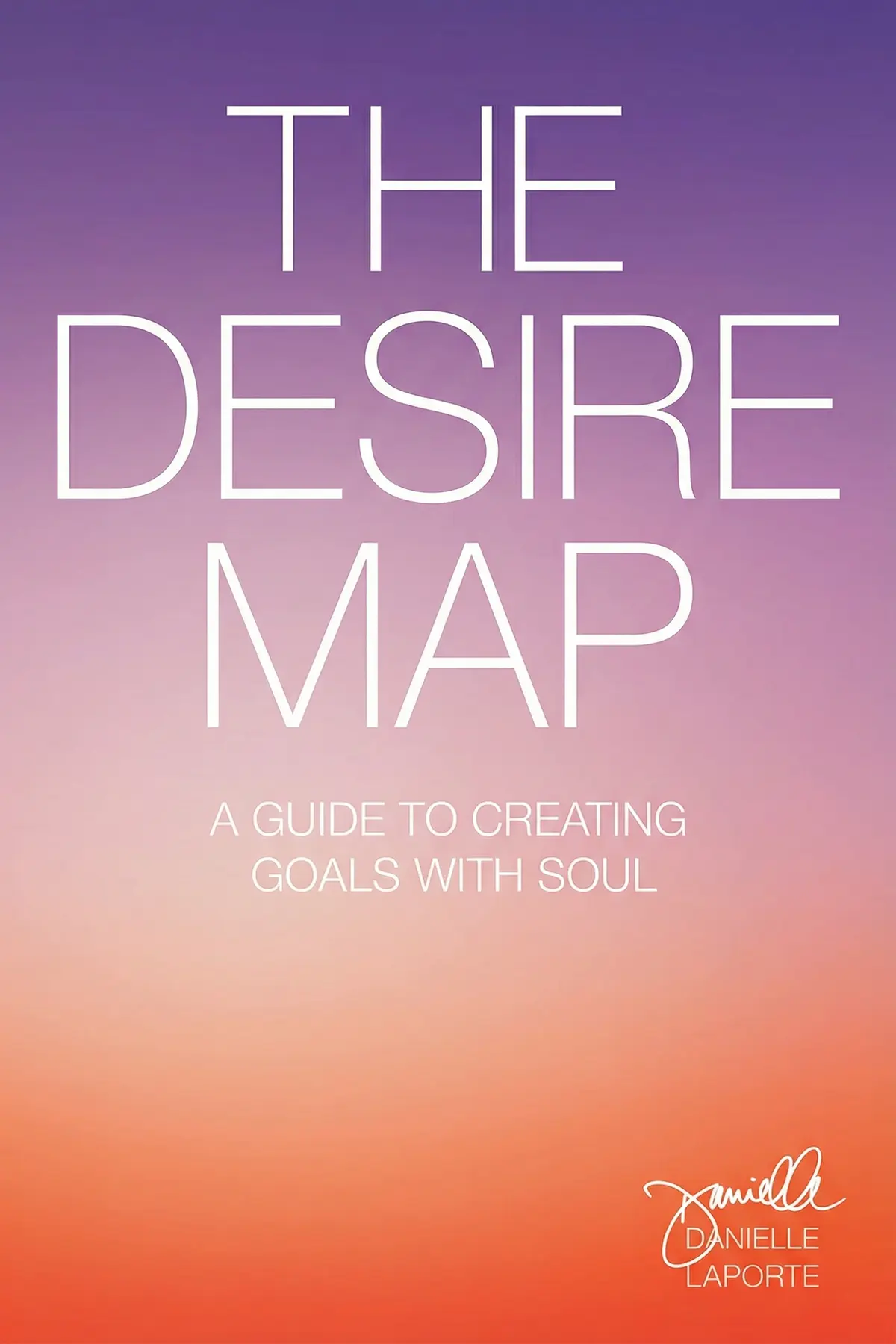
Table of Content
1. Introduction
1 min 04 sec
Many people reach a goal they worked hard for and then feel strangely flat. In The Desire Map, author and entrepreneur Danielle LaPorte argues that the problem starts earlier, when the goal is chosen. We set goals around numbers and other people’s expectations, when we should set them around how we want to feel.
Desire, in her view, deserves more respect than we usually give it. It is the force that gets us out of bed, makes us inventive and pushes us to grow. Her argument is that when your goals come from the feelings you most want in your life, chasing them feels like living instead of a chore.
Along the way she explains why a feeling can be true without being a fact, and why dreading a goal is a warning sign. She also shows how to keep a dream alive when money, family or health set limits. What you gain is one test for every plan you make: will reaching it make you feel the way you want to feel?
2. Use your wanting as an engine for growth
1 min 47 sec
Desire gets blamed for wars and heartbreak, so most of us try to keep it on a short leash. LaPorte asks what would be left if it disappeared, and her answer starts with a school crush.
3. Trust the feelings that are true for you
1 min 47 sec
Most advice on big decisions says to stick to the facts. LaPorte argues that a feeling can be completely true without being a fact, and that a feeling like daily dread is a strong signal that something in your life has to change.
4. Separate your real desires from borrowed ones
1 min 51 sec
Some of the deadlines you push hardest against were set by someone else. And sometimes what you want arrives looking nothing like you pictured, with a large nose and no fancy degree.
5. Drop the goals you dread chasing
1 min 45 sec
LaPorte once ran her life on hard numbers and fixed deadlines, and they mostly made her anxious. What she replaced them with still asked a lot of her, yet felt completely different to pursue.
6. Keep your dreams alive within real limits
1 min 50 sec
An inner critic, two desires that cannot both win, a tight budget or a health problem: each seems like a reason to quit. LaPorte argues for a third way between giving up and pretending.
7. Conclusion
1 min 04 sec
LaPorte’s real change is to where a goal begins. Most goal-setting starts with a number and hopes a good feeling will follow. The Desire Map reverses that order. You name the feelings you want to live with, pick goals that produce them, and treat dread, emptiness or borrowed pressure as signs that you have drifted. Desire turns out to be both the fuel and the compass.
You can test this with very little effort. Notice what you feel in the first minute after waking, and take it seriously as information about your life. Look at one goal with a deadline and ask whose expectation set it. If a plan scares you more than it excites you, rewrite it around the feeling it was supposed to deliver, and be honest about the limits you are working with. When nerves rise before something important, steady them with a short list of what is already working.
The first poem leads to the story contest, and the contest leads to a publication of your own. Desire keeps growing either way. The work is to make sure it grows in your own direction.
About this book
What is this book about?
Plenty of people reach a goal they worked hard for and feel oddly empty afterward. Danielle LaPorte argues that the fault lies in how the goal was chosen. We tend to start with a number, a deadline or someone else's expectation and hope that a good feeling follows. The Desire Map turns that order around. LaPorte treats desire as the power of wanting: it makes us creative, pushes us to grow and gets us out of bed. She argues that feelings can be true for you even when they are not facts, and that a few core desired feelings, such as belonging, creative freedom or closeness, stay with us for life and can serve as signposts. From there she shows how to tell your own desires from borrowed ones, and why a goal you dread is not worth chasing. She also covers what to do when two desires clash, and how to keep a dream alive while admitting real limits of money, family or health. Readers get a simple test for any plan: will reaching it make them feel the way they want to feel?
Book Information
Who it's for
Professionals who dread Mondays
Professionals in well-paid jobs who dread Monday mornings and want to know what to change.
Empty after hitting targets
People who keep hitting targets and still feel empty afterward.
Juggling dreams and limits
Anyone torn between conflicting dreams, or held back by budget, family or health limits.
About the Author
Danielle LaPorte
Danielle LaPorte is a Canadian author, entrepreneur and speaker based in Vancouver. She worked as a publicist and at a think tank in Washington, DC, where she managed futurists building scenario plans for clients including the Pentagon and the World Bank. Her other books include The Fire Starter Sessions and White Hot Truth. She also created the Centered Planner system, founded Centering, a multifaith app for spiritual wellness, and is a member of Oprah's Super Soul 100.
Ratings & Reviews
Ratings at a glance
What people think
Listeners find this work life-altering, offering a novel outlook on reaching objectives and helping identify fundamental values and desires. Furthermore, the workbook is considered useful and perceptive, motivating listeners to implement changes and discover their core desired feelings. The writing style is also highly regarded, with listeners valuing Danielle LaPorte's specific method and viewing the content as a worthwhile investment.
Top reviews
Prasarn
Wow. This book is essentially a roadmap for the soul that I didn't even know I was searching for. Most self-help guides focus on the 'what' and the 'how' of achievement, but Danielle flips the script by asking us to identify our core desired feelings first. The truth is, we don't want the fancy car or the promotion for the objects themselves; we want them because of how we think they will make us feel. This realization was life-changing for me. The workbook section is incredibly practical and helps you dig through the layers of social expectations to find your own truth. It feels sacred, almost like a conversation with a higher version of yourself. While some might find the style unconventional, I thought the layout was beautiful and inspiring. It is well worth the investment if you are ready to stop chasing empty goals and start living with real intention.
Show moreRungtip
Danielle LaPorte speaks directly to the soul in a way that feels both modern and ancient. I have read hundreds of personal development books, but this is the first one that felt like a bible for my inner life. The idea that we should plan our days based on how we want to feel is revolutionary in its simplicity. After years of numbing myself to meet external expectations, identifying my Core Desired Feelings felt like coming home. I’ve started applying this to my business, and the shift has been incredible; I no longer feel like a slave to my to-do list. The book is vibrant, intense, and unapologetic. Some critics mention the unconventional formatting, but I found the bold layout to be a visual representation of the author’s passionate energy. It is a magical experience for anyone who is ready to reclaim their authenticity and live a more abundant, heart-centered life.
Show moreTaweesak
This book arrived at exactly the right moment in my life when I was feeling lost and choiceless. I was stuck in a cycle of self-sabotage and grief, but the exercises here helped me see a path forward that wasn't just about 'grinding' harder. Not gonna lie, I was skeptical of the 'woo-woo' vibe at first, but the results speak for themselves. Identifying my values through the lens of feeling has made me much more grounded and truthful with myself and others. I love that it’s not a one-size-fits-all system; it’s a framework that you fill with your own story and your own shadows. It’s an investment in your own well-being that pays off every time you open the workbook. For me, it wasn't just a book—it was a permission slip to be exactly who I am, Gemini traits and all. Absolutely amazing and life-altering for those who are open to it.
Show moreDao
Ever wonder if you are actually chasing the wrong things in your career and personal life? I picked this up because I was feeling burnt out despite hitting all my major milestones. The Desire Map offered a fresh perspective by centering my core values and emotional state rather than just another checklist. To be fair, the writing style is a bit 'woo-woo' and very emotive, which might alienate analytical types who need concrete data. However, if you can get past the fragmented sentences and the bold, shouting fonts, there is some real wisdom to be found in these pages. I especially appreciated the workbook portion, which forced me to be honest about my relationship with money and success. It isn’t a traditional read, but it is an effective tool for anyone in a period of transition who feels a burning desire to change their direction.
Show moreSurasit
Finally got around to sitting with the workbook portion of this, and I have to say, it is quite insightful. I originally listened to the audiobook, which was a great experience because Danielle has a very commanding and soulful voice, but the physical book is necessary for the exercises. The process of narrowing down your desires is harder than it looks but totally worth the effort. In my experience, most goal-setting programs are too rigid and leave no room for the human spirit. This book changes that by making your internal state the priority. My only real gripe is that the writing can be a bit repetitive, and the author tends to ramble in a way that feels a bit unorganized. Still, the core message is powerful enough to overcome the stylistic quirks. It helped me reconnect with my motives and stop pursuing goals that were making me miserable.
Show moreKet
After a decade of traditional goal-setting and corporate ladders, this book felt like a breath of fresh air. It challenges the toxic idea that we have to suffer now to be happy later. Instead, LaPorte suggests we can feel how we want to feel right now, during the process. The focus on 'Core Desired Feelings' helped me realize that my pursuit of a specific salary was actually a pursuit of 'freedom' and 'security.' Once I knew that, I could find other ways to manifest those feelings immediately. The layout is definitely unique—lots of big fonts and poetic fragments—which I actually found helpful for skimming and re-reading. It isn't for everyone, especially if you want a linear narrative, but for the spiritually awakened woman, it’s a goldmine. I’ve already gifted copies to several friends who are struggling with their 'shoulds' and looking for more joy.
Show moreSebastian
Picked this up on a whim and was surprised by how much it resonated with my emotive side. As someone who often feels overwhelmed by traditional productivity systems, the non-linear approach here was actually quite relieving. I stopped focusing on the 'milestones' and started asking myself how I wanted my morning to feel, which completely changed my energy at work. The writing is very vocal and intense—Danielle doesn't hold back, and her 'no-bullshit' spirituality is refreshing. Some parts felt a bit rambling and the Christian undertones mentioned by others were a bit odd, but the overall impact was positive. It’s a great tool for uncovering what you actually value versus what society tells you to want. If you can handle a style that is more 'artistic' than 'academic,' you will get a lot out of this workbook.
Show moreLena
Look, I get the hype, but I think the delivery of this message is a bit hit-or-miss. The central premise—that our feelings should drive our goals—is a fantastic insight that I have already started implementing in my daily routine. However, the execution of the book itself feels a bit thin on actual substance. It’s very much a collection of 'post-it note' wisdom and artistic flourishes rather than a deeply researched psychological theory. Personally, I found the author’s tone to be a bit privileged at times, and I wasn't a fan of how she occasionally seemed to dismiss the complexities of mental health. It’s a quick read because there isn't actually that much text on the pages due to the massive font sizes and frequent line breaks. If you want a pretty, inspiring workbook to spark some reflection, this is great. Just don't expect a rigorous or systematic guide to life planning.
Show moreDiego
Gotta say, the layout made this a struggle to get through even though I loved the underlying message. The 'theory' half of the book felt more like a collection of inspirational quotes than a developed argument or guide. To be fair, the idea of checking in with your feelings before setting a goal is a brilliant shift in perspective that I will definitely keep using. But why do we need six different fonts and constant bullet points to say that? It felt like the author was trying to be 'edgy' with the graphic design, but it mostly just felt unedited and scattered. It’s a very quick read, mostly because half the pages are blank or just have one sentence on them. It’s a decent coffee table book for inspiration, but for $20+, I expected a bit more depth and a lot less white space.
Show moreSom
The typography in this volume is a total disaster and made the reading experience incredibly frustrating for me. As someone with a background in design, I found the constant shifting between four or five different fonts on a single page to be chaotic and unnecessary. It felt like I was being yelled at by a series of fragmented PowerPoint slides rather than reading a cohesive book. Frankly, the 'theory' section is almost non-existent, replaced instead by poetic snippets and sentence fragments that never quite develop into a full thought. The core concept of chasing feelings rather than external goals is a solid idea, but it could have been explained in a short blog post. There is so much white space here that I felt like I was paying for empty paper. If you prefer a logical, systematic approach to personal growth, this non-linear mess will likely drive you up the wall just as it did for me.
Show moreQuestions about this book
What is the main idea of The Desire Map by Danielle LaPorte?
LaPorte argues that goals should start from the feelings you most want in your life, which she calls core desired feelings. Desire, in her view, is a creative force that drives growth. When goals come from those feelings instead of from numbers or other people’s expectations, chasing them feels right, and reaching them does not leave you empty.
What are core desired feelings?
They are the feelings you want throughout your life, unlike passing moods such as annoyance or anticipation. LaPorte gives examples like belonging to a community, the freedom to be creative and closeness with someone you love. She treats them as signposts: when daily life, such as a well-paid but dreaded job, works against them, something needs to change.
How do I apply The Desire Map to my goals?
Check each goal against how it makes you feel. LaPorte says a goal you dread is not worth pursuing, so rewrite it around what you care about, as she did when she swapped strict income and deadline targets for reaching readers she valued. Ask whether a goal reflects your desire or pressure from peers, and admit your limits so you can plan around them.
What does LaPorte say about conflicting desires and personal limits?
When two desires clash, such as longing for a quiet cabin while raising two noisy children, she says a choice has to be made, and letting one desire go makes room for new ones. With limits like a tight budget, family duties or health issues, she advises neither giving up nor pretending they do not exist, but naming them and working with them.
Readers also enjoyed

A High-Performing Mind: Strengthen Your Mind and Live Your Best Life
Andrew D. Thompson


Abundance: The Inner Path to Wealth
Deepak Chopra


59 Seconds: Change Your Life in Under a Minute
Richard Wiseman




AUDIO SUMMARY AVAILABLE
Listen to The Desire Map in 15 minutes
Get the key ideas from The Desire Map by Danielle LaPorte, plus 5,000+ more nonfiction titles.
- 5,000+ titles
- Listen as much as you want
- 7-day free trial
- Cancel anytime









