
14 min 19 sec
Available in: English
 ไทย
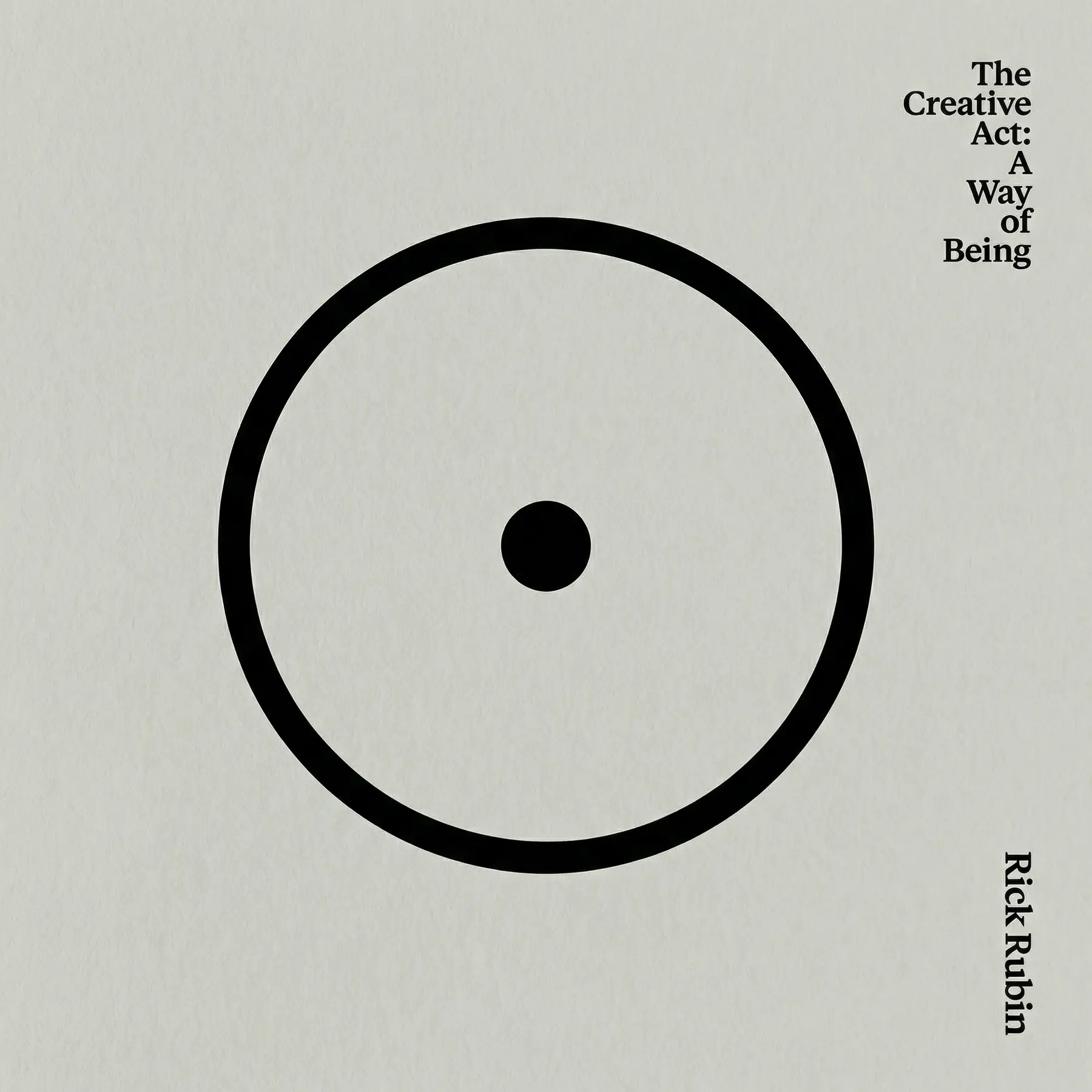
EnglishไทยThe Creative Act: A Way of Being
By Rick Rubin
Rick Rubin shows how anyone can live and work creatively: sharpen your attention, guard what enters your mind, play freely with early ideas, finish work on a deadline and keep making things even when fear says stop.
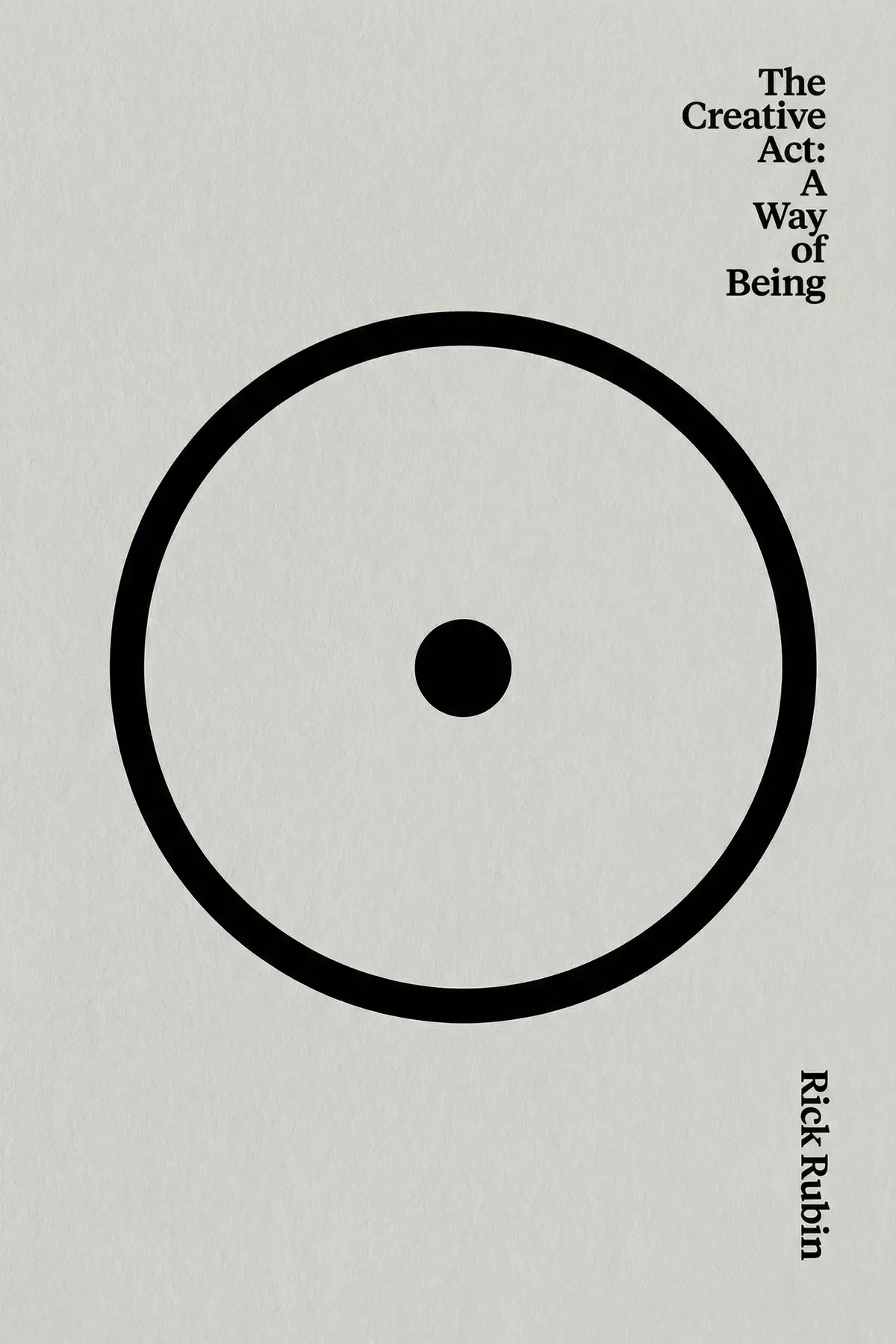
Table of Content
1. Introduction
1 min 00 sec
If you have always assumed creativity belongs to other people, the ones with the right family, the right city or a prize won at twelve, Rick Rubin believes you have it backward. In The Creative Act, the producer who has worked with Run-DMC, the Beastie Boys and many others argues that everyone is creative, and that what separates makers from everyone else is a practice anyone can build. That practice begins somewhere modest: putting your phone away on the walk home and paying attention.
Rubin’s case is that art moves through you when you stay open to the world, play freely with early ideas, finish on a deadline and refuse to let fear make the decisions. What follows is the cycle he describes, from noticing to shaping to letting go. Along the way there are small habits to try this week, a reason to treat a mistake as the most beautiful part of a piece, and a motive for making things that has nothing to do with applause.
2. Train your attention to catch ideas everywhere
1 min 59 sec
A tree in a garden never wonders whether it deserves to bear fruit. Rubin uses it to explain where ideas really come from, and why the habit that blocks them is probably sitting in your pocket.
3. Choose what you let into your mind
1 min 39 sec
Every day, other people decide much of what fills your head before you have chosen anything. Rubin’s fix is surprisingly relaxed, and it leaves plenty of room for trashy novels and noisy football stadiums.
4. Make the work while you are still afraid
1 min 49 sec
A performer with five decades on stage still feels sick before every show. A famous tower and a Japanese repair method explain why that fear may be pointing at something good.
5. Give yourself permission to make something bad
1 min 48 sec
Taking your work seriously sounds like the right instinct. Rubin argues it is often the very thing that leaves people with big ideas and nothing finished, and he borrows a thought from Oscar Wilde to say so.
6. Protect young ideas until they can grow
1 min 45 sec
A bent umbrella on the street can start a series of paintings, if the idea survives its first week. Most brainstorming meetings, Rubin observes, kill ideas like that in a very predictable way.
7. Finish your piece and let it go
1 min 41 sec
The vision in your head rarely survives contact with the page. A humble breakfast food shows why a disappointing first attempt still matters, and why an end date protects the work from you.
8. Make art for its own sake and free your work
1 min 27 sec
Plenty of people believe art should always carry a message. Rubin disagrees, and he points to a twist: the artists who never aimed for impact are often the ones who ended up having it.
9. Conclusion
1 min 11 sec
The Creative Act treats creativity as a way of living, something practiced daily by anyone willing to pay attention. Its cycle is easy to carry around: notice the world, gather seeds, play with them in private, build them patiently, finish on a deadline, let go, then begin again. Fear runs alongside every stage. Rubin reads that fear as a sign you are doing it right, as long as it never gets the final word.
The practice starts small. Tomorrow, make the commute without headphones and see what you catch. When a project stalls, ask the world for a nudge: a random page, a random film, a shop you would never enter. Give your next rough idea a few days of private, wild experiment before anyone judges it, and give your oldest unfinished piece an end date.
And when something you made comes out lopsided, remember the tower in Pisa that leans by accident, and the gold running through a mended bowl. The peach tree never waits to feel worthy before it fruits. Rubin’s book is an invitation to stop waiting too.
About this book
What is this book about?
Many people assume that creative work belongs to someone else: someone in the right city, from the right family, or with an early gift. Rick Rubin argues the opposite. In his view everyone is naturally creative, and what separates people who make things from people who don't is a practice that can be learned and kept up. Rubin describes that practice as a cycle. It begins with awareness: noticing the world, inviting chance clues and choosing carefully what you let into your attention. It moves to seeds, the small hunches that need private, playful experiment before they face criticism. Then comes crafting, the patient work of turning an idea into something real, kept moving by deadlines. Running through every stage is fear, which he treats as normal and even useful, illustrated by a tower in Pisa that leans by mistake and the Japanese art of mending pottery with gold. Readers get simple habits to fold into ordinary days, a way to lower the stakes when starting feels impossible, a more generous way to run brainstorming sessions and a reason to make art that does not depend on applause or a cause.
Book Information
Who it's for
Professionals doubting their creativity
Professionals who believe they are not creative but want to make things, at work or at home.
Creators stuck before finishing
Writers, musicians and designers stuck between big ideas and finished work.
Leads getting safe ideas
Team leads whose brainstorming meetings keep landing on safe, forgettable answers.
About the Author
Rick Rubin
Rick Rubin, born in 1963 in Long Beach, New York, is a record producer with a career spanning decades. He co-founded Def Jam Recordings, founded American Recordings and served as co-president of Columbia Records. Through his work with Run-DMC, Public Enemy, the Beastie Boys, Geto Boys and LL Cool J, he is credited with helping hip-hop reach a wider audience, and he has produced hits in heavy metal, hard rock and country. Time named him among the world's most influential people in 2007, and he entered the Rock and Roll Hall of Fame in 2026. The Creative Act, published in January 2023, is his first book.
Ratings & Reviews
Ratings at a glance
What people think
Listeners find this work exceptionally easy to digest and value the deep insights and stimulating activities included. Many regard it as a premier resource for creative growth, offering useful tips and acting as a manual for navigating life. Additionally, the quality of the prose earns praise; one listener specifically highlights the clarity of the text, and listeners feel motivated, including one who says it gives inspiration to listen to one's body. However, several listeners mention that their physical copies arrived with greasy spots and blemishes on the jacket.
Top reviews
Wit
Wow, I didn't expect a book about art to feel so much like a spiritual manual for the modern soul. Rubin speaks about "The Source" with a conviction that makes you want to immediately go out and observe the world with fresh eyes. Not gonna lie, I was worried it would be too "hippy-dippy," but the exercises are actually quite thought-provoking and grounded. Each short chapter acts as a meditative prompt, helping me dismantle the imposter syndrome that usually stalls my projects. It’s the kind of wisdom that feels like you’ve always known it, but needed a master to articulate it clearly. This is easily one of the best books on creativity I have ever encountered.
Show moreLevi
Picked this up during a period of intense burnout, and it was exactly the balm my creative spirit needed. The structure is brilliant because you can open to any random page and find a pearl of wisdom that resonates with your current struggle. I love how he demystifies the idea of the "tortured artist" and instead frames creativity as a natural, healthy way of being. To be fair, if you’re looking for a memoir about working with Jay-Z or Johnny Cash, this isn't that book. It’s a holistic guide that teaches you how to listen to your body and the world around you. My mindset has completely shifted regarding how I approach my daily work and my personal hobbies.
Show moreRyan
Rubin’s "The Source" might sound a bit mystical to the skeptics, but for a working artist, it’s the most practical thing I’ve read in years. This book doesn't give you a map; it gives you a compass, which is much more valuable when you're lost in a project. Personally, I found the chapters on patience and finishing to be the most impactful, as they address the hardest parts of any creative endeavor. The writing quality is top-notch, stripped of all unnecessary ego and focusing purely on the work itself. It's a thick, beautiful volume that feels significant in your hands, despite the occasional "woo-woo" tangent. I’ll be returning to these pages whenever I feel my inspiration starting to wane.
Show moreNarong
Look, if you're coming for a technical manual on music production, you're going to be disappointed by this book's spiritual leanings. This is a manifesto on the ineffable—the stuff that makes us human and drives us to create something from nothing. Rubin lays down the truth of our creative essence with a simplicity that is both profound and deeply moving. Every page feels like a conversation with a wise mentor who has seen it all and still believes in the magic. I’ve started recommending this to everyone I know, regardless of whether they consider themselves "artists" or not. It’s a guide for living life with an open heart and a sharp eye for the beauty around us.
Show moreNong
After hearing about Rick Rubin's legendary production career, I expected a technical deep-dive, but this is something much more ethereal. The book serves as a gentle guide for living a creative life rather than a set of rigid instructions. Truth is, the prose is remarkably accessible, which makes it easy to digest in small bites during a morning coffee. Some might find the aphorisms a bit too similar to fortune cookies, yet they often land right when you need a perspective shift. I found myself dog-earing pages that touched on the ebb and flow of the creative process. It’s a beautiful physical object, too, though my copy arrived with a few mysterious grease marks on the cover which was a bummer.
Show moreLuckana
Ever wonder what goes on in the head of a man who produces everything from Slayer to Adele? This book gives you a glimpse into that mind, though it’s less about music and more about a general philosophy of receptivity. I opted for the audiobook, which Rubin narrates himself in a very soothing, almost hypnotic tone. The chiming bells between sections were a bit polarizing for me, but they certainly lean into the Buddhist vibe he’s going for. Look, some of the advice is definitely repetitive, and you’ll find yourself skimming through sections that feel like "wellness" filler. However, the core message about the dignity of the creative act is profoundly moving and worth the price of admission.
Show morePriya
As someone who struggles with perfectionism, the sections on experimentation and the "seed" phase of ideas were liberating to read. Rick Rubin creates a space where it’s okay to fail, reminding us that the process is far more important than the final product. The prose is sparse and elegant, which mirrors the minimalist production style he is famous for in the music world. I did find some of the "Source" talk a bit too metaphysical for my tastes, but I can’t deny that it made me think. It’s a great companion piece to books like "The Art of Noticing" for anyone trying to break out of a rut. Overall, it's a solid guide for living life with more intention and curiosity.
Show moreNannapat
Finally got around to reading this after seeing it on every "Best of" list this year, and I mostly get the hype. It’s a very "zen" approach to production and art, focusing on the internal state of the creator rather than external tools. Got to say, the layout is stunning, with plenty of white space that allows the ideas to breathe as you reflect on them. My only real gripe is that it can feel a bit elitist, as if only those with endless time for meditation can truly be creative. Still, the pearls of wisdom regarding how to handle roadblocks are genuinely helpful for any professional. It’s a thought-provoking exercise in shifting your perspective on what it means to be productive.
Show moreElla
The short, punchy chapters make for an incredibly accessible read, but the lack of depth started to wear on me after the first hundred pages. While there are certainly some nuggets of gold buried in here, a lot of it feels like a very long "Mister Wonderful" mug. It’s a 2/10 for practicality, but a 4/10 for vibe, so I’m settling on a middle-of-the-road rating. In my experience, creativity requires a bit more grit and sweat than the "mindfulness and magic" approach Rubin suggests. It’s a pretty book to have on your coffee table, but it functions more as a series of pep-talks than a real curriculum. I think it's mostly for people who find the idea of being an artist more exciting than the actual work.
Show moreChaiwat
This book is basically a $30 collection of Instagram infographics bound in cloth, and I felt more frustrated than inspired. For someone with such a massive legacy, Rubin offers very few concrete examples from his career, opting instead for vague, "crunchy granola" word salad. Frankly, it feels like a cash grab that prioritizes aesthetic over actual substance or useful industry insight. Every other page is a pseudo-philosophical quote that you could find on a Pinterest board for "inspirational living." I also received a copy that looked like it had been handled by someone eating pizza, with stains all over the white cover. If you want real advice, look elsewhere, because this is just expensive fluff for the "meditation and matcha" crowd.
Show moreQuestions about this book
What is The Creative Act by Rick Rubin about?
Rick Rubin argues that everyone is naturally creative and that creativity is a practice, not a gift reserved for a few. He describes a cycle: sharpen your awareness of the world, choose your inputs carefully, collect small ideas he calls seeds, experiment with them playfully, then craft them into finished work on a deadline and let them go. Fear and doubt accompany every stage, and he urges readers to create anyway.
How does Rick Rubin suggest dealing with fear and self-doubt?
Rubin treats insecurity as normal, even among great artists. He describes a performer who still feels sick with stage fright after five decades yet walks on stage every time. He points to the Leaning Tower of Pisa and to kintsugi, Japanese pottery mended with gold, to show that flaws can become the best part of a work. When starting feels impossible, he suggests lowering the stakes and allowing yourself to make something bad.
What does Rubin mean by creative seeds?
Seeds are the early hunches and intuitions that come from paying attention, such as a twisted umbrella that suggests a series of watercolors. Rubin says they need protection: keep them private at first and play with them freely, for example by moving a story to Mars or turning a love story into a murder mystery. Only after they grow do you move on to crafting them.
How can I apply The Creative Act in daily life?
Start by attaching moments of awareness to routines you already have, such as deep breaths before getting up or listening to music with your eyes closed at night. Replace one passive input, like the news, with something you choose. When stuck, look for random clues in a book, a film or an unfamiliar shop. Then set a deadline for one unfinished project and release it when the date arrives.
Who should read The Creative Act?
It suits anyone who assumes creativity belongs to other people, as well as working artists who feel blocked or paralyzed by perfectionism. Team leads can use its advice on brainstorming, where Rubin recommends trying every idea before criticizing it. Readers looking for a calmer, less pressured relationship with their work will also find his emphasis on play and making art for its own sake useful.
Readers also enjoyed




AUDIO SUMMARY AVAILABLE
Listen to The Creative Act in 15 minutes
Get the key ideas from The Creative Act by Rick Rubin, plus 5,000+ more nonfiction titles.
- 5,000+ titles
- Listen as much as you want
- 7-day free trial
- Cancel anytime









