

16 min 11 sec
Available in: English
Better Living Through Criticism: How to Think About Art, Pleasure, Beauty and Truth
By A.O. Scott
Shows why honest judgments about art matter even when history overturns them, how taste is shaped by the people around us, and what critics must change now that everyone online is a reviewer.
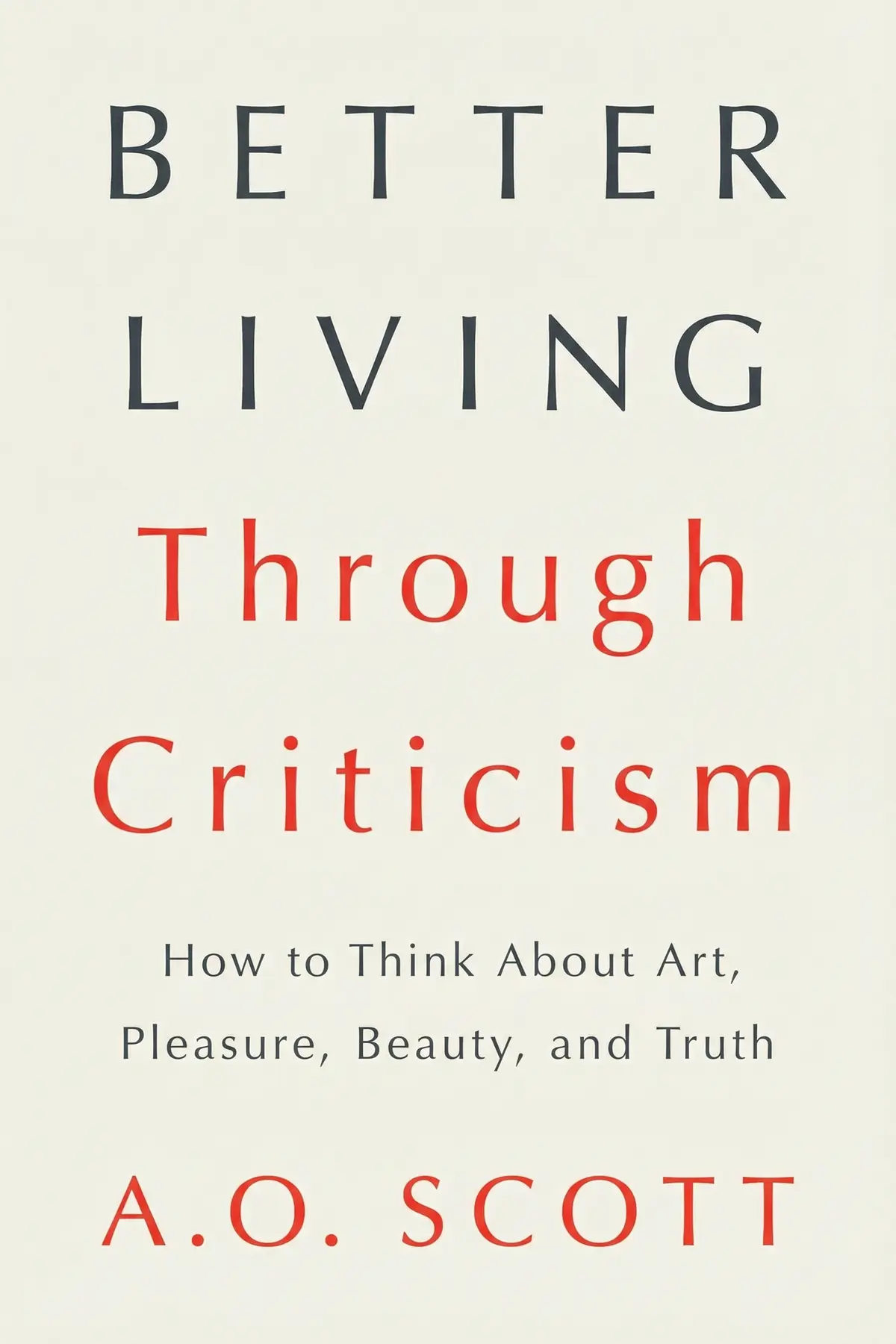
Table of Content
1. Introduction
1 min 06 sec
Most of us pass judgment all day on a film, a meal or a colleague’s slides, yet few of us can explain why our verdict deserves a hearing. In Better Living Through Criticism, longtime New York Times film critic A.O. Scott argues that judging well is a creative act, and that a review exists to capture its moment rather than to be right forever. Respected music critics first dismissed rock and roll. Their reviews faded and the music lasted, and Scott sees nothing broken in that. To him, that is how criticism works.
His argument rests on one idea: honest, risky judgments, even mistaken ones, start the public conversations that decide which art survives, and that job now has to be rebuilt for an internet full of reviewers. Along the way come Melville’s neglected masterpiece, a comedy that was panned and later revered, and a Twitter clash with Samuel L. Jackson. What the book offers is a better way to form, defend and revise your own opinions.
2. Judge art in the moment, even if history disagrees
1 min 59 sec
Respected critics once turned their backs on a kind of music the world now treasures. Scott argues their mistake reveals what criticism is really for, and why a furious movie star could not frighten him off his work.
3. Making and judging art draw on one creativity
1 min 52 sec
Harsh critics are often mocked as people who could not make it as artists. The careers of some famous playwrights and poets, and the habits of today’s filmmakers and DJs, tell a very different story.
4. Understand the forces that shape your taste
1 min 53 sec
Two great eighteenth-century philosophers believed every human being finds the same things beautiful. Scott explains what changed our minds, and why the song you love most may say as much about your friends as about you.
5. Honest verdicts that hurt still serve everyone
1 min 58 sec
One review can close a show or end a young writer’s career before it begins. Yet a set of savage notices on a great American novel turned out to be the very thing that rescued it from oblivion.
6. Get it wrong in public to find the truth
1 min 52 sec
Some of the most common words in movie reviews sound like praise and say almost nothing. Scott explains why they betray the reader, and why a critic who risks a wrong call does more good.
7. Discover how critics bring overlooked art to the world
2 min 08 sec
A comedy dismissed as ordinary by a leading newspaper is now counted among the greatest films ever made. Scott shows how later critics overturned that verdict, and how a once-despised music reached the world’s grandest stages.
8. Stand out in a world where everyone reviews
2 min 05 sec
Hundreds of tweets and online conversations now get there before a printed review is even read. Scott looks at what that flood has cost newspapers and trained critics, and where he still sees hope for serious judgment.
9. Conclusion
1 min 18 sec
Scott ends with ordinary life. Everyone criticizes constantly, from a verdict on a film to a private opinion about how a neighbor is dressed, mostly without noticing. What lifts true criticism above that background noise, he argues, is that it has to be interesting in itself.
That standard holds the whole case together. A review that reads like an advertising blurb is safe and soon forgotten. A review that takes a clear position in its moment, knowing it may be wrong, gives others something to answer. Out of those answers came a second life for Bringing Up Baby, concert stages for jazz, and readers for a Melville novel that its first reviewers buried and, by keeping a record, also saved.
The practice is open to anyone. When you judge something, say plainly what you think and why, and ask how much of the reaction came from the people around you. Trade words like captivating for a claim someone could dispute. Then go back to a work you once dismissed, because opinions, like art, are allowed to change.
A critic’s real task is to be worth arguing with, because the argument is how culture decides what to remember.
About this book
What is this book about?
Everyone judges films, books, songs and meals all day, yet few people can say why their verdict deserves a hearing. A.O. Scott, a longtime film critic at The New York Times, argues that criticism is a creative act in its own right. It belongs to the moment it was written, and its job is to start an argument, not to be right forever. Scott shows how artists and critics draw on the same creativity, from George Bernard Shaw to Quentin Tarantino and hip hop sampling. He traces how communities and commercial forces shape taste, and why a harsh review of Moby-Dick ended up saving the novel. Critics revived a panned comedy, Bringing Up Baby, and carried jazz from dance halls to the world's great concert stages. He also faces the present: a glut of online reviews, the collapse of print revenue, and the pressure to write clickbait instead of real judgment. Readers come away with a sharper way to form, defend and revise their own opinions, and a clearer view of why culture needs people willing to be wrong in public.
Book Information
Who it's for
Arts and culture fans
Film, music and book lovers who want to explain why they love or hate a work.
Reviewers, bloggers and writers
Writers, bloggers and reviewers who fear being wrong in public.
Workplace feedback givers
Professionals who give feedback and want their judgments to start useful conversations.
About the Author
A.O. Scott
Anthony Oliver Scott, born in 1966, worked at Variety, Slate and The New York Review of Books before he began reviewing films for The New York Times in 2000. In 2004 he became the paper's chief film critic, sharing the title with Manohla Dargis, and in 2023 he moved to its Book Review. Decades of judging films in public, sometimes to loud disagreement, give him an insider's view of what criticism is for.
Ratings & Reviews
Ratings at a glance
What people think
Listeners find this an outstanding listen that is both witty and masterfully composed. They appreciate the book's deep dive into the nature of criticism, with one listener noting its philosophical depth and effective use of film-related examples. Listeners describe the text as highly engaging, with one listener highlighting the exploration of fundamental tensions in art criticism, while another calls out the fascinating section on Frank Nugent.
Top reviews
Parichat
The chapter on Frank Nugent alone makes this worth the cover price. As a regular reader of the Times, I knew Scott was sharp, but I wasn't prepared for how funny and self-aware this book would be. He avoids the typical elitist traps by grounding his arguments in real passion. Whether he's talking about The Searchers or Marina Abramovic, you can feel his genuine love for the work. Truth is, we all act as critics every day, and Scott provides a beautiful framework for understanding why that matters. The Socratic interludes were a stroke of genius, capturing the internal tug-of-war between the objective analyst and the emotional fan. It’s a celebratory, erudite, and deeply human look at how we engage with beauty. If you care about art, you need to read this. It’s a classic.
Show moreMilk
This book argues that criticism isn't just a reaction to art—it's an essential part of the creative process itself. Scott calls it the 'second-born twin' of the human condition, and that idea resonated deeply with me. It’s a profound, well-written exploration of how we find our way through the glut of modern information. He doesn’t shy away from the contradictions of his job, using the Socratic dialogues to show how he wrestles with his own opinions. The sections on Rilke and the 'Archaic Torso of Apollo' were genuinely moving. To be honest, I didn't expect a book about film criticism to be so philosophical, but I’m glad it was. It’s thought-provoking, funny, and serves as a necessary reminder that our tastes define who we are. A must-read for any serious cultural consumer.
Show moreRohan
Scott manages to turn a Twitter spat with Samuel L. Jackson into a wide-ranging, sophisticated defense of the critical mind. That’s no small feat. This isn't just a book about movies; it’s an exploration of how we find meaning in a world drowning in data and 'the math.' I appreciated his take on the 'antiscientific mock skepticism' of the digital era. It’s refreshing to see someone take the act of judgment seriously in a time when the Tomatometer has replaced nuance. While some of the more abstract paragraphs became a bit of a slog, his wit usually saved the day. The way he connects the act of criticism to basic human survival—the 'second-born twin' of the creative impulse—is truly thought-provoking. It's a dense meal, but a rewarding one if you have the patience for it.
Show moreNong
Finally got around to this after seeing it on so many 'best of' lists, and I have to say, it’s a delight. It’s not your average collection of movie reviews. Instead, it’s a philosophical romp through the very idea of liking things. Scott is at his best when he's being playful, like in the self-interviews that mimic David Foster Wallace. He’s not afraid to look foolish or admit that criticism is a fallible, messy business. Some readers might find the prose a bit flowery or 'high-minded,' but I found it refreshing to read someone who actually uses the full range of the English language. My only gripe is that it can be a bit repetitive toward the middle. Still, for anyone interested in the foundational tensions of art and pleasure, this is a solid, insightful choice.
Show moreJackson
After hearing Scott discuss his craft on various platforms, I expected a roadmap for modern cultural engagement. Instead, Better Living Through Criticism is a dense, philosophical survey that feels more at home in a graduate seminar than on a bedside table. To be fair, his analysis of Ratatouille and the symbiotic relationship between creator and reviewer is brilliant. He captures that essential tension between our subjective feelings and the objective 'truth' of art. However, the pacing is all over the place. He’ll go from a funny self-interview to a thirty-page dissertation on Rilke that sucks all the oxygen out of the room. It’s a book for people who love the idea of thinking, but it lacks the practical 'better living' promised by the cover. Worth a skim for the film bits, but keep a dictionary and some coffee nearby.
Show moreViroj
The title is a bit of a bait-and-switch, isn't it? If you're coming for a 'how-to' guide, you'll be disappointed. Scott spends more time traipsing through the history of aesthetic theory than he does talking about actual criticism in the digital age. I enjoyed the parts where he finally got specific—the bit about Bringing Up Baby was a highlight—but those sections are far too rare. In my experience, the book works best when he stops trying to be a philosopher and just acts like the great film critic he is. The meta-dialogues were a clever touch, showing the internal self-doubt every writer feels, but they often felt like filler. It's a smart book, perhaps too smart for its own good, and it definitely overstays its welcome. Not a bad read, but certainly a frustrating one.
Show moreWillow
Prepare for a heavy dose of aesthetics that might leave you feeling a bit lightheaded. A.O. Scott is clearly a brilliant guy, but he has a tendency to get lost in his own 'brainy white noise.' He tackles huge questions: Does art even need critics? Is beauty universal? These are great, but the answers are often buried under quotes from Kant and Sontag. I found the section on 'vulgar pseudoscientific empiricism' particularly insightful, though it was framed in a way that felt a bit like a lecture. There are flashes of brilliance, especially when he discusses the anxiety of 'Did you feel that?' in relation to Philip Larkin’s poetry. But then he’ll pivot back to a dry historical survey that feels mandatory rather than inspired. It’s a 3-star experience—half-fascinating, half-boring, and entirely too long.
Show morePun
Maybe I’m just not the target audience for a 300-page defense of the professional critic. While I appreciate Scott’s intellect, many of the chapters felt like he was just proving he’d done his homework. The book is at its most alive when he discusses specific examples, like the critical reception of The Avengers or the evolving legacy of Bringing Up Baby. Those sections are punchy and vital. Unfortunately, they are bookended by long, rambling meditations on the nature of truth and beauty that felt like yellow clouds of cultural fumbling. Personally, I found the folksy tone a bit jarring when juxtaposed with the heavy-duty philosophy. It’s an interesting project, but it feels more like a collection of loosely related essays than a cohesive argument. It’s okay, just didn’t blow me away.
Show moreThitiwan
Is it just me, or does this book feel incredibly condescending? Scott uses a faux Socratic dialogue throughout that comes off as dopy and disingenuous, like a marketing brochure trying to lead you to a predetermined conclusion. He starts with these weird axioms, assuming we all think critics are just failed artists, and then spends chapters deconstructing a point I never even agreed with. Look, I enjoy his New York Times work, but here he’s just sniffing his own title. The writing is technically 'good,' but the tone is that of a dinner guest who won't stop talking about his own intellectual depth. It pummels you with dogma rather than inviting you into a real conversation. It’s not a one-star disaster because the history of critical thought is objectively interesting, but the delivery is just plain annoying.
Show moreThitima
I wanted to like this, really. But reading A.O. Scott’s prose feels like trying to run through waist-deep molasses while someone shouts quotes from Immanuel Kant at you. He takes these fascinating, vital questions—like why we care about the Tomatometer or how our tastes are formed—and then proceeds to smother them under layers of high-minded, yellow-cloud abstractions. There were moments of clarity, specifically when he dug into actual movies like The Searchers, but those were brief islands in a sea of academic blather. Frankly, it’s exhausting. It’s the kind of book that makes you feel like you’re in a coma by page 100. If you’re looking for a practical guide to being a better critic, stay far away. This is more of an elitist defense of his own job than a helpful tool for the rest of us.
Show moreQuestions about this book
What is the main idea of Better Living Through Criticism?
A.O. Scott argues that criticism is a creative act tied to its moment. A critic must judge art honestly now, even though history may overturn the verdict, as it did with early reviews of rock music. Those risky judgments start public conversations, and over time the conversations decide which works survive and which are rediscovered, as with Moby-Dick and Bringing Up Baby.
Why does A.O. Scott say critics sometimes need to be wrong?
Scott believes a subjective opinion, offered openly, invites disagreement, and the resulting discussion moves toward a judgment most viewpoints can accept. Rotten Tomatoes uses a version of this by combining many critics’ reviews into one score. Critics who hide behind empty praise words like captivating and mesmerizing avoid being wrong, but they also fail to start the conversation that criticism exists for.
How does the book explain where our taste comes from?
Scott says some reactions come from private experience, but much of our taste grows from the communities we join, in person or online through blogs and social media. Taste also changes as our lives change. Eighteenth-century thinkers Kant and Burke believed all humans find the same things beautiful, while today we recognize that cultural and commercial forces shape what we like.
What does Scott think the internet has done to criticism?
He sees a glut of amateur reviews on sites like Yelp and Goodreads, often driven by gut reactions and anger, competing on equal terms with trained critics. Print outlets have lost revenue, staff and readers to faster social media. Yet Scott urges traditional critics to adapt, noting that many digital writers who rose from blogging share the old journalistic spirit.
How can I apply the ideas in Better Living Through Criticism?
State your opinion of a work clearly and accept that time may change it. Ask how much of your reaction comes from your community or from marketing. Replace vague praise with a specific claim someone could disagree with, since that is what starts a real discussion. And revisit works you once dismissed, the way later critics rescued Bringing Up Baby.
Readers also enjoyed

A Guide to the Good Life: The Ancient Art of Stoic Joy
William B. Irvine

A Little History of Philosophy
Nigel Warburton

A Theory of Justice
John Rawls



A Room of One’s Own
Virginia Woolf

AUDIO SUMMARY AVAILABLE
Listen to Better Living Through Criticism in 15 minutes
Get the key ideas from Better Living Through Criticism by A.O. Scott, plus 5,000+ more nonfiction titles.
- 5,000+ titles
- Listen as much as you want
- 7-day free trial
- Cancel anytime









