

15 min 20 sec
Available in: English
The Contrarian: Peter Thiel and Silicon Valley's Pursuit of Power
By Max Chafkin
Max Chafkin traces how Peter Thiel turned a student grudge into a political creed and built it into PayPal, Palantir and his support for Trump, exposing how much Silicon Valley shares with him.
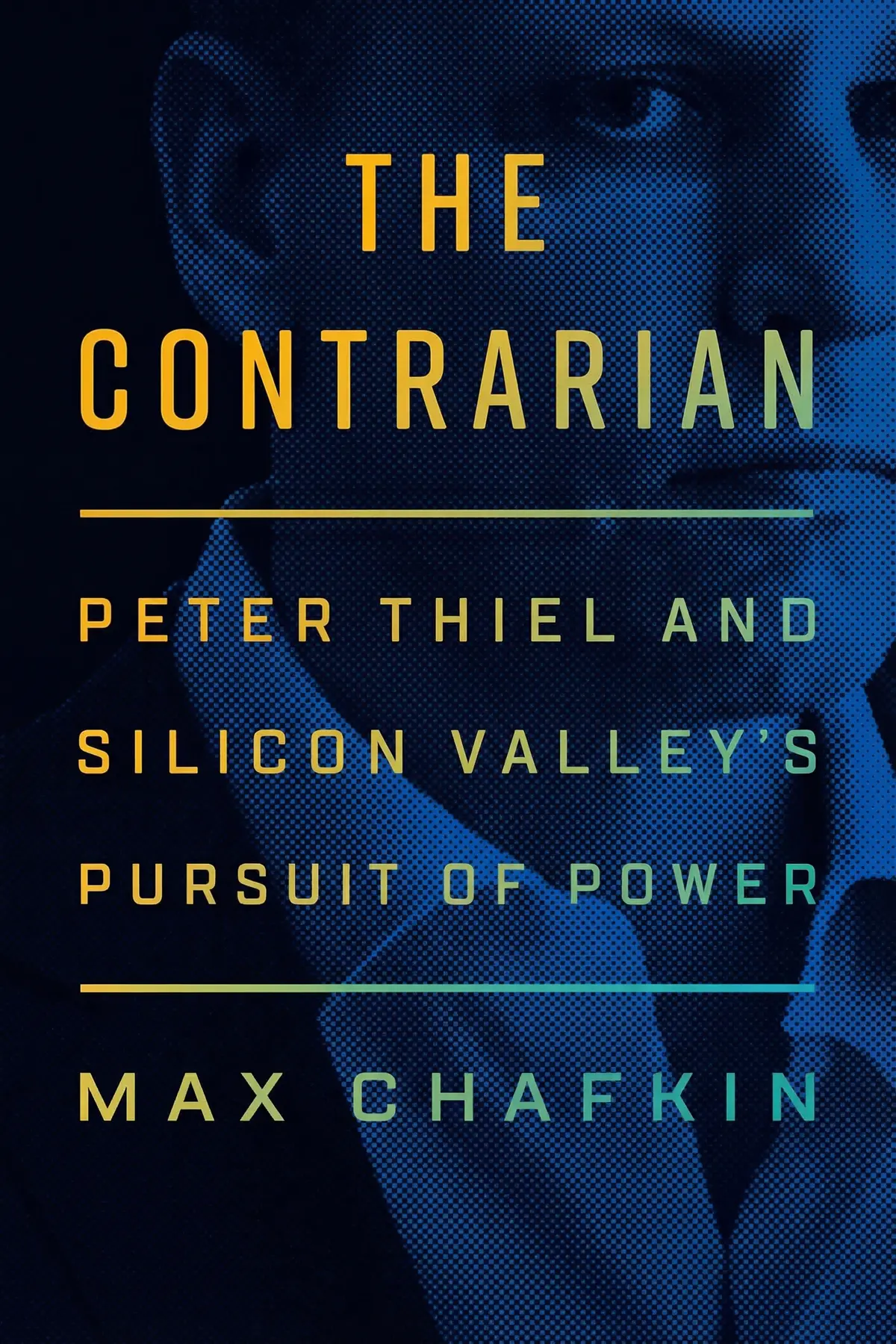
Table of Content
1. Introduction
1 min 02 sec
If Silicon Valley looks to you like a world of hoodies, idealism and liberal politics, Peter Thiel is the man who breaks that picture. In The Contrarian, Bloomberg Businessweek features editor Max Chafkin shows how Thiel, cofounder of PayPal and Palantir and Facebook’s first outside investor, carried a set of grudges from a college campus all the way to a seat beside a US president.
Chafkin’s argument is that Thiel’s politics were never separate from his business. A resentment formed at Stanford in the 1980s shaped how he built companies, how he made money and whom he backed for power. And by the end of 2016, the industry that claimed to be his opposite had started to behave a lot like him.
Follow the thread from a boy narrating Dungeons & Dragons games to a man arranging a meeting between Donald Trump and the heads of Apple, Amazon and Facebook, and the tech industry’s public values will read very differently.
2. The fantasy worlds behind a tech power broker
1 min 44 sec
A gifted boy who ranked among his country’s best young chess players spent his free hours somewhere else entirely. The worlds he loved there would show up decades later in the names and ambitions of his companies.
3. Learn what turned a campus grudge into politics
1 min 48 sec
Thiel arrived at a top university expecting quiet libraries and great books. What he found instead offended him so deeply that it set the political positions he would hold for the rest of his life.
4. Trace growth hacking back to PayPal's first days
1 min 48 sec
Referral bonuses and fast sign-ups now look like ordinary startup tricks. Their early form was something else: a bet that a payment app could weaken governments, launched with tactics borrowed from hardball politics.
5. What a hedge fund revealed about Thiel's real goal
1 min 53 sec
Leaving PayPal let Thiel drop a costume he had worn for years. A mansion, a sumo suit and one lucky bet on the economy showed what he was really after, and then he found a young founder much like himself.
6. Read a company's purpose in its name
1 min 54 sec
Most founders choose friendly, harmless names. Thiel picked one tied to a dark lord’s spying device, and he did it on purpose, betting that the menace would attract exactly the customers he wanted.
7. Understand what moved a skeptic to back Trump
1 min 53 sec
The loud candidate and the introverted investor seemed to have nothing in common, and Thiel first looked elsewhere. A sudden realization over dinner changed his mind, though ideology was only part of his reasoning.
8. See what one meeting exposed about tech's principles
2 min 02 sec
The country’s most celebrated tech chiefs had spent the campaign opposing the winner. Then they sat across a table from him, with Thiel at his side, and the cameras eventually stopped rolling.
9. Conclusion
1 min 16 sec
Chafkin’s portrait answers the question of who Thiel really is. The chess prodigy, the student swallowing vitamins at a fountain, the libertarian behind PayPal, the builder of Palantir and the Trump donor are one person, driven by one grudge. He felt shut out by a liberal consensus at Stanford, and he spent the following decades building companies, fortunes and alliances against it, changing his view of government whenever the fight required.
The sharper point concerns everyone else. Silicon Valley liked to see itself as a world away from a man like Thiel. Chafkin suggests the distance was mostly costume. The growth hacking Thiel pioneered became standard startup practice, and leaders who mocked Trump in public sat politely beside him in private.
A few habits follow from that. When a product promises freedom or connection, ask whose politics are built into its design, as they were into PayPal’s. When a company chooses a name, take it seriously, because Palantir told the world exactly what it was. And when executives talk about values, watch which ones they still defend after the cameras leave.
The boy who narrated Dungeons & Dragons games grew up and kept building the world other people had to live in.
About this book
What is this book about?
Peter Thiel cofounded PayPal, started the surveillance firm Palantir, was Facebook's first outside investor and sat beside Donald Trump when the president-elect met tech leaders in 2016. Yet he is hard to pin down. He has been a tech nerd, a hedge fund showman, a libertarian futurist and a man who seemed to want revenge on the liberal elite. Max Chafkin, a technology reporter and features editor at Bloomberg Businessweek, argues that these roles share one root. As a philosophy student at Stanford in the 1980s, Thiel came to see himself as a persecuted conservative, and that grievance shaped how he built companies, made money and chose political allies. His view of government swung from wanting to escape it with PayPal to serving its surveillance needs with Palantir, but his enemies stayed the same. The book follows Thiel from a childhood steeped in Tolkien and Dungeons & Dragons to a December 2016 meeting where America's top tech leaders sat politely with the new president. Readers get a clear account of where growth hacking came from, how ideology hides inside products, and why the tech industry's public values deserve a harder look.
Book Information
Who it's for
Founders and tech staff
Tech workers and founders who want to know where growth hacking and Silicon Valley's politics really came from.
Puzzled Thiel watchers
Readers puzzled by Peter Thiel's moves from PayPal to Palantir to Donald Trump.
Skeptics of tech leaders
Anyone who doubts that tech leaders' public values match their private choices.
About the Author
Max Chafkin
Max Chafkin is a technology reporter and a features editor at Bloomberg Businessweek, where he covers the companies and people shaping Silicon Valley. His articles have also appeared in the New York Times Magazine, Fast Company, Vanity Fair and Inc., giving him long experience writing about tech founders, investors and their influence.
Ratings & Reviews
Ratings at a glance
What people think
Listeners find the work fascinating and skillfully composed, portraying it as an absorbing narrative regarding a captivating topic. Nevertheless, opinions on the caliber of research are varied; some consider it meticulously documented, whereas others take the opposite view. Additionally, there are complaints about significant bias, especially toward conservative viewpoints, and concerns regarding its validity, with one listener pointing out a heavy reliance on unidentified sources.
Top reviews
Eleanor
Wow. Max Chafkin has done the impossible by cracking open the shell of one of the world's most reclusive billionaires. The story of how Thiel single-handedly destroyed Gawker is worth the price of admission alone—it’s a masterclass in vengeance and legal maneuvering. I loved the way the author tied together the seemingly disparate threads of cryonics, Bitcoin, and alt-right politics into a cohesive (and terrifying) worldview. Is it biased? Probably, but every biography of a living power-player is. The reporting here feels solid, and the way he describes the 'PayPal Mafia' culture explains so much about why the tech industry is so broken today. Personally, I found the section on his 'seasteading' dreams to be both hilarious and deeply revealing of the tech elite's desire to escape the very societies they profit from. A must-read for anyone who cares about big money.
Show moreJom
Picked this up during a flight and couldn't put it down until I landed. It’s a staggering look at how a single individual can leverage his wealth to reshape the political landscape of the United States. Chafkin is a gifted storyteller who manages to make venture capital and board seats feel as exciting as a spy novel. The way he details Thiel’s 'strategic investments' in New Zealand to secure a 'doomsday' escape hatch is absolutely wild. While some might find the author’s perspective a bit harsh, I think it’s a necessary counterbalance to the fawning profiles we usually see in business magazines. It's a deeply researched, often shocking, and ultimately vital piece of journalism. The book doesn't just profile a man; it profiles an entire era of American capitalism that has gone off the rails. Highly recommended for fans of 'Bad Blood' or 'The Everything Store'.
Show moreLuckana
After hearing so much about the 'PayPal Mafia' and Thiel’s outsized influence on modern politics, I found this biography to be a compelling, if occasionally frustrating, read. Chafkin’s writing is sharp. He does a phenomenal job tracing the lineage of Thiel’s power from the early days of Stanford to the Trump transition team. However, the tone is undeniably skeptical—bordering on cynical—which might rub some readers the wrong way if they are looking for a purely objective business history. I appreciated the deep dive into Palantir and the Gawker lawsuit, but I wish there were more interviews with his actual allies rather than just critics. It’s an informative look into a very secretive world, even if the author clearly has a specific perspective he wants to push. To be fair, Thiel is such a polarizing figure that a 'neutral' biography might be impossible to write at this point. Definitely worth it for the Silicon Valley gossip alone.
Show moreKanokporn
Finally got around to reading this and I have to say, the level of detail regarding the surveillance apparatus behind Palantir is chilling. Chafkin paints a picture of a man who values privacy for himself but builds tools to dismantle it for everyone else. It’s a fast-paced narrative that reads like a techno-thriller at times, especially when discussing the Trump era and the virtual border walls. My only real gripe is that the ending felt a bit rushed, as if the author was racing to hit a publication deadline before the 2022 midterms. Some critics claim it's too biased, but when someone exerts this much influence over our democratic institutions, a little scrutiny is warranted. The prose is punchy and the short chapters make it easy to breeze through. If you want to understand why Silicon Valley has drifted toward the right lately, this is the essential field guide.
Show moreSamira
Ever wonder why Peter Thiel is so obsessed with death? This book dives deep into his investments in longevity and his refusal to accept aging as a natural process. Chafkin does a great job of showing how these personal quirks translate into massive business decisions. It’s a fascinating read, even if you don’t agree with the author’s political leanings. I particularly liked the analysis of the 'Thiel Fellows' program—it’s a great example of a good idea that was poorly executed due to ego. To be fair, the book can be a bit repetitive when it comes to criticizing Thiel’s association with the alt-right, but the core reporting is strong. It gave me a lot to think about regarding the ethics of venture capital. Not perfect, but certainly one of the better tech biographies I’ve read in the last year.
Show morePriya
Frankly, I was surprised by how much I enjoyed this, despite the clear ideological slant. I was looking for a deep dive into the 'contrarian' investment strategy that made Thiel a billionaire, and while Chafkin focuses heavily on the politics, the business anecdotes are still there if you look for them. The writing is punchy. He manages to make the board meetings at Facebook feel like high-stakes drama. The constant attempts to link every move Thiel makes to a grand sinister conspiracy can be a bit exhausting, but the factual timeline is well-documented. It’s a fast-paced narrative that helps deconstruct the 'genius' myth that surrounds Silicon Valley's elite. Even if you think Chafkin is unfair to his subject, the questions he raises about tech power are essential. I'd recommend it to anyone curious about how we got to our current political moment.
Show moreBun
It's hard to separate the man from the myth after reading this, and I'm not sure Chafkin helps us get any closer to the real Peter Thiel. The book is undoubtedly well-written and kept me engaged through the later chapters on his New Zealand citizenship and 'seasteading' experiments, but it lacks a certain balance. I was hoping for more insight into his actual philosophy—Rene Girard’s mimetic theory is mentioned but treated mostly as a tool for manipulation. While the research into the 'Thielverse' and his political maneuvering is extensive, it feels filtered through a lens of extreme distaste. Not gonna lie, some of the anecdotes about his early days at Stanford were the highlight for me, showing a nerdy kid obsessed with D&D. Yet, by the end, the author’s animus becomes a distraction from the facts. It’s an okay primer, but proceed with a healthy dose of skepticism.
Show moreSuvannee
The chapter on Thiel’s time at Stanford was the most enlightening part of the book for me. It shows how his early grievances against 'political correctness' formed the bedrock of the political machine he’d eventually build. However, as the book progressed into the 2010s, it felt less like a biography and more like a collection of news clippings I’d already read. Chafkin does a good job of summarizing the highlights, but he doesn't offer much new information on the inner workings of Facebook or the early days of PayPal. The truth is, the book is at its best when it analyzes Thiel's contradictions, like being a gay man who supports politicians with anti-LGBTQ+ track records. It's a decent overview for the uninitiated, but if you’ve been following tech news for the last decade, you won't find many surprises here. Three stars for the effort, though the tone is a bit too 'shouty' for my taste.
Show moreElla
This book reads more like a prosecutor's brief than a standard biography, which is a shame because Peter Thiel is a fascinating subject. Chafkin seems less interested in understanding why Thiel thinks the way he does and more interested in casting every single move as part of a sinister master plan. For instance, the section on the Gawker lawsuit completely ignores the ethical issues surrounding the Hogan sex tape, portraying Gawker as a simple victim of a billionaire’s ego. Furthermore, the heavy reliance on anonymous sources makes some of the more 'shocking' claims feel like mere hearsay or workplace rumors. The truth is, you don’t get a clear picture of Thiel’s investment success with companies like Stripe or Airbnb because it doesn't fit the narrative of him being a lucky villain. If you’re looking for a nuanced psychological profile, look elsewhere; this is a hit piece through and through.
Show moreWoramet
To be fair, I expected a balanced biography, but what I got was a collection of every negative rumor ever whispered in a Palo Alto coffee shop. Chafkin’s obsession with labeling Thiel as a 'reactionary' or a 'fascist' for simply reading certain philosophers is intellectually lazy and beneath a professional journalist. He spends pages attacking the Thiel Fellowship, yet glosses over the massive technological breakthroughs funded by Founders Fund that have actually benefited society. The book relies far too heavily on disgruntled former employees who clearly have an axe to grind, making the 'factual' basis of the narrative highly questionable. It’s a one-sided caricature that ignores the complexity of a man who is both a libertarian and a supporter of state-backed defense tech. This isn't research; it's a 300-page subtweet. Save your money and read his actual writing instead.
Show moreQuestions about this book
What is The Contrarian by Max Chafkin about?
It is a biography of Peter Thiel, cofounder of PayPal and Palantir and Facebook’s first outside investor. Chafkin argues that Thiel’s politics, formed when he felt persecuted as a conservative at Stanford in the 1980s, shaped every business he built and led him to back Donald Trump in 2016. He also argues that Silicon Valley’s supposedly liberal leaders have more in common with Thiel than they admit.
Did Peter Thiel invent growth hacking?
Chafkin credits Thiel with writing its script at PayPal. The company gave each new user $10 and another $10 for every referral, and skipped collecting the customer details banking rules required so sign-up stayed fast. Chafkin ties these aggressive tactics to activist conservative politics and the Barry Goldwater campaign of the 1960s. Rare in the 1990s, they are now common practice among startups.
Why did Peter Thiel name his company Palantir?
The name comes from Tolkien’s The Lord of the Rings, where the palantiri are unbreakable crystal seeing stones used mainly by the villain Sauron to spy and manipulate. Thiel, a lifelong Tolkien fan, did not discourage the association. He reasoned that clients who wanted to watch people would like the image of an all-seeing eye, and Palantir went on to win contracts with the US government, Morgan Stanley and Fiat Chrysler.
Why did Peter Thiel support Donald Trump in 2016?
Chafkin gives several reasons. Thiel opposed globalization and saw that Trump’s promises on factory jobs and immigration appealed to struggling Midwest towns. He liked Trump’s attacks on political correctness and immigration. He feared a Hillary Clinton tax policy would cost him heavily. Above all, he judged Trump the candidate most likely to keep the Democrats out of power, and he turned out to be right.
What does The Contrarian reveal about Silicon Valley?
Chafkin points to a December 2016 meeting where Trump hosted leaders including Tim Cook, Sheryl Sandberg and Jeff Bezos, with Thiel at his side. Many had opposed Trump publicly, yet none challenged him. They thanked him and agreed on China instead. Chafkin also notes that Facebook’s algorithms spread falsehoods about Clinton. His conclusion is that profits often outweighed the industry’s stated principles.
Readers also enjoyed

Ali: A Life
Jonathan Eig

A Life Decoded: My Genome: My Life
J. Craig Venter


A Long Way Gone: Memoirs of a Boy Soldier
Ishmael Beah

All Creatures Great and Small
James Herriot


A Promised Land
Barack Obama

AUDIO SUMMARY AVAILABLE
Listen to The Contrarian in 15 minutes
Get the key ideas from The Contrarian by Max Chafkin, plus 5,000+ more nonfiction titles.
- 5,000+ titles
- Listen as much as you want
- 7-day free trial
- Cancel anytime









