
11 min 37 sec
Available in: English
The Conscious Parent: Transforming Ourselves, Empowering Our Children
Shows parents how their own ego, childhood wounds and hunger for success can smother a child's natural self, and offers small daily habits for accepting children as they are.
Table of Content
1. Introduction
1 min 05 sec
Many loving parents push their children toward good grades and trophies, then wonder why the house feels tense and the child seems anxious. In The Conscious Parent, clinical psychologist Shefali Tsabary argues that the trouble often starts with the parent. She sees each child as born whole and good, and the parent as a temporary guardian whose own fears, ambitions and ego can smother that wholeness.
Her case is direct: children grow into themselves when parents stop using them to satisfy their own agendas and start working on their own awareness. A child is not property, not a smaller copy of you, and not a vehicle for your unfinished dreams.
What follows is a way to see your own reactions clearly, from the praise you give after a test to the words you choose after a failure, along with small daily habits that let a child feel loved simply for being who they are.
2. Love your child without grading them
1 min 55 sec
Warm praise for coming first in class looks like the best encouragement a parent can give. Tsabary sees a hidden cost in it, one that can leave a child more anxious after every success.
3. Stop passing your old hurts to your kids
1 min 54 sec
Most parents swear they will never repeat their own parents’ mistakes, then hear those same words leave their mouths. Tsabary traces the pattern to three wounds, and to one habit that can break the chain.
4. Trade a packed schedule for real presence
1 min 52 sec
Many adults pack their calendars with appointments, activities and social events, leaving little room for stillness. Tsabary argues that the full calendar often protects the adult more than it helps the child, and she explains what it is protecting them from.
5. Find the magic in ordinary days
1 min 52 sec
Pride in a gifted child feels harmless, even healthy. Tsabary follows that pride to the point where it turns into constant comparison, and shows what it can cost a child who senses they are being measured.
6. Turn a child's mistake into self-discovery
1 min 48 sec
A failed test or forgotten chore can end in a lecture, a label and a slammed door. Tsabary suggests a different conversation, one that starts with how the parent treats their own slip-ups.
7. Conclusion
1 min 11 sec
The Conscious Parent turns the usual question around. Most parenting advice asks how to change the child. Tsabary asks what in the parent is getting in the way: the urge to approve, the old hurt, the crowded calendar, the hunger for a special child, the quick judgment after a mistake. In her view, a child arrives already whole, and the parent’s task is mostly to stop covering that wholeness up. Parenthood becomes a chance to drop ego and social conditioning, heal your own wounds and find your real self again, alongside your child.
She is clear that this takes time and daily practice, and that every small step counts. Tell your child you love eating with them, with no report card in sight. Put down what you are holding and look at them when they speak. After the next failed test, wait for calm and ask what it taught them about how they learn. And when a strong reaction rises in you, check whether it belongs to your child or to the child you once were.
Each moment of awareness gives a child a little more room to become who they already are.
About this book
What is this book about?
Many loving parents push hard for good grades, trophies and a full schedule, then find their homes tense and their children anxious. Shefali Tsabary argues that the problem often lies with the parent. Each child, she says, arrives whole and good, and the parent is only a temporary guardian whose ambitions, anxieties and ego can bury that wholeness. Drawing on clinical psychology and Eastern philosophy, Tsabary asks parents to stop treating children as property or as a path to their own dreams. She explains how approval differs from acceptance, how three common childhood wounds get passed down, and why constant busyness and the push to be special leave children worried about whether they measure up. The book's answer is awareness. Readers get small daily practices: celebrating a child at the dinner table, putting everything down to listen, enjoying ordinary moments, and responding to a failed test with curiosity instead of shame.
Book Information
Who it's for
Parents pushing for achievement
Parents who push hard for grades and trophies and sense their child is growing anxious.
Parents echoing their parents
Mothers and fathers who hear their own parents' harsh words coming out of their mouths.
Busy families wanting calm
Busy families who want calmer, closer everyday time with their children and teenagers.
About the Author
Shefali Tsabary
Shefali Tsabary holds a Ph.D. in clinical psychology from Columbia University. Introduced to Eastern philosophy early in life, she blends it with Western psychology in her work with families. She runs a private practice and lectures on conscious parenting in many countries. Her books include The Conscious Parent and The Awakened Family, both New York Times best sellers, as well as Out of Control and It's a Mom.
Ratings & Reviews
Ratings at a glance
What people think
Listeners find this parenting resource profoundly life-altering and thought-provoking, viewing it as a mandatory read. It delivers exceptional parental advice, with one listener praising the integration of theoretical concepts alongside practical, real-world examples. Listeners value the revelatory perspective, which helps them better understand themselves and their kids while cultivating a more tranquil household.
Top reviews
Jai
Wow, this book completely flipped the script for me. Instead of focusing on how to 'fix' my child's behavior, Dr. Tsabary forced me to look inward at my own triggers and baggage. It’s a challenging read because it demands total accountability from the adult in the room. I realized how much of my frustration stems from my own ego and my desire for my kids to be 'mini-mes' who validate my success. While some sections are a bit dense with metaphysical language, the core message is incredibly powerful. Every chapter felt like a mirror being held up to my least favorite parts of myself, but in a way that offered hope. If you’re tired of traditional discipline methods and want a more peaceful home, you need this. It’s less of a manual and more of a spiritual awakening for anyone raising humans. You won't look at your children the same way again.
Show moreGift
This book should be required reading for anyone even thinking about starting a family. Most parenting guides focus on sleep schedules or time-outs, but Tsabary goes much deeper than that. She explores the idea that our children are here to help us grow into our most authentic selves. Not gonna lie, I cried several times while reading because it made me realize how much of my childhood trauma I was inadvertently passing down to my toddlers. The insights regarding ego and expectations were particularly eye-opening for me. It’s shifted the energy in our house from one of constant battle to one of mutual respect and understanding. Some people might find the tone a bit too mystical, but if you look past the 'zen' terminology, the psychological truth is undeniable. I’ve already bought copies for three of my friends who are struggling with their teens.
Show morePreeda
The chapter on the 'ego' was a total game-changer for my daily interactions. It’s rare to find a book that challenges you to your core without making you feel like a terrible person. Dr. Tsabary has a way of presenting these high-level, abstract concepts through real-life examples that eventually click. Personally, I found the section on 'mini-mes' to be the most convicting. I realized I was trying to mold my daughter into the athlete I never was, rather than celebrating her artistic spirit. This book isn't about the child; it's about the parent's evolution. Since adopting this mindset, the tension in our home has decreased significantly. We are finally learning to live authentically together. It requires a lot of stillness and reflection, which isn't easy in our fast-paced world, but the payoff is a deep, soul-level connection with your kids. Truly an eye-opening journey.
Show moreMint
Finally got around to reading this after seeing it on so many 'must-read' lists, and I finally get the hype. It provides excellent parenting guidance by shifting the focus from discipline to connection. The truth is, most of us parent from a place of fear—fear that our kids won't be successful, fear of what neighbors think, or fear of repeating our parents' mistakes. Tsabary deconstructs those fears with surgical precision. I loved how she encourages us to see our children as our teachers rather than our projects. My household has become much more peaceful since I stopped trying to 'win' every argument. This isn't just another parenting book; it’s a manual for self-discovery. It’s definitely a slow read because you have to stop and process the heavy emotional weight of each section. If you’re ready to do the hard work on yourself, this is the gold standard.
Show moreAudrey
To put it simply, this work is both direct and incredibly profound. This is easily the most impactful book I’ve read in years, and it isn't just about parenting. Dr. Shefali helps you realize that your children are not yours to own or possess; they are independent spirits who deserve to be seen for who they truly are. Not gonna lie, some parts are hard to read because they hit so close to home, but that’s how you know it’s working. I’ve stopped focusing so much on the behavior and started focusing on the underlying emotional needs of my kids. The shift in my relationship with my teenage son has been nothing short of a miracle. We’ve moved from constant conflict to actual conversation and mutual respect. If you are willing to set aside your ego and actually listen, this book is the map you’ve been looking for.
Show morePruet
After hearing about this on Oprah, I went in with sky-high expectations. For the most part, it delivered. The concept that our children are our spiritual guides is a beautiful perspective that has already softened my daily interactions. Truth is, it’s not always an easy pill to swallow; admitting that your child’s defiance might be a reflection of your own lack of presence is tough. I did find some of the case studies a bit extreme, focusing on parents who were verbally abusive, which didn’t always feel relatable to my situation. To be fair, I would have appreciated more 'day-to-day' practical scripts like those found in Laura Markham's work. However, the paradigm shift this book offers is unparalleled. It’s helped me move away from a 'command and control' style toward genuine connection. Definitely worth the read, even if you have to wade through some repetitive parts.
Show moreRatree
As someone who has struggled with a very reactive parenting style, this was a breath of fresh air. I was tired of yelling and felt like a failure every night. The Conscious Parent helped me understand that my child isn't 'misbehaving' to spite me; they are simply reacting to my own energy and unhealed wounds. Look, it’s not a quick fix. You won’t finish this and suddenly have a perfect child. What you will have is a better perspective on why you feel the need to control every little thing. My only gripe is that it can be quite repetitive in its descriptions of 'ego.' I felt like she could have made her point in about fifty fewer pages. Still, the message of letting our children be who they are—rather than who we want them to be—is a lesson I’ll be chewing on for years. It’s helped us achieve a much more peaceful household.
Show moreNum
Ever wonder why your kids' tantrums trigger such an intense, visceral reaction in your body? This book explains it perfectly by exploring our own 'unconscious' patterns from childhood. I found the analysis of the parental ego to be extremely insightful for my own growth. The book helps you gain a better perspective on why we feel the need to control and shape our children into something they aren't. I will say, the author tends to use a lot of second-person perspective which can feel a bit grating if you aren't that kind of parent. But if you can look past the tone, the psychological framework she presents is incredibly solid. It’s helped me stay calmer during the 'terrible twos' by reminding me that it is rarely actually about me. This is a great resource for anyone looking to break generational cycles once and for all.
Show moreDiego
Picked this up during a particularly rough patch with my nine-year-old, hoping for some concrete strategies. Frankly, I was a bit disappointed by the lack of practical value found in these pages. Tsabary writes beautifully, but the whole thing felt like a bunch of metaphysical fluff and kumbaya talk to me. I kept waiting for her to get to the point, but she stays up in the clouds with analogies about spiritual compasses. If you’re looking for 'How to Talk So Kids Will Listen' style advice, you won’t find it here. I also felt the examples she used were often very extreme cases of dysfunction, which made it hard to relate to as a normal parent. I can see why people love the 'zen' vibe, but for a busy parent, it feels a bit too vague. It’s an interesting philosophy, but it isn't the practical manual I was looking for today.
Show moreHazel
Not what I expected based on the glowing reviews I had seen online. Gotta say, there are some decent kernels of truth buried in here about respect and mindfulness. However, the writing style is incredibly dense and, at times, feels like it’s going in circles. I found myself scoffing at the suggestion that we should just 'let experiences wash over us' without judgment. When your toddler is smeared in paint on the white carpet, a little judgment is probably healthy! In my experience, the book assumes the reader is either an authoritarian tyrant or completely disconnected from their emotions. It feels a bit insulting to parents who are already practicing gentle methods. While I appreciate the emphasis on 'acceptance,' I think the author ignores the need for boundaries and structure. It’s a bit too much 'woo-woo' for my taste, though I did appreciate the reminder to look at my own restlessness.
Show moreQuestions about this book
What is the main idea of The Conscious Parent?
Shefali Tsabary argues that children are born whole and good, and that parents often smother that wholeness with their own ego, anxieties and ambitions. A child is not property or a vehicle for a parent’s dreams. By becoming aware of their own reactions and childhood wounds, parents can accept children as they are and let them grow into their authentic selves.
What is the difference between approval and acceptance in The Conscious Parent?
Approval, in Tsabary’s view, is a form of judgment, even when it sounds like praise. Lavish praise for coming first in a test can leave a child afraid of losing your warmth next time. Acceptance means loving the child whether or not they succeed, for example by telling them you enjoy sharing a meal or waking up in the same home.
What childhood wounds does Shefali Tsabary describe?
She names three common wounds from how we were parented. One is feeling not good enough, which can lead to impossible standards for yourself and your children. Another is people-pleasing, which breeds resentment. The third is losing your authentic self, which makes it hard to let your own children be different. Awareness, with professional help when needed, is her remedy.
How should parents respond to a child's mistakes according to Tsabary?
Tsabary suggests avoiding negative labels such as lazy or selfish, which create shame and helplessness. Parents should model self-compassion with their own errors, then treat a child’s mistake as a chance for self-discovery. After a failed test, wait until the child is calm and ask whether the test revealed anything about how they learn, focusing on why it happened.
Featured in
Readers also enjoyed

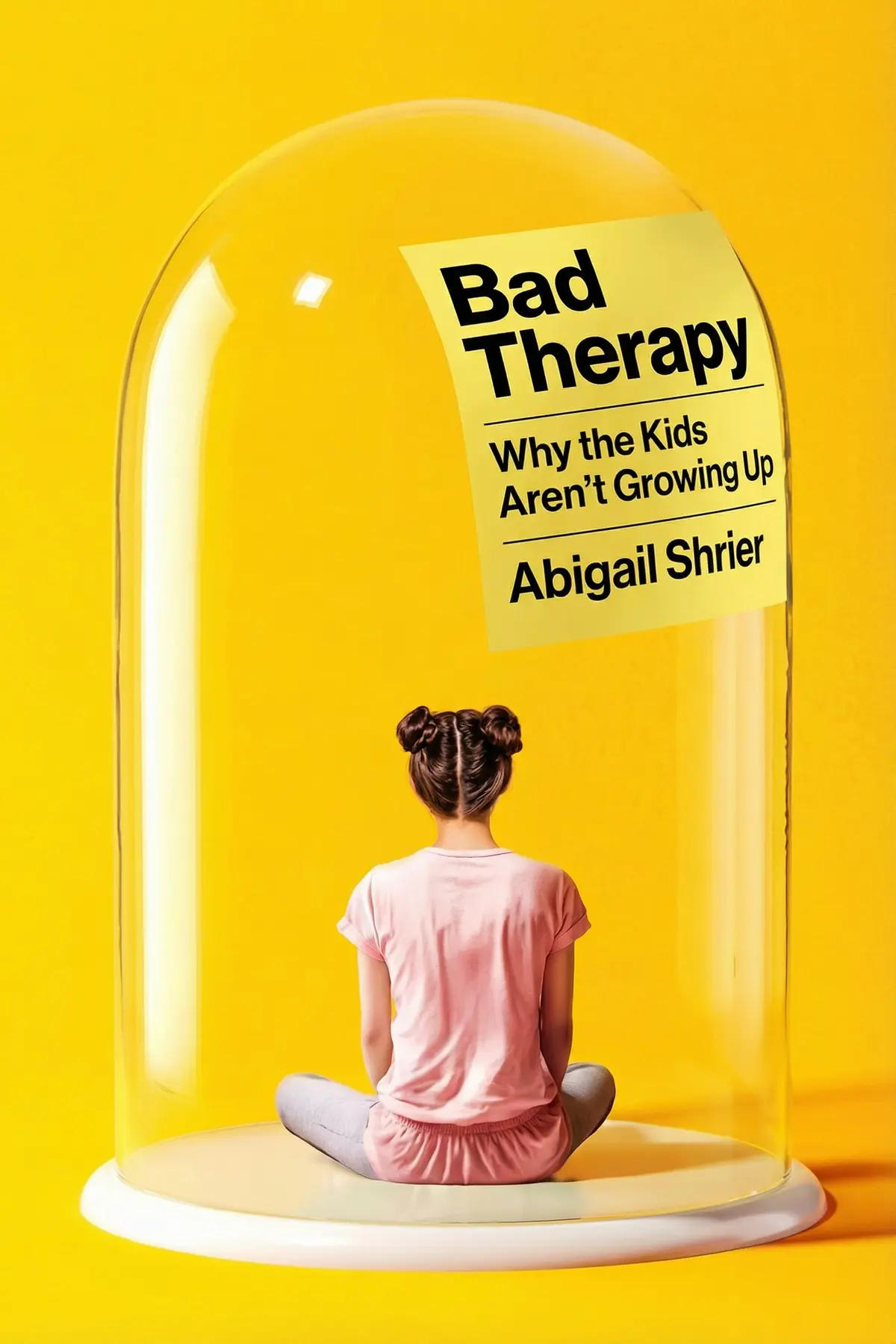
Bad Therapy: Why the Kids Aren't Growing Up
Abigail Shrier
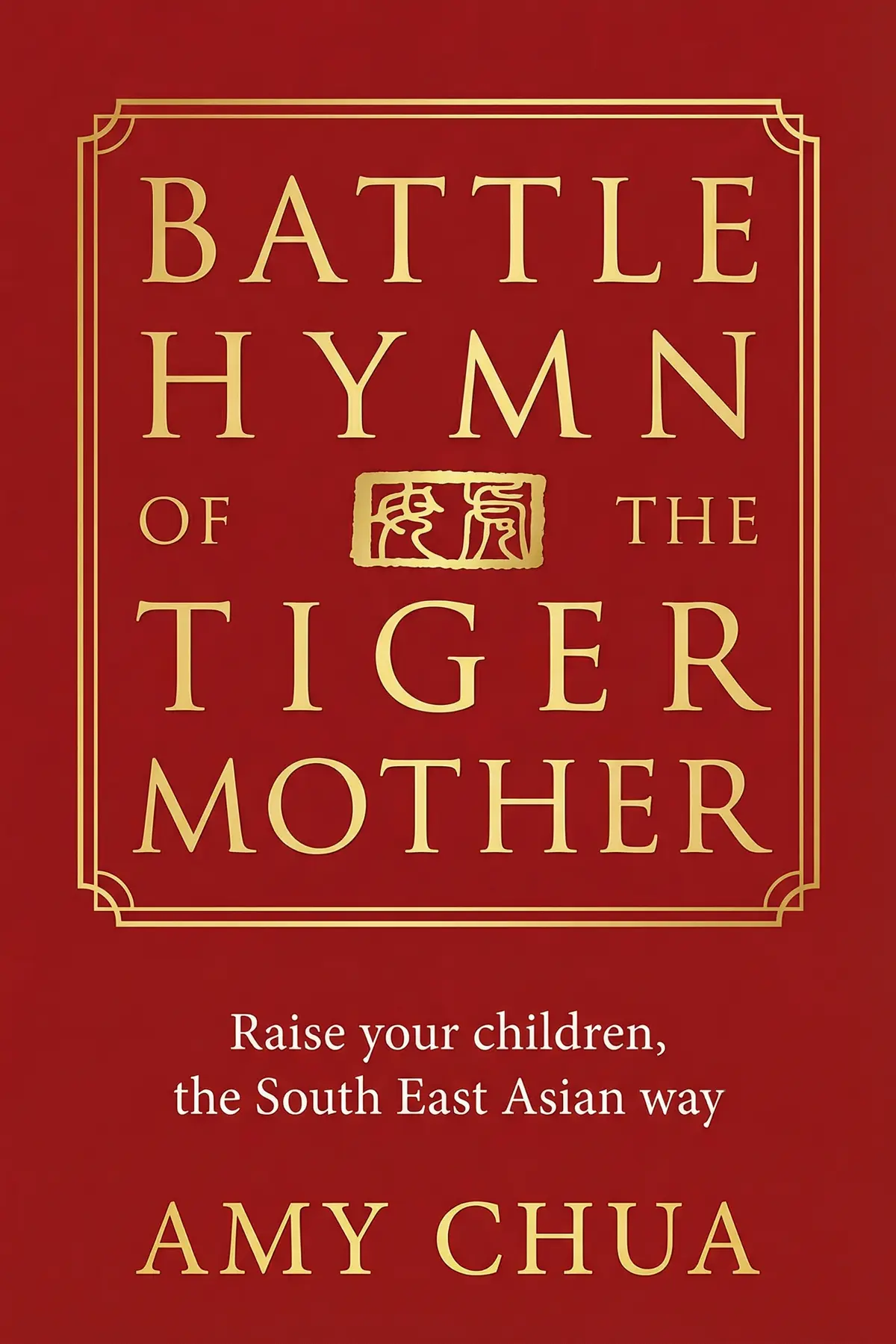
Battle Hymn of the Tiger Mother
Amy Chua
Dear Ijeawele, or A Feminist Manifesto in Fifteen Suggestions
Chimamanda Ngozi Adichie
AUDIO SUMMARY AVAILABLE
Listen to The Conscious Parent in 15 minutes
Get the key ideas from The Conscious Parent by Shefali Tsabary, plus 5,000+ more nonfiction titles.
- 5,000+ titles
- Listen as much as you want
- 7-day free trial
- Cancel anytime









