

14 min 56 sec
Available in: English
The Connected Child: Bring Hope and Healing to Your Adoptive Family
Shows adoptive parents why a hurt child's hardest behavior is often fear from the past, and how felt safety, calm correction, routines, play, touch and better food rebuild trust.
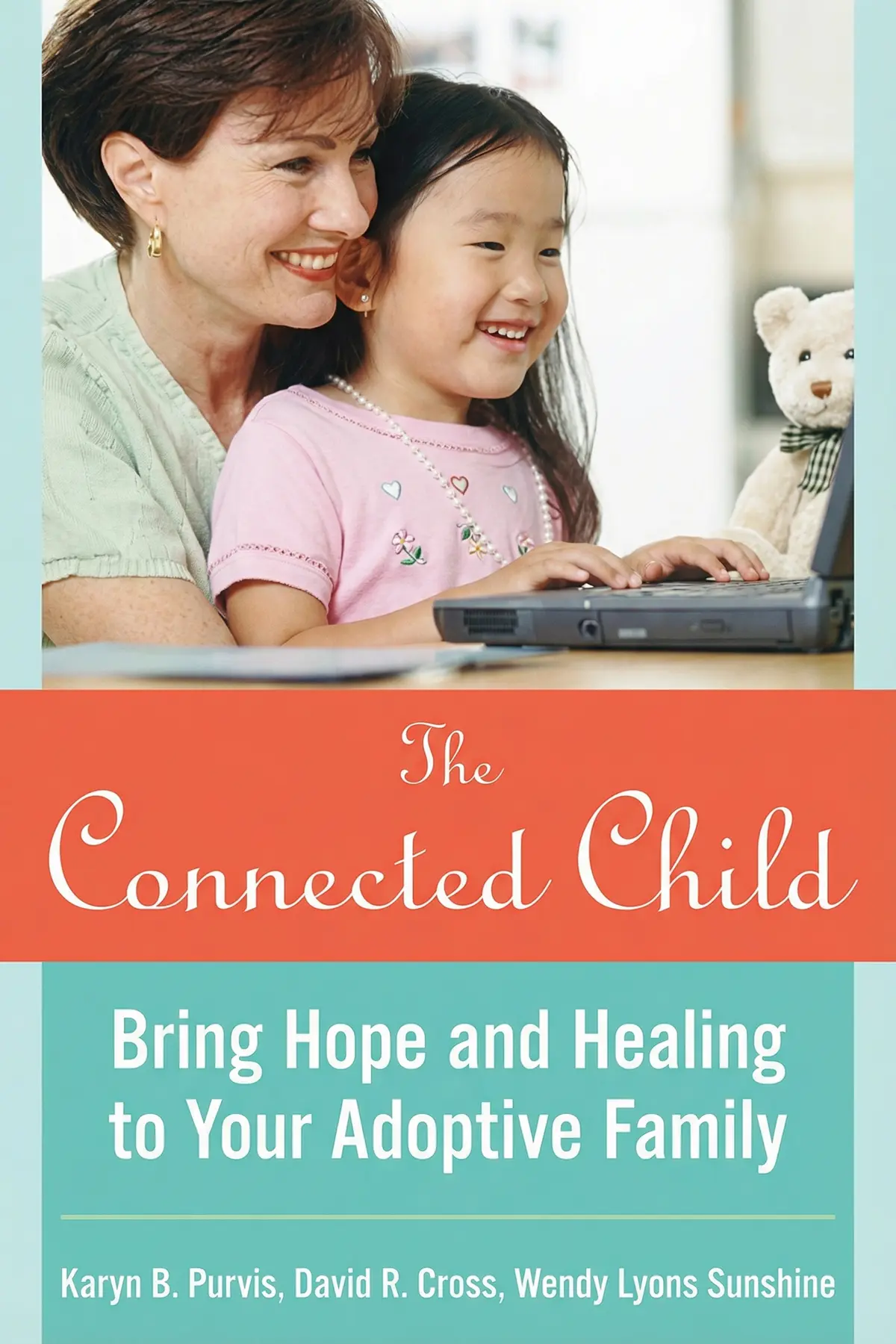
Table of Content
1. Introduction
59 sec
Parents who adopt a child from neglect or abuse often find that ordinary discipline makes things worse, and the reason is fear. In The Connected Child, child development researchers Karyn B. Purvis and David R. Cross, writing with journalist Wendy Lyons Sunshine, argue that much of a hurt child’s hardest behavior is a survival reaction to a past where needs went unmet.
Their case is that healing starts with trust. Felt safety, calm correction, predictable routines, play, careful touch and better food all serve one aim: a bond strong enough that the child can stop fighting to survive. The tools are small enough to try tonight. Among them are a snack bar kept for after dinner to calm a fear of going hungry, a do-over in place of a time-out, fifteen minutes on the floor with Legos, and a week-long food diary that may explain mood swings.
2. Read your child's behavior through their history
1 min 43 sec
Two babies, one held and answered, one left staring at a ceiling, grow into very different children. The difference can stay hidden for years, and it changes how every outburst should be read.
3. Meet a meltdown with safety your child can hold
1 min 56 sec
A refused snack set off screaming, a slammed door and tears. Punishment would have seemed reasonable, yet the authors argue it would have confirmed the very thing the child feared most.
4. Teach the conversation skills a hurt child missed
1 min 41 sec
Some children reach a new home without ever having been talked with, only shouted at. Teaching them to speak up starts with something far simpler than words.
5. Correct firmly while staying on your child's side
1 min 50 sec
Time-outs, lectures and raised voices are standard advice, but for a child who fears abandonment they can backfire badly. A calmer method keeps the rules and drops the rejection.
6. Build trust through floor play, praise and touch
1 min 57 sec
A boy drew himself as a tiny speck beneath a giant airport. Changing how a child sees himself is a gradual process, and it has to be done carefully.
7. Calmer moods that start on the dinner plate
2 min 05 sec
A pastry after school can look harmless, yet it may be behind the evening’s worst blowup. The authors argue that food gives parents a real way to influence a child’s brain chemistry.
8. A setback can mean your child is healing
1 min 37 sec
A child who suddenly wants to be rocked like a baby can alarm any parent. The authors see something very different in that moment, and they also ask parents to look honestly at themselves.
9. Conclusion
1 min 08 sec
The Connected Child asks parents to change the question. Instead of asking how to stop a behavior, they ask what a child learned before arriving and what would prove that lesson wrong. A boy who saw himself as a speck beneath an airport and a girl who screamed over a snack were both making sense of a world that had once let them down. Trust is the treatment, built from many small, repeated proofs of safety, delivered calmly and close by.
That makes the work concrete. When fear flares, meet it with something your child can hold, like a snack bar saved for after dinner. When behavior goes wrong, correct at eye level, offer a do-over and keep your child near you while they cool down. Set aside 15 minutes on the floor with your phone off, and keep a food diary for a week to see whether mood follows the plate. Look after yourself as well, because a child heals best beside an adult who is not running on empty.
Healing will slide backward at times. A child who suddenly wants to be rocked like a baby may be telling you the bond has finally taken hold.
About this book
What is this book about?
Parents who adopt a child with a history of neglect or abuse often find that the usual tools don't work. Harsh punishments, time-outs and lectures can make behavior worse, and loving parents start to doubt themselves. Karyn B. Purvis and David R. Cross, writing with Wendy Lyons Sunshine, argue that much of this behavior is a survival response. These children learned early that hunger, silence or harm could come at any time. Their answer is to build trust before anything else. The book explains how deprivation, starting in the womb, shapes a child's brain and ability to bond. It then gives parents a set of practical tools: felt safety to calm fear, eye-level communication, firm correction with do-overs and time-ins, routines that prevent conflict, play that fills a child's trust bank, careful touch and honest praise, and a diet that steadies brain chemistry. Readers learn how to read a meltdown as a message, how to discipline without triggering old wounds and why sudden regressions can signal a deepening bond. The authors also ask parents to look at their own history and their own exhaustion, since a child heals best beside an adult who is looking after themselves too.
Book Information
Who it's for
When usual discipline backfires
Adoptive parents whose usual discipline makes a hurt child's behavior worse.
Families of hurt children
Families caring for children with histories of neglect, abuse or orphanage life.
Helpers wanting practical tools
Social workers, teachers and caregivers who support children from hard places and want practical tools.
About the Author
Karyn B. Purvis
Karyn B. Purvis spent her career researching and speaking up for children hurt by trauma, abuse or neglect, a group she named children from hard places. With David R. Cross she co-created Trust-Based Relational Intervention, launched The Hope Connection summer camp in 1999 as a research and training lab for adopted children and their families, and directed the Institute of Child Development at Texas Christian University until her death in 2016. Cross, now a retired TCU psychology professor, co-founded the institute and directed it from 2016 to 2022. Wendy Lyons Sunshine is an award-winning writer and journalist.
Ratings & Reviews
Ratings at a glance
What people think
Listeners consider this parenting guide an outstanding resource for adoptive families, offering actionable tips and deep understanding of the requirements of foster and adopted kids. It is straightforward to digest and apply, featuring lucid descriptions of methodologies alongside uncomplicated illustrations. Listeners value how it illuminates the difficulties children face, suggests methods for recovery, and instills an enduring sense of empathy.
Top reviews
Thanit
Finally got around to reading this after it sat on my nightstand for months, and I am kicking myself for waiting. This book is the gold standard for understanding how trauma rewires a child’s brain and behavior. Dr. Purvis doesn’t just explain the science; she provides the 'how' to fix cycles of defiance with incredible compassion. The concept of 'felt safety' was a total game-changer for our household dynamic during a very rocky transition. We’ve started using the specific scripts for 're-dos' and are already seeing results in how our son handles his frustration. It is not an easy path because it requires a lot of emotional heavy lifting from the parents. However, shifting from a strict 'boss' mentality to a nurturing connection is worth every bit of the effort. If you are parenting a child from a 'hard place,' this is essential equipment.
Show moreLaor
The chapter on teaching life values was worth the price of the book alone. Most parenting guides offer vague advice, but this one gives you actual words to say when a child is spiraling. I loved the emphasis on 'giving choices' and 'compromises' to empower kids who have lost so much control in their lives. Honestly, it changed how I view my daughter’s meltdowns. Instead of seeing them as manipulation, I now see them as a physiological survival response. The authors use a very accessible, simple writing style that makes the complex research easy to digest even when you're exhausted. We’ve implemented the nutritional suggestions, including increasing hydration and protein, and the stabilization in her moods is actually noticeable. It is rare to find a manual that offers both high-level psychological insight and practical, boots-on-the-ground tactics for everyday parenting struggles.
Show morePranee
Wow, I wish I had discovered this years ago when we first brought our daughter home. The authors explain the 'biological clock' of a traumatized child in a way that finally made sense of her sleep and eating habits. We had been using traditional 'spare the rod' discipline, and it was only making her more defiant and fearful. Switching to the 'nurturing parent' model described here has been like night and day for our relationship. The book is packed with specific scripts that take the guesswork out of what to say during a tantrum. It teaches you how to be the 'boss' while still being a safe harbor for your child. It's heart-wrenching to read about what these kids have been through, but this book offers so much hope. It is a must-read for anyone in the adoption or foster community who feels like they are drowning.
Show moreSienna
It’s rare to find a manual that balances PhD-level research with such tender, actionable advice for the average parent. Dr. Purvis and Dr. Cross have created a masterpiece that should be required reading for all caregivers. The descriptions of different parenting styles—authoritative versus authoritarian—helped me realize I was being way too rigid. The book teaches you how to look past the surface behavior to the wounded child underneath. I loved the practical examples of 'playful interaction' and how it can disarm a child who is stuck in a defensive posture. It’s a very hopeful book that emphasizes that healing is possible through consistent, loving attachment. We have started implementing the 'ten-minute rule' for focused attention, and the change in our son’s attitude has been remarkable. This is a life-changing resource for any family struggling to connect with a child from a traumatic background.
Show moreGai
Picking this up felt like receiving a lifeline during a very dark season of our parenting journey. We were struggling to connect with our three-year-old, and every day felt like a battle of wills. This book gave us a new lens to view her actions through, focusing on 'felt safety' rather than just compliance. The chapters on sensory integration were eye-opening; we realized so many of her 'defiant' behaviors were actually her being overwhelmed by her environment. The authors write with such warmth and lack of judgment that it makes you feel empowered rather than guilty about past mistakes. It is a long road to healing, but this book provides the practical steps to get there. From nutritional tips to behavioral re-dos, it covers everything a foster or adoptive parent needs to know. I’ll be buying copies for all the parents in our support group this year.
Show moreJoe
As someone who is just starting the foster care journey, this was recommended to me by our licensing agency as 'the bible' of attachment. It is definitely a different approach than how I was raised, focusing more on connection than traditional discipline. I appreciate the deep dive into how sensory processing issues affect behavior, especially for kids with a history of neglect. The focus on 'open-handed touches' and maintaining eye contact is beautiful, though I do wonder if it might be overwhelming for some kids at first. My only real gripe is the tone feels a bit repetitive at times, almost like it’s being dumbed down for the reader. Still, the core message of healing through relationship is powerful. It gave me a lot of tools to keep in my back pocket for when things get difficult. I feel much more prepared to handle the 'tough places' now.
Show morePenelope
To be fair, this isn’t just a book for adoptive families; it’s a masterclass in compassionate parenting for anyone. I picked this up to help with my ADHD son’s emotional regulation and found so many parallels to the trauma-informed techniques. The idea that behavior is a symptom of a deeper need is a perspective shift every parent should experience. I especially liked the sections on 'nurture groups' and how to use play to bridge the gap between a parent and child. It is a very time-intensive way to parent, though. You have to be fully 'on' and present, which is draining. There were moments where the advice felt a little too idealistic for a household where both parents work full-time. That said, the strategies for using 'match-ups' and 're-dos' are highly effective and easy to implement immediately. It’s a solid resource for building a stronger bond.
Show moreMint
After hearing so many recommendations from our local adoption support group, I finally dove into this. The focus on 'relational connection' over 'correction' is a powerful framework that has helped me stay calm when things get chaotic. I particularly appreciated the focus on potential nutritional shortfalls in children from hard places. Learning how magnesium and blood sugar levels impact behavior was a lightbulb moment for us. The book is written very clearly, making it easy to skim for specific advice when you're in a pinch. My only criticism is that the discipline approach can feel a bit 'soft' if you aren't careful with the execution. You really have to follow the instructions precisely to ensure you’re still setting firm boundaries. It’s a delicate balance to strike, but the book provides a decent roadmap for navigating that middle ground between authoritarian and permissive styles.
Show moreWyatt
Truth is, I was skeptical about the 'no-punishment' angle at first because I didn't want my house to become a free-for-all. But once you start reading, you realize this isn't about letting kids do whatever they want. It’s about teaching them how to regulate their own emotions so they don't feel the need to act out. The specific language scripts were incredibly helpful for me because I often get tongue-tied when I’m frustrated. Using phrases like 'with respect' and 'try that again' has lowered the temperature in our house significantly. The book can be a bit repetitive, and the formatting is a little dated, but the content is gold. Frankly, even if you didn't adopt, you'll learn a lot about how to communicate with children in a way that actually makes them want to listen. It’s all about building that foundation of trust first.
Show moreKavya
Look, the science here is undeniable, and I truly appreciate the heart behind the TBRI approach. However, I found the suggested daily schedule to be completely out of touch with the reality of a two-income household. The authors seem to suggest that you can spend nearly every waking hour in high-intensity, focused interaction, which just isn’t feasible when you have a job and other children. I also found the emphasis on constant eye contact a bit much; for some children with severe abuse histories, that can feel domineering rather than connecting. There are definitely gems here, like the advice on magnesium for calming and the importance of hydration. But overall, I had to take a lot of this with a grain of salt and adapt it heavily to fit a normal, busy life. It’s a good starting point but feels slightly unrealistic for most modern families.
Show moreQuestions about this book
What is the main idea of The Connected Child?
Karyn B. Purvis and David R. Cross argue that adopted children with histories of neglect or abuse often act out of fear, not defiance. Their brains and habits were shaped by survival. The authors say healing starts with trust, built through felt safety, calm and firm correction, predictable routines, play, careful touch and good nutrition, so the child can gradually let go of old survival behaviors.
What is felt safety in The Connected Child?
Felt safety means giving a frightened child repeated experiences that show the new home can be trusted. When Janey melted down over a refused snack, the authors suggest her mother could have let her keep the snack bar for after dinner, or let her keep healthy snacks in her room. Concrete actions like these calm the fear better than reasoning or punishment.
How does The Connected Child approach discipline?
The authors warn that yelling, shaming, lectures and even time-outs can backfire with children who fear abandonment. Instead, parents step in calmly, get to eye level, state the rule and a clear consequence, then follow through. The child gets a do-over to practice the right behavior and receives praise for it. Cooling off happens in a time-in beside the parent.
Does diet affect behavior according to The Connected Child?
Yes. The authors say chronic stress disrupts brain chemistry and that nutrition can help. They cite studies on vitamins, minerals and fish oil, and advise limiting sugar and caffeine, using protein snacks like almonds or string cheese, and choosing unsaturated fats. They suggest a one-week food diary to link meals with moods.
Who should read The Connected Child?
It is written for adoptive parents and families caring for children who experienced neglect, abuse or orphanage life. It also suits professionals who support these children. Readers get practical tools such as eye-level communication, do-overs, time-ins, supermarket and bedtime planning, and daily play, along with advice on handling setbacks and their own emotional history.
Readers also enjoyed

Bad Therapy: Why the Kids Aren't Growing Up
Abigail Shrier

Battle Hymn of the Tiger Mother
Amy Chua


Dear Ijeawele, or A Feminist Manifesto in Fifteen Suggestions
Chimamanda Ngozi Adichie
AUDIO SUMMARY AVAILABLE
Listen to The Connected Child in 15 minutes
Get the key ideas from The Connected Child by Karyn B. Purvis, plus 5,000+ more nonfiction titles.
- 5,000+ titles
- Listen as much as you want
- 7-day free trial
- Cancel anytime









